@Usedivest I’m totally disappointed with your services. I initiated a transaction 3 days ago, and it not yet showing up on my recent transaction dashboard. No joy from customer service, either!!
Master Excel IN 24 pages😍:
An Amazing EXCEL Guide That You'll Love!
To get it:
1. Follow me (so I can DM you)
2. Like and retweet
3. Reply with "Excel"
#excel
@TomMitchellData Truly great stuff! I'm going to do these case studies one-by-one, and add the results / process to my online portfolio. Thank you very much for sharing this.
@TomMitchellData Thanks for sharing this, Tom. I just completed Google’s DA professional program; only to realize how much I needed Python.. it wasn’t taught. This’ll help me to close the gap.
@GbenroAdegbola So proud of you and Sis, Bro. You’re literally the wind beneath her wings!
Proud, too, to be part of TVC.
One thing that stands out at TVC is the kids’ good manners.
And your products, the Alumni, aren’t playing!
Awesome school. Here’s to the next 30 years! 🥂🍾
This is Elon Musk.
He runs 5 billion-dollar companies, has 11 kids, and still has time to sh*tpost on Twitter.
I had to know how he manages his time.
Here’s what I found:
TL;DR
- Soft Skills > Technical
- Data cleaning is key
- You decide what to work on
- Be able to work independently
- Work like the position you want in the future
- Be a storyteller
- Communication is key
- Work together rather than dictate
- You can't please everyone
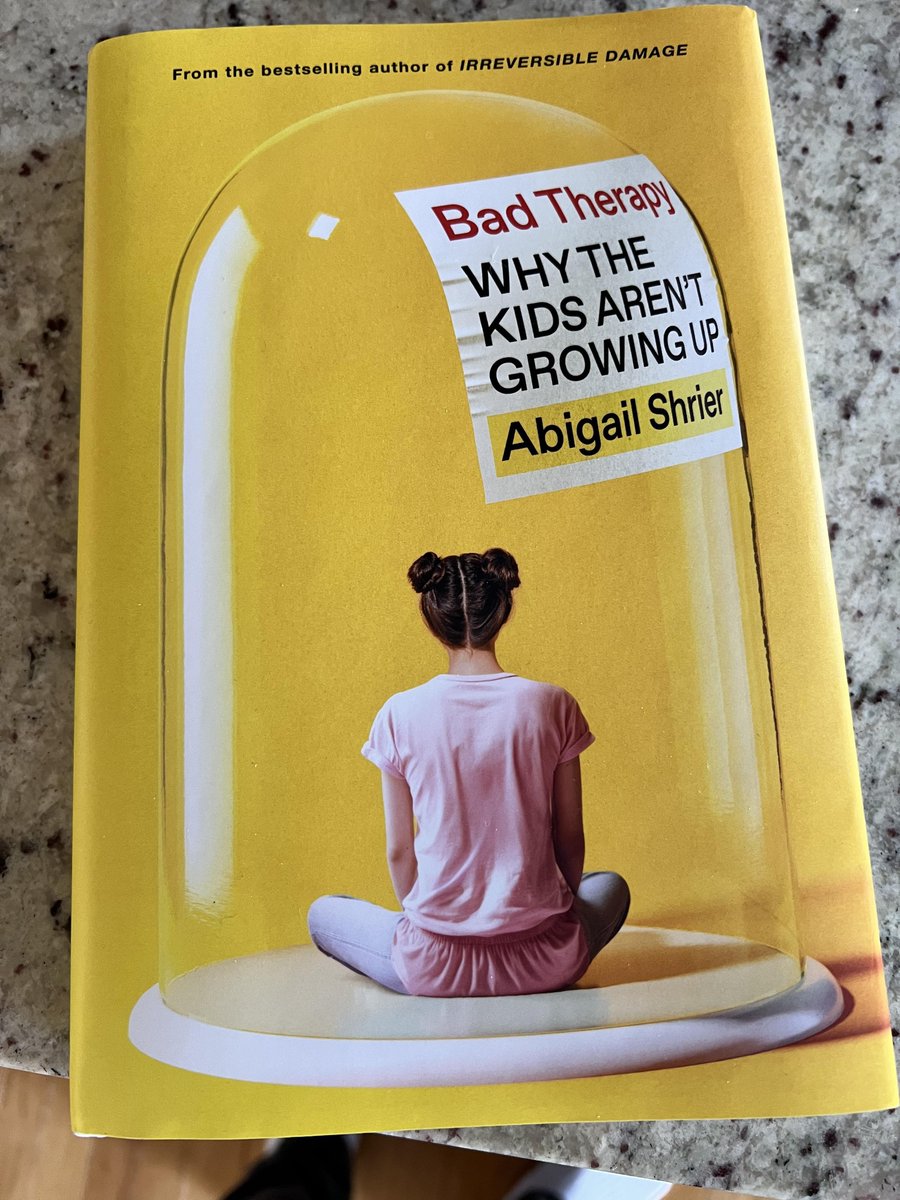
Just finished this book - Bad Therapy by @AbigailShrier
This is one of the most eye-opening books I've ever read. It's a must read for any parent, any teacher, and should be required reading for any school administrator as well.
The book dives into trying to figure out why kids are having so many mental health problems, when there are so many resources devoted to improving mental health outcomes.
Anxiety, depression, suicide, etc are all higher than they've ever been with kids, even though their lives are arguably better than ever before. It just doesn't make sense.
A few key takeaways from the book:
A constant attention on how kids are "feeling" or "thinking" is causing negative outcomes.
Constantly ruminating on your emotions and how you feel negatively impacts your mental health. If all you do is focus on your emotions, you are destined to be anxious or depressed.
We incessantly ask kids how they're feeling, if they're happy, how their mental health is, etc, and this is creating kids who think they're fragile instead of resilient.
Trying to solve every problem for kids has caused a generation who can't do anything for themselves.
We (Gen X) were told to "suck it up" or "you'll live" or "rub some dirt on it" all the time. Many of us came to the conclusion this is "bad parenting" because our feelings were neglected, and we vowed not to do this to our own children.
Because of that, kids immediately over-dramatize everything that happens to them, making mountains out of molehills, and thinking the world must revolve around their emotions and feelings.
You develop confidence and strong mental health by doing things, not by thinking or via therapy.
You can't think your way out of anxiety. You don't gain confidence by analysis of your thoughts or mental health issues.
You gain confidence and eliminate anxiety by doing gradually more difficult tasks, excelling at them, and realizing you are a competent, capable person.
The non-stop attention therapy gives to these small, common emotions we all feel blows them out of proportion to their seriousness (not talking about genuine disorders here, just normal anxieties that millions of people go to therapy to try to avoid).
One of the best ways to decrease your happiness is to chase it.
Our society constantly tells kids they should be "happy" and asks them if they are.
Happiness isn't a state you should be in 24/7. That's not realistic. Joy and bliss aren't permanent states - they are fleeting.
Contentment, stillness, and being even-keeled are much better goals to aim for mentally.
The happiest, most well adjusted kids come from families with loving parents that have strict rules for the household.
This one really set off the confirmation bias in me... I feel really blessed we have 2 well adjusted middle school kids who do great in school, are very respectful and well mannered, and we barely even need to parent them.
But for years, we were very strict with them. Bedtimes, family rules, how we do things, etc. The in-laws and lots of friends thought we were totalitarian.
In reality, we just had high standards. And it's really paying off right now. I found it really interesting that strict rules equals happy kids. Makes sense, though, as kids need to know what their boundaries are.
Constantly surveying school-age kids about their mental health causes more issues than it solves.
Mental health resources is big money. Districts need to validate all the resources allocated towards mental health, and they often do that via surveys.
Asking kids non-stop questions like:
- Have you thought about self harm?
- Have you thought about suicide?
- Have you been so anxious you can't get out of bed?
Etc, etc puts into their heads the idea that themselves, or many of their peers are broken and cannot function properly in the real world.
It normalizes situations that would be incredibly rare at any other time in history.
There's a lot of other takeaways, too, but I'll stop there.
It's a fantastic book. Go pick it up and read it. This isn't an affiliate thing or a promotion thing at all. I just really enjoyed it, and it will further shape the way I parent moving forward.
An idea I can't stop thinking about...
Solomon's Paradox (and how to escape it):
In the Old Testament, King Solomon was known for his incredible wisdom. He was considered one of the wisest men who ever lived.
But King Solomon's life was quite a mess:
• Hundreds of wives and partners
• Obsession with money and wealth
• Absent relationship with son and children
In short, King Solomon was great at giving advice, but terrible at taking that same advice into account in his own life.
This story gave a name to a common psychological phenomenon:
When we provide clear, rational perspectives and advice to others, but are unable to provide those same quality perspectives to ourselves, we are falling victim to Solomon's Paradox.
We've all been stuck in Solomon's Paradox at one point or another.
Why? Well, it's quite simple, really:
When you're considering someone else's problems, you are objective, rational, and balanced.
When you're considering your own problems, you are emotional, irrational, and volatile.
It's not your fault—you're human, after all!
Two core strategies to escape:
Strategy 1: Create Space
Viktor Frankl, the Austrian philosopher and Holocaust survivor renowned for his contributions to existential psychology, has a brilliant framing for the power of space:
"Between stimulus and response, there is a space. In that space is our power to choose our response."
Pause: Our immediate reactions are almost always emotional, and we make bad decisions in the heat of emotion. Force a pause (whether it's seconds, minutes, hours, or days) before reacting.
Reset: Allow yourself to feel the emotional response, but remind yourself that you are in control of what comes next. Give yourself that power.
Engage: With a more balanced perspective, engage with the situation.
Strategy 2: Zoom Out
A rule for life: When in doubt, zoom out.
You live your entire life zoomed in. This can create challenges, as struggle feels bigger than it really is and growth feels smaller than it really is.
Forced zoom outs provide perspective, on the true nature of your struggles and the impressive nature of your growth.
Mental Time Travel is a useful tool for zooming out:
Imagine yourself in the past and consider yourself in the present.
Imagine yourself in the future and consider yourself in the present.
This zoom out forces perspective that breathes new life into a situation.
***
To fight back against Solomon's Paradox:
Create space and force new perspective.
The right questions (and answers) will come to you.
What’s up @GTBank? I’ve had massive challenges with every single one of your platforms today - the mobile banking app, USSD, atmcard. I’ve not been able to transfer money [even btw my own accounts!!! 😳], use my card for POS payments. WHAT THE HECK IS GOING ON?!
@cenbank#sos