A CS grad can look impressive on paper.
They may have touched multiple domains.
Built isolated projects.
Tried every new tool.
But in 2026, that is not enough.
The real signal is depth:
Can they use AI inside the actual engineering workflow?
Can they reason through context?
Can they review, test, and ship software people can depend on?
At @icamp, we are building for that layer.
Not surface-level fluency.
Production-ready engineers.
AI is no longer a side tool for developers.
It’s becoming the workflow for how software is planned, written, reviewed, and shipped.
The gap will be between those who work deeply with AI and those who only prompt casually.
$ icamp filter --depth
depth is signal. surface is noise. #icamp #aibootcamp
AI is no longer a side tool for developers.
It’s becoming the workflow for how software is planned, written, reviewed, and shipped.
The gap will be between those who work deeply with AI and those who only prompt casually.
$ icamp filter --depth
depth is signal. surface is noise. #icamp #aibootcamp
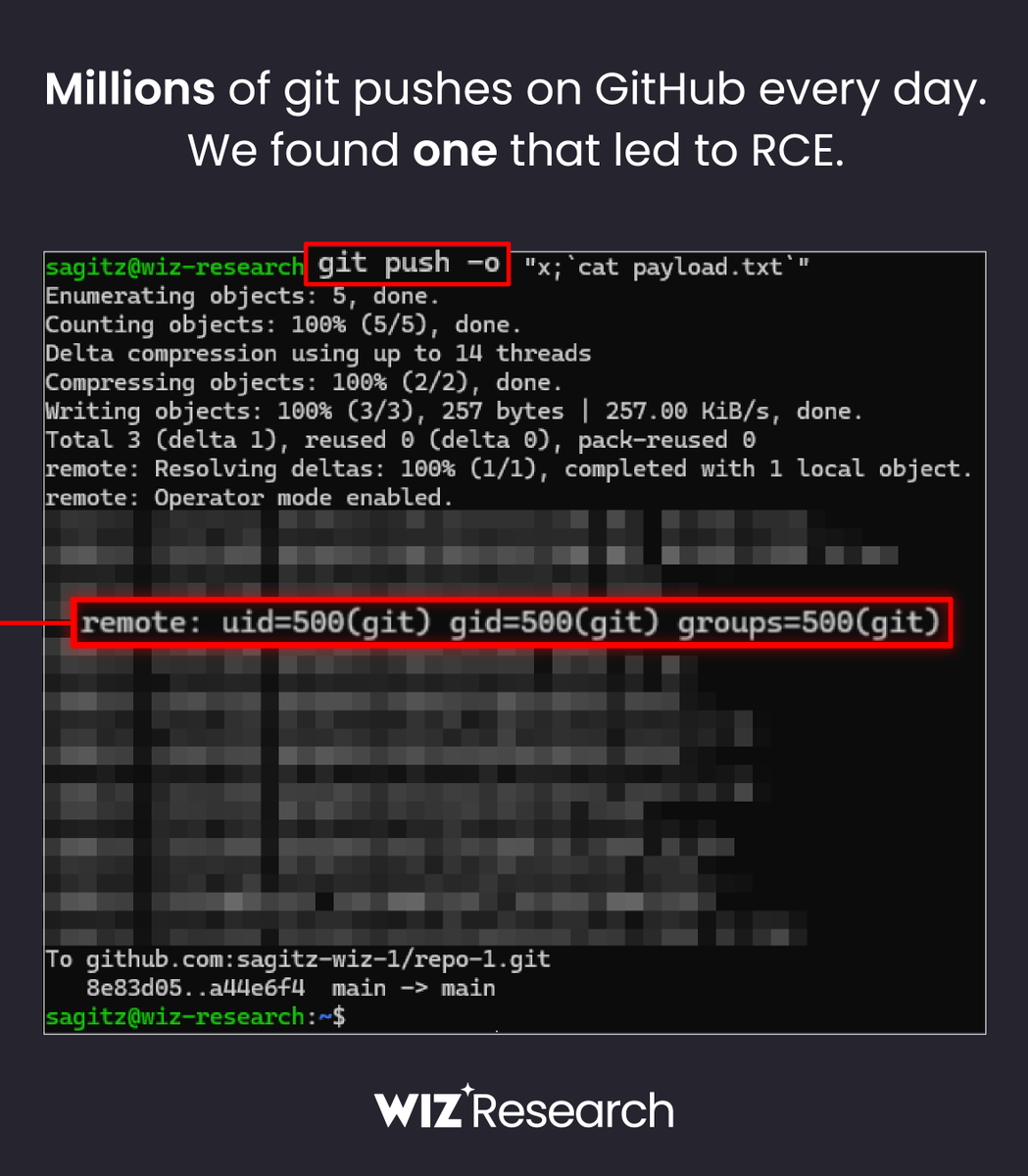
🚨 BREAKING: Wiz Research discovered Remote Code Execution on https://t.co/SvN2lGsnbO with a single git push
The flaw in @github allowed unauthorized access to millions of repositories belonging to other users and organizations 🤯
Jack Dorsey, co-founder of Twitter (now X) and Block, on why treating AI as a "copilot" is a losing strategy:
@jack argues that most companies are approaching AI in a way that will make it nearly impossible for them to survive.
"I think most of the industry is thinking about AI as like a co-pilot, as something that is augmented onto, rather than like how do you just rebuild our whole company with this as the core."
His concern is that bolting AI onto existing structures produces companies that look indistinguishable from each other, and from the AI labs themselves.
"If it doesn't make sense for your business to do that and you end up being or looking very similar or rhyming too closely with the frontier labs, then I think it's going to be very, very challenging to differentiate and survive."
This thinking has been driving his decisions since early 2024, when these tools "really came to bear."
That's when his team began building Goose, an agent coding harness, as part of a broader effort to rebuild around AI rather than layer it on top.
The core insight?
Speeding up old workflows with AI is a short-term gain every competitor will match. Real differentiation comes from rebuilding the company itself around intelligence.
SDLC is supposed to bring order to software. Clear stages, defined ownership, predictable outcomes. Requirements move from design to code to tests to production.
In practice, systems drift.
Take a simple example. A product team defines a requirement to let users withdraw money. It looks straightforward. You build it, validate it, ship it.
Then constraints evolve. Withdrawals over $10,000 need a flag. Free-tier users have daily limits. Some regions have restrictions. Each change is valid, but they don’t propagate cleanly. Backend updates, frontend lags, docs age, tests pass on outdated assumptions.
Now the same rule exists in multiple places, each slightly different. The issue is not execution. It is consistency.
This is where teams slow down. Debugging takes longer. Onboarding depends on tribal knowledge. Changes feel risky because no one is fully certain what the system does.
The pattern is predictable. A rule changes in one place and not everywhere else. Repeat this enough times and the system becomes hard to reason about.
The fix is structural. One rule, one source of truth. Everything else reads from it. No duplication, no ambiguity.
When that constraint is enforced, SDLC works as intended. Systems stay aligned. Teams move faster. Software behaves as expected.
This is what most developers learn only after systems break. At @icamp, we make it explicit from day one, building production-grade engineers.
LeetCode isn’t about DSA.
It’s about:
Breaking problems.
Handling constraints.
Making trade-offs.
Execution is easy now.
Thinking is not.
At @icamp, we train depth, so you don’t end up as a framework engineer.
Most developers optimize for exposure.
The top 1% optimize for ownership.
Exposure = “I’ve tried this”
Ownership = “I’m responsible when this breaks”
In 2026, familiarity will only get you so far, ownership is what will ultimately compound.
Once something runs, everything changes.
Users behave differently.
Systems fail in unexpected ways.
Simple flows break.
Now you are learning, not planning.
Instead of one big integration.
Components connect early.
Issues show up sooner.
Progress is visible.
You will not get it right the first time.
That is the point.
In Computer Science, you get there iteration by iteration.
This is the kind of system thinking @icamp builds.
In Computer Science, you are asked to build things that do not exist yet.
So you try to figure everything out upfront.
Flows.
Edge cases.
User behavior.
It looks clean.
But it has not faced real usage.
What works in design breaks in execution.
Better approach.
Build something that works early.
Signup → verification → approval.
A minimal payments flow.
A simple recommendation wired to data.
Do not guess.
Observe.
This is how Computer Science is actually learned at @icamp.
Once something runs, everything changes.
Users behave differently.
Systems fail in unexpected ways.
Simple flows break.
Now you are learning, not planning.
Instead of one big integration.
Components connect early.
Issues show up sooner.
Progress is visible.
You will not get it right the first time.
That is the point.
In Computer Science, you get there iteration by iteration.
This is the kind of system thinking @icamp builds.
Most developers optimize for exposure.
The top 1% optimize for ownership.
Exposure = “I’ve tried this”
Ownership = “I’m responsible when this breaks”
In 2026, familiarity will only get you so far, ownership is what will ultimately compound.
A typical CS grad today looks quite impressive on paper:
> touched multiple domains
> built isolated projects
> shipped nothing people actually depend on
That’s not really an inherent flaw.
It’s just will not suffice anymore.
In 2026, surface-level competence is noise.
At @icamp, we believe depth is the filter for the crème layer of production-ready engineers.
You can give two people the same AI tools
One builds something valuable.
The other stays stuck.
The difference isn’t the tool.
It’s depth of understanding.
Tools amplify skill. They don’t replace it.
That’s why Computer Science fundamentals > everything else
Exactly what @icamp focuses on.