Our 95-minute AI feature film, Hell Grind, is now fully open-sourced for the Higgsfield Global Film Festival.
All the prompts and assets are public.
It was made for $500,000, screened in Cannes Market, and drew coverage from The Wall Street Journal, Variety, and BBC News.
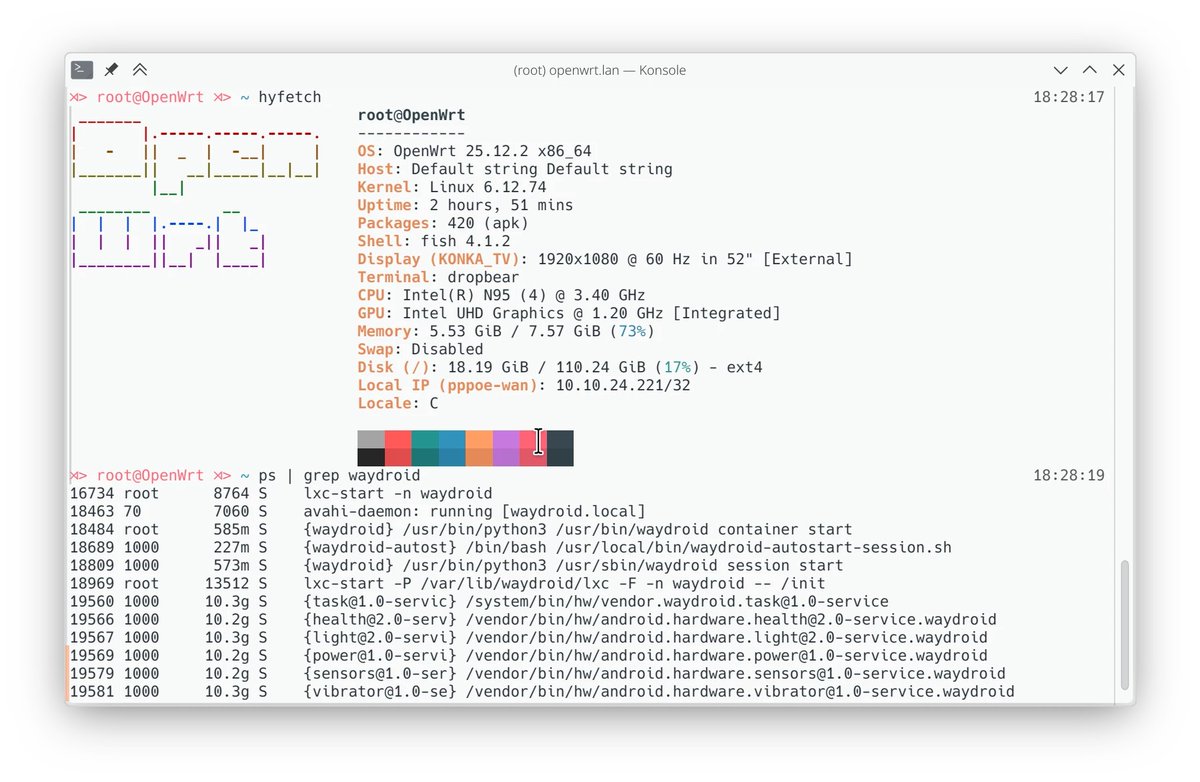
家里没有多余的电视盒子了,电视的性能也不是很好,怎么办呢?刚好软路由上有个 HDMI,于是...
向您介绍:LineageOS in LXC(Waydroid) on Fedora in LXC on OpenWrt,无须虚拟化,直接跑在 OpenWrt 的 kernel 和 sysfs 上的 Android!
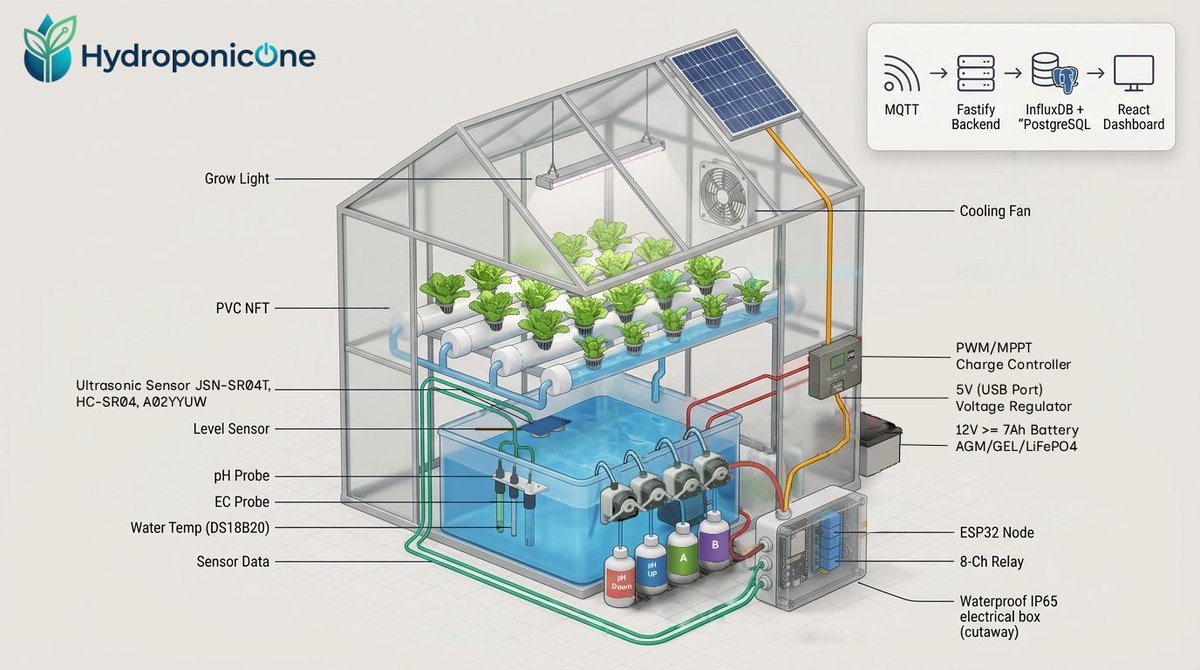
#工科女魅力时刻
Claude CAD (Claude Code hooked up to an MCP CAD viewer) uses scripted parametric CAD to build. Build123d and CadQuery are python open source libraries built around the OCCT kernel.
Scripting is fundamentally different from packaged parametric CAD. Patterning, conditionals, configurations are all native with scripted parametric CAD. In addition, you get github for diffs and versioning and anything else you could possibly want out of a PLM system.
And, because Claude is very good at reasoning over code, it can manipulate these scripts with much more finesse than packaged CAD. Need to sweep over a parametric variable? Easy, just program it in. Check for collisions or interference? Just build it into the script. Morph geometry conditional to a particular parameter or integrate information from analysis? It’s just code.
You can even build PLM approvals and release information into STEP files themselves, and the released STEP itself can be used as the source of truth.
Moving from CAD models to drawings is still an issue, but given what I’ve seen of Solidworks and Creo drawing packages, I‘m sure a fairly lightweight solution can be built. Maybe it already has—I don’t think anyone is super-impressed by commercial CAD drawing packages.
If drawings and curmudgeon-ism are the only things standing in the way of AI augmented CAD, I’m sure we can figure it out and free the ME field from packaged CAD lock-in.