Iranian authorities once again blocked roads leading to Jina Mahsa Amini’s gravesite on the fourth anniversary of her killing in police custody, Amini's mother said today.
A widespread general strike was held Wednesday, September 16, across Kurdish-majority cities, with shops and bazaars closed in Saqqez, Sanandaj, Oshnavieh, Baneh, Bukan, Paveh, Piranshahr, Divandarreh, Qorveh, Kamyaran, Kermanshah, Javanrud, Marivan, Mahabad, and Miandoab. In Saqqez, Amini’s hometown, authorities failed to prevent the market shutdown.
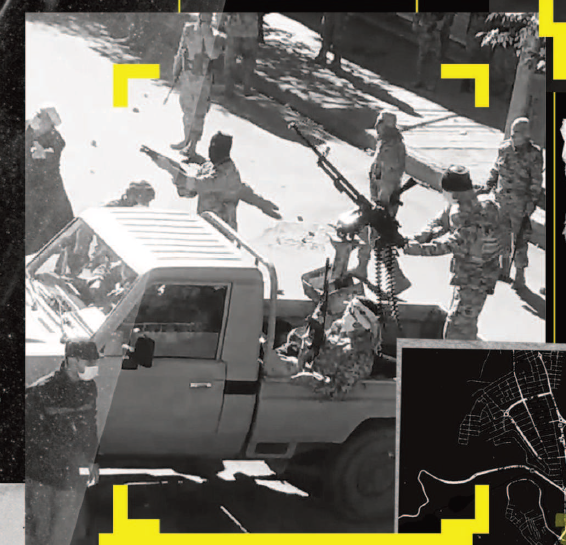
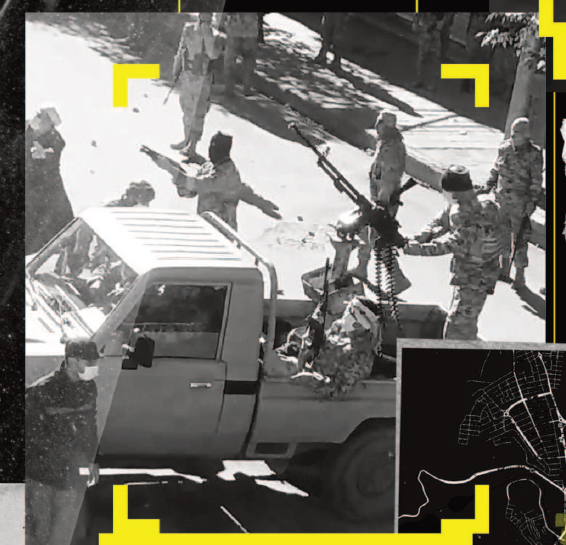
Videos and reports also show a heavy security presence, including anti-riot units and military vehicles. Several Kurdish-majority cities reported severe internet disruptions.
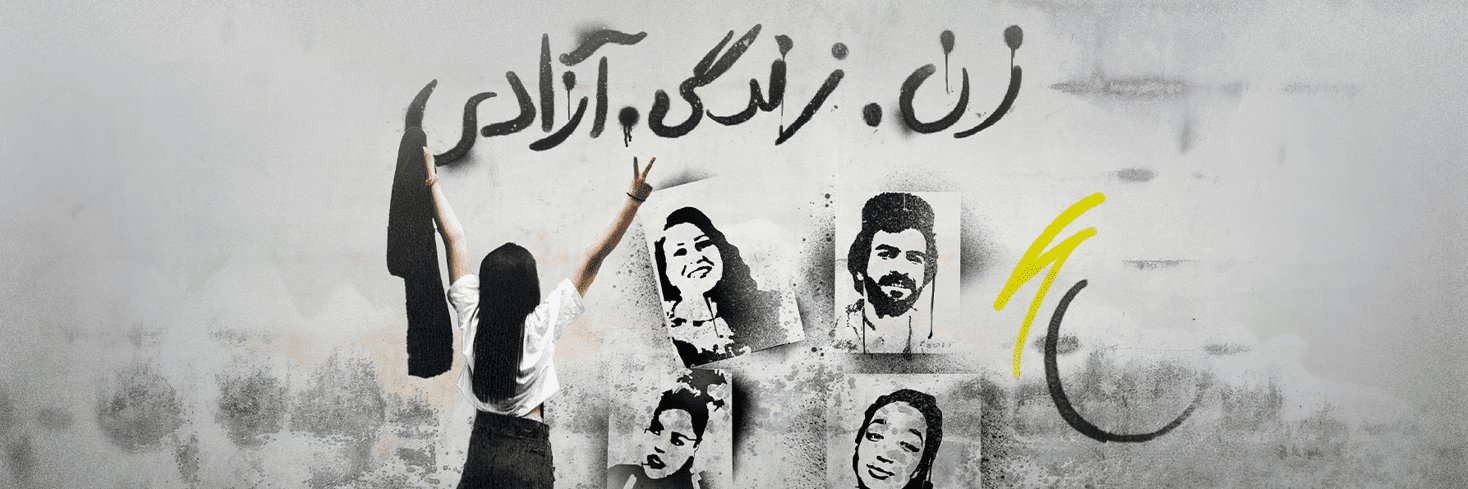
#WomanLifeFreedom
#زن_زندگی_آزادی
The Center for Human Rights in Iran joins Amnesty International’s call for the UN General Assembly to establish an international criminal justice mechanism for Iran.
Governments around the world should also pursue investigations and prosecutions of Iranian officials suspected of responsibility for crimes under international law, under universal jurisdiction.
Impunity for the crimes against humanity committed in 2022 emboldened the Iranian authorities to commit further atrocities.
Thousands were killed during nationwide protests on 8 and 9 January 2026, over 3,000 by the authorities’ own admission.
Demand International Justice for Crimes Against Humanity in Iran ✊
https://t.co/1ZlLedyA6X
گزارش بیش از هزار صفحهای عفو بینالملل، افشا میکند که چگونه مقامات جمهوری اسلامی ایران برای سرکوب خیزش «زن، زندگی، آزادی» در سال ۲۰۲۲ مرتکب جنایت علیه بشریت شدند.
این گزارش همچنین ۸۷ مقام را شناسایی میکند که باید تحت تحقیقات کیفری قرار گیرند.
https://t.co/SPmvHQjSkl
On 16 Sep, the 4-year anniversary of the #WomanLifeFreedom uprising @amnesty will publish a landmark 1000+ page report on crimes under international law committed by Iran's authorities during the 2022 deadly crackdown. We'll be live-posting from a press conference at 10am UK time
Impunity for the crimes against humanity committed in 2022 emboldened the Iranian authorities to commit further atrocities.
Thousands were killed during nationwide protests on 8 and 9 January 2026, over 3,000 by the authorities’ own admission.
Demand International Justice for Crimes Against Humanity in Iran ✊
https://t.co/1ZlLedyA6X
Four years after Jina Mahsa Amini’s killing sparked the historic Woman, Life, Freedom uprising in Iran, those responsible for grave violations continue to enjoy impunity while protesters face imprisonment and execution.
The Center for Human Rights in Iran joins Amnesty International’s call for the UN General Assembly to establish an international criminal justice mechanism for Iran.
Governments around the world should also pursue investigations and prosecutions of Iranian officials suspected of responsibility for crimes under international law, under universal jurisdiction.
Read our statement: https://t.co/vrwIgtS20F
#WomanLifeFreedom #زن_زندگی_آزادی
As Iran approaches the fourth anniversary of the Woman, Life, Freedom uprising, a diverse group of labor and civil society groups has issued a statement reaffirming the movement’s demands for freedom, equality, economic security, & an end to repression.
https://t.co/quQL0Qvz8M
The UN Independent International Fact-Finding Mission on Iran has called on Iranian authorities to immediately withdraw a sweeping “Countering Foreign Infiltration” bill that would criminalize routine contact with people and institutions abroad and expose journalists, academics, activists and ordinary citizens to lengthy prison sentences.
The Mission warned that the vaguely worded legislation would place virtually all interactions with the outside world—from journalism and academic cooperation to cultural, social and commercial activities—under government surveillance and approval, further restricting fundamental freedoms and isolating Iranians from the international community.
Read the full statement: https://t.co/7ACH7S603I
Ali-Asghar (Alireza) Peyghambari, 26, arrested during Iran’s nationwide January 2026 protests, is at imminent risk of execution after the Supreme Court upheld his death sentence.
Peyghambari was sentenced to death by Branch 23 of the Tehran Revolutionary Court on charges of “operational and security-related actions against the regime” and “encouraging individuals to participate in protests,” under the draconian Law on Intensifying Punishment for Espionage and Cooperation with Israel. Branch 9 of the Supreme Court recently upheld the sentence.
His attorney, Payam Derafshan, has said Peyghambari had no organizational or other ties to “hostile groups” and that the only conduct attributed to him was attending a protest. Derafshan said a request for a retrial and a stay of execution had been prepared.
Peyghambari was arrested by security forces on January 9, 2026, and released on bail in March. He was arrested again following a second hearing before Branch 23 of the Tehran Revolutionary Court in late May and transferred to Greater Tehran Prison. He was later transferred to Ghezel Hesar Prison.
Protests and strikes by shopkeepers and bazaar merchants began in Tehran on December 28, 2025, and quickly spread across the country. State security forces responded with a deadly crackdown in January, massacring hundreds of protesters.
#علیاصغر_پ��غمبری
Join us for an evening of film and conversation featuring The Court of History, a new docudrama that confronts one of the most difficult questions facing Iran: How can those responsible for atrocities ultimately be held accountable?
RSVP today. ⬇️
https://t.co/TRC7N0DYhu
In a case involving 16 Iranian protesters arrested during the January 2026 nationwide protests, a Revolutionary Court has sentenced 10 to death and handed all 16 a combined 256 years in prison despite reports of torture and serious due process violations.
The Center for Human Rights in Iran previously reported on the alarming rise in group trials, in which protesters are prosecuted collectively rather than individually, denied meaningful access to independent legal counsel and case files, and subjected to torture and coercion to extract forced “confessions.”
Ten defendants, including two women, were sentenced to death and 11 years in prison each. Six others received prison terms ranging from 16 to 36 years from Branch 1 of the Esfahan Revolutionary Court. The combined prison sentences for all 16 defendants total 256 years, according to the Human Rights Activists News Agency (HRANA).
The case, known as the “Esfahan Shohada Square” case, stems from protests and clashes in and around Shohada Square in Esfahan in January. Two people died during the events, including a member of the Islamic Revolutionary Guard Corps (IRGC) and a homeless man.
HRANA reports that the indictment does not contain a specific charge against any of the 16 defendants for killing either person. Instead, they were prosecuted on charges including “moharebeh,” “destruction of public property,” “assembly and collusion against national security,” and “propaganda against the regime.”
According to HRANA, prosecutors presented no evidence during the trial establishing that any of the defendants participated in the deaths.
The proceedings have also been marred by allegations of torture and restrictions on the defendants’ right to a fair defense.
Before the hearing, defense lawyers reportedly did not have access to a substantial portion of the case file and objected that they had been given insufficient time to review the documents and evidence.
During the hearing at Dastgerd Prison in Esfahan, Ahmadreza Saeedi told the court that he had been tortured during interrogation, adding that the investigator used an electric shock device on his neck and genitals.
The death sentence against Arghavan Fallahi, a 24-year-old Iranian political prisoner held in Evin Prison, was recently upheld by the Supreme Court.
Fallahi was sentenced to death in July 2026 by Branch 15 of the Tehran Revolutionary Court on the alleged charge of "armed rebellion."
The sentence was handed down by Judge Abolghasem Salavati, a notorious judge widely known as the "Judge of Death" for his record of issuing death sentences against political prisoners and dissidents.
Fallahi was first arrested during the Woman, Life, Freedom protests in November 2022 alongside her father and brother. She was later sentenced to two years' imprisonment by Branch 26 of the Tehran Revolutionary Court. After completing her sentence, she was released from Evin Prison.
She was arrested again in January 2025 and was reportedly subjected to severe physical and psychological torture aimed at forcing her to confess to alleged involvement in the assassinations of judges Mohammad Moghiseh and Ali Razini.
🔸 Since the start of the war, Iranian authorities have significantly escalated domestic repression by fast-tracking political cases through the judiciary and imposing lengthy prison sentences and death penalties through politically motivated prosecutions without even the semblance of due process, targeting both recently detained individuals and political prisoners already behind bars.
🔸 Death sentences in Iran are routinely handed down following grossly unfair trials, with defendants frequently denied due process and convicted on the basis of forced "confessions" extracted under torture and coercion.
🔸 Vaguely defined and fabricated "national security" charges are being increasingly used to criminalize dissent and secure convictions that carry the death penalty.
Spoke to the @WashingtonPost about a proposed bill in Iran that would criminalize contact with foreign media & institutions, putting many ordinary interactions between Iranian people and the outside world under a system of state surveillance and control.
https://t.co/S0djCBJnRr
Neda Dadehjani and Setayesh (Behnoosh) Sarabi, two Iranian women arrested during the January 2026 protests, were flogged 31 times on August 22 and then transferred to Sanandaj Prison to serve their prison sentences.
Dadehjani and Sarabi had been sentenced in two separate cases. Branch 102 of the Qorveh Criminal Court sentenced each woman to one year in prison, 31 lashes, and two years of exile to Nikshahr County on charges of “disrupting public order and tranquility.”
In a separate case, Branch 1 of the Qorveh Revolutionary Court sentenced each to two years in prison for “assembly and collusion to commit a crime against national security.”
Dadehjani is a theater activist who previously received an award at a regional theater festival for people with disabilities.
We are proud to announce the international broadcast of The Court of History, a gripping new docudrama that examines how those responsible for decades of human rights crimes in Iran could ultimately be held accountable.
https://t.co/5EXGaatGfE
In an extraordinary escalation of post-protest repression, Iranian authorities have sentenced dozens of protesters to death in group prosecutions that violate even the most basic international standards of due process and fair trial rights.
Read CHRI's latest report ⬇️ https://t.co/Ldkx4QMRjV
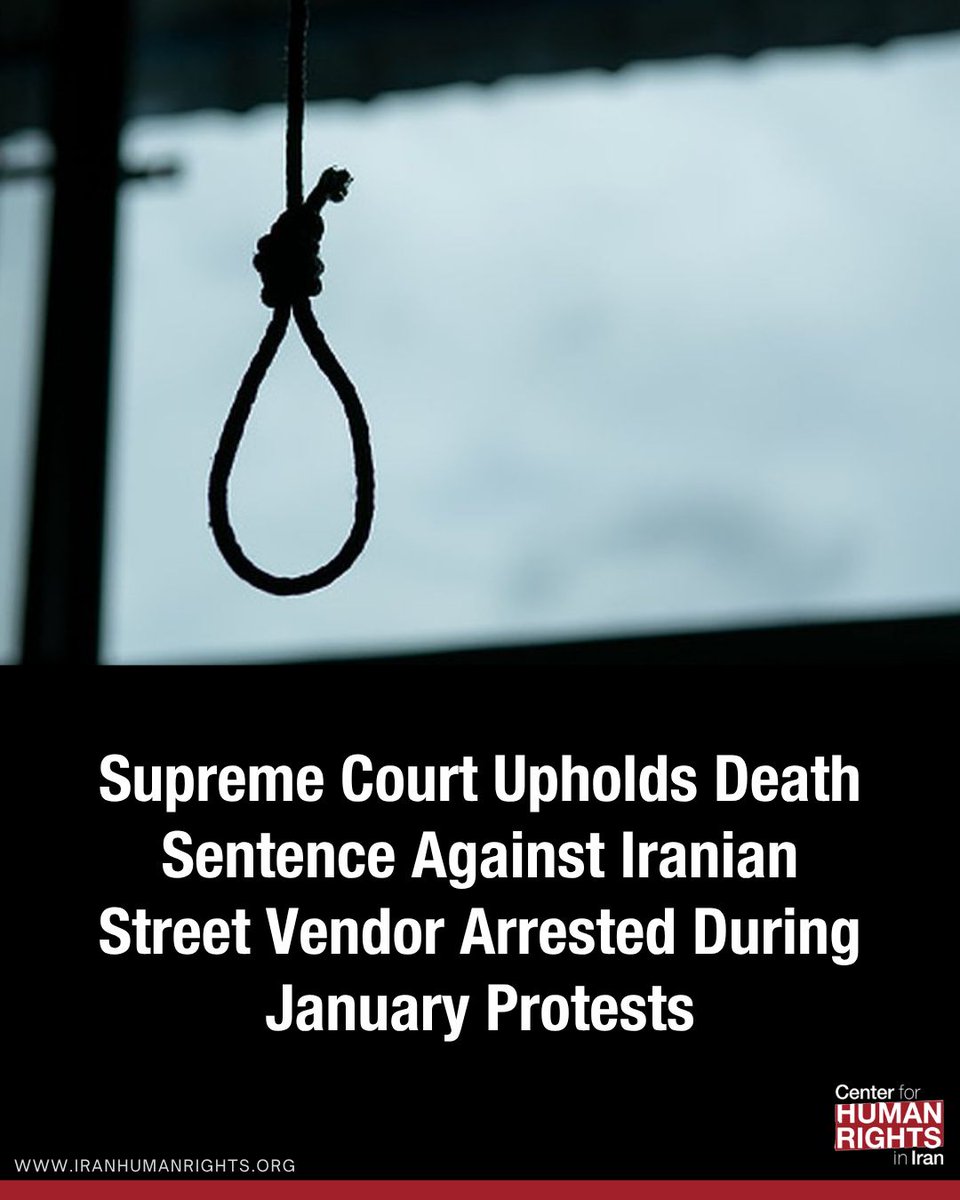
Iran's Supreme Court has upheld the death sentence against Rasoul Rezaei, a 28-year-old resident of Fariman who was arrested during the January 2026 nationwide protests and is currently imprisoned in Vakilabad Prison in Mashhad.
Rezaei is the father of two children, ages two and five. Before his arrest, he worked as a street vendor to support his family.
Rezaei was previously sentenced to death by a branch of the Mashhad Revolutionary Court on the charge of "moharebeh” (enmity against God). No information is currently available regarding the specific conduct cited by the court as the basis for the charge.
Marzieh Mohebi, a legal expert familiar with the case, confirmed Rezaei’s death sentence to the Human Rights Activists News Agency (HRANA). She said security forces arrested him in Fariman on January 9, 2026, and that he has since been denied access to a lawyer of his choosing, as well as telephone calls and family visits.
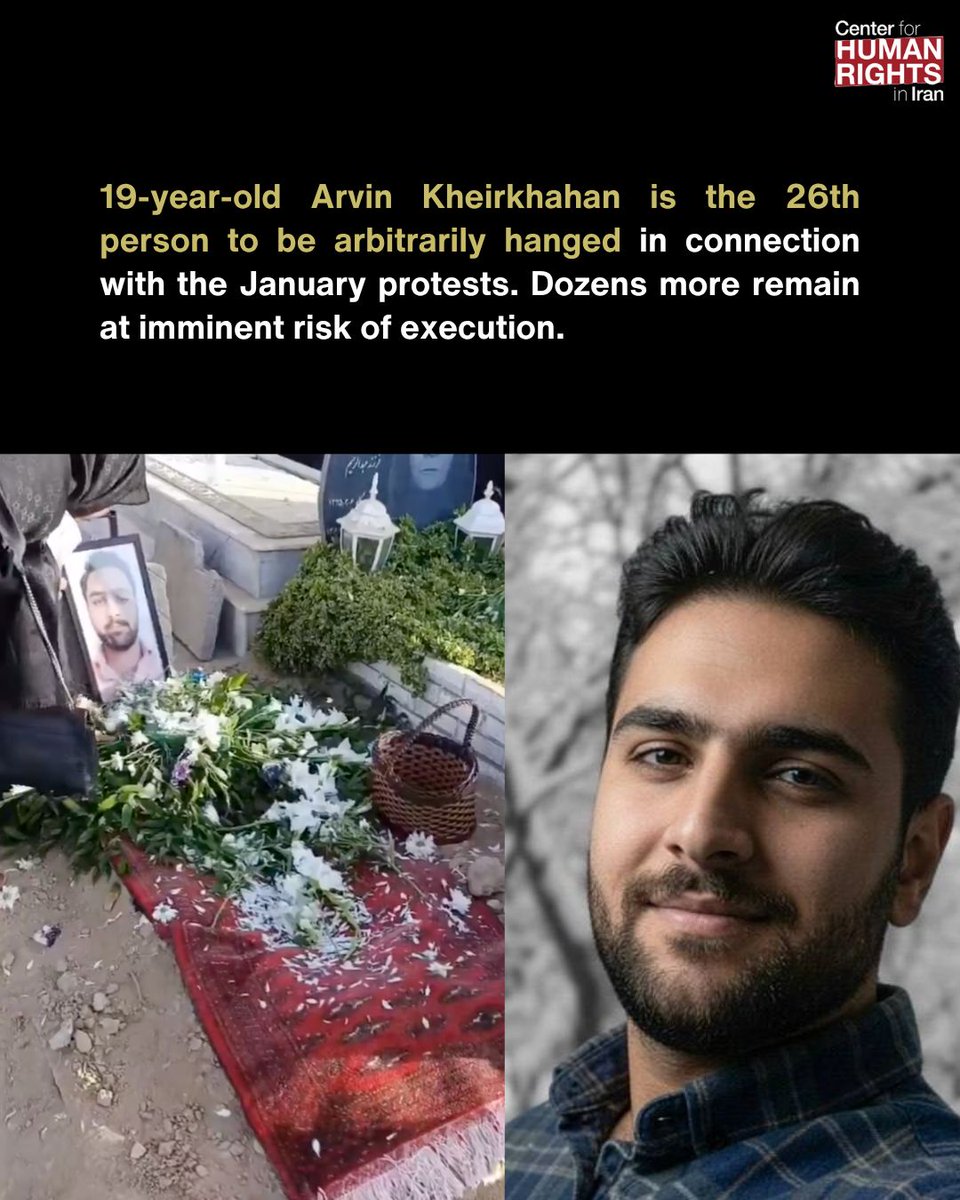
At dawn on August 1, 2026, 19-year-old Arvin Kheirkhahan, arrested during the January 2026 protests, was executed in Shahrud Prison after being sentenced to death on charges of “enmity against God."
According to HRANA, Kheirkhahan was executed at approximately 4 a.m. His family was informed that they must collect his body at 3 a.m. on Sunday and hold his burial ceremony at 5 a.m.
Kheirkhahan was sentenced to death by Branch 1 of the Shahrud Revolutionary Court. The Supreme Court upheld the verdict. Little information is available about his case.
🔸 CHRI has documented widespread due process violations in protest-related capital cases, including incommunicado detention, denial of access to independent lawyers, torture-tainted forced confessions, and fast-tracked sham trials.
🔸 Independent lawyers who have challenged due process violations and the authorities' handling of protest cases have themselves been subjected to arrest, interrogation, and other forms of harassment.
🚨 Given the widespread and systematic due process violations in capital cases, all executions in Iran must be halted immediately. CHRI calls on the international community, including the UN and governments worldwide, to urgently press the Iranian authorities to impose an immediate moratorium on executions.
“The protests against the executions in Isfahan are highly significant. The authorities have made clear that they are willing to kill people for protesting, meaning those who took to the streets were risking their own lives.”
— @BGhandehari
https://t.co/Zy8DPO1whn
At least 60 protesters in Iran, including three arrested as children, remain at risk of execution.
At least 25 others from the January protests have already been hanged.
The death penalty is inhumane, and in authoritarian countries, it is also a weapon of repression.