The world's mountains can't afford another year of promises.
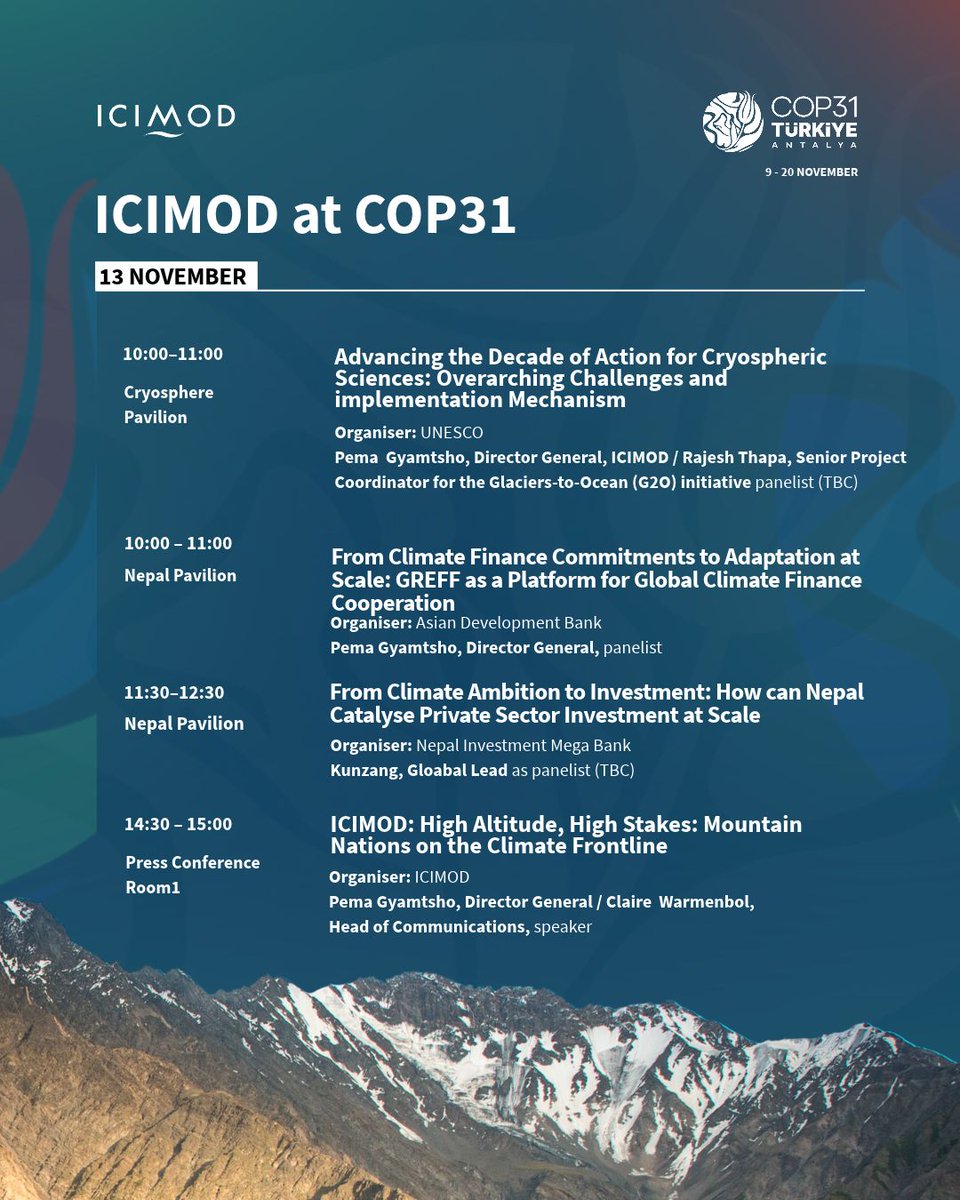
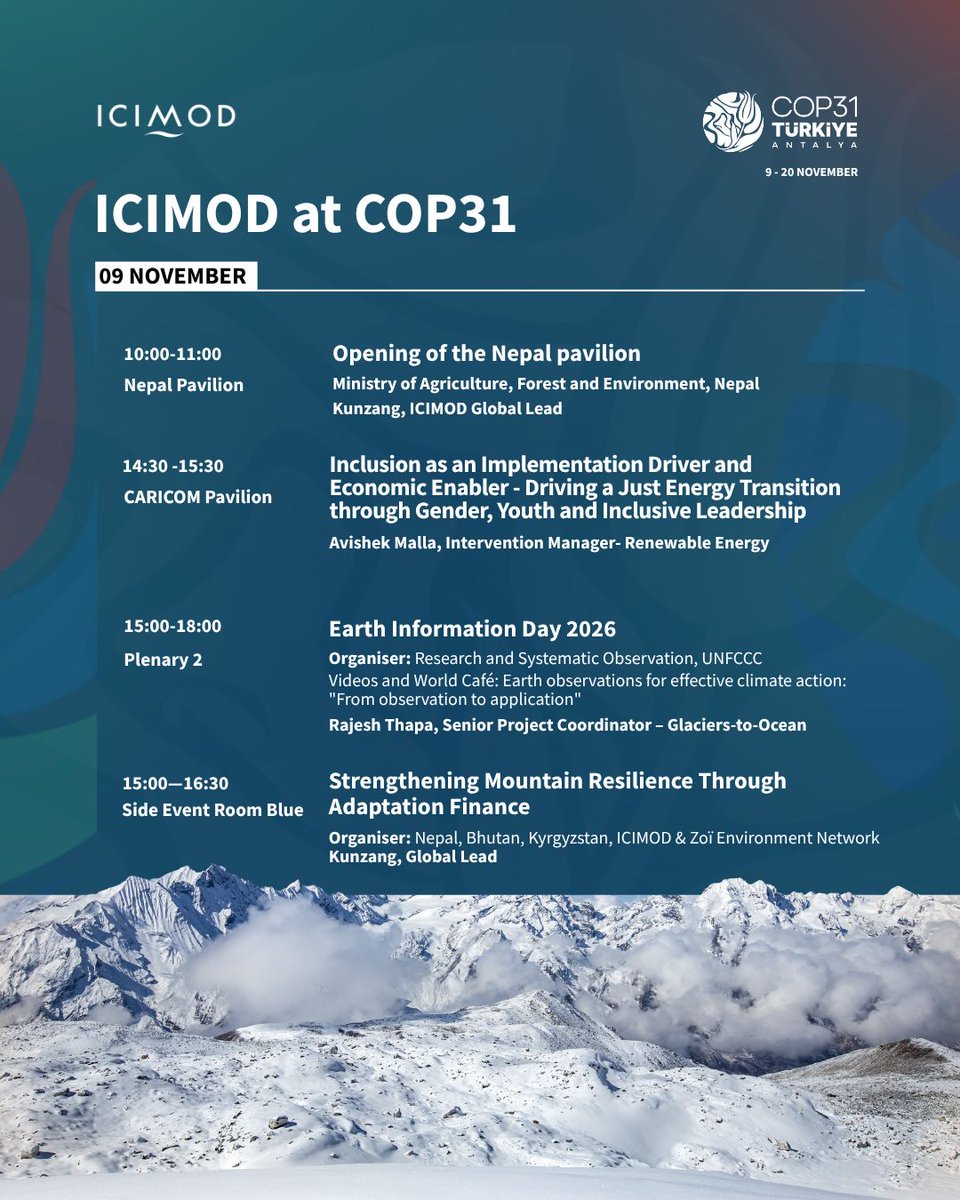
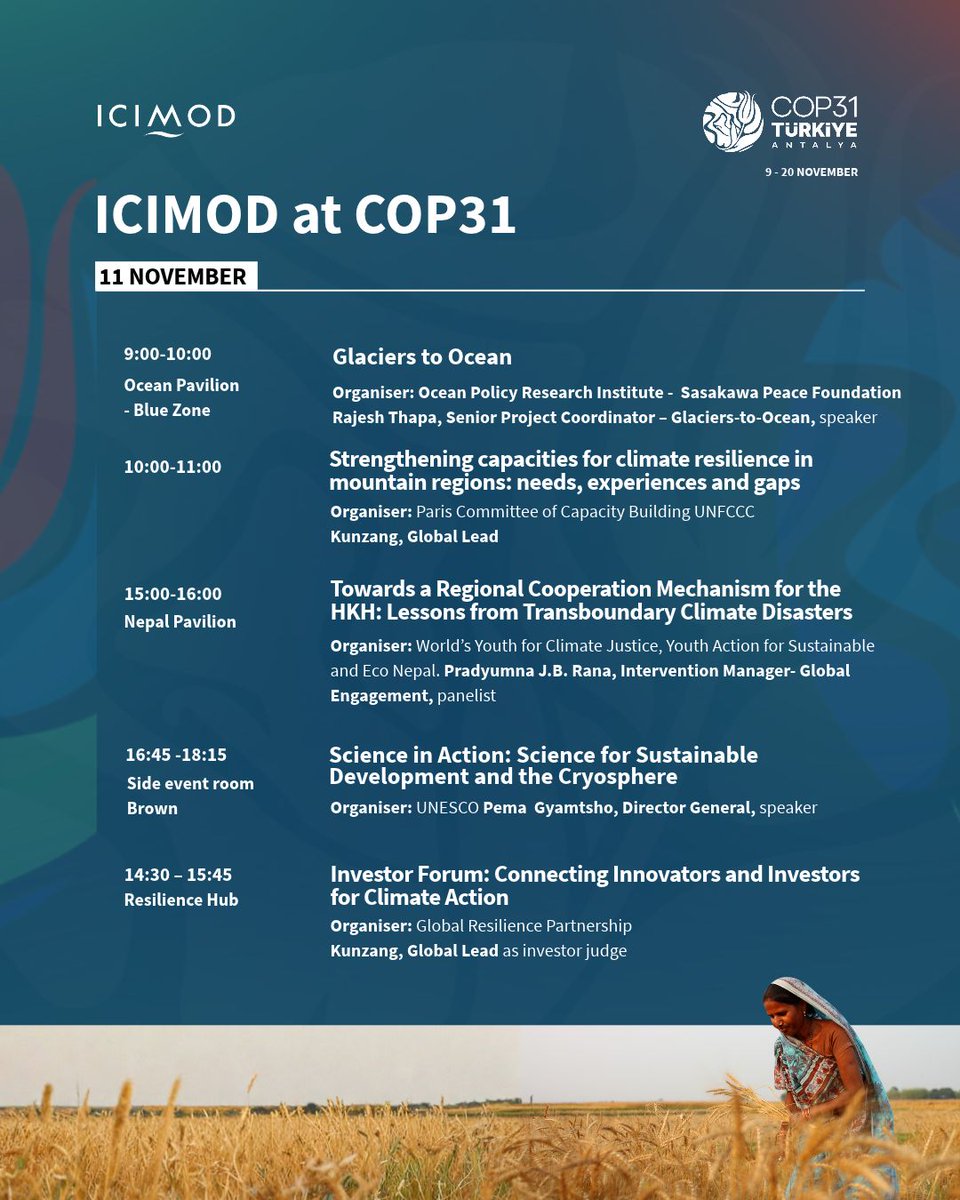
As COP31 enters its second week, ICIMOD is bringing science, partnerships, and mountain solutions to conversations on cryosphere change, climate mobility, resilient livelihoods, disaster risk, air quality, and climate finance across multiple pavilions and events.
From the Hindu Kush Himalaya to Antalya, we're working to ensure mountain priorities remain visible, funded, and acted upon.
Follow our COP31 engagements this week and join the conversation. https://t.co/6e6RkMadFQ
#HKH2Antalya #COP31 #ICIMOD #COP31Antalya #WorthTheWorld @turkiyecop31
Mountains have been recognised. Now they need action and delivery.
COP31 starts today in Antalya, Türkiye, and ICIMOD is bringing the mountain voices, knowledge, priorities and solutions of the Hindu Kush Himalaya countries to the global climate conversation. We're advocating for stronger regional cooperation and more climate finance for mountain communities.
Follow our COP31 engagements for the first week and find out where you can connect with us.
Ahead of #COP31, women negotiators are preparing to make their voices heard in the climate negotiations.
From 5–7 November, ICIMOD is joining the Women’s Environment and Development Organisation (WEDO) and UNFCCC, for the Women Delegates Fund Night School, bringing together women negotiators participating at COP31 including the Hindu Kush Himalaya (HKH), Small Island Developing States (SIDS), and Least Developed Countries (LDCs).
Through practical sessions and a negotiation simulation, participants will learn to navigate the UNFCCC process, understand past decisions, and develop and draft negotiation text.
One of the trainers is Kunzang, Global Advocacy Lead at ICIMOD and a Night School alumna, who has previously represented Bhutan and the LDCs in UNFCCC negotiations. By strengthening the knowledge and skills of women negotiators, this initiative supports more informed and confident participation in global climate decision-making and empowering and building women leadership in UNFCCC process .
Follow our work at COP31: https://t.co/xY8su2Vm9G
#HKH2Antalya #COP31Antalya #WorthTheWorld @turkiyecop31
ICIMOD is heading to COP31 in Antalya, Türkiye, from 9 to 20 November 2026. Led by Director General Pema Gyamtsho, our delegation brings together experts in climate policy, adaptation, renewable energy, air quality, cryosphere and disaster risk reduction. Meet the team and follow our work at COP31: https://t.co/xY8su2Vm9G
#HKH2Antalya #COP31 #ICIMOD #COP31Antalya #WorthTheWorld @turkiyecop31
What holds back clean energy adoption among South Asian firms, and who bears the greatest costs when disasters strike?
Join the SANDEE–ICIMOD Karl-Göran Mäler Memorial Lecture (Winter 2026) to explore these questions and the policies that can advance clean energy adoption and climate resilience.
Lecture 1: Clean Energy Adoption in South Asian Firms: From Global Knowledge to Local Constraints
🎙️Atonu Rabbani, Research Director, General Economics Division, BIDS
Lecture 2: When it rains, it pours! Revisiting the Hidden Costs of Natural Disasters in India
🎙️Pranab Mukhopadhyay, Senior Professor of Economics, Goa University
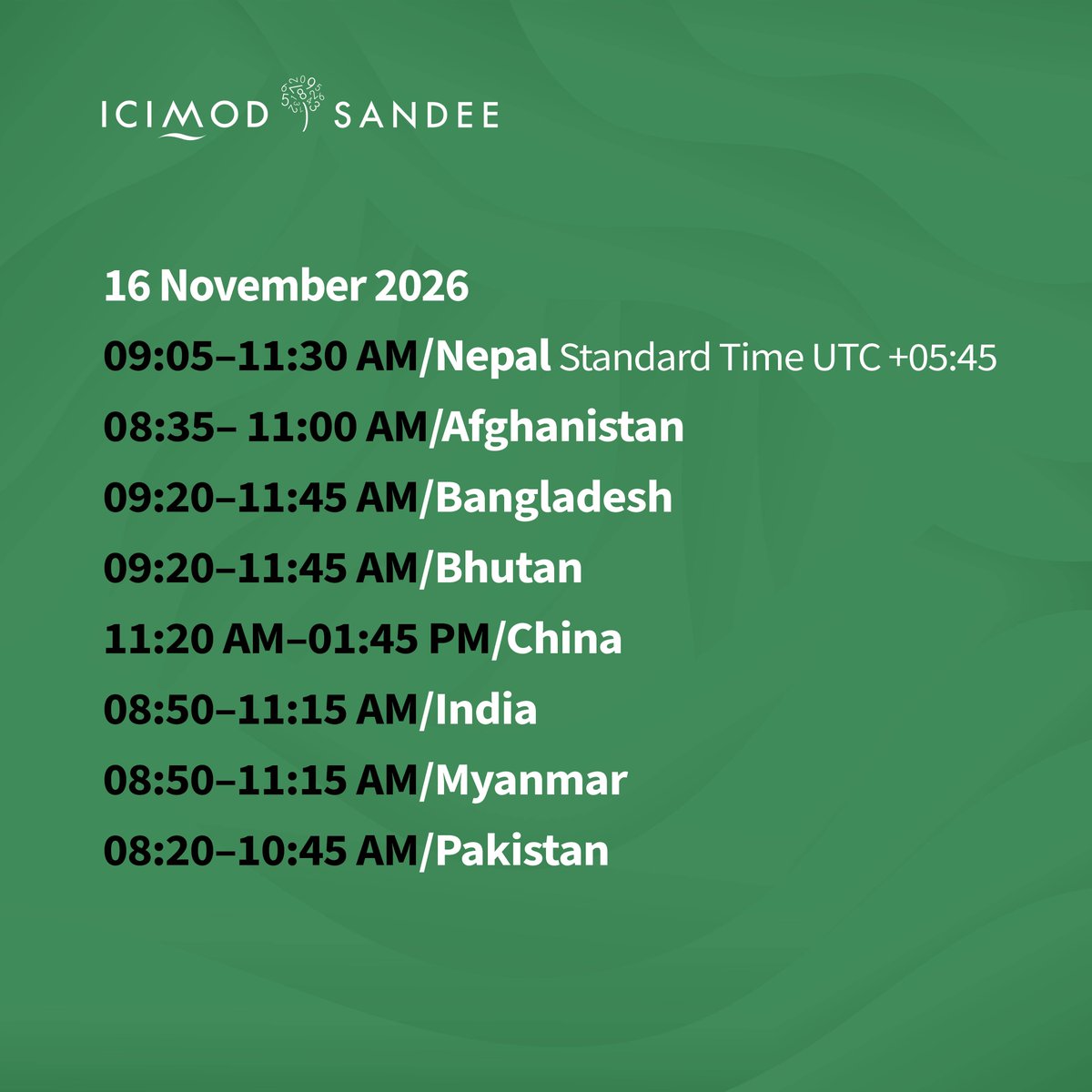
🗓️16 November 2026 | 09:15–11:30 NST (UTC +05:45) | Hybrid (Nepal and Zoom)
Register: https://t.co/6K6bmx6gKe
#SANDEE #ICIMOD #CleanEnergy #ClimateResilience #SouthAsia #HinduKushHimalaya @FromSANDEE
Correction: Join experts from ICIMOD, the High Ambition Coalition for Nature and People (HAC) and UNEP-WCMC on 6 November for practical guidance on OECM assessment, documentation, and reporting. Register now: https://t.co/VXVeCIkba4
How can we bridge national OECMs processes with global conservation goals?
Target 3 of the Kunming-Montreal Global Biodiversity Framework aims to conserve 30% of land, inland waters, and marine and coastal areas by 2030, including through other effective area-based conservation measures (OECMs) In the Hindu Kush Himalaya (HKH) and South Asia, turning national recognition into internationally reportable data remains a challenge. Join experts from ICIMOD, the High Ambition Coalition for Nature and People (HAC) and UNEP-WCMC on 4 November for practical guidance on OECM assessment, documentation, and reporting.
Register now: https://t.co/VXVeCIjDkw
What holds back clean energy adoption among South Asian firms, and who bears the greatest costs when disasters strike?
Join us for the SANDEE–ICIMOD Karl-Göran Mäler Memorial Lecture, Winter 2026, to explore these questions and the policies that can advance renewable energy adoption and strengthen climate resilience.
Lecture 1: Title: Clean Energy Adoption in South Asian Firms: From Global Knowledge to Local Constraints
Renewable energy is widely accessible and rooftop solar is financially viable for firms, yet adoption remains slow. Why? This lecture explores how policy design and the mismatch between household-focused energy policies and firms’ production-driven needs may explain the gap.
Speaker: Atonu Rabbani, Research Director of the General Economics Division at the Bangladesh Institute of Development Studies (BIDS)
Lecture 2: When it rains, it pours! Revisiting the Hidden Costs of Natural Disasters in India
How do extreme rainfall and floods affect human welfare in India, from household assets and consumption to education? This lecture explores why do women, poorer households and marginalised groups bear greater losses, and how can social protection and public-private partnerships help build climate resilience.
Speaker: Pranab Mukhopadhyay, Senior Professor of Economics at the Goa Business School, Goa University, India
Moderator: David Thomas Potter, Head of Regional Action and Global Advocacy, ICIMOD
16 November 2026 09:15–11:30 AM (Nepal Standard Time UTC +05:45)
Hybrid (Nepal and Zoom)
Register Now: https://t.co/Xj1uHMk3Z9
@FromSANDEE
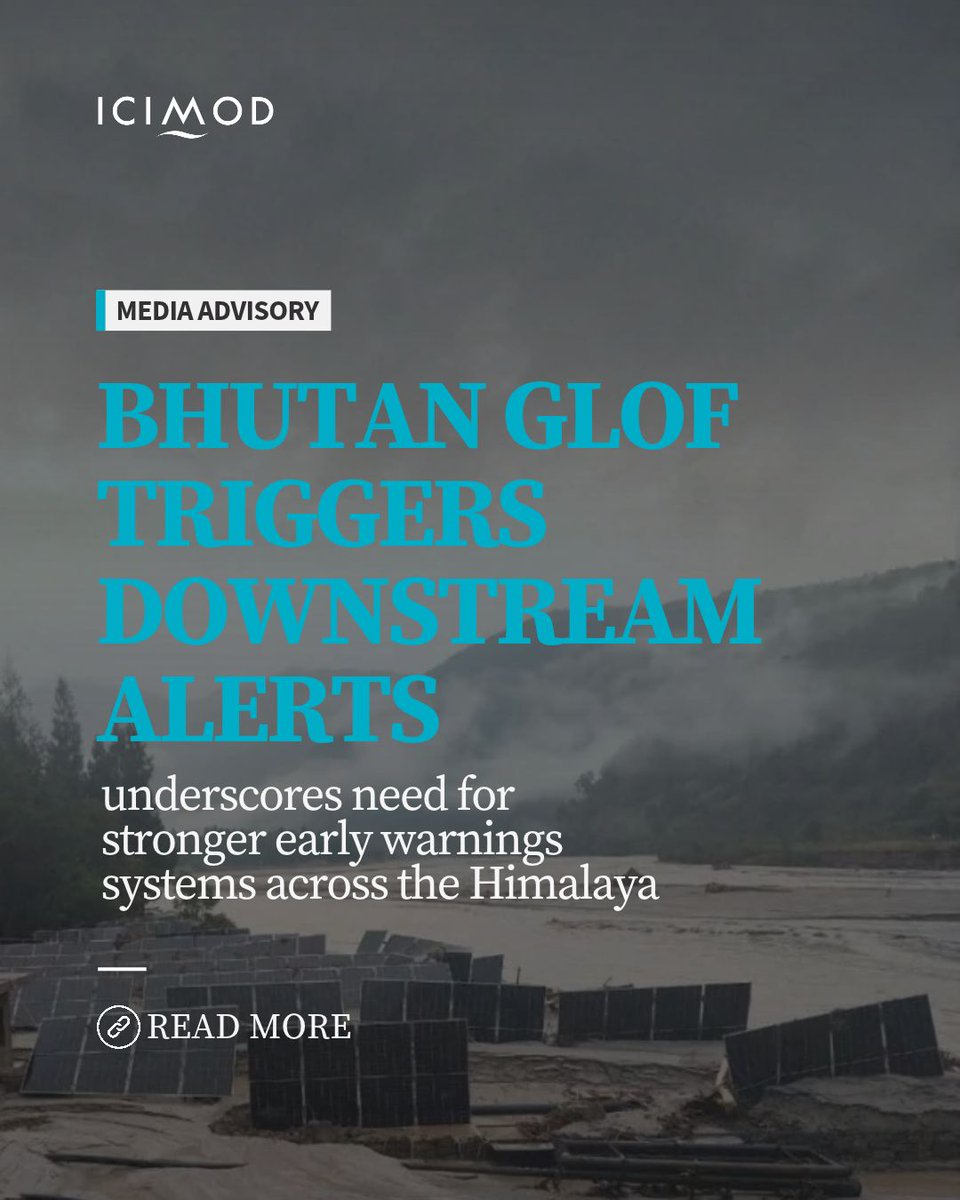
The glacial lake outburst flood (GLOF) from Sintaphu Lake in Bhutan has triggered downstream alerts in the Indian states of West Bengal and Assam, drawing attention to the growing risks posed by high-mountain hazards across the Hindu Kush Himalaya (HKH).
Communities and media are advised to follow the official warnings and advisories issued by Bhutan’s National Centre for Hydrology and Meteorology (NCHM) and the relevant disaster management authorities in India.
“The timely warnings issued by Bhutan’s authorities demonstrate the value of sustained monitoring and effective early warning systems in reducing disaster risk,” said Pema Gyamtsho, Director General of ICIMOD. “As mountain hazards become more complex, continued investment in forecasting, preparedness, and cross-border cooperation will be critical to protecting vulnerable communities across the Himalaya.”
Read the full advisory: https://t.co/svHlhWExci
#BhutanGLOF
We are seeking a qualified and experienced consultancy firm to prepare Local Disaster and Climate Resilience Frameworks for nine municipalities and rural municipalities in Rautahat, Mahottari, and Dhankuta districts, Nepal.
Proposals are due by 10 November 2026, 23:59 Nepal Standard Time (UTC+05:45).
Read the Terms of Reference and apply: https://t.co/5eeQhapiZZ
Co-organised by ICIMOD, the Department of Livestock (MoAL), the Planning and Policy Division (MoENR) and the Yak Federation of Bhutan, building on years of support for yak herder organisations across Bhutan, India, Nepal and Pakistan since 2017–18.
Link to the media advisory: https://t.co/iXQGbxgSPT
#SG2 #rangelands #yaks #pastoralism #herders
@bandanashakya12@FCDOGovUK@SwissDevCoop
Yak herders across the Himalaya now have one collective voice.
Herders from Bhutan, India and Nepal are coming together to launch the Himalayan Yak Herders Network (HYHN), a herder-led, herder-owned regional platform built by the communities who steward the high-altitude rangelands of the Hindu Kush Himalaya (HKH).
Yak herders are important custodians of high-altitude rangelands. They contribute to food security, biodiversity conservation, cultural heritage and resilient mountain livelihoods. The platform will strengthen the collective voice of these herders in national, regional and global policy and development processes.
The launch takes place at the 9th Royal Highland Festival in Laya, Bhutan, on 23 October 2026, and honours the UN International Year of Rangelands and Pastoralists 2026.
The Hindu Kush Himalaya spans 3,500 km across eight countries and holds four of the world's 36 global biodiversity hotspots.
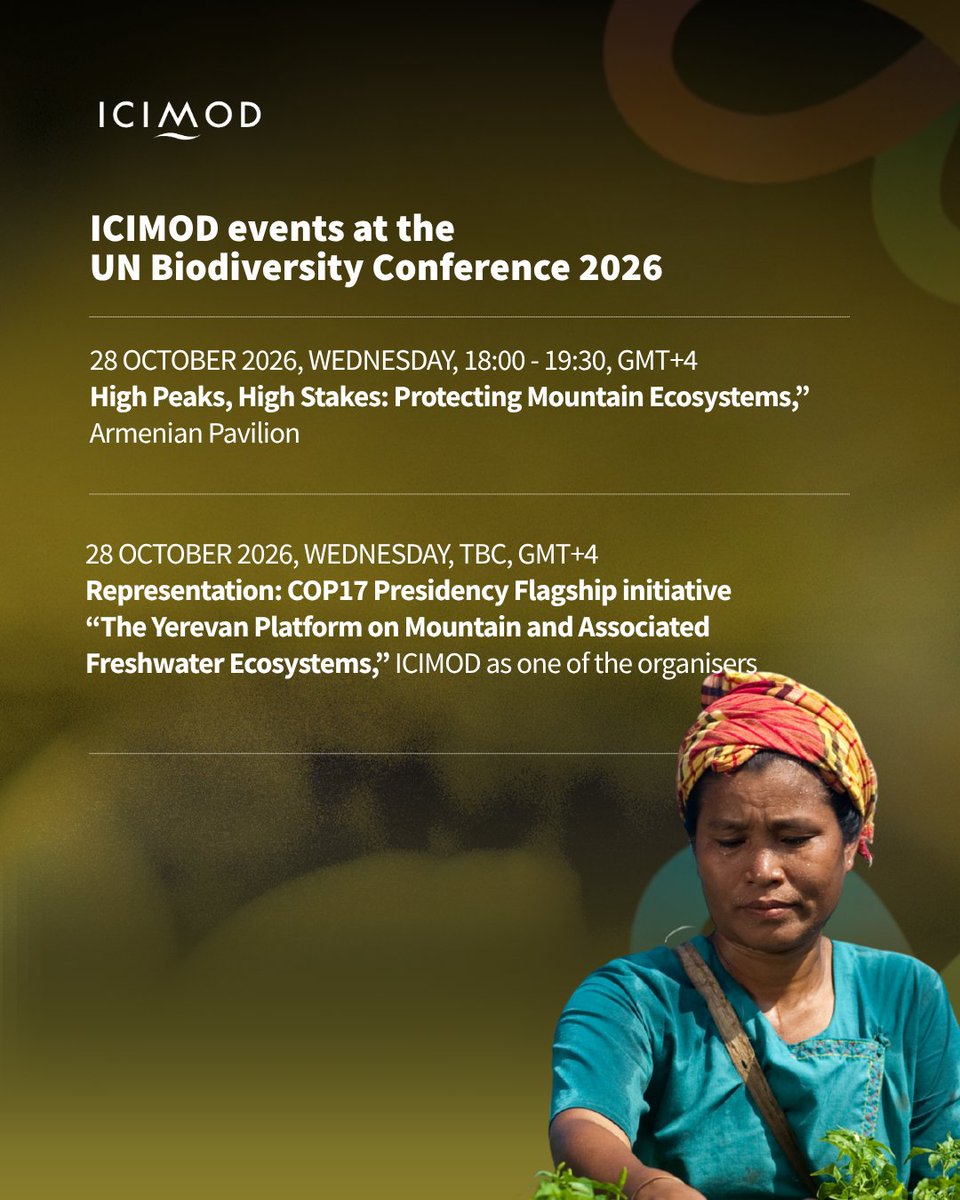
From 19 to 30 October,196 parties to the Convention on Biological Diversity (CBD) will gather in Yerevan, Armenia for the first global review of progress on the Global Biodiversity Framework at the Seventeenth Conference of Parties to the Convention on Biological Diversity.
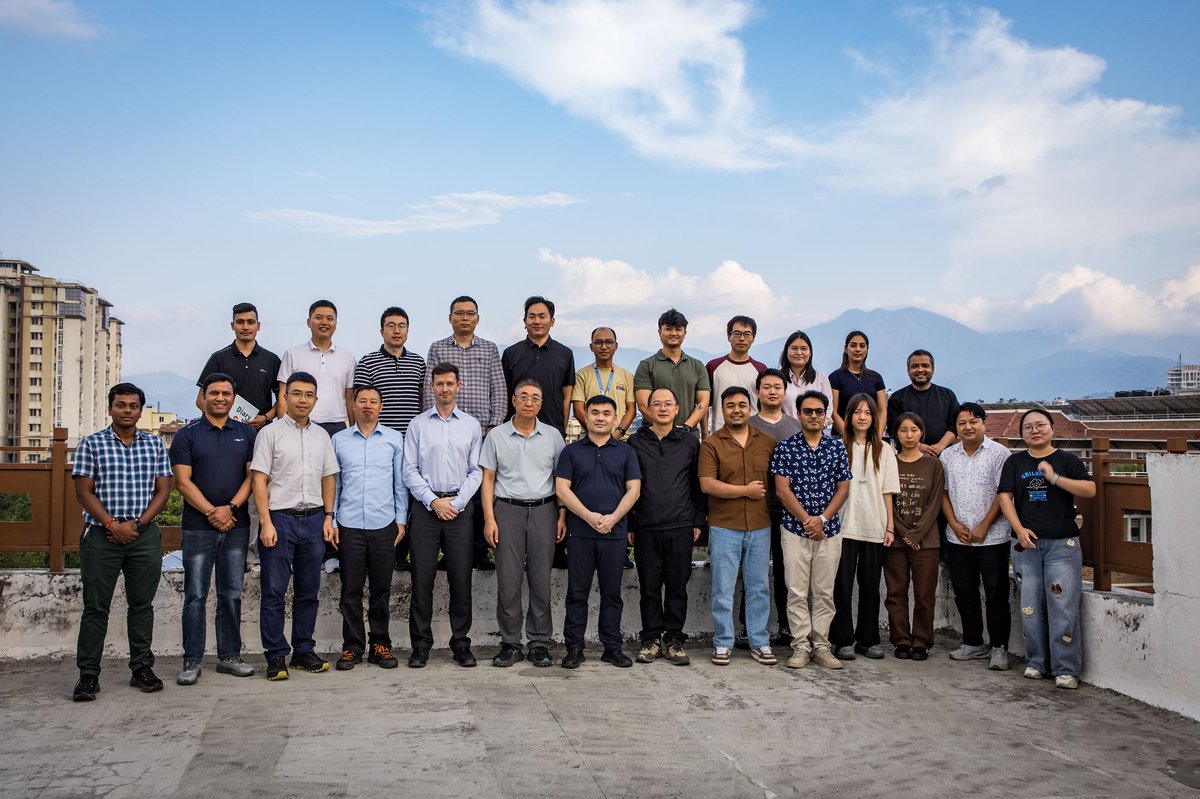
In early October, a team from ICIMOD, the Institute of Mountain Hazards and Environment (IMHE/CAS), Chengdu University of Technology, and Tribhuvan University began a three-part scientific expedition to map geohazards across key Nepal-China transit routes, led by ICIMOD and CNICIMOD.
The first leg covered the Tatopani -Zhangmu corridor, where the team mapped active landslide and debris flow risks threatening local communities and hydropower sites. The researchers inspected structural engineering measures at high-risk glacial lakes like Jialong Co, examining how lake-level drawdown works in practice to reduce glacial lake outburst flood (GLOF) risks.
As an intergovernmental knowledge platform, ICIMOD’s role is to connect frontline science with knowledge management and regional policy. By turning raw field observations into clear hazard assessments and practical warning systems, we work alongside our member states to build genuine climate resilience across mountain communities.
A few glimpses of the team in action on the ground. 👇
#ICIMOD #GLOF #DisasterRiskReduction #ClimateResilience #Himalayas #TransboundaryCooperation
This is happening in a region that is warming faster than the global average and where climate change is amplifying extreme weather events and natural hazards. More than 240 million people living in the Hindu Kush Himalaya, and 1.65 billion downstream, depend on these mountain systems.
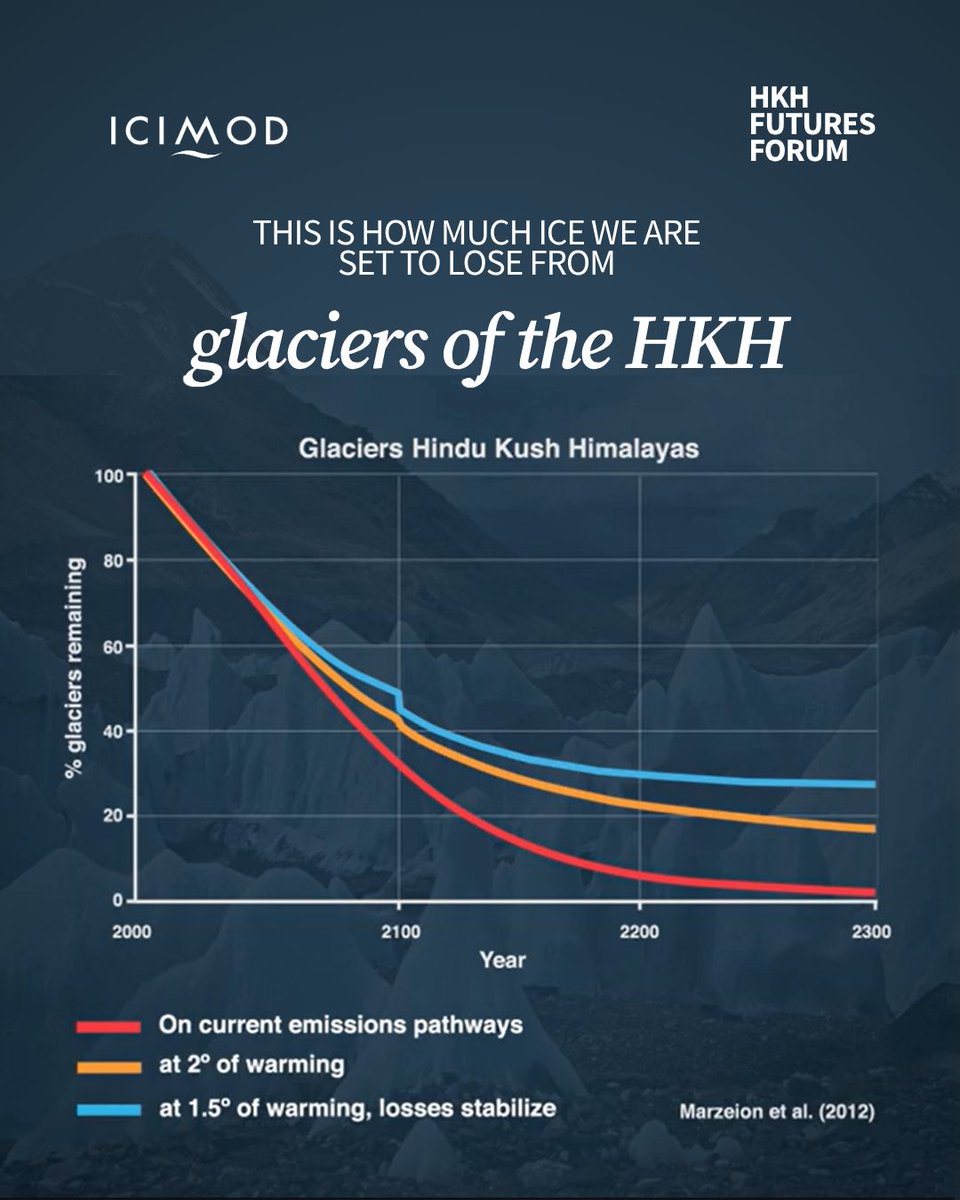
Scientists warn that, under current emissions pathways, HKH glaciers could lose up to 80% of their volume by the end of the century, increasing risks from floods, landslides, and glacial hazards across the region.
As climate risks accelerate across the Hindu Kush Himalaya, the need for regional dialogue and collective action has never been greater.
#HKHFUTURESFORUM2026
Since 2025, ICIMOD has established the Hindu Kush-Himalayan Futures Forum (H2F2), an informal but influential think-tank of eminent diplomats, academics, and experts drawn from ICIMOD’s member countries to provide high-level strategic advice and thought leadership.
The 2026 edition, its second chapter, has begun today in Pokhara, Nepal (15 to 18 October 2026), exploring pathways to strengthen regional cooperation and advance regional leadership.
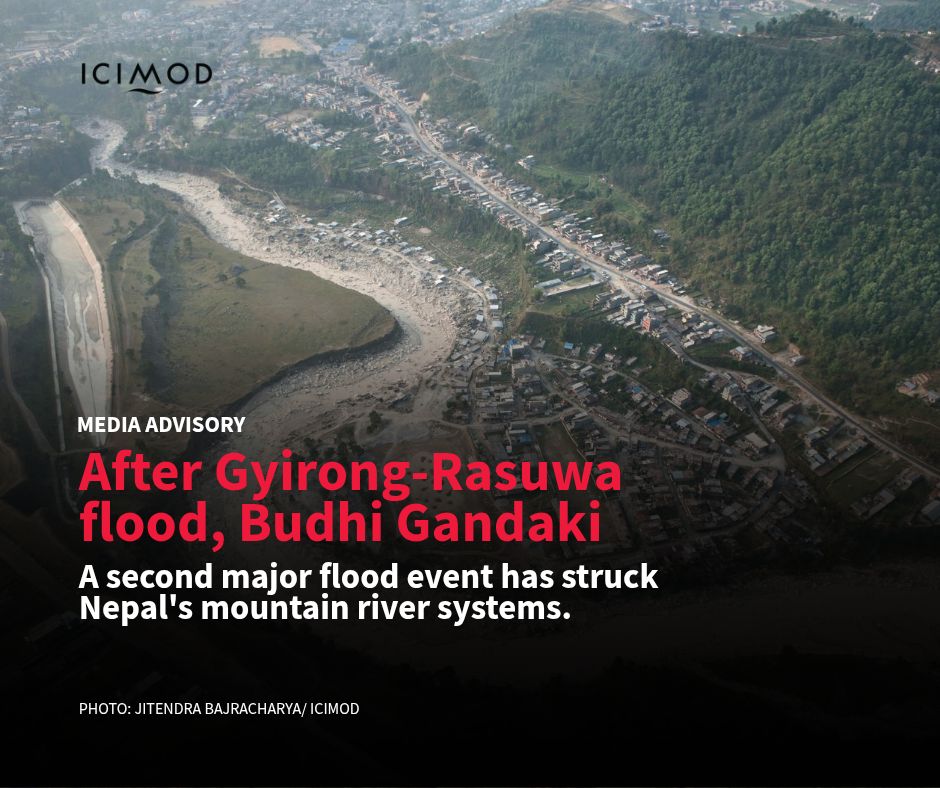
In just the past few weeks, Nepal has witnessed devastating mountain disasters. The catastrophic Bhote Koshi flood in Rasuwa and the recent Budhi Gandaki flood in Gorkha have demonstrated how cascading hazards involving glaciers, rockfalls, landslides, water, and sediment are becoming increasingly destructive in our mountains.
As the world marks the International Day for Disaster Risk Reduction and Nepal responds to a second major mountain disaster in less than seven weeks, a new scientific synthesis released today has found that the mountain slope responsible for the Gyirong-Rasuwa disaster was deforming by up to 40 centimetres between 7 July and 24 August 2026, Sentinel-1 InSAR satellite observations recorded up to 40 centimetres of line-of-sight deformation between 7 July and 24 August 2026, indicating measurable movement of the slope before failure.
The disaster killed at least 1,451 people and left 5,745 people missing in Nepal, according to the National Disaster Risk Reduction and Management Authority. Chinese authorities reported 43 deaths and 519 people missing.
The report, Understanding the Gyirong–Rasuwa disaster of 26 August 2026 was launched today by Pema Gyamtsho, Director General of ICIMOD, at Nepal’s National Conference on Disaster Risk Reduction, where policymakers, practitioners and researchers gathered to discuss lessons from recent disasters and emerging risks across the Himalaya.
Read the full press release and the report: https://t.co/y4E4qQd5wx
A flash flood swept through Nepal's Budhi Gandaki river system early on 11 October, carrying mud, sediment and debris downstream.
Preliminary accounts indicate that the failure of a temporary landslide blockage near Chumchet, Gorkha, may have triggered the event.
With search, rescue and evacuation efforts are underway, our prayers are with everyone affected. We stand in solidarity with the Government of Nepal providing technical support as required.
Read the full press release: https://t.co/PfTLvT2Tcf