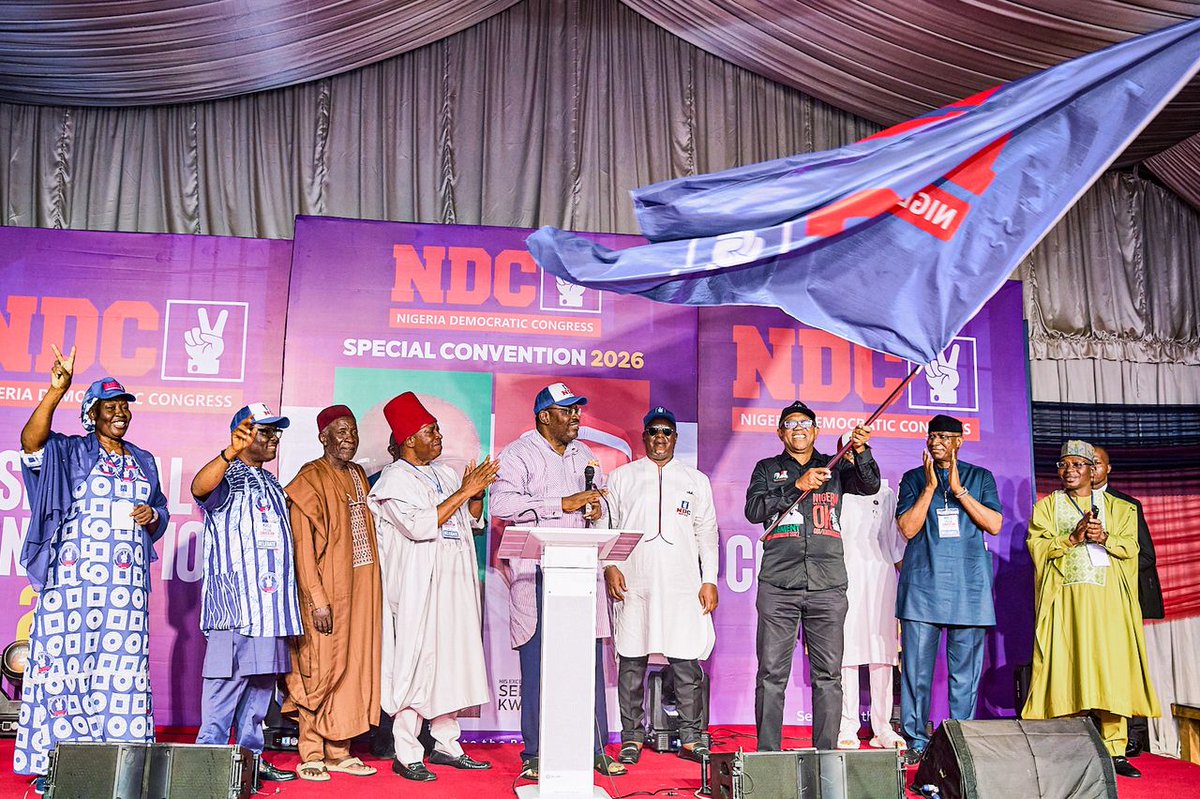
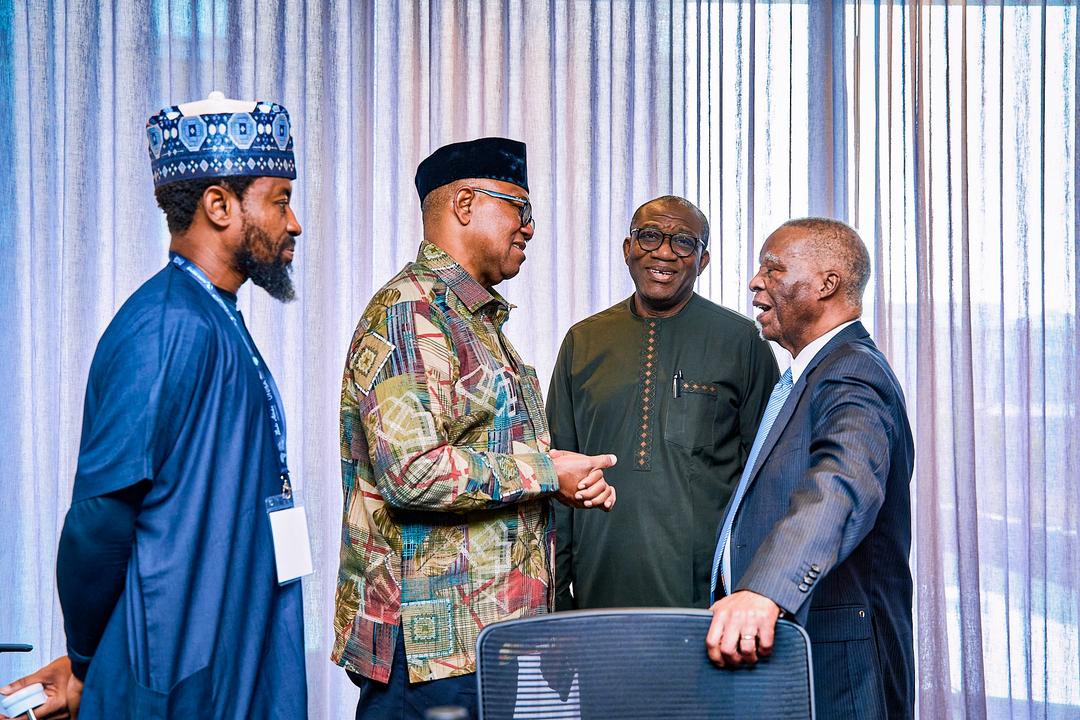
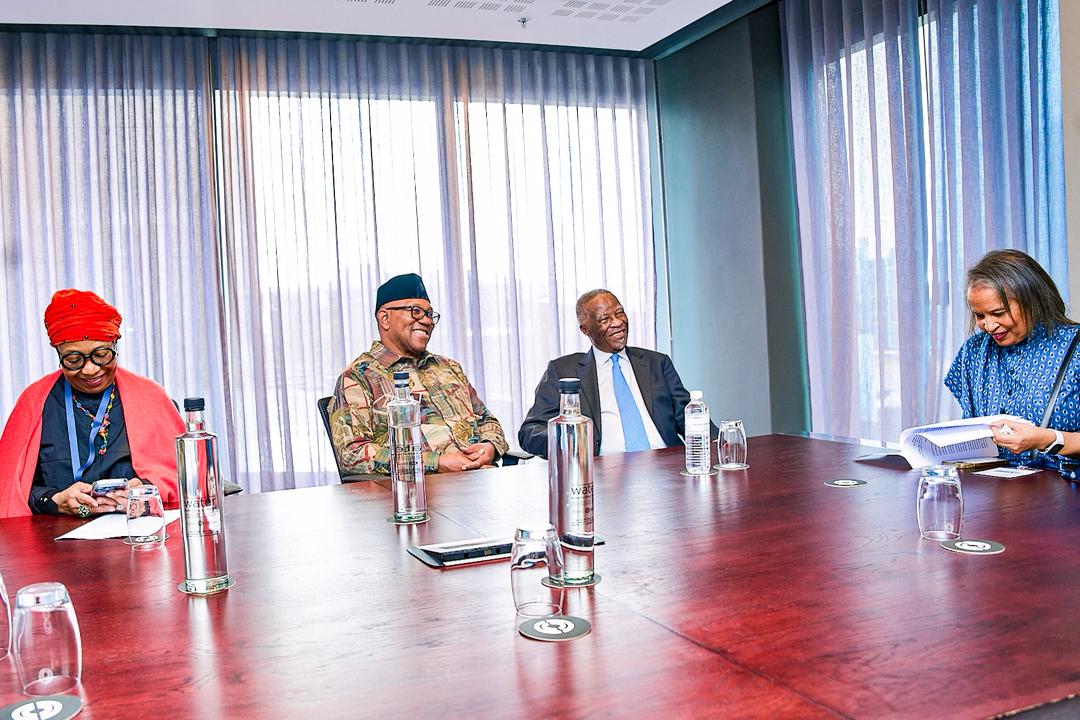
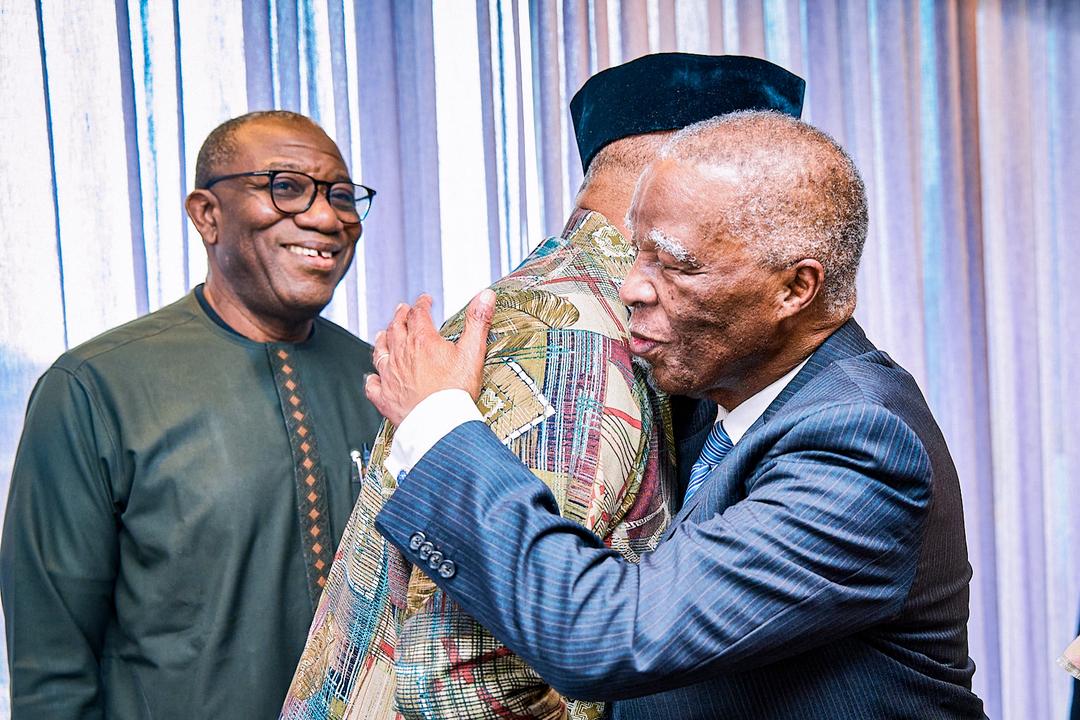
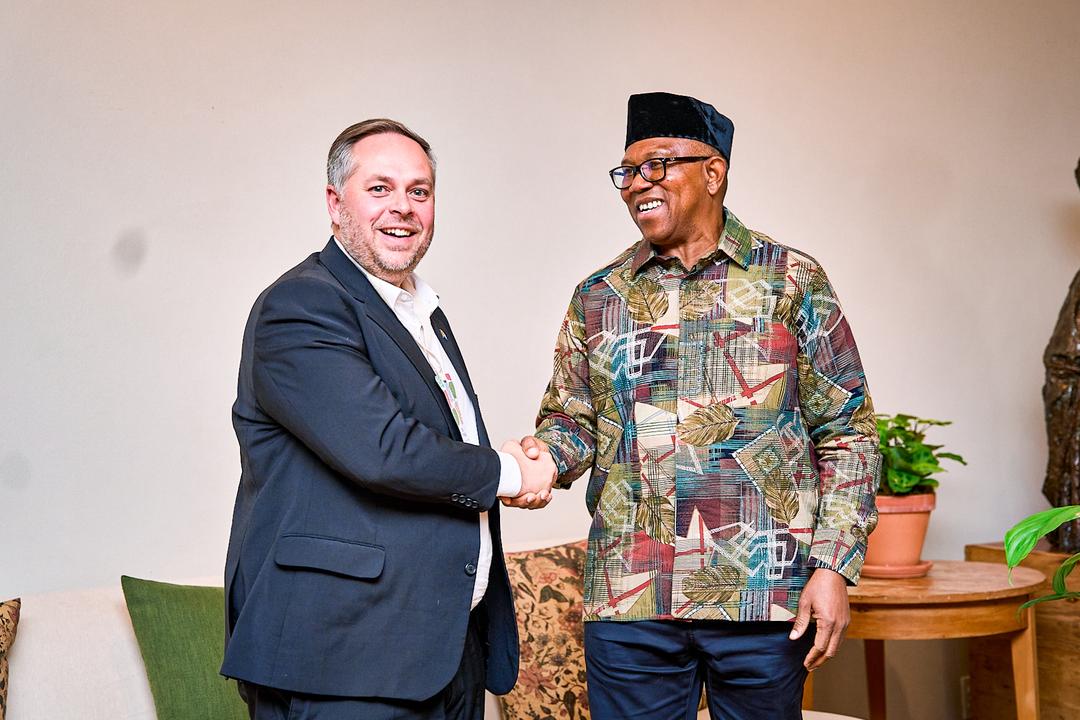
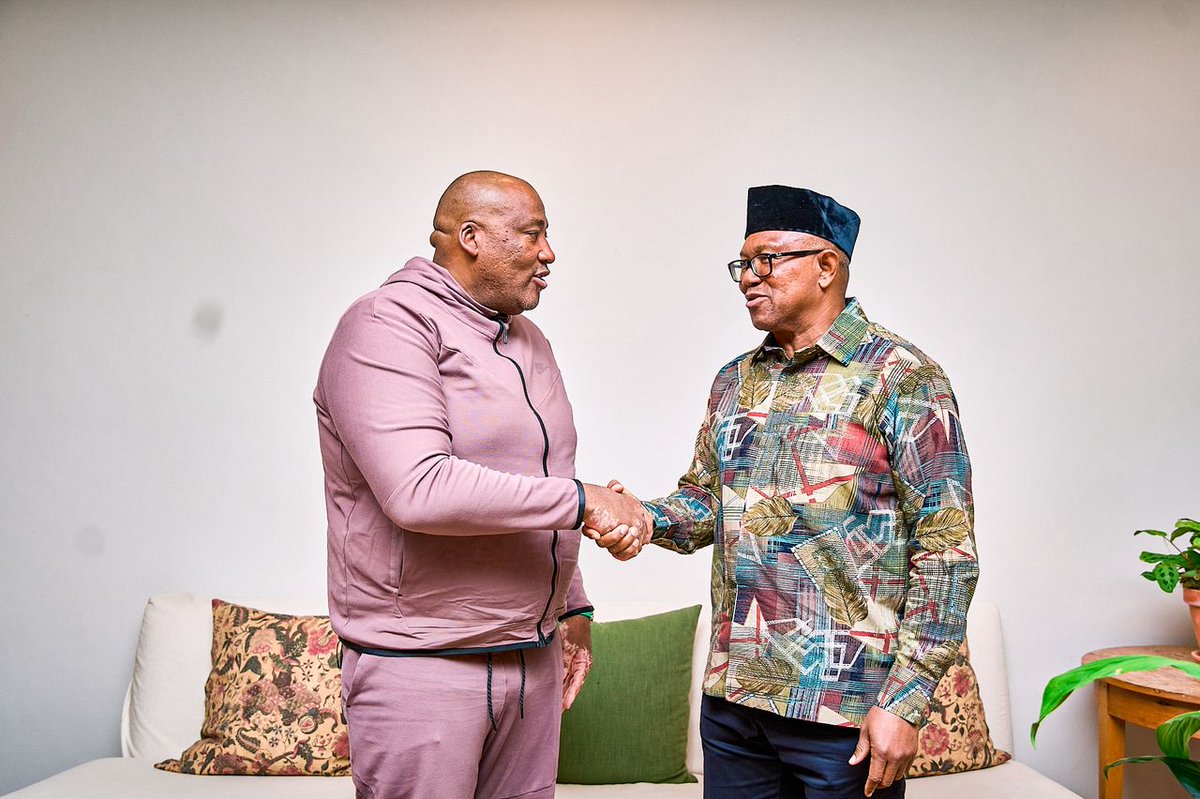
In continuation of my quest to deepen knowledge and impact positively on our society, yesterday June 10th, in London, I held a series of important engagements, including a fruitful meeting with Alex Vines, Director of the Africa Programme at the European Council on Foreign Relations (ECFR).
Our discussions focused on strengthening strategic relationships and fostering a deeper understanding of Africa’s evolving role in global affairs. It was emphasized that Africa must no longer be viewed merely through the prism of statistics or humanitarian concern, but as a serious and equal partner in shaping the future global order, much like India, Indonesia, and other emerging centres of influence.
During our engagement, it became increasingly clear that Africa, and Nigeria in particular, must be placed at the centre of international conversations on partnership, trade, governance, innovation, and sustainable development.
Constructive dialogue and mutual respect remain essential to building meaningful cooperation between Africa and the international community.
A New Nigeria is POssible. -PO
In a strong display of solidarity, the National Coordinator of the Obidient Movement, Dr. @YunusaTanko, joined hundreds of members of the Village Boys Movement (VBM), led by Maazi Tochukwu Ezeoke (@maaziezeoke), on a march through the streets of Abuja on Saturday to celebrate the emergence of His Excellency, Mr. @PeterObi, as the Presidential Candidate of the Nigerian Democratic Congress (NDC).
The march and collaborations reflected the growing momentum behind Peter Obi’s leadership and the shared aspiration of millions of Nigerians for a nation founded on competence, capacity, character, accountability, and good governance.
#PeterObi #VillageBoysMovement #ObidientMovement #VBM #NewNigeria
ACCEPTANCE SPEECH BY MR. PETER OBI FOLLOWING HIS NOMINATION AS THE PRESIDENTIAL CANDIDATE OF THE NIGERIAN DEMOCRATIC CONGRESS(NDC) – MAY 30, 2026
Protocols,
Esteemed citizens of Nigeria,
It is with deep humility that I accept the role of presidential candidate for our party.
I express my profound gratitude to the leaders of our party. His Excellency Seriake Dickson, the National Chairman, National Secretary and the National Working Committee, NWC members and members of our relentless supporters, and the Nigerian populace who have steadfastly kept the spirit of hope alive. I commend those who have made the journey from every region of our nation to convene here in Abuja.
I wish to assert unequivocally: a New Nigeria is Possible. This conviction has united us; it must serve as our compass on the challenging road ahead and sustain us through all trials we may face. This pivotal moment transcends the individual ambitions of Peter Obi; it concerns the essence of our nation and the future of our children. It is about rekindling hope for millions who have faced adversity yet remain committed to Nigeria.
Today, our nation finds itself at a crucial juncture, enveloped in uncertainty. Families are anxious about their safety; parents are concerned for their children's futures; and talented youth increasingly question their prospects in their homeland.
Businesses are struggling, communities are suffering, and an alarming number of citizens have lost faith in the very concept of governance. Yet, I stand before you filled with optimism and strong faith in the resilience of our people, for I firmly believe that a New Nigeria is possible.
UNITY
To realise this New Nigeria, we must first mend the foundational elements essential for the success of any nation.
Nigeria cannot advance while fragmented by ethnic, religious, regional, or narrow political divides. We may communicate in different languages and practise diverse faiths, but we share a singular destiny under one flag. Our diversity should not be a source of division; rather, it is among our greatest strengths.
We should build bridges where others erect barriers, replace mistrust with confidence, division with understanding, and resentment with a collective purpose. A united Nigeria is indispensable. As Will Durant wisely pointed out, "A great civilisation is not conquered from without until it has destroyed itself from within." We must never self-destruct. We must heal, unify, and progress together.
INSECURITY
In terms of security, the situation in Nigeria has considerably worsened. The global terrorism impact assessments ranked Nigeria as the 8th most affected nation in 2022, 6th in 2024, and 4th in 2026.
Yet, for many years, Nigeria garnered global recognition as a reliable contributor to peacekeeping, regional stabilisation, and conflict resolution. Our troops have not only displayed bravery but have also shown professionalism, discipline, resilience, and empathy in the most challenging operational contexts. Our officers and personnel have successfully commanded multiple international forthe ces, safeguarded vulnerable civilian populations, monitored ceasefires, reinstated constitutional order, and contributed to rebuilding efforts.
Nigeria became one of the leading contributors of troops from Africa to UN peacekeeping missions and earned widespread admiration for operational effectiveness and leadership in various countries, including Rwanda, Sudan, Liberia, Sierra Leone, Mali, Western Sahara, Congo, Lebanon, Cambodia, Haiti, and Kuwait. At one pointin a Nigeria, Lt. General Isaac Obiakor (rtd) even led global peacekeeping initiatives.
We must address insecurity with resolve and urgency, for no nation can thrive while its citizens live in trepidation. The primary responsibility of the government is to ensure the safeguarding of lives and property.
This Southern Africa trip with Mr. Peter Obi, from Lagos to Johannesburg to Cape Town and back has been, for me, far beyond movement across cities and meetings across borders. It has been an opportunity for deep observation, learning, reflection, and a closer understanding of leadership, nation-building, and the burden of carrying the hopes of people across different spaces and circumstances.
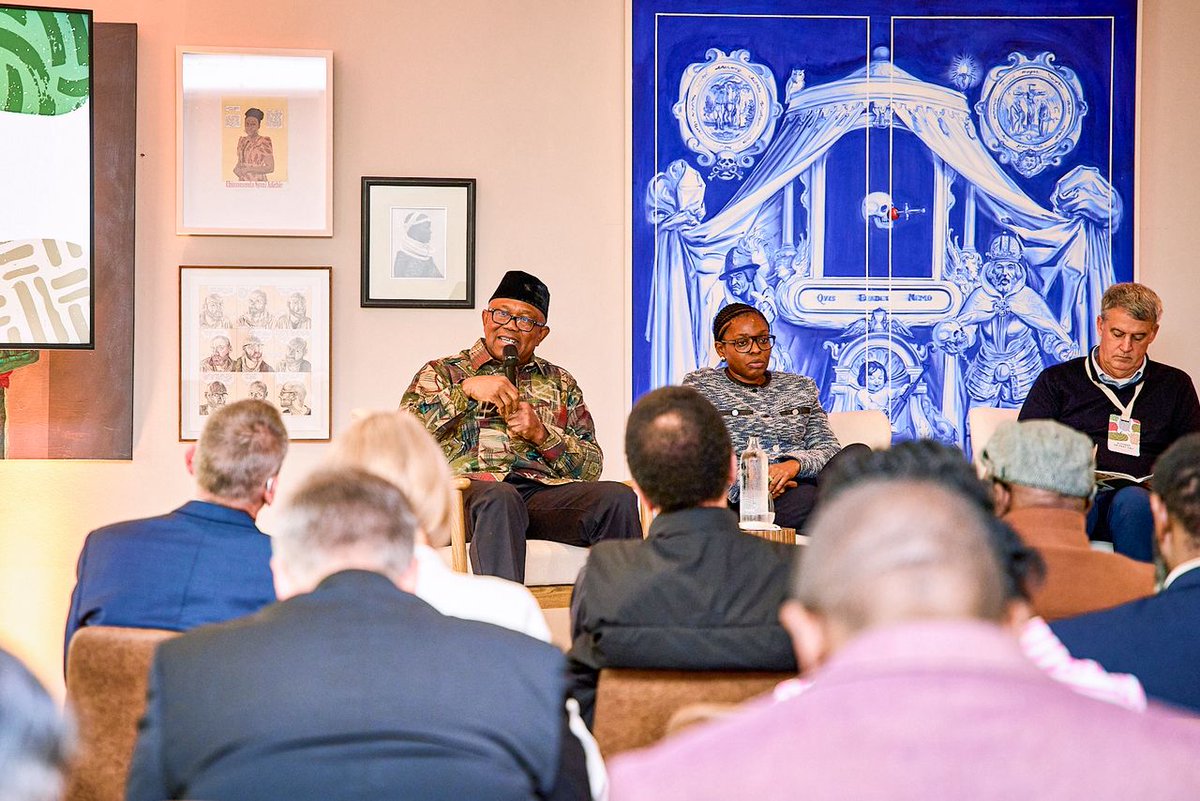
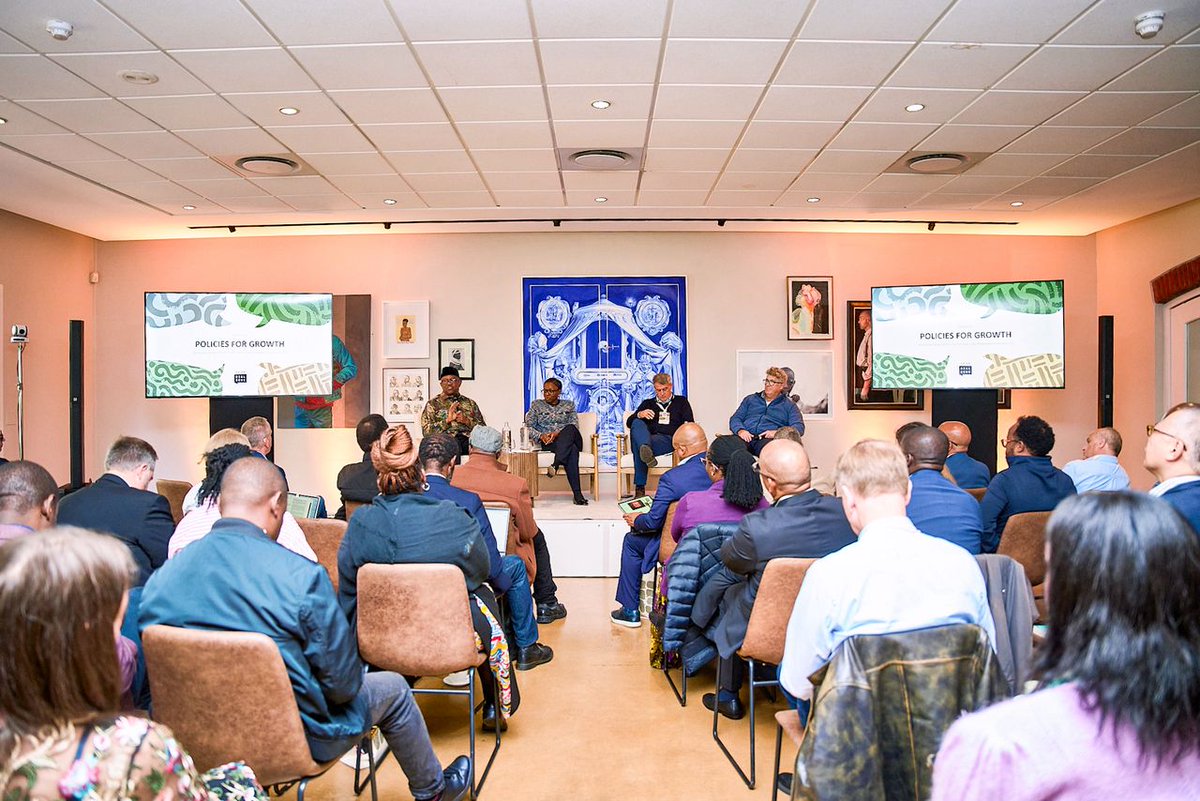
Beginning in Cape Town, at the Spier dialogue on Africa’s growth and development, I watched Mr Peter Obi engage leaders from across the continent and beyond with remarkable humility and depth. Mr Peter Obi introduced me to the Mayor of Cape Town, political leaders, diplomats, academics, development experts, and participants who had come from different parts of Africa, Europe, and America. What stood out immediately was not merely recognition, but the genuine warmth, respect, and attentiveness with which people received him. Across ideological and political divides, there was a visible acknowledgment of his consistency, clarity, and moral standing.
For me, however, the most profound moments were often not on the podium, but in the quieter spaces, observing how Mr Peter Obi listens, the questions he asks, and the seriousness with which he approaches even the smallest conversations. Whether speaking to former Presidents, current ministers, political leaders, diaspora Nigerians, or ordinary citizens, his first instinct is always to ask questions, How are Nigerians faring? What are the challenges? How are our people treated? What opportunities exist? What lessons can Nigeria learn? What systems are working? What systems are failing?
There is something deeply instructive about seeing a leader genuinely curious, genuinely listening, and genuinely concerned. At the dialogue in Cape Town, when Mr Peter Obi delivered his key address on policies for growth in Africa, he spoke with clarity about the tragedy and paradox of a continent so blessed with natural and human resources still struggling under the weight of poor leadership, corruption, weak institutions, and misplaced priorities. But what struck me most was how seamlessly he connected the broader African conversation with the realities at home in Nigeria.
Mr Peter Obi spoke about leadership not as an abstract concept, but as a lived responsibility. He explained how the quality of governance within a nation ultimately reflects how its citizens are perceived and treated beyond its borders. That leadership at home shapes dignity abroad. That when governance fails, citizens often carry the burden internationally. Yet even while addressing difficult truths, he consistently defended the integrity, resilience, brilliance, and hard work of Nigerians everywhere. Mr Peter Obi raised hope while still confronting reality. He challenged systems without condemning people. He spoke honestly, but never hopelessly.
In Johannesburg and Cape Town, the interactions with Nigerian communities were deeply emotional and revealing. Many shared concerns, fears, frustrations, and experiences about migration, identity, economic hardship, and social tensions. Yet in those interactions, I also saw something else, the trust and emotional connection people have with Mr Peter Obi. Not merely politically, but personally. People spoke to him as someone who understands their pain and still believes in their future.
Watching Mr Peter Obi’s engagements with South African ministers and political leaders was equally enlightening. The discussions were thoughtful, respectful, and frank. There was no grandstanding, no unnecessary drama, just serious conversations around governance, migration, law, regional cooperation, and the future of Africa. Even in disagreement, there was mutual respect.
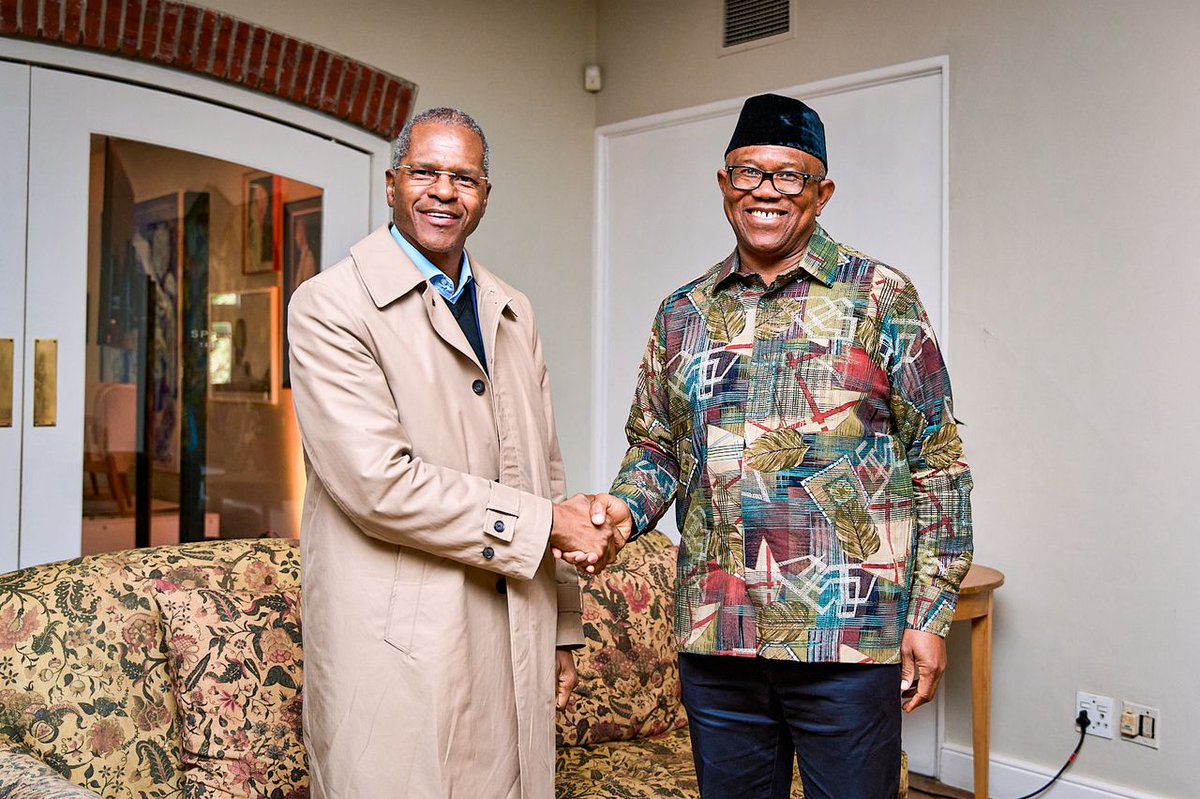
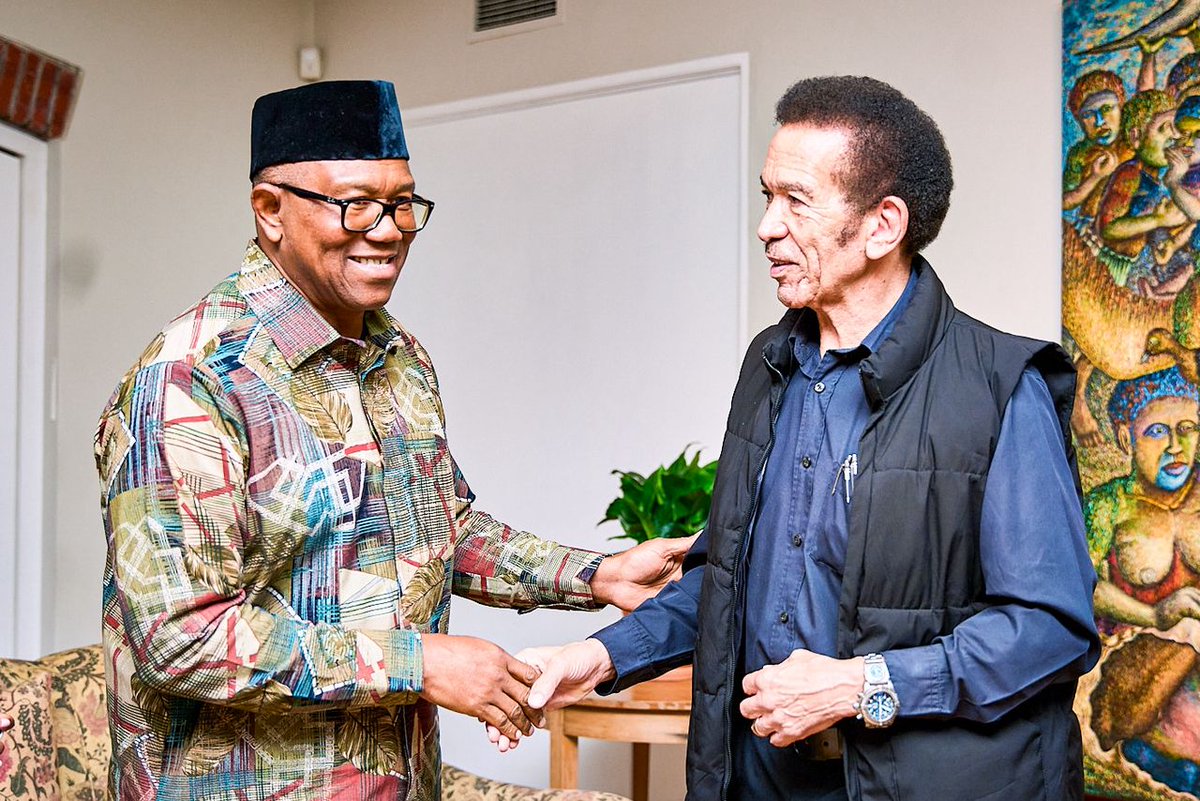
My final engagement before leaving Capetown for Johannesburg yesterday, I had the privilege of meeting two distinguished former leaders, President Ian Khama of Botswana and President Thabo Mbeki of South Africa, before departing Cape Town for Johannesburg yesterday.
This meeting was an opportunity for me to express my heartfelt appreciation for their positive comments on the recent immigration issues in the region and their continued advocacy for peace and unity among African nations.
Both Mr Khama and Mr Mbeki continue to hold significant respect across the continent due to their remarkable contributions, both during and after their presidencies.
During my audience with Mr Mbeki, I also reconnected with my good friend, former Ekiti State Governor Dr Kayode Fayemi, who delivered a keynote address at the Thabo Mbeki Africa Day lecture, focusing on the themes of rebuilding unity and revitalising institutions throughout the continent.
This event was organised by the Thabo Mbeki Foundation. -PO
Yesterday in South Africa, after meeting with the ministers in the morning, I delivered a guest speech at the Spier Dialogue Event on “Policies for Growth in Africa” in Cape Town, where I reiterated that Africa has no reason to remain poor. Our continent is blessed with enormous natural and human resources. Africa holds huge mineral reserves, possesses over 60% of the world’s uncultivated arable land, and has the youngest population globally. These are not liabilities; they are strategic assets for economic transformation.
Yet, despite these enormous advantages, Africa continues to lag due to poor leadership, corruption, weak institutions, and the high cost of governance.
Africa must now look ahead and move forward with decisive action. We must shift our focus from politics and endless election cycles to productivity, development, and nation-building. The future of Africa lies in investing aggressively in Human Development Index (HDI) indicators, especially education, healthcare, and lifting people out of poverty.
Today, many African countries still record low life expectancy, high infant mortality, widespread unemployment, and growing poverty levels. Small and medium-scale businesses, which should be the engine of growth, are collapsing under harsh economic conditions, poor infrastructure, and policy inconsistency.
What Africa needs is competent leadership with the capacity, compassion, and commitment to prioritise production over consumption, and development over politics. If we invest in our people, strengthen institutions, reduce the cost of governance, combat corruption, and create an environment where businesses can thrive, we can build a more productive, secure, democratic, and prosperous Africa that works for all its people.
A New Africa is Possible. -PO
I like to categorically state that the Obidient Movement is not directorate of any particular political party. Any individual or individuals claiming to be leaders of this non-existent directorate are simply not members of the broader Obidient Movement.
After speaking with Nigerians in Cape Town yesterday, I was able to have meaningful discussions this morning with three South African ministers and political party leaders regarding the ongoing challenges related to immigration, regional collaboration, and fostering peaceful coexistence between our nations.
I had the pleasure of meeting with Mr Leon Schreiber, the South African Minister of Home Affairs and a prominent figure in the Democratic Alliance; Mr Velenkosini Hlabisa, the Minister of Cooperative Governance and Traditional Affairs and leader of the Inkatha Freedom Party (IFP); and Mr Gayton McKenzie, the Minister of Sports, Arts and Culture and leader of the Patriotic Alliance (PA).
Our conversations were productive and candid, focusing on the current challenges that affect both countries—particularly those related to migration, economic strains, youth unemployment, security issues, and the rising tensions faced by African foreigners in South Africa.
I firmly believe that Nigeria and South Africa, both prominent African nations, must enhance dialogue, bolster cooperation, and seek solutions based on justice, mutual respect, and adherence to the rule of law. In challenging times, leaders and citizens alike need to demonstrate responsible leadership, compassion, and restraint.
We collectively stressed the importance of law-abiding behaviour, avoiding violence, resisting hate or provocation, and allowing lawful institutions to address grievances through democratic and constitutional processes, regardless of the challenges we face.
The progress of Africa hinges on our ability to create unity, foster economic inclusivity, invest in our communities, and uphold the dignity of every African, no matter where they live. -PO
Demanding good governance should never lead to humiliation, intimidation, or torture. I have always believed that the child of nobody can become somebody without knowing anybody, but the reality of our system has made that dream difficult for millions of Nigerians.
My crime was believing in a better Nigeria and to demand accountability, justice, and good governance. What I went through, and what I am still going through, has tested me emotionally, mentally, and physically, but it did not break me.
Instead, it made me stronger.
This experience has strengthened my belief that Nigeria can still become the country of our dreams — a nation where hard work, honesty, and dedication matter more than connections or power.
While the matter remains before the court, I will continue to respect the legal process and remain hopeful that justice will prevail.
Nigeria will be great again. Do not give up on our country.
Someday, the child of nobody will truly become somebody without knowing anybody.
God bless the Federal Republic of Nigeria 🇳🇬
Justice will never be cracked.
Igbos are the real integrity people in Nigeria. They said Igbos can do anything for money but Nnamdi Kanu surprised them. Governor Amuneke surprised them. Odumodublvck surprised them. There is limit to rubbish an Igbo man can tolerate. Ezi aha ka ego is an Igbo qoute.
@MrOkoye_Nnamdi@SadiqMaunde Are you guys really normal? What did he do for Peter obi, every reasonable Nigerian is fighting for the betterment of the country, not doing for Peter obi, can anyone do what Peter obi does for Nigerian?
I am so glad that what we have been saying has been made cleared by his excellency Rabiu musa kwankwanso in his words
“I am convinced that Peter Obi is truly ready for a united Nigeria. Many people have twisted what happened in Imo State the issue of the ID CARD / TAG given to northers, I was the one who stepped in . You have all been hearing my interviews, the ones I have done and I am still doing.
There is no way people will say Northerners were being targeted without mentioning that I stepped in to resolve the matter. I, Rabiu Kwankwaso, intervened and settled the issue. It was not Anambra, it was not Peter Obi it was an issue in Imo State, and I was the one who stepped in.
The person involved is a friend of ours from the North. I do not know what happened to him maybe power got into his head or something else happened.
I personally went to him and told him that what he was doing would not work, and that others could also retaliate by doing the same thing. We discussed it, laughed over it, shook hands, and everything was settled peacefully. I was the one who arranged and resolved the matter.
But despite all this, people still say Peter Obi does not like the North or that he hates Northerners. All those claims are false. They are huge and deliberate lies.
“I’m angry because of you Nigerians, not because of our politicians, because they have already shown us that they do not care about us. As Nigerians, go and collect your PVCs, that is the only noise we need right now.”
— Nollywood Actor Emeka Ike.
State visits by Leaders are not tourism, and diplomacy is not a fashion parade. Every foreign trip undertaken by a government must deliver measurable benefits to the people, including investments, technology transfer, trade agreements, factory expansion, industrial partnerships, and job creation.
During President Trump’s recent visit to China, the American delegation reportedly included a few top government officials, and many of the biggest figures in global business and technology:
Consequently, huge trade deals worth several billion dollars including about 200 Boeing orders were achieved.
The list of the entourage included
1. Donald J. Trump – President of the United States
2. Marco Rubio – Secretary of State
3. Pete Hegseth – Secretary of Defence
4. Elon Musk – CEO, Tesla & SpaceX
5. Jensen Huang – CEO, Nvidia
6. Tim Cook – CEO, Apple
7. Larry Fink – CEO, BlackRock
8. Stephen Schwarzman – CEO, Blackstone
9. Kelly Ortberg – CEO, Boeing
10. Brian Sikes – CEO, Cargill
11. Jane Fraser – CEO, Citigroup
12. Larry Culp – CEO, General Electric
13. David Solomon – CEO, Goldman Sachs
14. Sanjay Mehrotra – CEO, Micron Technology
15.Cristiano Amon – CEO, Qualcomm
16. Dina P. McCormick – President of Meta
17. Ryan McInerney – CEO, Visa
18. Michael Miebach – President, Mastercard
19. Jim Anderson – CEO, Coherent
20. Jacob Thaysen – CEO, Illumina
That is how serious nations approach diplomacy, by aligning foreign policy with economic expansion, industrial growth, innovation, and national productivity.
I hope that lessons can be learned from these recent visits comparing them with the President of Nigeria’s recent state visit to the United Kingdom.
A large entourage of politicians, aides, and government officials travelled, yet Nigerians are still asking a simple question: what exactly did Nigeria bring home?
Which factories are coming to Nigeria?
What power, technology, manufacturing, agricultural, or industrial agreements were secured?
How many direct jobs will this visit create for Nigerian youths?
What investments were attracted?
What measurable economic outcomes can the ordinary Nigerian point to?
The delegation reportedly included:
1. President Bola Tinubu
2. Senator (Mrs) Tinubu
3.12 governors
4.9 ministers
5.7 members of the National Assembly
6. Over 20 senior State House staff
7. Over 30 security personnel
8. Over 10 domestic staff
9. Several supporters and associates
It is not enough to ride horses, wear matching uniforms, attend royal banquets, and release glossy photographs. Symbolism without substance cannot feed hungry citizens.
Today, Nigeria is in decline, battling serious insecurity, food insecurity, unemployment, a weakened naira, declining industrial productivity, and worsening poverty.
At a time when millions of Nigerians struggle daily to afford food and survive economic hardship, every kobo spent on foreign trips must produce tangible national value: investments, factories, jobs, exports, infrastructure, and economic opportunities.
Nigeria needs leadership that is focused less on optics and more on productivity; less on ceremony and more on measurable economic results.
A New Nigeria is POssible. -PO