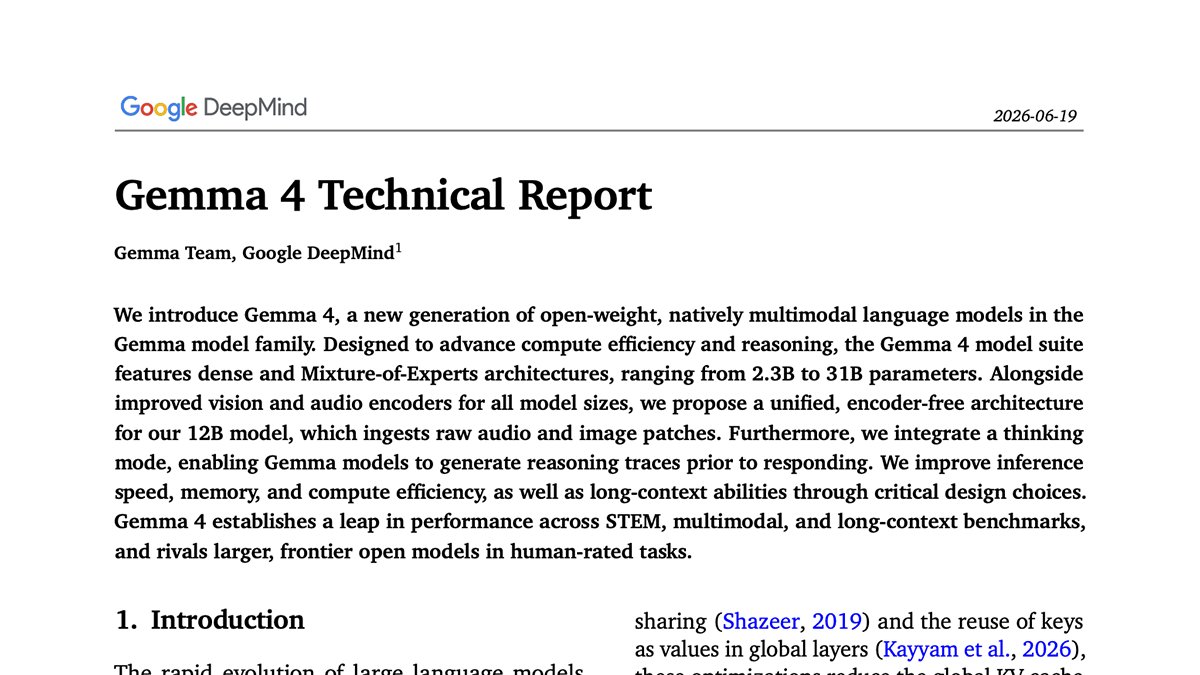
Just dropped: The Gemma 4 Technical Report!
Dive into the decisions behind our latest open-weight multimodal models, Gemma 4 (E2B–31B). Discover details on how the Gemma team approaches architecture, efficiency and responsibility. The report also covers the recent encoder-free 12B variant, quantization-aware training and multi-token prediction (MTP) drafters.
The biggest breakthroughs rarely arrive on your timeline, they arrive when you've become the person ready to receive them.
Sometimes what's taking the longest to arrive becomes the greatest blessing because of who you become while waiting.
What are you believing for right now? 🙏✨
I just found a tool that makes your Claude Code sessions basically unlimited. It's called 9Router and it's trending on GitHub right now.
It sits between Claude Code and 60+ AI providers. One local endpoint. That's it.
When your Claude Code quota runs out, it switches to a cheaper model.
When that runs out, it drops to a completely free one. You don't notice the switch. Your session never stops.
→ Works with Claude Code, Cursor, Codex, Cline, Copilot, and more. One setup covers your entire stack.
→ Built-in token compression saves 20 to 40% on every request. Same answers, fewer tokens to get there.
→ Tracks your quota per provider in a live dashboard so you always know where you stand.
→ Translates between OpenAI, Claude, and Gemini formats automatically. Any tool talks to any provider.
The free tier alone is wild. Kiro gives you unlimited Claude Sonnet 4.5. iFlow gives you unlimited Kimi, GLM, and MiniMax. Qwen gives you unlimited Qwen 3 Coder.
Setup is two steps. Install it, point your tool at localhost:20128. Done.
For anyone burning through Claude credits mid-session or tired of hitting rate limits at 2am, this changes what's possible on a near-zero budget.
The U.S. Department of Energy instructed AI data centers to stop using electricity from the main power grid.
As temperatures exceeded 100 degrees Fahrenheit across much of the eastern United States Energy Secretary Chris Wright ordered data centers and other major electricity consumers on the PJM grid to switch to backup generators. The purpose was to conserve power so that homes could continue running air conditioners during one of the hottest periods of the year.
The PJM grid serves 13 states and includes northern Virginia which hosts the largest cluster of data centers in the world. These centers support AI systems cloud computing streaming services and much of the internet but they require massive amounts of electricity.
Officials explained that backup generators would ease strain on the grid and help avoid blackouts while millions of air conditioners operated at peak levels.
This action illustrates how the rapid growth of AI infrastructure is starting to compete with regular household electricity needs during extreme heat waves.
There are drawbacks to the solution. Most backup generators burn diesel or natural gas which creates more local air pollution than power from large plants. The region also has limited battery storage compared to states like California and Texas making it challenging to handle demand surges with cleaner sources.
As AI data centers expand across the country experts predict that extreme heat events will increasingly challenge the ability of the power grid to meet both technological and everyday needs.
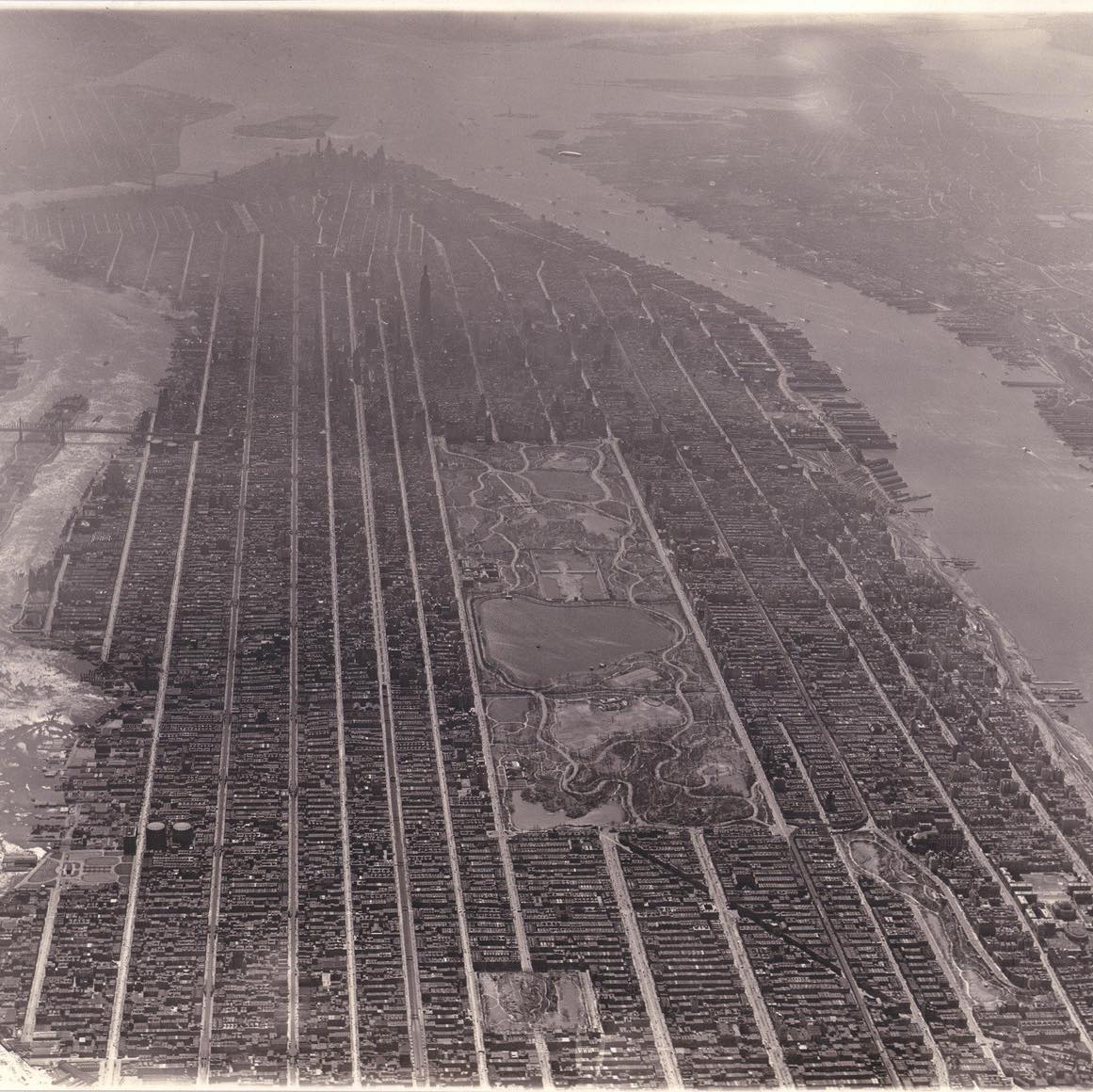
Manhattan, 1931 — before the skyline became a forest of towers.
In this aerial view, Central Park cuts through a dense city of mostly low- and mid-rise buildings, while only a few skyscrapers rise above the grid — including the newly completed Empire State Building.
What makes the image even more striking: Manhattan had more residents in the early 20th century than it does today. Its population peaked in 1910 at over 2.3 million, compared with about 1.69 million in the 2020 census.
Photo: John Victor Dallin / Hagley Museum and Library.