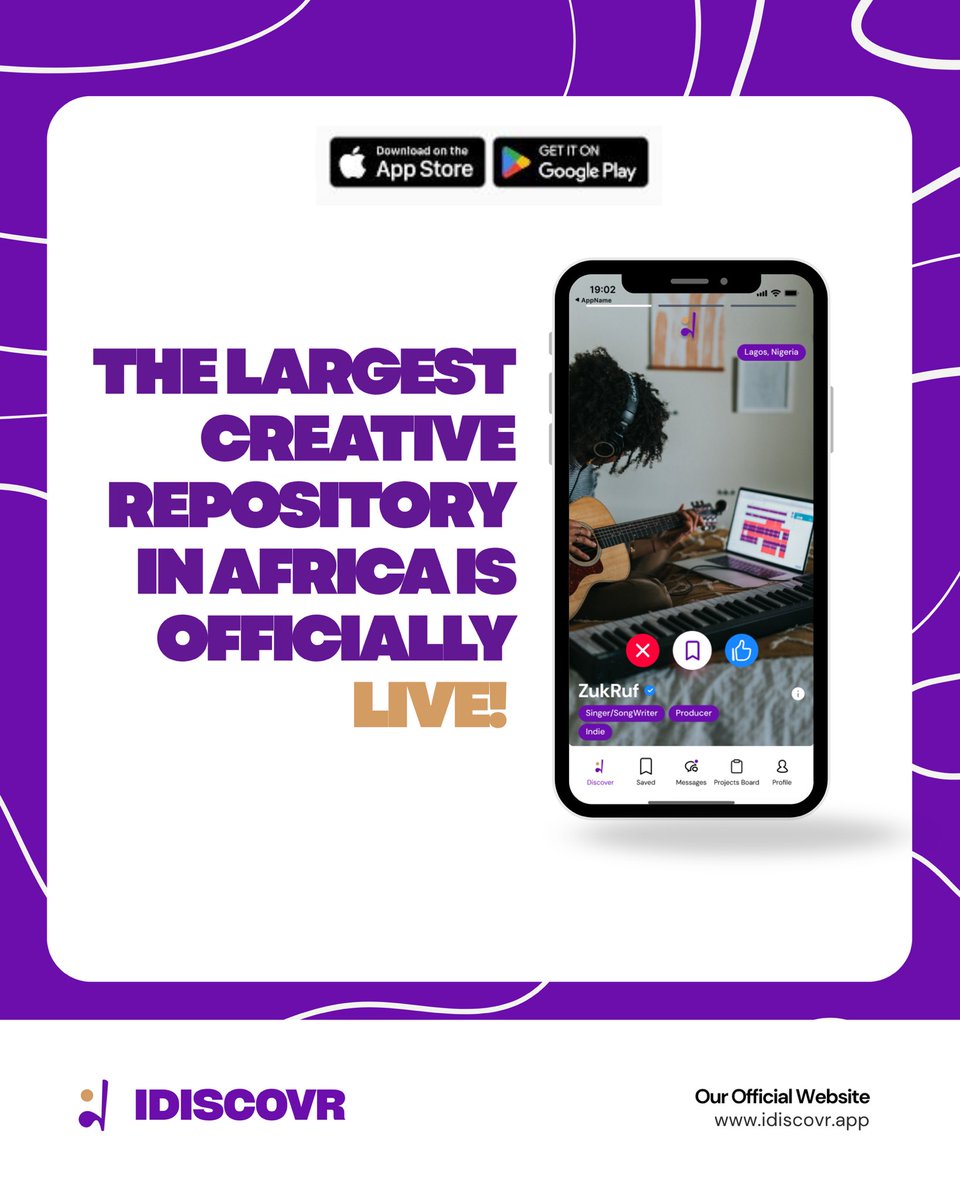
The largest creative repository in Africa is officially LIVE!
Yesterday, we walked through a sample scenario for using iDiscovr, whether you are a creative looking for the exact right talent to finish a track, or an industry executive scouting talents.
There is a difference between people who listen to your music and people who actually follow your music.
Spotify knows this and if you’re an independent artist, you should probably know it too. Your monthly listeners might be telling you little compared to what is more important
Two resources you should check out as a developing artist
1/ Spotify: Super Listeners – Your Guide to Developing Fans
https://t.co/1xLCPBOigb
2/ Spotify: Audience Segments explained
https://t.co/7nFMXfeDMf
Two resources you should check out as a developing artist
1/ Spotify: Super Listeners – Your Guide to Developing Fans
https://t.co/1xLCPBOigb
2/ Spotify: Audience Segments explained
https://t.co/7nFMXfeDMf
There is a difference between people who listen to your music and people who actually follow your music.
Spotify knows this and if you’re an independent artist, you should probably know it too. Your monthly listeners might be telling you little compared to what is more important
Firstly, by definition, a UG artiste is one who operates largely outside the mainstream music ecosystem, with limited mainstream visibility and commercial reach.
Now, using that as the basis for this argument, I wouldn’t necessarily classify Abefe as a UG artiste anymore.
Abefe may have emerged from the underground, but the visibility and audience attention surrounding him have moved him into a different category.
We need to stop using UNDERGROUND as a synonym for UPCOMING (which some people still have a problem with) They are not the same.
Firstly, by definition, a UG artiste is one who operates largely outside the mainstream music ecosystem, with limited mainstream visibility and commercial reach.
Now, using that as the basis for this argument, I wouldn’t necessarily classify Abefe as a UG artiste anymore.
There is a difference between people who listen to your music and people who actually follow your music.
Spotify knows this and if you’re an independent artist, you should probably know it too. Your monthly listeners might be telling you little compared to what is more important
Labels don’t just want to know how many people you can reach. They want to know what happens after you reach them. Do listeners come back? Do they become invested in your next move?
You don’t need a label to start understanding your audience.
There is a difference between people who listen to your music and people who actually follow your music.
Spotify knows this and if you’re an independent artist, you should probably know it too. Your monthly listeners might be telling you little compared to what is more important
Next time you open Spotify for Artists, don’t rush to screenshot your monthly listeners.
Go to Audience -> Segments
Look at your monthly active listeners, previously active listeners and super listeners. Watch how those numbers change.
A label observing an artist is not just listening to the music. Where are they listening from? And what are they doing after they listen to the song?"
A minor accessory that most independent artists should probably be aware of.
Shazam.
The interesting thing is that you don’t have to wait for a label to start thinking this way.
Claim your Apple Music for Artists profile. Study your Shazam numbers. Pay attention to your cities. Compare the activity with your other platforms.
A label observing an artist is not just listening to the music. Where are they listening from? And what are they doing after they listen to the song?"
A minor accessory that most independent artists should probably be aware of.
Shazam.