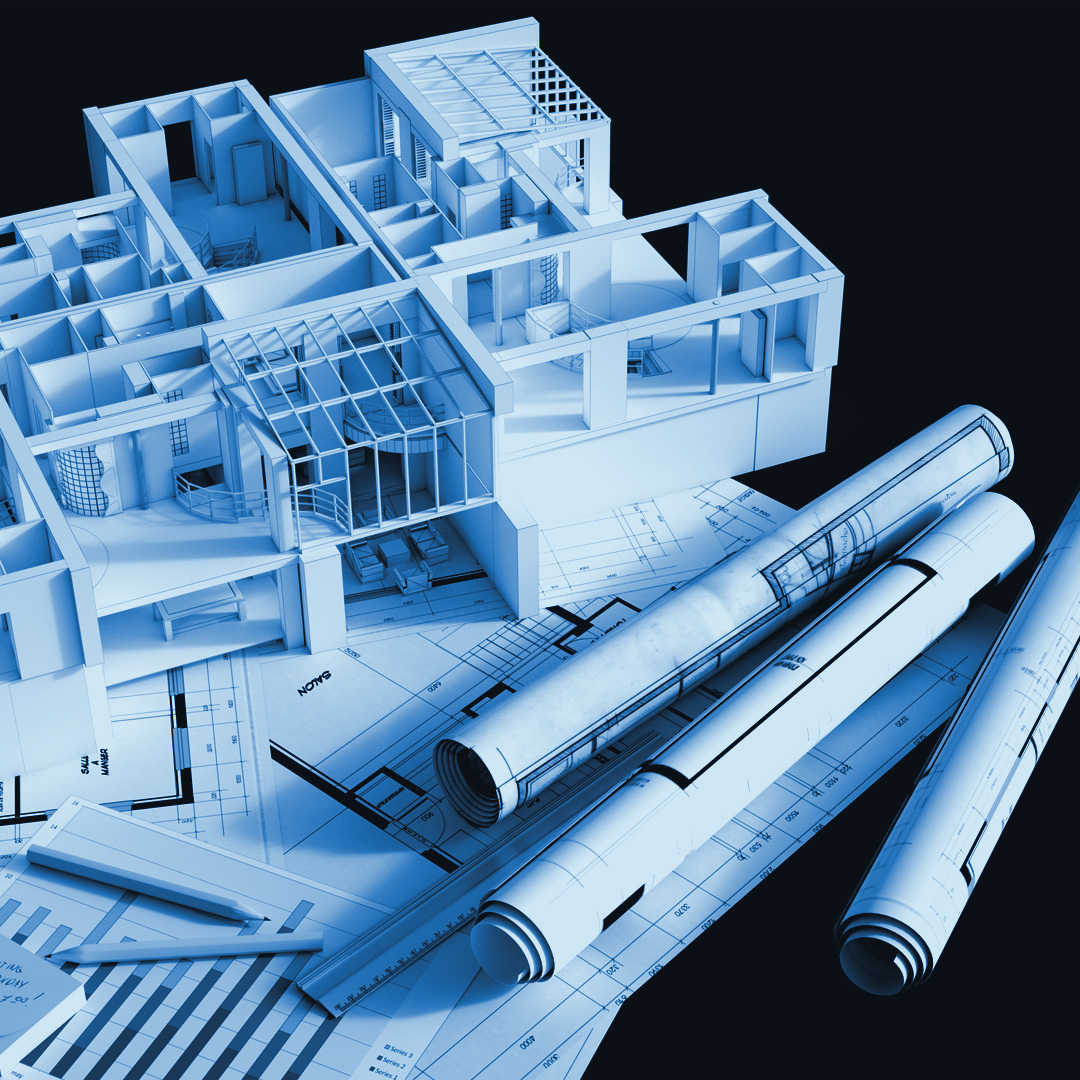
The more advanced buildings become, the more responsibility shifts toward the preconstruction stage.
Because more and more of the project gets built before construction officially begins.
#Preconstruction#Construction
Working on a project like 2000 Market Street, you start noticing how many spaces are designed to look identical – cafés, copy rooms, shared areas.
But once you get into the details, they aren’t.
Each space brings its own dimensions and conditions.
Millwork shop drawings resolve that early, so every version builds the way it’s intended.
#Millwork #ShopDrawings #ConstructionDetailing #BIM
Laser scanning defines existing geometry before detailing begins.
That becomes critical in renovation, restoration, or any non-standard work.
From that point on, decisions follow reality, not assumptions.
#LaserScanning#AsBuilt#3DScanning#AEC
Good shop drawings define more than dimensions.
They clarify how structural elements, materials, and installation conditions interact during construction.
That clarity supports smoother coordination on site.
#construction#shopdrawings
A surprising amount of construction issues can be traced back to unclear drawings.
When relationships between systems are documented properly, installation becomes far more predictable.
#construction#constructiondocumentation
Decking systems should be coordinated with the supporting structure before installation begins.
Layout, support spacing, fastening, and edge conditions must be defined early to ensure the system fits the structural framework.
Shop drawings help establish those relationships before work reaches the site.
#construction #shopdrawings
A basic principle in storefront systems:
Installation should start with shop drawings.
They define the relationship between the aluminum frame, mullion layout, and the structural opening before fabrication begins.
Clear dimensional references reduce uncertainty during installation and help ensure the system fits the building as intended.
#construction #storefront
Good documentation removes the question.
Active set is obvious. Superseded is marked. Decisions are attached.
That’s reliability.
#documentation#AEC#coordination
On long projects, teams lose time to verification: which set is active, what’s superseded, did the change get applied.
Stable standards reduce that invisible workload and keep handoffs smoother.
#construction#AEC#documentation
Speed isn’t trust. Predictability is.
Inputs confirmed, one active set, changes visible, review repeatable.
That’s what keeps “current” clear when timelines tighten.
#AEC#documentation
Reliable documentation is “boring” on purpose.
Inputs are verified. Versions are labeled. Changes are logged. Decisions are traceable.
That discipline is what keeps projects steady when the pace picks up.
#construction#AEC#documentation
When documentation is clear, current, and traceable, it disappears into the background.
Nobody debates versions. Nobody chases context. Work just moves.
That’s the point.
#construction#documentation
Projects don’t fail because trades are different.
They fail when documentation standards change from scope to scope.
One system + shared standards keeps coordination stable.
#construction#coordination
Fast delivery can still create chaos.
Trust comes from predictable outcomes: correct inputs, clear versions, visible changes, repeatable review.
Speed matters, but predictability builds confidence.
#AEC#documentation
Reliable documentation is quiet.
You only notice it when something breaks, a version is wrong, or a decision can’t be traced.
The goal isn’t attention. It’s predictability.
#construction#AEC#documentation