United States tax revenue: $2.66 trillion
Proposed Iran refund: $300 billion
$300b/$2.66 trillion = 0.11.
11% of your federal taxes will be going to Iran.
In 1604, a young man said this 90-second prayer, and it saved him from hell that very night.
It's not a chaplet.
It's not the Memorare.
It's not even the rosary.
But it takes less than 90 seconds — and almost every Catholic forgets to say it.
The story comes straight from St. Alphonsus Liguori's classic work The Glories of Mary — and it's one of the most haunting true accounts in Catholic tradition.
In 1604, in a city in Belgium, two students were destroying their souls.
Drinking. Lust. Debauchery. The whole bit.
One night, both of them went to the house of an evil woman.
Halfway through, one of them — a young man named Richard — felt something pull at his conscience. He left early and went home.
Exhausted, he started to climb into bed.
Then he remembered.
He hadn't said his daily three Hail Marys.
He was tired. Half-asleep. Tempted to skip them just this once.
But he forced himself through it. Mumbling. No devotion. Just three Hail Marys to a Mother he barely thought about anymore.
Then he fell asleep.
What happened next, he never forgot.
A violent pounding at the door woke him.
The door was locked.
But then a figure walked straight through it.
A young man — but hideously deformed, twisted, burning.
"Who are you?" Richard cried.
"You do not know me?" the figure asked.
Richard looked closer.
It was his friend.
The same friend he'd left at that house just hours before.
And then his friend said the words that should haunt every Catholic alive:
"I am damned. When I was leaving that house of sin, a devil came and strangled me. My body lies in the street. My soul is in hell."
"And know this — the same fate awaited you. Except the Blessed Virgin spared you, for that little act of homage of the Hail Marys. If you are not a fool, profit by this warning which the Mother of God has sent."
Then he opened his cloak.
Flames. Serpents. Torment.
And he was gone.
Richard fell to his knees sobbing.
He ran to the Franciscan monastery that very night and begged to be admitted. The friars hesitated — they knew his reputation. But when they sent two priests into the street and found his friend's strangled, blackened body exactly where he said it would be...
They took him in.
Richard spent the rest of his life as a Franciscan missionary.
He preached the Gospel in India.
Then in Japan.
And on September 10th, 1622, he was burned alive for the faith at Nagasaki.
A martyr.
A saint.
All because of three Hail Marys mumbled in 90 seconds.
Now let that sink in.
If Richard had skipped those three Hail Marys that night — just one night — he would be in hell right now.
No conversion.
No monastery.
No missions.
No martyrdom.
Just eternal fire.
But he gave Our Lady 90 seconds.
And she gave him heaven.
Now ask yourself:
How much time did you spend scrolling today?
How many minutes did you give to Instagram? To YouTube? To the news cycle that will be irrelevant by morning?
And how many did you give to the Mother of God?
St. Paul says it plainly:
"Redeem the time, for the days are evil." — Ephesians 5:16
We have no idea — no idea — what a single Hail Mary unleashes in the spiritual realm.
St. Teresa of Avila said she would suffer the pains of every creature who has ever lived just to gain one more degree of glory in heaven.
One.
That's how much a single grace is worth.
And we throw away thousands of them every day.
C.S. Lewis said that both good and evil increase at compound interest.
Three Hail Marys today becomes a decade tomorrow.
A decade becomes a full rosary.
A rosary becomes a habit.
A habit creates a Saint.
But it has to start somewhere.
And our Lord said it Himself:
"He who is faithful in a very little is faithful also in much." — Luke 16:10
So here's the challenge.
Right now — before you scroll one more inch — say three Hail Marys.
Just three.
Offer them to Our Lady for the salvation of your own soul and for the souls of everyone in your family.
It will take you 90 seconds.
It might be the most important 90 seconds of your entire life.
Send this to a friend who will enjoy it!
Evangelicals: "Catholics worship statues."
Catholics: "No, we don't."
Evangelicals: "Still, the Bible says don't make statues at all!"
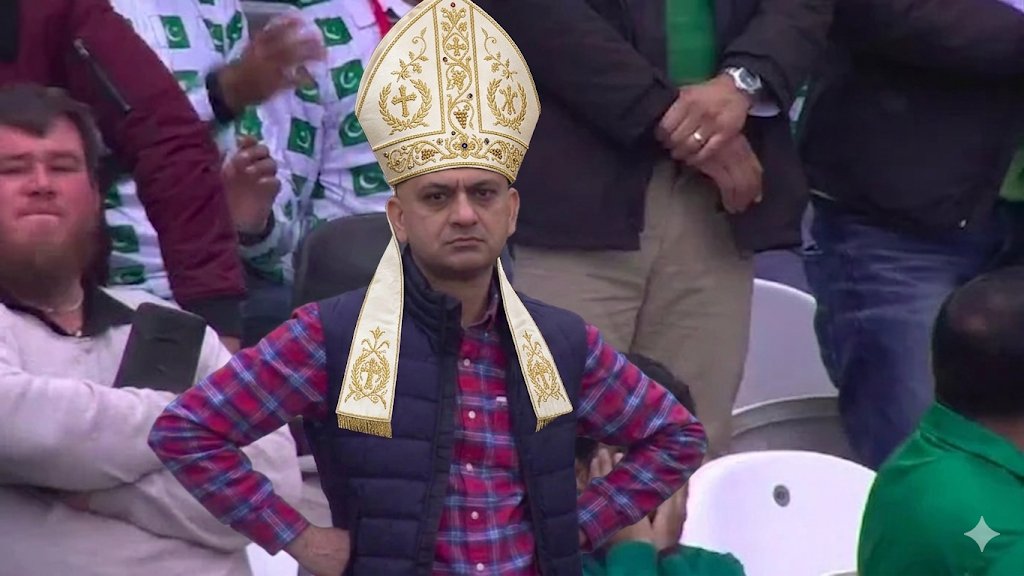
Evangelicals build a golden Trump statue.
Catholics:
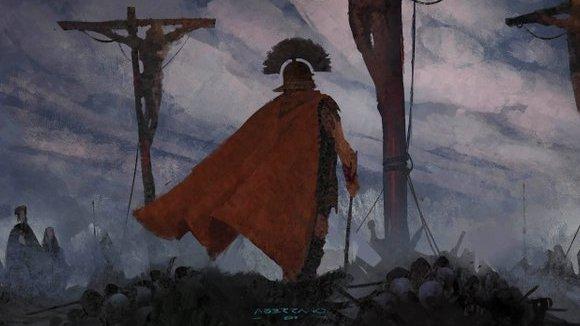
He speared the side of Christ, and then he became a Saint, a centurion in the armies of God.
Saint Longinus was the Roman Centurion who pierced the side of Christ with a spear to ensure He was dead.
Tradition says he was partially blind. When the blood and water flowed from Jesus' side, it splashed onto his face, instantly restoring his sight.
He threw down his spear and cried out: "Truly this man was the Son of God!"
The weapon that speared Christ became a relic (The Spear of Destiny), and the man who wielded it became a martyr for the Faith.
Later he was persecuted by the Roman Empire for spreading the faith in Cappadocia.
There he preached Christ crucified and risen, converting pagans, baptizing multitudes. The governor demanded he bow to idols. The soldier of Christ refused.
He laughed at their lifeless statues: “They are not gods. They cannot save.”
They arrested him, tortured him and took his eyes, a brutal mockery of the vision Christ had given him. But even in darkness, Longinus stood strong: “I have seen the truth,” he declared, “and no man can blind me now.”
Still desperate to break him, the governor led Longinus to the temple of the gods, demanding he bow. Before him stood a massive idol, cold and lifeless. Then they cut out his tongue, thinking they had stolen his voice. But the Heavens defied them, Longinus continued to speak clearly, his words as if carried by God Himself.
His hand found the hilt of a discarded sword. And with one mighty strike, he cleaved the false god’s head from its body. As the stone shattered, he roared for all to hear: “NOW WE SHALL SEE IF THEY ARE GODS OR NOT!”
The Emperor had him martyred for this, but his actions had already converted thousands.
Saint Longinus was a soldier of Rome, but he died a warrior of Christ, and in that, he won the greatest battle of all. The battle for his soul.
Saint Longinus, patron saint of soldiers and converts, pray for us!
La Pasión de Cristo de Mel Gibson. Satanás quiere que Cristo se salve.
La clave teológica de La Pasión de Cristo de Mel Gibson es algo que la mayoría del público no percibe y es que el diablo no quiere que Cristo muera. En Getsemaní, la figura andrógina que Gibson presenta como Satanás no incita a la violencia ni empuja hacia la cruz, sino que susurra a Cristo que abandone, que ningún hombre puede cargar con el peso de los pecados de la humanidad, que salvar sus almas "es demasiado." La tentacion no es al pecado, es a la compasión por sí mismo, porque si Cristo se rinde antes de completar el sacrificio la Redención no se consuma y el dominio de Satanás sobre la humanidad sobrevive.
Gibson construyó Getsemaní como un nuevo Edén. La serpiente que emerge del manto del diablo y se desliza hacia Cristo reproduce el Génesis, y cuando Cristo la aplasta con el pie cumple el Protoevangelio (Gn 3,15). Donde Adán cedió a la tentación en un jardín, el segundo Adán resiste en otro. Es tipología bíblica pura traducida a imagen. El Heliand, el poema sajón del siglo IX que narra la vida de Cristo en clave germánica, recoge la misma idea: Satanás teme que si Cristo muere el Infierno quede vacío. Gibson conocía esta tradición.
La escena del bebé demoníaco durante la flagelación responde a la misma lógica: es una inversión deliberada de la Virgen con el Niño que Gibson explicó en EWTN como la capacidad del diablo de tomar "forma inofensiva" para engañar. Donde María sostiene al autor de la vida Satanás sostiene una criatura grotesca que sonríe ante el sufrimiento de Cristo, la maternidad invertida, la compasion convertida en espectáculo. María y Satanás son los dos polos de la película, obediencia total al plan de Dios frente a rechazo total, la Inmaculada Concepción frente al enemigo del género humano, y la tensión entre ambos es la que sostiene toda la estructura narrativa de la Pasión.
El hilo que conecta todo es la compasión como arma del diablo. Satanás no tienta con placeres ni con poder, lo intentó en el desierto y fracasó, tienta con piedad, con piedad por uno mismo en Getsemaní, piedad mal dirigida en el sueño de Claudia Prócula que busca que Pilato libere a Cristo antes de que se complete el sacrificio. La tradición patrística occidental (Rábano Mauro, Beda, Bernardo de Claraval) interpretó ese sueño como una maniobra del diablo para detener la crucifixión, y el propio Tomás de Aquino integró ambas lecturas (la oriental que lo ve como gracia profética y la occidental que lo ve como tentacion diabólica) señalando que el diablo actuó por miedo a perder su dominio sobre la muerte. El paralelo con Pedro en Mt 16,23 es directo: cuando Pedro intenta disuadir a Cristo de su Pasión por compasión genuina, Cristo le responde "apártate de mí, Satanás." La compasión que busca evitar la cruz, por bienintencionada que sea, trabaja objetivamente contra la Redención.
El grito de Satanás al morir Cristo no es triunfo sino derrota. Todo lo que hizo durante la pelicula estaba orientado a impedir que la Pasión llegase a su fin, y fracasó porque la soberbia le impidió concebir que alguien aceptase voluntariamente un sufrimiento así por amor.
Bibliografía recomendada:
– Decent Films (SDG Reviews): "Understanding the Catholic Meaning of The Passion of the Christ."
– The Catholic Talks: "Inside The Passion of the Christ", partes 1-3.
– Brown, R.E.: The Death of the Messiah, Doubleday, 1994.
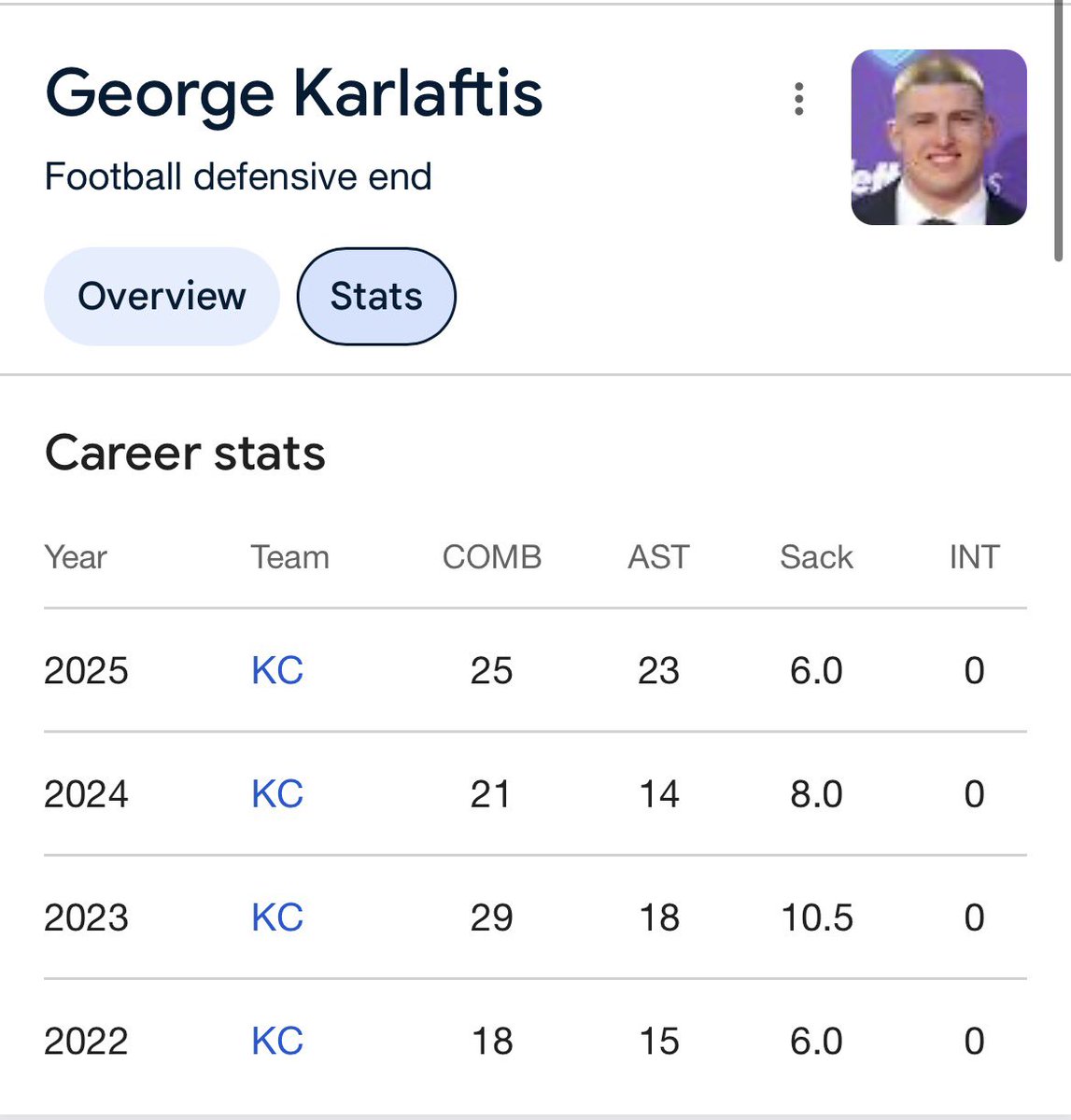
Mafe signed for 3yr $60M, Phillips 4yrs $120M. Karlaftis ext is 4yr $93m for those of you bitching non stop about it. You don’t know what the fuck you are talking about.