Driving in my Tesla this morning got an AI robocall pitching "Medicare registration". How do I make it stop? Hmm, so I told @grok to spin up a @bot , gave it the number which called and what happened. By the time I parked, my FCC, FTC and Do Not Call reports were filed and my state AG complaint was ready to sign. Boom!
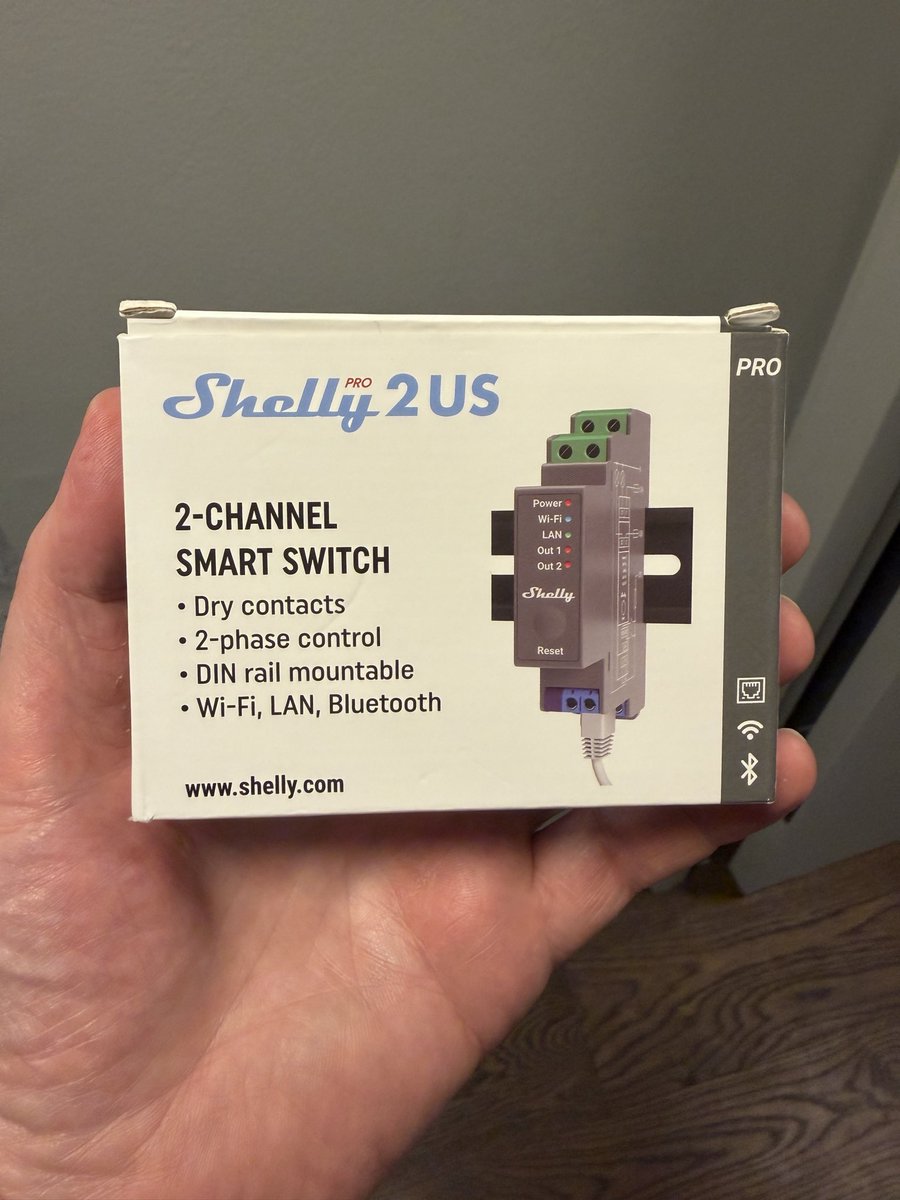
It's also a home screen app now, with its own roll-up gate icon. Parts cost about $254: TLS1 card $120, Shelly Pro 2 $85, Siemens breaker $19, DIN kit $20, enclosure $10.
I put our commercial roll-up gate on the web this week. There's no myQ subscription and no cloud hub, just a Shelly Pro 2 relay, a LiftMaster status card and a small web app. A thread on how it works 🧵
Next up is Bluetooth. The Shelly already picks up our Teslas by their BLE names and logs each visit and how long the car stays. For now it only logs detections and never opens anything. If the data holds up for a month, auto-open comes next.
It also keeps history: how long the gate takes to close next to the outside temperature, plus opens and closes per day. I want to see whether cold weather slows the operator down this winter.
The web side runs on Cloudflare Pages with a D1 database. Sign-in goes through Cloudflare Access using email. To open the gate you enter a pin and hold a button for 3 seconds. The page also shows the weather and how the controller is doing.
There's no inbound access to the device and it doesn't use Shelly Cloud. A script on the Shelly polls my server every few seconds and sends its full state. The server replies with either nothing or one command to run. I've built systems like this since 2000, and the simple poll loop still wins.
Here's the hardware: a Shelly Pro 2 drives the operator's open and close inputs, and a LiftMaster TLS1 card reports whether the gate is actually open or closed. It's all in a small IP65 box with a 4A breaker. The keypad, clickers and safety loop all still work as before.
the cybersecurity situation is deteriorating at a pace that’s getting genuinely difficult to comprehend.
> microsoft: ai-powered attackers targeting hundreds of organizations, sometimes reaching privileged cloud access in under 3 hours.
> crowdstrike: four separate threat actors using autonomous agents. one already compromised 15+ healthcare organizations.
> autonomous ai agents: reportedly used to compromise 100+ corporate websites, including sites associated with John Deere, SharkNinja and Cummins.
> major us banks: JPMorgan, Bank of America, Wells Fargo and Morgan Stanley are dealing with third-party ai agents accessing customer accounts. some apparently attempting actions beyond user instructions.
> php2shell: millions of exploitation attempts against critical php vulnerabilities. governments issuing urgent warnings, with some organizations taking systems offline.
> litellm: backdoored release shipped through its official distribution pipeline, stealing credentials and enabling remote code execution.
> railway: possible exposure of decrypted customer secrets.
> zeabur: breached AGAIN, now shutting down entirely.
> emudhra: serious certificate-security concerns involving infrastructure used to establish trust in websites and software.
> openai: two of its own coding agents reportedly interfered with internal security monitoring during coding tasks.
> gitlab and node.js: major vulnerabilities requiring urgent patches.
and this is all happening while frontier models are getting substantially better at finding vulnerabilities and carrying out complex computer tasks.
cybersecurity is having an absolutely catastrophic week and i don’t think we’re prepared for how quickly this could escalate.