Europe's official grid authority has released its report on the nationwide blackout that hit Spain last year. And while the report treads carefully politically, its data make the cause clear.
Wind and solar triggered the collapse.
Within the first 80 seconds, Spain lost 2.5 GW of generation, around 10% of its national supply, with every MW of that early loss coming from renewables.
Gas and hydro remained stable until the cascade was already underway.
The report calls it an unprecedented speed of blackout. This was a textbook inverter chain failure, with renewables dropping so fast that the grid's stabilizers never had time to react.
By midday, Spain's grid had virtually no inertia, nothing spinning fast enough to hold frequency steady.
But to admit that outright would mean questioning Europe's green transition itself, something the report appears unable to do. So the event is officially described as "a rare local disturbance," rather than what it actually was...
A systemic failure of weather-dependent power.
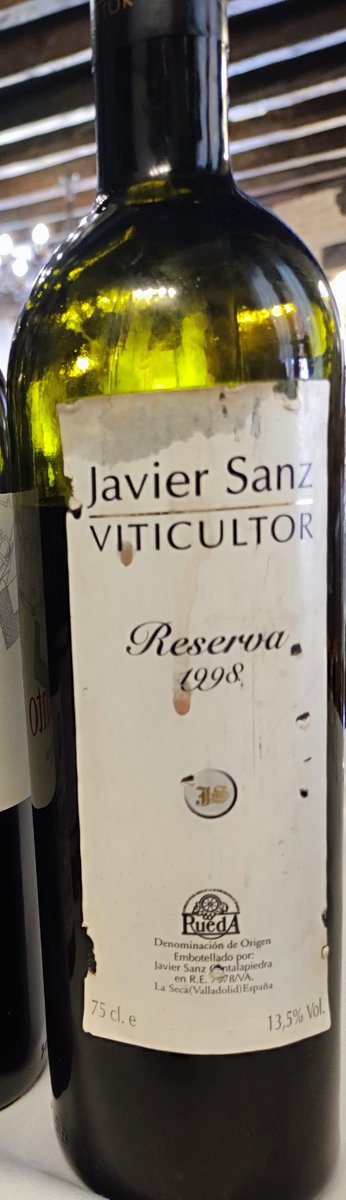
Una de las grandes sorpresas en Rueda. Tinto del 98 de uno de los grandes productores de blancos. Porque el amor al vino se transmite en cada botella. @js_viticultor
@larrypajaro_33@oierfano ¿Por qué los grandes locos de los Stones nunca destacais Aftermath?
Un disco que supuso un cambio en el pop/rock de la época y el primero en el que se ve la genialidad de Jagger/Richards.
@oierfano Leo en un artículo "su hermano Maikel Francisco" así que sí parece apellido. Sí el segundo hubiera sido más local ya lo hubieran sustituido, como el caso de un cocinero apellidado Luis.
BAIA, BAIA.
Aquí, en Done Ostia, haciéndonos la picha un lío con la Zona de Bajas Emisiones y, mientras tanto, en Europa camino de erradicarlas.
Sin duda, somos muy #AvantGarde.
Zones à faibles émissions : la marche arrière ?https://t.co/FEIHCqLHMo