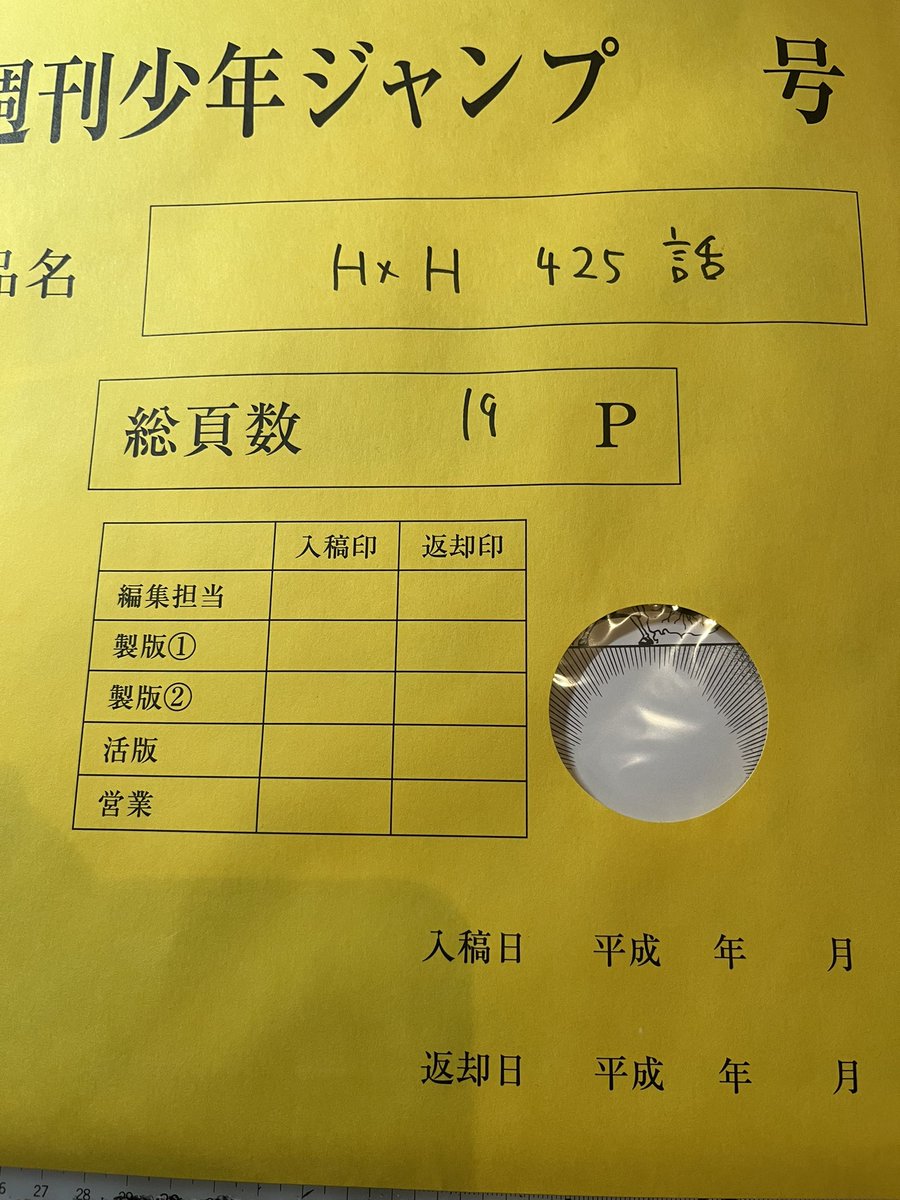
On vit une époque bénie. Togashi vient d'envoyer le chapitre 426 au Jump. ✍️
Il y a encore deux ans, on priait pour avoir 10 chapitres par an. Aujourd'hui, le type enchaîne les 19 pages semaine après semaine avec une régularité de monstre.
La Guerre de Succession est déjà un chef-d'œuvre de tension, mais savoir que le chapitre 430 approche... Ça veut dire qu'on se rapproche dangereusement du débarquement ou d'un carnage monumental sur le bateau.
Profitez de chaque tweet du goat, on est en train de vivre un des plus grands arcs de l'histoire du manga en direct
“The Misconception That Poor Countries Can't Build Great Manga Industries”
“I wish our country could become a manga powerhouse like Japan, but our country is poor and not ready.
So it probably won't happen.”
Okay... That sounds quite convincing.
Perhaps that is also why some people think, “We should be able to read manga for free.”
When you look at the countries that have become major comics powers, most of them are indeed wealthy, developed economies: Japan and South Korea, North America, France, Italy, and other economically advanced countries.
But the idea that “manga can't succeed because a country is poor” is like believing that the Earth is flat—or that the Sun revolves around the Earth.
It is simply a profoundly mistaken interpretation of the evidence.
Japan is certainly a developed country today.
But Japan was poor in the 1950s, when the foundations of the modern manga industry were being established, and Astro Boy was born.
Japanese manga developed during the years when Japan was still recovering from the devastation of World War II.
It grew out of the ashes of a defeated and impoverished country and eventually became the industry we know today.
South Korea is certainly a developed country today as well.
But South Korea only became a developed economy relatively recently—roughly within the last decade.
When I made my debut as a pro mangaka in South Korea in 1993, South Korea was certainly not a wealthy developed country.
Its GDP per capita was around US$7,000—somewhere between what Vietnam and Brazil have today.
And yet South Korea has been already a powerful comics ecosystem, manhwa.
The first dedicated Korean manhwa magazine was launched in 1982, when Korea's GDP per capita was only around US$2,000—roughly comparable to Zimbabwe or Nigeria today.
South Korea's population at the time was about 40 million.
And even then, there was already a powerful comics culture built around rental-comic shops and comics published in sports newspapers.
The 1982 magazine was simply the first dedicated manhwa magazine to appear.
The American comic books emerged in the 1930s—during the Great Depression.
Of course, when the world's earliest comics emerged in Britain, and when great comics traditions developed in France, those countries were already powerful and relatively prosperous nations.
But were ordinary people in those countries living comfortable lives with plenty of leisure?
Or were they working hard, struggling to survive, and trying to overcome poverty?
All of this is far from accidental.
It happened because of something fundamental about the nature of manga and comics.
You can create comics and manga with just a few sheets of paper and something to draw with.
Learning to draw does not have to cost much money.
You don't need expensive art education such as life-drawing classes.
And one person can create a comic alone.
You don't need a crew of 100 people, a gigantic budget, expensive cameras, or a grand piano.
Of course, professional work requires artists to be paid.
But compared with the cost of a piano, an artist's page rate is a remarkably small investment.
And before becoming a professional, you don't even need to be paid to start creating.
Yes, I've said this several times before.
Manga is like soccer.
It can certainly be enjoyed by people living comfortably in wealthy countries.
But at its core, it is something that can give opportunities to children who are poor and have few other opportunities.
It is also an ideal industry for a developing country to build—and an ideal way to create a wealth of homegrown IP.
Manga can capture a country's culture, the lives and thoughts of ordinary people, its emotions, and its unique beauty.
More precisely, among all the forms of art humanity has created, few are better suited to doing this.
Just as it is a misconception that people in poor countries cannot afford to buy manga, it is equally a misconception that a poor country cannot become a manga powerhouse.
All it needs is opportunity.
Give people the opportunity, and they will experience the joy of buying and owning manga.
Give aspiring creators the opportunity, and they can become the manga artists of countries where countless new creators emerge.
So, based on the clear evidence of manga and comics history, I will make a very straightforward argument:
Any country with a GDP per capita of around US$2,000 and a population of more than 20 million can build a powerful manga market and comics industry right now.
Manga is not cinema.
The price of a basic film-lighting kit could support dozens of mangaka.
A country does not have to become wealthy before it can develop manga.
In fact, manga can develop precisely because a country is still relatively poor.
And as that country becomes wealthier, manga can grow stronger and play an increasingly important role in supporting that country's cultural and economic development.
Poverty is not a barrier to building a great manga industry.
In fact, poverty can be the very reason why the opportunity exists now.
Because it's manga.
Una banda de Gandalfs fueron a la casa de Peter Thiel, el dueño de PALANTIR, con una bandera que dice “NO PASARÁS, LA CONCHA DE TU MADRE”
JAJAJAJJAJJAJA EMOCIONA 🚬
El Dinamo reveló bajo el titular de “La generación sin currículum de Kast”, que Sofía Shea, recién egresada de periodismo e hija de un excolaborador de Felipe Costabal, fue ascendida a jefa del Departamento de Comunicación Digital de la SECOM en un mes, pasando del grado 14 al 11 y con un sueldo de $3,5 millones. Es el segundo caso de la semana, tras el caso de Trinidad Zegers en el ministerio de Justicia.
¿Y tú, qué opinas? ¡Te leemos en los comentarios!
Lee la nota completa en el link 🔗https://t.co/arf7UO6r2f
Dos economistas demostraron matemáticamente que la IA destruirá la economía.
Investigadores de Wharton y la Universidad de Boston publicaron un artículo aterrador titulado "The AI Layoff Trap".
Mapearon el fin del juego económico de la transición a la IA, y expone un defecto fatal en el capitalismo competitivo.
Cuando una empresa reemplaza a un trabajador con IA, captura el 100% de los ahorros salariales.
Pero ese trabajador desplazado también es un consumidor. Cuando pierden su empleo, dejan de comprar cosas.
La empresa obtiene todos los ahorros, pero la pérdida de la demanda del consumidor se distribuye por toda la economía.
Si hay 20 competidores en un mercado, un CEO solo absorbe 1/20 de los daños económicos que sus despidos acaban de crear.
Por lo tanto, cada CEO racional tiene un incentivo matemático para automatizar lo más rápido posible.
Pueden ver literalmente el precipicio acercándose, y aun así pisan el acelerador.
Desata un Dilema del Prisionero inevitable. Si no automatizas, tus competidores lo harán, y te aplastarán en precio.
No solo daña a los trabajadores. Destruye las empresas también.
La economía queda atrapada en una carrera armamentística de automatización. Las empresas despiden a su fuerza laboral para mantenerse competitivas, hasta que toda la base de consumidores queda completamente vaciada.
En el límite, el artículo concluye: “Firms automate their way to boundless productivity and zero demand.”
¿Y la parte más aterradora?
Los investigadores probaron matemáticamente cada solución popular.
¿Ingreso Básico Universal? Falla. Eleva el nivel de vida pero no cambia el incentivo corporativo para recortar empleos. ¿Reconversión? Falla. ¿Equidad para trabajadores? Falla.
El artículo demuestra que más competencia hace que el colapso ocurra más rápido. Y una IA "mejor" hace que el daño sea peor.
Lo único que matemáticamente detiene el colapso es un impuesto a la automatización dirigido, obligando a las empresas a pagar por el poder adquisitivo que destruyen antes de automatizar el empleo.
Periodista de un medio independiente dándole un Master class a los periodistas que ganan millones de pesos es medios tradicionales.
Pone en aprietos al subsecretario de agricultura por tener seremis abogados.
Una verdadera masacre 👇
Cuando vayas a firmar tu finiquito puedes escribir la reserva de derechos para que te paguen tu dinero y luego, evaluar la posibilidad de demandar.
Te dejo una reserva de derechos que sirve para la mayoría de los despidos 👉🏼
The Pokémon Company enfrenta una demanda colectiva por presuntas grabaciones ocultas en baños.
Se ha presentado una demanda colectiva propuesta contra The Pokémon Company International después de que un ex-director de ingeniería fuera acusado de grabar secretamente a empleados y visitantes en los baños de la oficina de la compañía en Bellevue, Washington.
Los investigadores supuestamente encontraron 89 videos grabados dentro de los baños de la oficina Pokémon en dispositivos incautados en la casa del ex-ejecutivo.
La filmación está almacenada en carpetas etiquetadas como 'Pokémon 27'y 'Pokémon 29'.