#CountryDuty
General Nhlanhla Mkhwanazi has told eNCA that IDAC has issued a 48hr ultimatum for him and Crime Intelligence Head, General Dumisani Khumalo to hand themselves over.
Mkhwanazi stated that ‘we’re at war’.
‘If they’re looking for me, I might as well be close by.’ ~ GL Nhlanhla Mkhwanazi
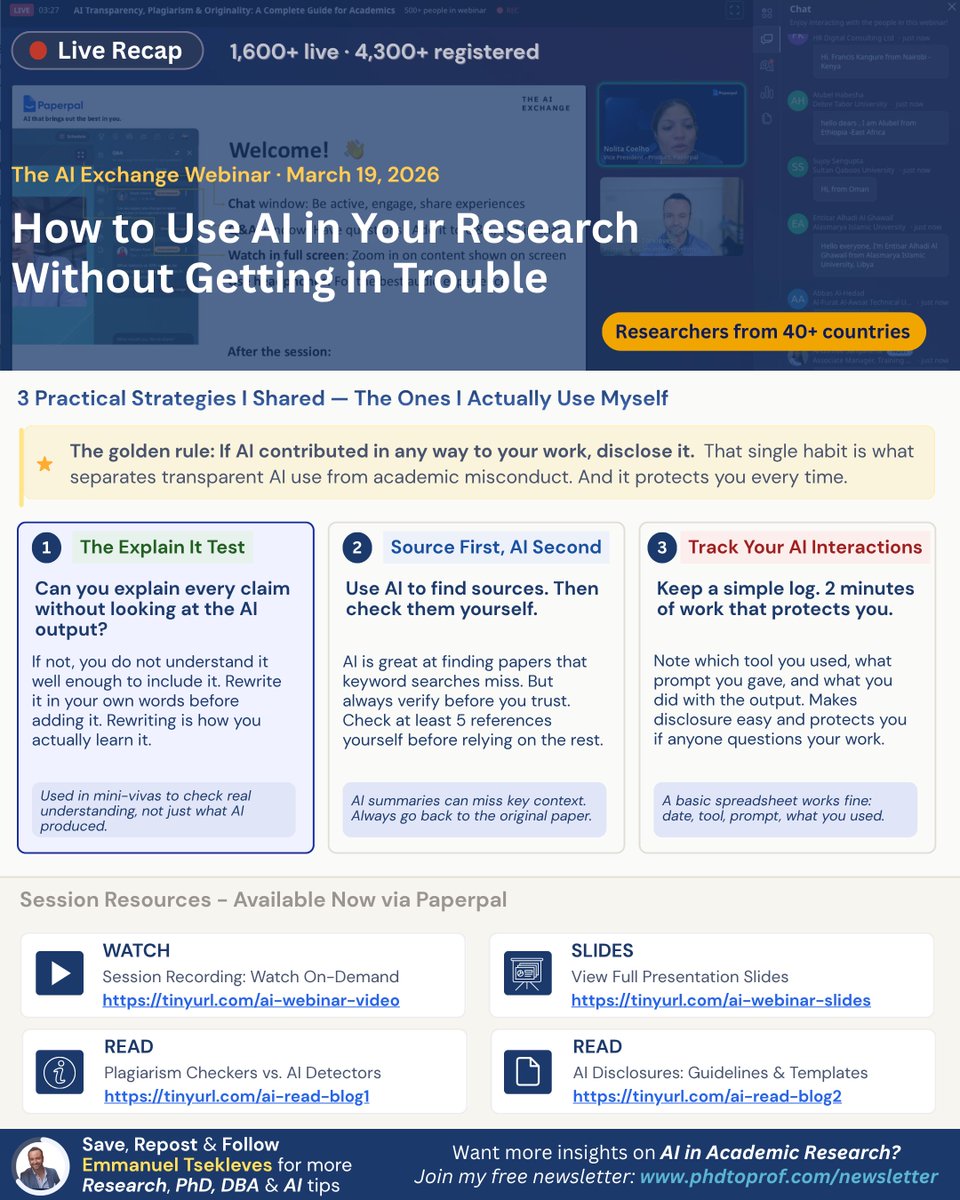
4,300 researchers registered for last week's webinar on AI in academia.
One question brought them all there: am I using AI in a way that could get me in trouble?
Before we start, here is a checklist for your manuscript
✅ Delete adjectives modifying relationships
✅ Don't say 'differed' → explain relation
✅ Don't forget to mention limitations
✅ Use short instead of long words
✅ Spellcheck all + references
Check off before you submit.
Introduction
🟢 Hook & Gap: Why it's interesting
🟢 Question: What the paper is doing
🟢 Direct tie-ins: Precursors to the paper
🟢 Contributions: Value based on precursors
🟢 Action plan: Tailored short paper organization
Instantly capture curiosity & compel people to read it.
Related Work
🟢 Parallels between your research & unrelated fields
🟢 Highlight opposing views for added depth
🟢 Identify and describe the existing gaps
🟢 Comparable questions answered
🟢 Similar methods used
Emphasize your novelty & exploration.
Methods
🟢 Study procedure details
🟢 Framework to analyze & collect data
🟢 Simple & plain: components & materials
🟢 How you calculated & analyzed parameters
🟢 Present statistical or qualitative techniques
Keep methods simple, replicable, factual.
Results
🟢 Preliminary & descriptive first
🟢 Core outcomes of hypothesis tests
🟢 Describe through examples, tables, graphics
🟢 Emphasize unexpected findings & robustness
🟢 Don't exaggerate findings; keep it factual & to the point
Show the most impactful aspects.
Discussion
🟢 Offer alternative interpretations of results
🟢 Link findings to real-world applications
🟢 Draw connections to other disciplines
🟢 Extend implications of results
🟢 Provide broader perspectives
Trigger further discussion and exploration.
Conclusion, Limitations, Future Work
🟢 Brief summary
🟢 Potential result constraints
🟢 Frame limitations as opportunities
🟢 Implications for field policy/practice
🟢 Offer specific, actionable future research
How did you change, challenge, or advance your field's knowledge?
PhD candidate: When I started in academia we didn't have AI.
PI: When I started in academia we didn't have Google.
Emeritus: When I started in academia we didn't have internet.
If this appears on your TL kindly Repost until these criminals who beat up the delivery driver are found & dealt with by the Law! No one deserves to be treated like this. Someone out there knows these bullies. If you know them kindly contact the nearest Police Station!
If this appears on your TL kindly Repost until these criminals who robbed a ehailing driver of his phone and cash during a passenger pick up in Westbury Johannesburg are found & dealt with the Law. Someone out there knows these people.
Unexpected ways research makes your life better:
You learn to organize massive amounts of chaos.
You realize how little everyone else knows.
You become immune to criticism.
You spot fake news instantly.
Every person should write a literature review at least once.
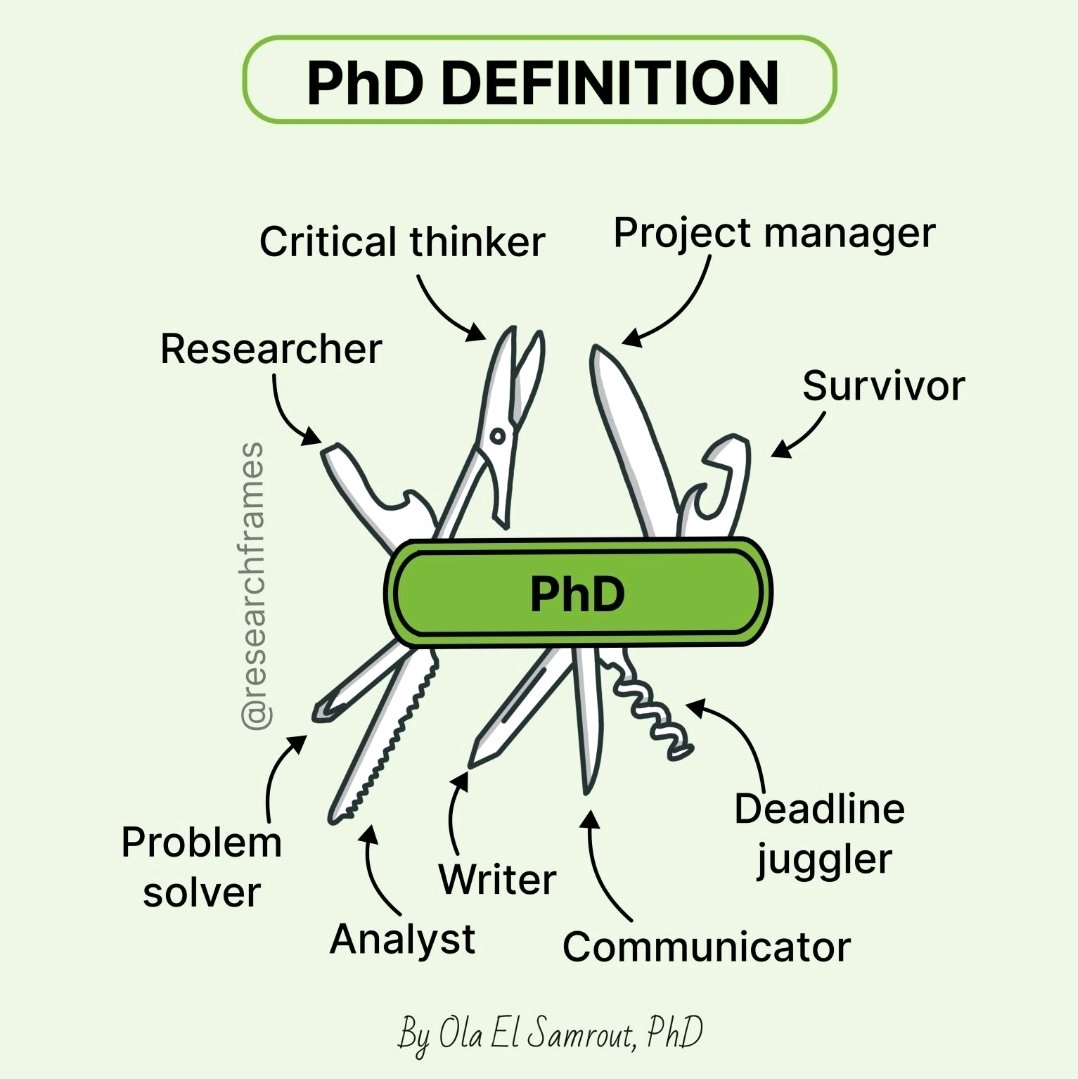
What a PhD Really Means: Beyond the Thesis
Many people think a PhD is only about writing a long thesis or conducting advanced research. But the truth is much broader.
A PhD is not just a degree. It is a full training ground where you learn many skills at the same time. A PhD student does not wear one hat. They wear many.
1. A PhD turns you into a writer. You write reports, articles, proposals, and presentations. You learn to express complex ideas in simple words. You also revise constantly, which teaches patience and discipline.
2. You become a critical thinker. You question everything. You learn to check assumptions, evaluate methods, and identify gaps in knowledge. This habit stays with you for life.
3. You also become an analyst. Whether you work with numbers, texts, images, or experiments, analysis helps you see patterns and draw conclusions. This skill is valuable in both academia and industry.
4. A PhD forces you to be a problem solver. Research is full of challenges. Experiments fail. Data gets messy. Deadlines come fast. You learn to think creatively and find solutions.
5. You slowly turn into a project manager. You plan your time, organise tasks, track progress, and manage long-term goals. You balance multiple responsibilities at once.
6. You grow as a researcher. You learn how to read papers, design studies, collect data, and interpret results. You understand what good evidence looks like.
7. You also become a deadline juggler. You handle coursework, supervisor meetings, research work, writing tasks, conferences, and personal life. You learn how to prioritise and keep going even when it is difficult.
8. Most importantly, you become a survivor. A PhD is mentally demanding. Some days you feel confident; other days, confused or stuck. You learn resilience, courage, and emotional strength.
9. Finally, you become a communicator. You speak at conferences, present ideas to your supervisor, and discuss results with peers. You explain your work to people inside and outside your field.
Every day in a PhD is different. Some days you read. Some days you fix problems in the lab. Some days you write all day. Some days nothing works. But through it all, you keep learning, adapting, and finding your path forward.
See the infographic for best summary: a PhD is like a multi-tool. It equips you with many abilities that go far beyond the thesis.
The truth is simple:
A PhD is less about knowing everything and more about learning how to figure things out. It is about growth, resilience, and becoming someone who can handle complexity and uncertainty with confidence.
That is the real definition of a PhD.
So, go for it. It is worth it.
Image Copyright: Ola El Samrout, PhD.
Last chance, PhD students!
Apply to be a 2026 SMS PhD Student Circle Champion before Nov 30. Lead, connect, & make an impact!
Serve a two-year term and receive one complimentary year of SMS Student Membership as our thank-you.
Apply now: https://t.co/SFvBciTezw
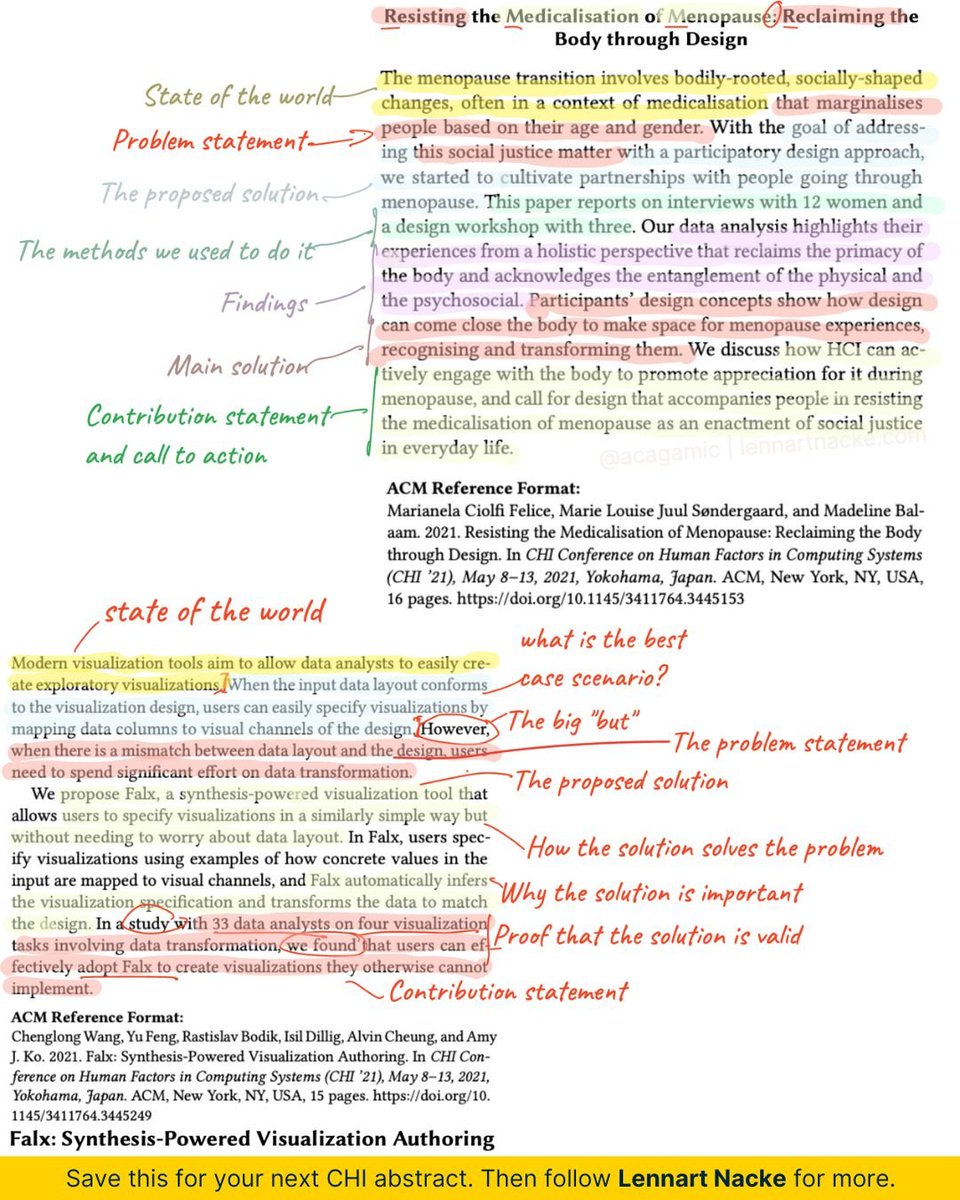
Most researchers lose readers in the first 100 words.
Here’s how to write an abstract that actually gets read:
After reviewing 100+ papers,
here’s the formula I give my students.
Write an abstract that will get your paper noticed.
An abstract isn’t just a summary.
Reviewers skim hundreds.
But only a few make them stop.
It’s your first chance to prove your research matters.
The right structure turns curiosity into citations.
Follow this 5-part formula:
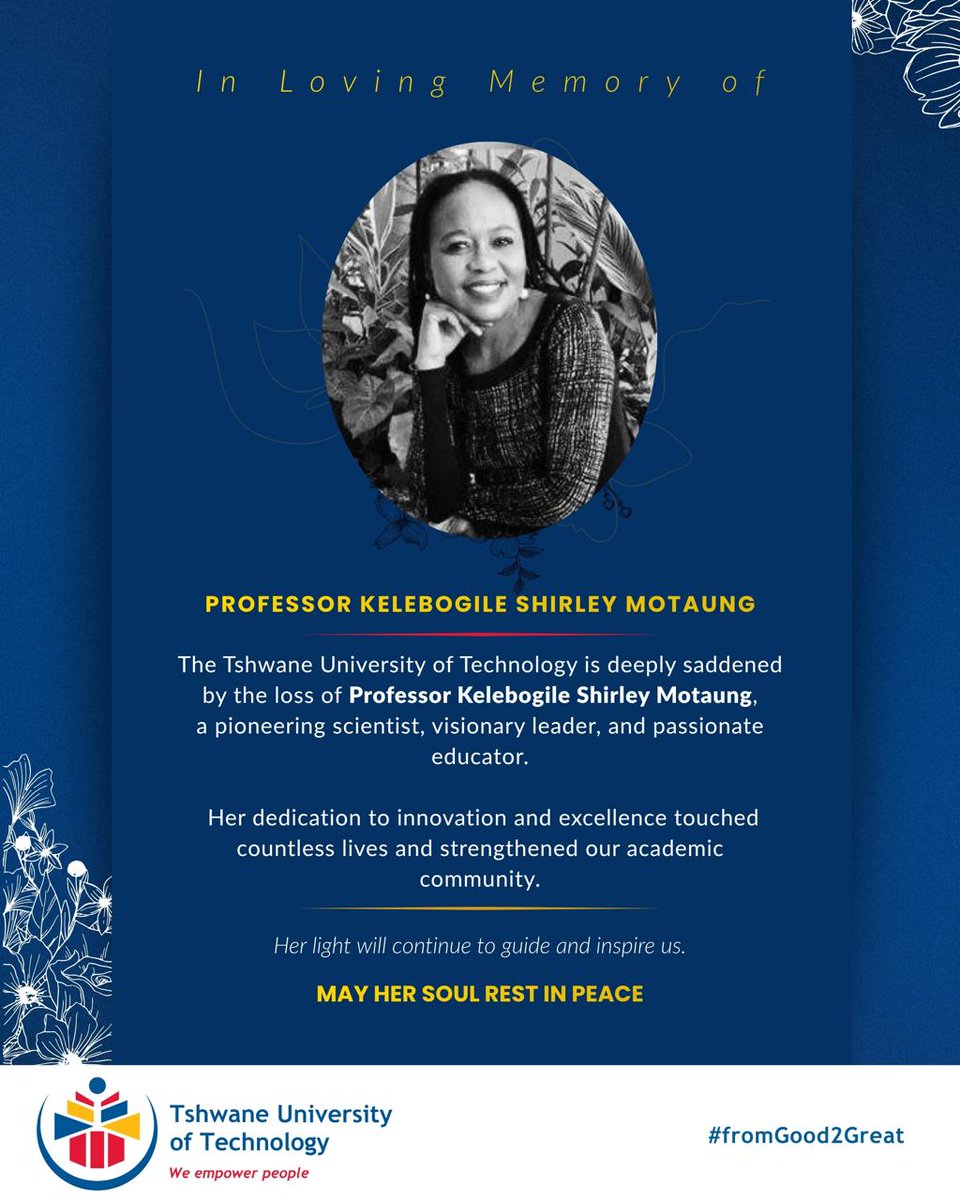
Tshwane University of Technology mourns the loss of Professor Keolebogile Shirley Motaung - a pioneering scientist, visionary leader, and passionate educator.
We extend heartfelt condolences to her family, friends, and loved ones. Her light will forever guide us.
Rest in peace.
If choosing the right statsistical test gives you anxiety..
Save & Share this quick reference guide of common statistical tests ⤵
[descriptive stats set the stage but aren't a test]
✅ Z-Test: Large samples with known population variance
✅ T-Test: Comparing means, typically for smaller samples
✅ ANOVA: Juggling 3+ groups? This is your go-to
✅ Pearson's Correlation: Linear relationships between continuous variables
✅ Mann-Whitney U: Non-parametric alternative when normality is violated
To pick a test, understand WHY it fits your data and research question!
💬 𝐖𝐡𝐢𝐜𝐡 𝐬𝐭𝐚𝐭𝐢𝐬𝐭𝐢𝐜𝐚𝐥 𝐭𝐞𝐬𝐭 𝐰𝐨𝐮𝐥𝐝 𝐲𝐨𝐮 𝐚𝐝𝐝?
𝐏𝐒. 𝘓𝘦𝘮𝘮𝘦 𝘬𝘯𝘰𝘸 𝘪𝘧 𝘺𝘰𝘶'𝘥 𝘭𝘪𝘬𝘦 𝘢 𝘗𝘋𝘍 𝘰𝘧 𝘵𝘩𝘪𝘴 𝘨𝘶𝘪𝘥𝘦!
Comment 'stats' for PDF here.
--------------------------------
Useful find? Pass it on!
🔄 Retweet
Want FREE tips on using AI in research?
✍ 𝐒𝐢𝐠𝐧 𝐮𝐩 to join 16K+ #researchers
🔗 in bio
And click @RaziaAliani + follow + 🔔
I test AI tools to simplify your #research & #analysis
---------------------------------
#biostatistics #statisticaltests









![RaziaAliani's tweet photo. If choosing the right statsistical test gives you anxiety..
Save & Share this quick reference guide of common statistical tests ⤵
[descriptive stats set the stage but aren't a test]
✅ Z-Test: Large samples with known population variance
✅ T-Test: Comparing means, typically for smaller samples
✅ ANOVA: Juggling 3+ groups? This is your go-to
✅ Pearson's Correlation: Linear relationships between continuous variables
✅ Mann-Whitney U: Non-parametric alternative when normality is violated
To pick a test, understand WHY it fits your data and research question!
💬 𝐖𝐡𝐢𝐜𝐡 𝐬𝐭𝐚𝐭𝐢𝐬𝐭𝐢𝐜𝐚𝐥 𝐭𝐞𝐬𝐭 𝐰𝐨𝐮𝐥𝐝 𝐲𝐨𝐮 𝐚𝐝𝐝?
𝐏𝐒. 𝘓𝘦𝘮𝘮𝘦 𝘬𝘯𝘰𝘸 𝘪𝘧 𝘺𝘰𝘶'𝘥 𝘭𝘪𝘬𝘦 𝘢 𝘗𝘋𝘍 𝘰𝘧 𝘵𝘩𝘪𝘴 𝘨𝘶𝘪𝘥𝘦!
Comment 'stats' for PDF here.
--------------------------------
Useful find? Pass it on!
🔄 Retweet
Want FREE tips on using AI in research?
✍ 𝐒𝐢𝐠𝐧 𝐮𝐩 to join 16K+ #researchers
🔗 in bio
And click @RaziaAliani + follow + 🔔
I test AI tools to simplify your #research & #analysis
---------------------------------
#biostatistics #statisticaltests](https://pbs.twimg.com/media/G53fHZ0WcAAsSSF.jpg)


