Hacking the #EU#AgeVerification app in under 2 minutes.
During setup, the app asks you to create a PIN. After entry, the app *encrypts* it and saves it in the shared_prefs directory.
1. It shouldn't be encrypted at all - that's a really poor design.
2. It's not cryptographically tied to the vault which contains the identity data.
So, an attacker can simply remove the PinEnc/PinIV values from the shared_prefs file and restart the app.
After choosing a different PIN, the app presents credentials created under the old profile and let's the attacker present them as valid.
Other issues:
1. Rate limiting is an incrementing number in the same config file. Just reset it to 0 and keep trying.
2. "UseBiometricAuth" is a boolean, also in the same file. Set it to false and it just skips that step.
Seriously @vonderleyen - this product will be the catalyst for an enormous breach at some point. It's just a matter of time.
We achieved a guest-to-host escape by exploiting a QEMU 0-day where the bytes written out of bounds were uncontrolled.
Full breakdown of the technique, glibc allocator behavior, and our heap spray/RIP-control primitive ↓
A Race Within A Race: Exploiting CVE-2025-38617 in Linux Packet Sockets.
A step-by-step guide to exploiting a 20-year-old bug in the Linux kernel to achieve full privilege escalation and container escape, plus a cool bug-hunting heuristic.
https://t.co/IxURrHpBT0
🚨 I'm working on adding new Linux coverage for the EDR telemetry project and want to get things right from the start. I'd love your input on the current approach—check out my comment here: https://t.co/S0HWHunrDF
What do you think? Drop your thoughts in the comments below or on GitHub. Appreciate any feedback! 🙌
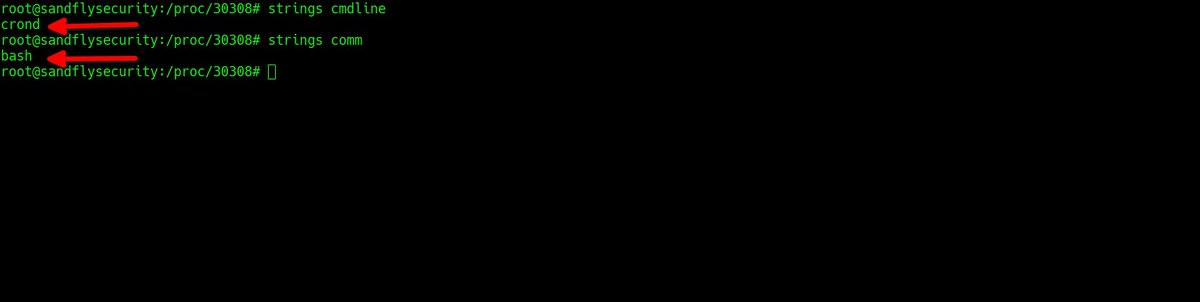
This is a nice simple way to hide a process name on Linux. You can see it happening due to /proc/PID/exe, /proc/PID/comm, and /proc/PID/cmdline mismatch. But, legit processes may present this way as well so not always reliable for detection.
🚨New! "PKFail: Untrusted Platform Keys Undermine Secure Boot on UEFI Ecosystem."
#PKfail is a supply-chain issue affecting x86/ARM devices around the globe.
Blog:
https://t.co/X3RaVzDWGk
Full report:
https://t.co/BrzDzd5D4L
A free scanning tool: https://t.co/fSqeVlxxT7
Hundreds of UEFI products from 10 vendors are susceptible to compromise due to a critical firmware supply-chain issue known as PKfail, which allows attackers to bypass Secure Boot and install malware - @serghei
https://t.co/JylzTUgBkX
Ensuring #Jenkins server security is crucial. Our latest findings indicate a rise in #cryptomining activities due to misconfigurations.
Get the complete analysis and protection tips here:⬇️ https://t.co/NqUPTtApkE
Acer, Dell, Gigabyte, Intel, and Supermicro impacted: the platform key was leaked in 2022 on GitHub at https://t.co/yzXMQzuZCC
"The repository included the private portion of the platform key in encrypted form. The encrypted file, however, was protected by a four-character password"
via @Agarri_FR
https://t.co/fcN6zeZ2kQ