📍🟡 "We're looking at cutting discretionary expenditures. The second absolute last resort is cutting the salaries of civil servants, but we don't want to do that."
The Economic Advisor to the Prime Minister’s Office Nurhisham Hussein joins The Breakfast Grille to answer:
• Why the real impact of this crisis will hit us in June
• How supply shortages will impact every aspect of our lives beyond petrol prices
• What happens if we don’t start consuming less now
This interview was filmed on 11 May 2026 ⬇️
A Beijing-based, English-speaking influencer suddenly dominates U.S. media—racking up millions of views in days. But who is “Professor Jiang”?
Watch the full video here: https://t.co/XYmmlfTnlu
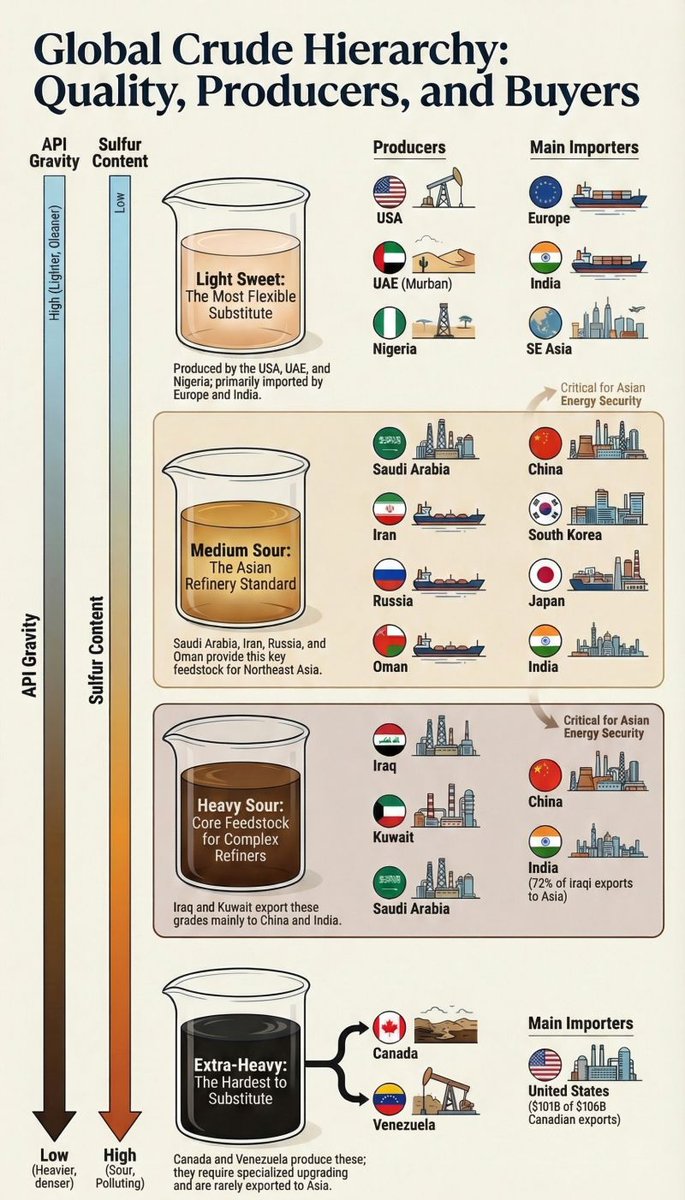
Asia's refineries are built for Gulf crude
That's exactly what's disappearing from Hormuz right now
You can't just swap in US Light Sweet.
It doesn't run the same way.
Why there's no easy substitute:
→ #Russia: Already maxed out, can't scale further
→ US Light Sweet: Wrong grade for Asian refineries
→ #Venezuela Heavy: Extra-heavy, rarely goes to Asia
→ #Canada Heavy: 96% to US, not exported to Asia
The reality is that Asia doesn't just need oil.
Asia needs Medium and Heavy Sour crude from the Gulf.
And right now:
→ The Strait is 80% closed
→ Refineries are burning
→ Producers are declaring force majeure
→ Tankers won't enter the Gulf
You can't replace it barrel for barrel because refineries are built for specific grades.
When those grades disappear, the system breaks.
#oott
We now have evidence that gentle parenting doesn’t work.
Here’s an uncomfortable truth about parenting no one wants to say out loud:
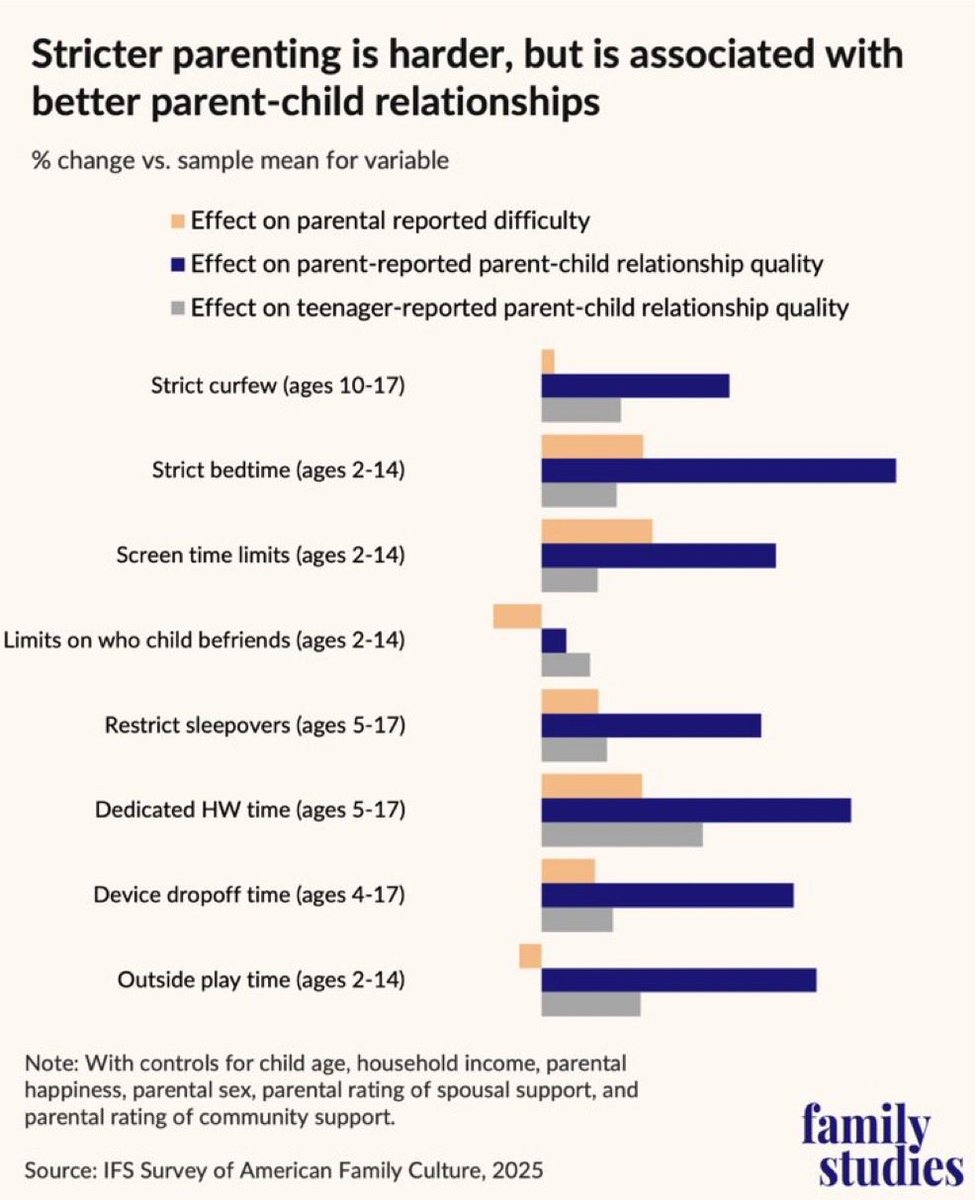
The data is not kind to gentle parenting.
According to teenagers, strict curfews. strict bedtimes, screen limits, device drop off times, dedicated homework blocks, and sleepover restrictions IMPROVE higher relationship quality.
And yes, parenting difficulty goes up.
Of course it does. Leadership is harder than appeasement.
For the past decade we have been sold a watered down, Instagram friendly version of “gentle parenting” that often collapses into boundary avoidance, endless negotiation and emotional processing without enforcement. Parents terrified of saying no because they do not want to rupture connection.
But connection without authority is not connection. It is dependency.
When parents impose structure, the relationship improves.
Teenagers report better parent child relationship quality in homes with curfews and rules. Younger kids report better relationships in homes with screen limits and bedtimes. Even device drop off times correlate positively.
Why?
Because structure is not cruelty. Structure is love made visible.
A bedtime says: your brain matters more than your entertainment.
A screen limit says: your dopamine system is not fully developed and I will guard it until it is.
A curfew says: your safety matters more than your social standing.
That is not authoritarianism. That is caring.
Boundaries create friction. Friction creates growth. The parent absorbs the short term discomfort so the child does not pay the long term cost.
Children do not experience well calibrated limits as rejection. They experience them as stability. The human brain craves predictability. Predictability reduces anxiety. Reduced anxiety strengthens attachment.
That is why relationship quality goes up.
Notice something else in the data. The strongest effects are around time structure. Bedtime. Homework. Devices. Outside play. These are environmental constraints. They scaffold executive function.
The winning formula is not tyranny.
It is high warmth plus high structure.
The modern failure mode is high warmth plus low structure. That is just abdication of responsibility wrapped in empathy.
Children need leadership, not negotiation. They need adults who can tolerate their anger. They need boundaries that do not move every time emotions spike. They need someone whose prefrontal cortex is fully myelinated.
The harder path produces the stronger bond.
Because when a child feels that someone is strong enough to hold the line, they relax. And relaxed nervous systems build durable relationships.
California by Joni Mitchell, released in 1971, found new life when Amanda Seyfried performed it on The Tonight Show with Jimmy Fallon. Sitting with a dulcimer in her hands, she delivered the song with a gentle confidence that immediately caught the room off guard. Her voice was soft but assured, carrying the melody with ease as she played, and you could see Fallon’s genuine surprise as the performance unfolded. What felt like a casual late-night moment quietly turned into something special.
Originally written during Joni Mitchell’s travels through Europe and released on the album Blue, California is a song about homesickness, reflection, and the pull of belonging. Its conversational lyrics and vivid imagery capture the tension between freedom and the desire to return home. Hearing it reinterpreted decades later, with the same honesty and simplicity, reminded everyone why the song remains so emotionally resonant.
That’s why this performance still feels so memorable.
VOLUME NEVER CHANGE:
Define your edge and verify positive expectancy with data. Backtest and track.
Plan the trade. Trade the plan. No ad‑hoc changes once you’re in.
Cut losses quickly. Small, frequent losses are tuition.
Let winners run. Sitting tight on the right trend often pays the most.
In 1929, a man named Roger Babson predicted the crash that would destroy the American economy.
Wall Street laughed at him. 47 days later, they lost everything.
Babson wasn't lucky. He identified a 5-stage pattern that appears before every major financial collapse.
The same pattern showed up before 1987. Before 2000. Before 2008.
And right now, 4 of those 5 stages are flashing red.