Humanity is transitioning into a collective "superorganism,” experts say.
Culture has officially overtaken genetics as the dominant driver of our evolution.
For billions of years, the slow process of natural selection dictated survival, passing advantageous genes down through generations. However, researchers Timothy Waring and Zachary Wood from the University of Maine argue that humanity has entered a historic shift where culture, rather than genetics, is our primary tool for adaptation.
When faced with challenges like disease or vision loss, we no longer wait millennia for genetic mutations; instead, we rapidly invent vaccines and eyeglasses. This rapid transmission of knowledge and technology allows ideas to reshape human survival in a matter of months, essentially bypassing biological evolution entirely.
This profound shift is organizing humanity into a collective "superorganism," closely mirroring the complex social cooperation seen in ant colonies. Our survival now hinges on massive, interconnected networks of institutions, supply chains, and technologies that no individual fully understands, yet collectively protect us. But this superpower has a dark side. The same cooperative structures designed for resource extraction and competition are now driving existential threats like climate change. Ultimately, our future may no longer depend on the biology in our DNA, but on whether we can adapt our global institutions to solve the very problems our collective success created.
source: Waring, T. M., & Wood, Z. T. (2025). Cultural inheritance is driving a transition in human evolution. BioScience, 75(10), 803–819.
Research reveals that holding your baby during sleep helps build the neural pathways essential for lifelong emotional resilience.
Science is increasingly validating what many parents have intuitively known for generations: the gentle act of holding a sleeping baby plays a profound role in shaping early brain development.
Research demonstrates that consistent, soothing physical contact—such as skin-to-skin holding during rest—helps strengthen functional and structural connections between the prefrontal cortex (the brain's hub for higher-order emotional regulation, decision-making, and cognitive control) and the amygdala (the core region for processing fear, threat detection, and emotional reactivity). These prefrontal-amygdala pathways form a critical top-down regulatory circuit: the prefrontal cortex modulates amygdala responses, dampening excessive fear signals and enabling calmer emotional processing over time.
By providing reliable, nurturing touch early in life, caregivers essentially "wire" the infant brain for better stress resilience and emotional balance. This early reinforcement promotes more efficient neural patterns that support self-regulation, reducing vulnerability to intense fear responses or anxiety as the child grows. The benefits extend well into adulthood, establishing a foundational biological scaffold for healthier mental health outcomes—helping individuals cope more adaptively with future stressors and challenges.
In essence, that quiet moment of embrace during sleep transcends mere comfort; it actively contributes to building a child's long-term psychological resilience through targeted neurodevelopmental sculpting.
[Tottenham, N. (2020). "Maternal buffering of human amygdala-prefrontal circuitry during childhood but not during adolescence." Nature Neuroscience]
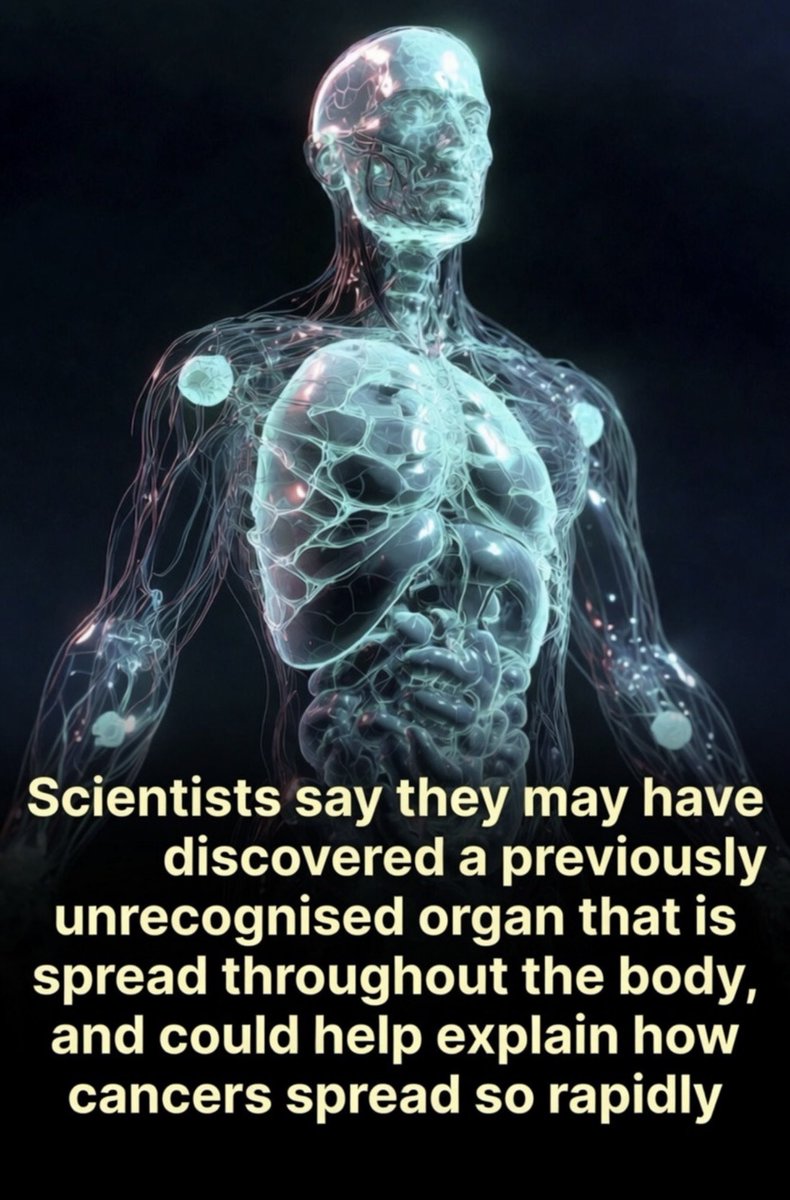
Scientists may have discovered a hidden network inside the human body that had gone unnoticed for decades.
In 2018, researchers described a widespread system of fluid filled spaces found throughout the body and suggested it could qualify as a newly recognized organ called the interstitium.
The structure is located beneath the skin, surrounding muscles, lining organs such as the lungs and digestive tract, and wrapping around blood vessels and the urinary system. For years, these layers were thought to be made mostly of dense connective tissue.
But when scientists examined living tissue using a laser imaging method known as probe based confocal laser endomicroscopy, they found something unexpected.
Instead of tightly packed solid tissue, they observed interconnected pockets filled with fluid and supported by a flexible network of collagen and connective fibers.
Researchers believe the structure had been missed for so long because of the way tissue samples are traditionally prepared for microscopes. Standard preparation methods involve chemically fixing tissue before examination, a process that drains the fluid and causes the spaces to collapse, making them appear solid.
In living tissue, however, the channels remain open and connected.
Scientists think the interstitium may help move fluid through the body and could influence inflammation, tissue aging, and even the spread of cancer.
Some researchers suspect these fluid pathways may help explain how certain cancers spread so quickly. Once cancer cells enter the network, the channels may allow them to travel into the lymphatic system and reach other parts of the body more easily.
The structure may also play a role in wrinkles and the stiffening of tissue that occurs with age.
Not all scientists agree that the interstitium should officially be classified as its own organ, and debate continues within the scientific community. Even so, the discovery has changed how many researchers think about human anatomy.
Read the study:
“Structure and Distribution of an Unrecognized Interstitium in Human Tissues.” Scientific Reports.
@teddy_Dwyane@PatMcAfeeShow Based on what? They're bigs who are nimble? Thats not all around. It basic basketball skill. You are not the authority. Coach K who has coached for decades players that have been hall of fame players, gold medalists, and all dimensions of basketball knows more than you.
@ParlayDre@teddy_Dwyane@PatMcAfeeShow Those are his position numbers. Don't forget all defensive. You vs coach k....hmmm. McAfee should have inquired as to your opinion. Lol. All around meaning skill level, not stats.
@ParlayDre@teddy_Dwyane@PatMcAfeeShow Those are his position numbers. but as a player, he was all around the best. You vs coach k?....hmmm. why didn't McAfee just get ahold of you. Oh, I know why. Your not qualified therefore, you have no idea





![Rainmaker1973's tweet photo. Research reveals that holding your baby during sleep helps build the neural pathways essential for lifelong emotional resilience.
Science is increasingly validating what many parents have intuitively known for generations: the gentle act of holding a sleeping baby plays a profound role in shaping early brain development.
Research demonstrates that consistent, soothing physical contact—such as skin-to-skin holding during rest—helps strengthen functional and structural connections between the prefrontal cortex (the brain's hub for higher-order emotional regulation, decision-making, and cognitive control) and the amygdala (the core region for processing fear, threat detection, and emotional reactivity). These prefrontal-amygdala pathways form a critical top-down regulatory circuit: the prefrontal cortex modulates amygdala responses, dampening excessive fear signals and enabling calmer emotional processing over time.
By providing reliable, nurturing touch early in life, caregivers essentially "wire" the infant brain for better stress resilience and emotional balance. This early reinforcement promotes more efficient neural patterns that support self-regulation, reducing vulnerability to intense fear responses or anxiety as the child grows. The benefits extend well into adulthood, establishing a foundational biological scaffold for healthier mental health outcomes—helping individuals cope more adaptively with future stressors and challenges.
In essence, that quiet moment of embrace during sleep transcends mere comfort; it actively contributes to building a child's long-term psychological resilience through targeted neurodevelopmental sculpting.
[Tottenham, N. (2020). "Maternal buffering of human amygdala-prefrontal circuitry during childhood but not during adolescence." Nature Neuroscience]](https://pbs.twimg.com/media/HMH4ClFW4AA1JxI.jpg)