Tarik Skubal's nine-year, $450 million deal with the New York Mets is the largest for a pitcher in baseball history, $125 million ahead of Yoshinobu Yamamoto's deal. A monumental contract for Skubal, a monumental add for the Mets. @JonHeyman was first on the agreement.
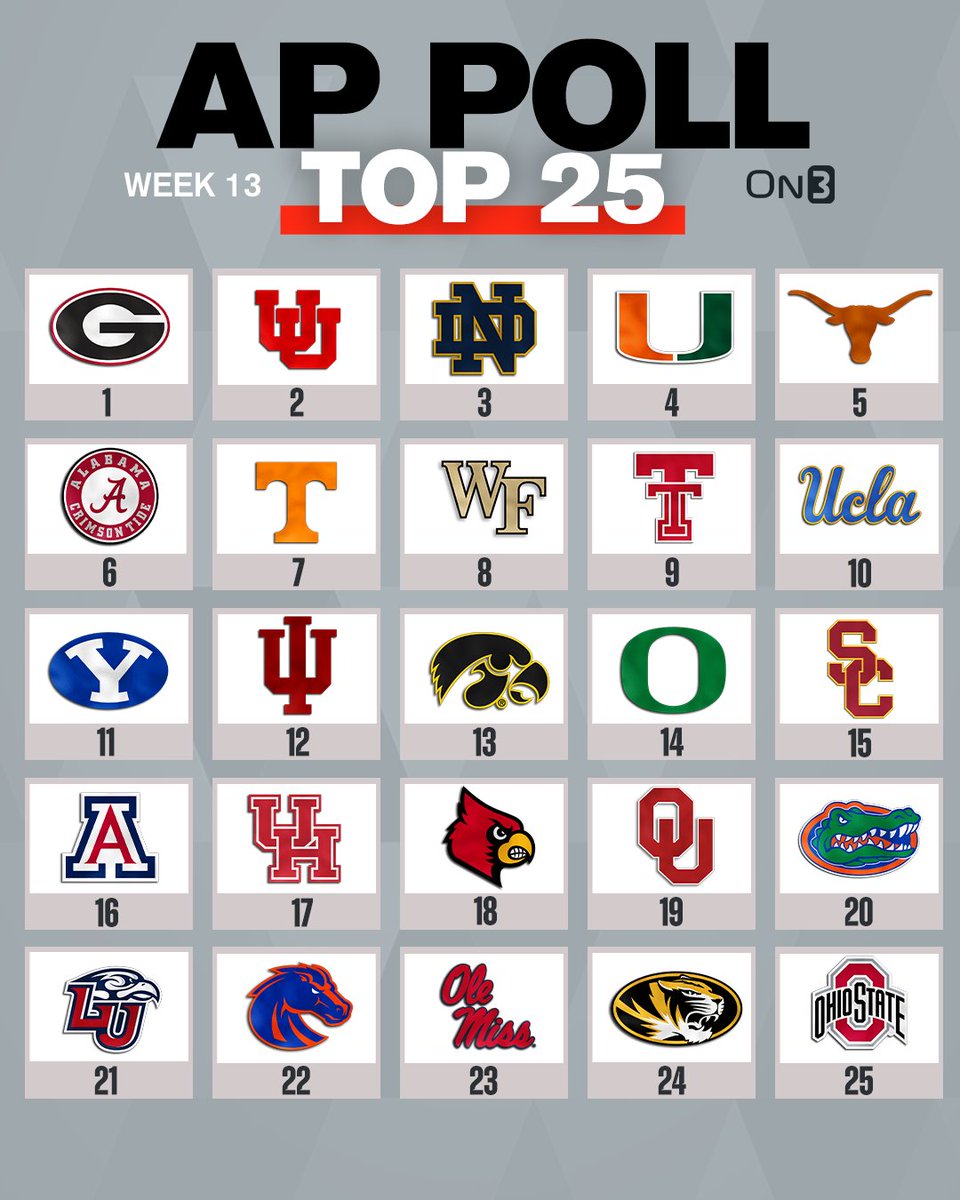
BREAKING: Four-Star OT Wyatt VanBoening has Committed to Notre Dame, he tells me for @Rivals
The 6’7 295 OT chose the Fighting Irish over Northwestern, Wisconsin, and Iowa
He’s ranked as a Top 65 Recruit (No. 8 OT) in the 2028 Rivals300
“Go Irish☘️”
https://t.co/4EJHBqsa9G
BREAKING: Elite 2027 LB AJ Randle Jr. has Flipped his Commitment from Miami to Notre Dame, he tells me for @Rivals
The 6’3 215 LB had been Committed to the Hurricanes since May
Randle is ranked as the No. 2 LB in the 2027 Rivals300
https://t.co/N7GwUKRL2r
Saint Cecilia of Rome is venerated as an early Christian virgin and martyr, traditionally a noblewoman of the third century. According to the ancient accounts she consecrated her virginity to God from youth, yet her parents arranged her marriage to the pagan Valerian. On their wedding night she told him of her vow and of the angel who guarded it; he accepted her witness, was baptized, and with his brother Tiburtius openly professed the faith. Both brothers were put to death, and Cecilia herself was then arrested.
The prefect ordered her suffocated in the heated baths of her own house, but she survived the ordeal. An executioner was then sent to behead her; after three blows he left her still living, and she lingered three days, during which she gave her goods to the poor and entrusted her house to the Church. She was buried in the Catacomb of Callixtus. Later tradition holds that she sang in her heart to the Lord while musicians played at her wedding, and she is therefore honored as the patron of music and musicians. Her feast is kept on 22 November, and her name is among those commemorated in the Roman Canon.
The Solemnity of Christ the King was instituted by Pope Pius XI in 1925 with the encyclical ‘Quas Primas’ amidst the rise of secularism and totalitarian regimes. It was meant to reaffirm the kingship of Christ over all aspects of life, both personal and societal. Christ's dominion extends over all creation, highlighting that His kingdom is one of truth and life, holiness and grace, justice, love, and peace. It's a reminder that all authority on Earth is subject to Our Lord’s supreme authority.
The liturgy is an album in which every epoch of Church history immortalizes itself. Therein, accordingly, can be found the various pictures of Christ beloved during succeeding centuries. In its pages we see pictures of Jesus suffering and in agony; we see pictures of His Sacred Heart; yet these pictures are not proper to the nature of the liturgy as such; they resemble baroque altars in a gothic church. Classic liturgy knows but one Christ: the King, radiant, majestic, and divine.
With an ever-growing desire, all Advent awaits the "coming King"; in the chants of the breviary we find repeated again and again the two expressions "King" and "is coming." On Christmas the Church would greet, not the Child of Bethlehem, but the Rex Pacificus — "the King of peace gloriously reigning." Within a fortnight, there follows a feast which belongs to the greatest of the feasts of the Church year — the Epiphany. As in ancient times oriental monarchs visited their principalities (theophany), so the divine King appears in His city, the Church; from its sacred precincts He casts His glance over all the world....On the final feast of the Christmas cycle, the Presentation in the Temple, holy Church meets her royal Bridegroom with virginal love: "Adorn your bridal chamber, O Sion, and receive Christ your King!" The burden of the Christmas cycle may be summed up in these words: Christ the King establishes His Kingdom of light upon earth!
If we now consider the Easter cycle, the luster of Christ's royal dignity is indeed somewhat veiled by His sufferings; nevertheless, it is not the suffering Jesus who is present to the eyes of the Church as much as Christ the royal Hero and Warrior who upon the battlefield of Golgotha struggles with the mighty and dies in triumph. Even during Lent and Passiontide the Church acclaims her King. The act of homage on Palm Sunday is intensely stirring; singing psalms in festal procession we accompany our Savior singing: Gloria, laus et honor tibi sit, Rex Christe, "Glory, praise and honor be to Thee, Christ, O King!" It is true that on Good Friday the Church meditates upon the Man of Sorrows in agony upon the Cross, but at the same time, and perhaps more so, she beholds Him as King upon a royal throne. The hymn Vexilla Regis, "The royal banners forward go," is the more perfect expression of the spirit from which the Good Friday liturgy has arisen. Also characteristic is the verse from Psalm 95, Dicite in gentibus quia Dominus regnavit, to which the early Christians always added, a ligno, "Proclaim among the Gentiles: the Lord reigns from upon the tree of the Cross!" During Paschal time the Church is so occupied with her glorified Savior and Conqueror that kingship references become rarer; nevertheless, toward the end of the season we celebrate our King's triumph after completing the work of redemption, His royal enthronement on Ascension Thursday. 🧵