"Si sólo quisieras ser feliz, esto podría lograrse fácilmente; pero deseamos ser más felices que otras personas, y esto siempre es difícil, porque creemos que otros son más felices que nosotros”.
-Montesquieu
In 2010, I started contributing to my retirement account. Back then, the maximum annual IRA contribution was just $5,000, and I’ve contributed the maximum every year since. Over the last approx 16 years, I’ve invested roughly $100,000 of my own money. Through patient, sensible investing, the account has grown to more than $1.1 million.
At first glance, that looks like roughly a 16% CAGR, but that’s actually a misleading way to measure the return because it assumes the entire $100,000 was invested on day one. In reality, money was added every year for 16 years, so much of the capital had less time to compound. The proper way to measure performance is with a money weighted return calculation (XIRR), which would be north of 25% CAGR. Calculating the exact figure requires the precise dates and amounts of every contribution, which I am too lazy to do.
For perspective, the S&P 500 compounded at roughly 14% annually over approximately the same period. The lesson isn’t that I beat the market, the lesson is that even a small annual edge, compounded over many years, can produce dramatically different outcomes.
To be fair, I was fortunate enough to own two investments that each became 30 baggers, and they accounted for a significant portion of the gains. Luck always plays a role in investing. But luck also tends to favor investors who stay in the game long enough to let exceptional businesses surprise them.
One of the biggest lessons I’ve learned is that investing isn’t about being right all the time. I made plenty of mistakes along the way. The overwhelming majority of my wealth came from just a handful of decisions. You don’t need to hit a home run every year. You need to avoid catastrophic mistakes, recognize exceptional businesses when you find them, and then have the discipline to hold them while they continue compounding.
The hardest part wasn’t finding those businesses. The hardest part was continuing to hold them after they doubled, tripled, went up 10x, and eventually more than 30x. Every step of the way there were reasons to sell. Every step of the way there were people saying they were overvalued. Looking back, my greatest enemy wasn’t inflation, recessions, or bear markets. It was the temptation to interrupt compounding.
I also realized something fascinating as the portfolio grew. In the beginning, my annual contributions were the primary driver of my wealth. Eventually, they became almost irrelevant. The businesses themselves began creating more wealth than I could contribute through new savings. That’s the moment you truly understand the power of ownership. The first $100,000 came from me. The next million increasingly came from the businesses I owned.
That’s why I believe the biggest secret in investing isn’t finding hundreds of great stocks. It’s finding a few truly exceptional businesses, buying them at sensible prices, and then having the patience to let time do what almost no investor is willing to allow it to do.
Compounding doesn’t look impressive in the beginning. It whispers for years before it roars (borrowed this quote is from my book 😉). The greatest fortunes are rarely built by constantly making brilliant decisions. They’re built by making a handful of great ones… and then having the discipline to get out of their way.
🌹
¿En qué lugar te enseñan a ser un adulto pro, un hombre, un cabrón que resuelve sin dramas?
Nadie te puede enseñar a ser un hombre-hombre.
Ser un hombre-hombre es una decisión.
Una decisión dolorosa, porque automáticamente te aleja de mucha gente.
Te aleja de los que están fingiendo, jugando al teatro de la adultez, pero que quieren todo suavecito, tranquilo, balanceado, lento.
Hay muchos hombres-hombres, pero están desperdigados cuidando a los suyos y construyendo lo suyo.
Esa separación te hace pensar que no hay nadie que te entienda.
Esto es como en el gym y la gente que ya te ubica ahí.
El tipo que es un pro igual que tú y que va a lo que va.
Tú no sabes su nombre, él no sabe el tuyo.
Pero tú lo respetas. Él te respeta.
Hay un entendimiento tácito, un reconocimiento intangible del uno para el otro.
Eso es en el gym, pero en la vida es igual.
Un hombre-hombre reconoce a otro.
Porque lo ves haciendo lo que tiene que hacer.
Puedes apreciar su enfoque y determinación.
Lo puedes medir bien cuando habla, cómo se expresa, la chispa que trae.
El camino del hombre-hombre comienza no engañándose uno mismo.
(Como dijo Feynman, uno mismo es el más fácil de engañarse).
No engañarte a ti mismo no significa que te tienes que decir solamente lo malo: significa que también puedes ver lo genial de lo que haces y aplaudírtelo tú mismo sin pena.
Cuando eres hombre-hombre, tú te pones la presión, tú te pones las cifras, tú te pones el objetivo, tú te pones las fechas, tú te pones los parámetros.
Nada de lo que te exija una pareja, un trámite, un grupo social, un jefe, nada de eso te estresa o te quiebra, porque la exigencia contigo mismo es de tal nivel en su estándar que lo demás te parece nada.
Tu rutina es insultante para casi todos.
Tus ideas, tus proyectos, son tontos, ridículos y exagerados para casi todos.
Y qué. No los necesitas, de la misma manera que en el gym no le tienes que explicar a nadie la rutina automática, aburrida y repetitiva que ya tienes, en tu vida de hombre-hombre no tienes que pedir disculpas ni dar explicaciones a nadie de por qué te vas a dormir temprano, de por qué ya no vas a ir a esas reuniones de tu generación de la primaria, de por qué te vas a salir de ese grupito de WhatsApp donde son puras tonterías tras otras, de por qué comes lo comes en las porciones y horas en que lo comes.
El hombre-hombre parece solitario, pero en realidad solo necesitas unas cuantas personas en las cuales vierte su amor, su enfoque, sus recursos. Uno o dos amigas, su familia, su pareja, algunos colaboradores y así. Con eso es suficiente. En el ápice de la confianza personal, la cantidad de gente a la que quieres quedarle bien disminuye astronómicamente.
Una marca perfecta de la inseguridad es la necesidad de querer rodearnos todo el tiempo de ruido y de mucha gente.
(La enorme mayoría de personas son de relleno, son de cristal, son NPCs, todo esto que te estoy diciendo aquí las va a ofender, les va a molestar y obviamente se van a burlar —sobre todo en privado— con estas cosas ridículas de "hombre-hombre" y demás. Identifícalos y ve dónde están y a dónde te va a llevar conectar con lo que dicen).
Nadie te puede enseñar a ser hombre-hombre.
Ser hombre-hombre es una decisión.
El camino ha sido recorrido millones de veces en la historia de la humanidad.
No reinventes la rueda.
Haz lo que sabes que tienes que hacer.
S.H-H.Y.S.A.
—A.
Working in finance is realizing that the job is often an escape from real life for a lot of people in the industry
The MDs and VPs with children who are staying in the office past 10 PM instead of spending time with their kids
The PE and HF portfolio managers who continue to stick around despite having a net worth that should have made them leave a decade ago
Some of them are there because they truly love the grind. Others because they are deeply unhappy with their personal lives and view the job as the only avenue where they have full control over the outcomes
The irony is that the unhappiness stems from all the sacrifices they made for this job in the first place, whether that is in their relationships or friendships
But the stockholm syndrome is real, and their careers are so core to their personality that it is impossible to leave behind
“Todo lo que quiero saber es donde voy a morir, para nunca ir allí”
Munger dijo que es más importante como se llega al fracaso para evitarlo a toda costa.
My opinion is that you will learn 10x more from studying failure than you will by studying success
As Charlie Munger says “inverse, always inverse."
An easy path to success is to avoid catastrophic failure. Teach yourself what not to do and rest takes care of itself
La 1ra empresa convierte cada dólar de EBITDA en 80 centavos de flujo libre de efectivo (FCF); la otra solo en 30 centavos de FCF.
Desgraciadamente el EBITDA enmascara la economía de un negocio. Pero nadie se hace rico con el EBITDA, te haces rico con el efectivo de la caja ↓:
@gabiciddeleon «¡Perder un tren solo duele si corres tras él!
Del mismo modo, no igualar la idea de éxito que los demás esperan de ti solo duele si eso es lo que buscas.»
El éxito se revela en todo aquello que dejamos de perseguir con devoción ↓:
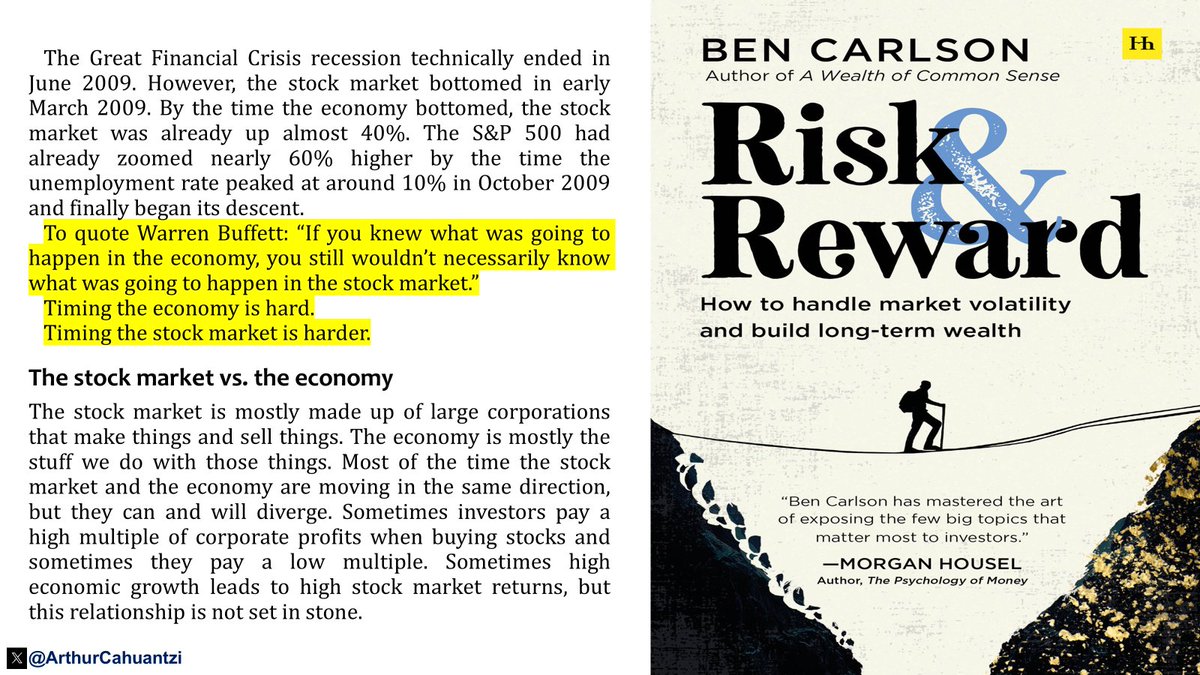
«Parafraseando a Warren Buffett:
"Aunque supieras lo que va a pasar en la economía, no necesariamente sabrías lo que va a pasar en el mercado de valores".
Cronometrar la economía es difícil.
Cronometrar el mercado de valores es más difícil.» ↓:
Tres frases atemporales del libro: How Will You Measure Your Life, de Clayton Christiansen
1/
"En mi experiencia, las personas con grandes logros se concentran mucho en convertirse en la persona que quieren ser en el trabajo, y muy poco en la persona que quieren ser en casa."
🚨Update: Mexico has absolutely NO air defense capabilities to speak of, even compared to Venezuela!
Mexico does not operate any dedicated ground-based SAM systems, such as medium- or long-range missiles (e.g., no Patriot, S-300, Buk, or similar). There are no widespread reports of modern anti-aircraft missile batteries in the inventory for territorial air defense.
Limited short-range systems exist primarily with the Mexican Navy (SEMAR) for ship self-defense.
Mexico’s primary air-to-air capability comes from a very small number of aging Northrop F-5E/F Tiger II fighters (often reported as around 3–8 operational aircraft in recent sources). These date back to the early 1980s!