🫁 HEMOPTYSIS: COUGHING UP BLOOD
Hemoptysis is the coughing up of blood or blood-stained sputum originating from the lower respiratory tract.
🔴 Common causes:
• Pulmonary TB
• Pneumonia/bronchitis
• Bronchiectasis
• Lung cancer
• Pulmonary embolism
• Bleeding disorders
🧪 Key investigations:
• FBC/CBC
• PT/INR & aPTT
• Sputum microscopy/culture
• AFB/molecular TB testing
• Chest X-ray/CT
• Bronchoscopy when indicated
⚠️ Significant or recurrent bleeding, difficulty breathing, chest pain, dizziness or fainting requires urgent medical attention.
Remember: Hemoptysis is a symptom, not a diagnosis. Finding the underlying cause is key.
#MedicalLaboratoryScience #Hemoptysis #MedTwitter #Healthcare
🧠 Dissociative Identity Disorder (DID)
Dissociative Identity Disorder (DID) is a mental health condition characterized by the presence of two or more distinct personality states or identities, together with recurrent gaps in memory that cannot be explained by ordinary forgetfulness.
🔹 Common Symptoms
Two or more distinct identity states
Memory gaps or episodes of amnesia
Feeling detached from yourself or your surroundings
Sudden changes in behavior, preferences, or mannerisms
Confusion about personal identity
Anxiety, depression, or sleep disturbances
Difficulty remembering important personal information
🔹 What Causes DID?
DID is strongly associated with severe, repeated trauma—particularly during childhood. It is thought to develop as a coping mechanism when a person is exposed to overwhelming experiences.
🔹 Diagnosis
Diagnosis is made through a comprehensive psychiatric assessment. Clinicians look for characteristic identity disruptions and recurrent memory gaps while ruling out other conditions, substance effects, neurological disorders, or culturally accepted experiences.
🔹 Treatment
There is no specific medication that directly cures DID. Treatment generally focuses on:
Psychotherapy/trauma-focused therapy
Establishing safety and emotional stability
Managing anxiety, depression, or other associated symptoms
Improving functioning and memory
Gradual integration or better coordination of identity states, depending on the individual's treatment goals
⚠️ Important
DID is not the same as schizophrenia. Schizophrenia is primarily a psychotic disorder involving symptoms such as hallucinations, delusions, and disorganized thinking, whereas DID involves identity disruption and dissociation.
DID is a real and complex mental health condition, and people experiencing symptoms should be assessed by a qualified mental-health professional.
👶 COLIC IN BABIES
Colic is a condition in which an otherwise healthy baby cries excessively and is difficult to soothe, often without an obvious cause.
🔹 How to recognize colic
A baby with colic may:
Cry intensely, often for several hours
Cry more frequently in the evening
Clench their fists
Draw their legs toward the abdomen
Have a red or flushed face while crying
Appear to have abdominal discomfort
Be difficult to calm despite feeding, changing or cuddling
🔹 What causes colic?
The exact cause is not fully understood. Possible contributing factors include:
Immature digestive system
Swallowed air and gas
Overstimulation
Difficulty settling or self-soothing
Sensitivity to certain foods or formula in some babies
🔹 What can parents do?
✅ Hold and cuddle the baby
✅ Burp the baby properly after feeds
✅ Avoid overfeeding
✅ Keep the baby upright during and after feeding
✅ Try gentle rocking or walking
✅ Reduce excessive noise and stimulation
✅ Use gentle tummy massage when the baby is calm
Never shake a crying baby. If you feel overwhelmed, place the baby safely on their back in a cot and take a short break.
🚨 When should you seek medical attention?
Do not automatically assume excessive crying is colic. Seek medical care if the baby has:
Fever
Persistent vomiting, especially green vomit
Blood in the stool
Difficulty breathing
Poor feeding
A swollen or unusually hard abdomen
Unusual sleepiness or weakness
Poor weight gain
A sudden change in crying pattern
Remember: Colic is a diagnosis of exclusion. A healthcare professional should assess a baby with persistent or unusual crying, especially in very young infants.
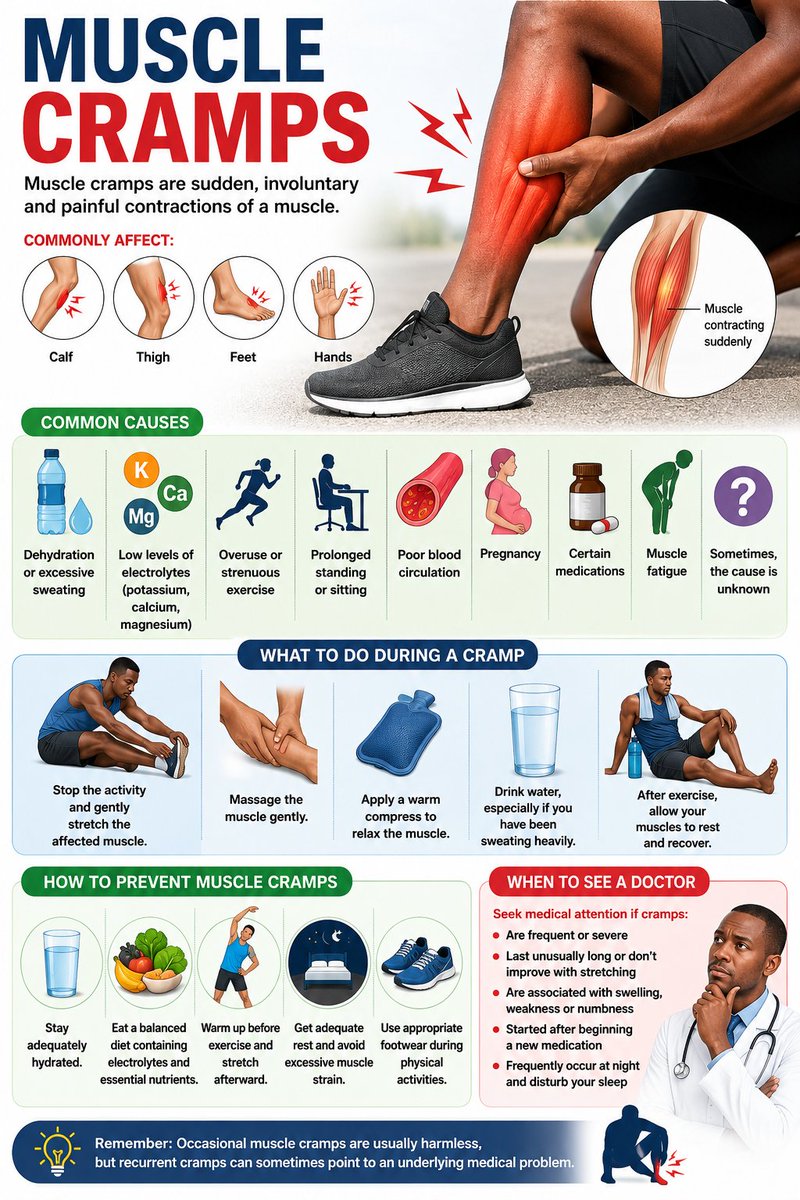
💪 Muscle Cramps
Muscle cramps are sudden, involuntary and painful contractions of a muscle. They commonly affect the calf, thigh, feet and hands and may last from a few seconds to several minutes.
🔹 Common Causes
Dehydration or excessive sweating
Low levels of electrolytes such as potassium, calcium or magnesium
Overuse or strenuous exercise
Prolonged standing or sitting
Poor blood circulation
Pregnancy
Certain medications
Muscle fatigue
Sometimes, the cause is unknown
🔹 What to Do During a Cramp
✅ Stop the activity and gently stretch the affected muscle.
✅ Massage the muscle gently.
✅ Apply a warm compress to relax the muscle.
✅ Drink water, especially if you have been sweating heavily.
✅ After exercise, allow your muscles to rest and recover.
🔹 How to Prevent Muscle Cramps
💧 Stay adequately hydrated.
🥗 Eat a balanced diet containing electrolytes and essential nutrients.
🏃 Warm up before exercise and stretch afterward.
🛌 Get adequate rest and avoid excessive muscle strain.
👟 Use appropriate footwear during physical activities.
⚠️ When to See a Doctor
Seek medical attention if cramps:
Are frequent or severe
Last unusually long or don't improve with stretching
Are associated with swelling, weakness or numbness
Started after beginning a new medication
Frequently occur at night and disturb your sleep
Remember: Occasional muscle cramps are usually harmless, but recurrent cramps can sometimes point to an underlying medical problem.
Almighty. Keep our hearts focused and faith firm despite these heartbreaking days. Help us to not be discouraged with what’s going on around us. We will keep asking You. We know You’re indeed the Best of Planners. Aameen.
You may think your life is hopeless. Little do you know that the Almighty has a plan for you. Keep praying. Keep asking Him. He can turn your life around in the blink of an eye.