Worked four decades with global Oil Companies. Retired. Promoting professional excellence in Pakistan's leading Engineering Co. Sports enthusiast. Abdalian.
I sit across from a LUMS graduate. Lanky, nerdy sharp as hell GPA 3.4.
I end the interview with: "Ask any question?"
Q: “Sir, why did you return to #Pakistan from abroad?"
Since 2020, I’ve been only asked this exact question. Every single time.
Youth don't ask about their prospects, or where the industry is heading. Youth ask me to justify returning to 🇵🇰!
To them, coming home is not an achievement. It is a stupid mistake that needs explaining.
And the consequence is already visible.
🔴 Tier 1 talent is gone — Dubai, London, Silicon Valley.
🔴 Tier 2 works for multinationals here.
🔴 Tier 3 is what's left for our local companies.
We are asking our Tier 3 talent to build our industry, our #technology, our future.
You cannot compete with the talent everyone else already passed over.
We lost our youth, and our future, the day they stopped believing that staying was rational.
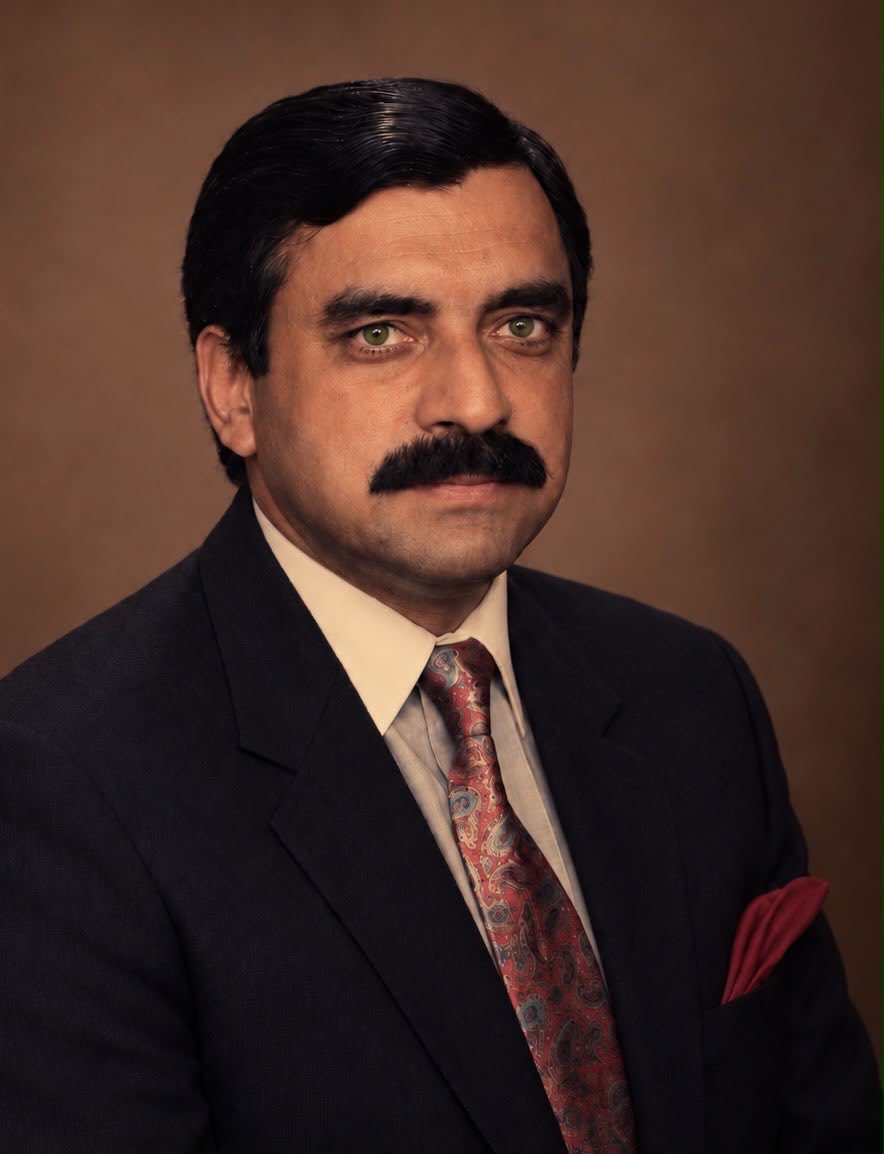
Pakistan has lost a man whose legacy lies deep beneath its soil. Tariq Majeed Jaswal led exploration at OGDCL & Pakistan Oil fields through remarkable periods of discovery. His internationally recognised research helped decode some of Pakistan’s most complex petroleum geology. But perhaps his greatest legacy is yet to unfold.
The wells he helped discover produced energy and the research he published produced knowledge. And the exploration roadmap he has left behind may produce discoveries for years to come.
Few professionals leave their signature beneath the soil of their country. Tariq Majeed Jaswal did. May his knowledge and service become Sadaqah-e-Jariyah and may his soul rest in peace. Ameen.
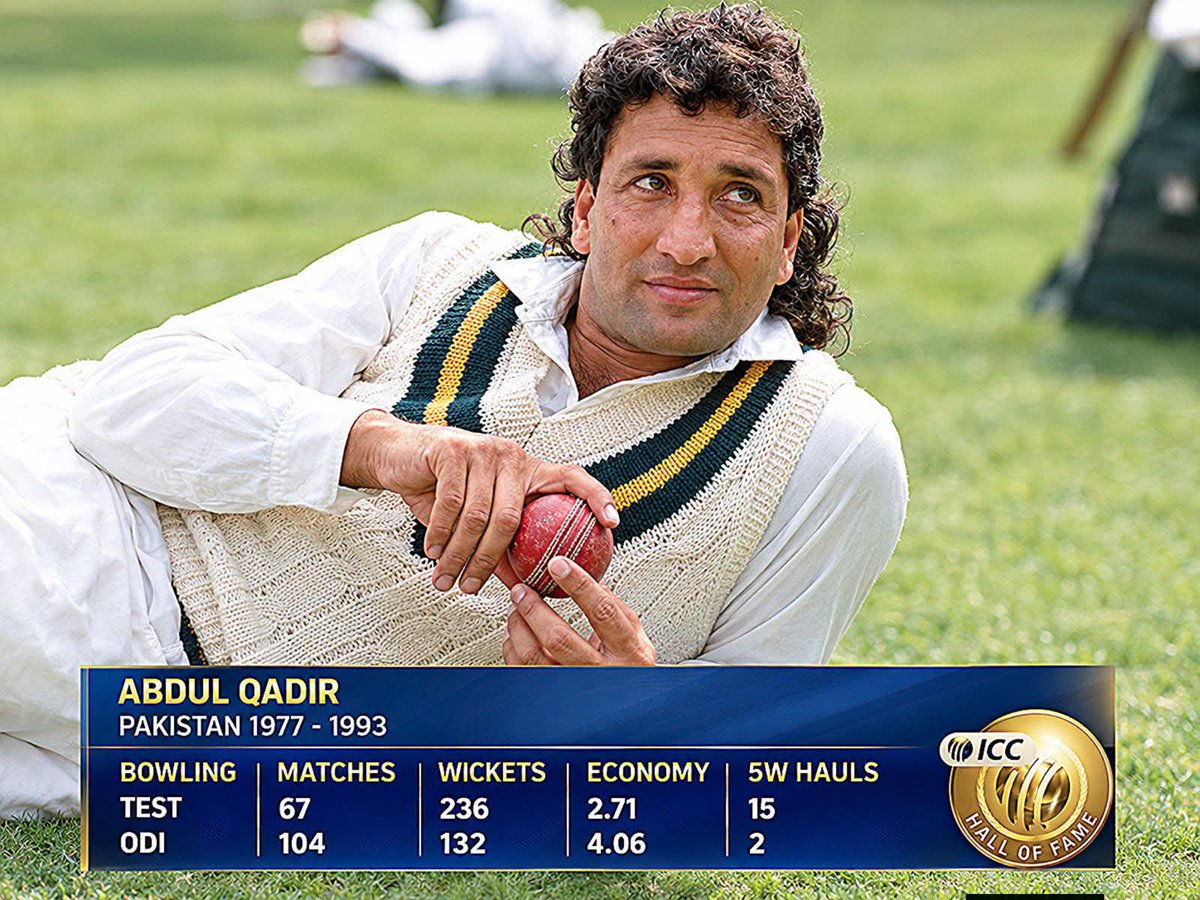
Today would have been Abdul Qadir's 71st birthday. Seven years ago, we lost him just nine days short of reaching his 64th. Imran Khan said his statistics did not do justice to his genius, while Graham Gooch, who rated him even finer than Shane Warne, called him the master of his era. The world remembers the wickets, but today's the day to remember the man behind them. Happy birthday, Abdul Qadir.
Start with the decade he was playing in, because that is where Qadir's greatness becomes properly difficult to understand. The 1980s belonged to four-pronged pace attacks, while wrist-spin was close to extinct as a front-line weapon. Finger spinners could hold an end and give the quicks a rest, but Qadir was there to attack. In the 1987 series against England, he took 30 wickets in three Tests, including 9 for 56 and 13 for 101 at Lahore, turning leg-spin into Pakistan's main weapon in a way few others could.
Then comes the part that tells you how seriously the people around him regarded his talent. Imran Khan later said Qadir's statistics did not do justice to his genius and believed that, with modern DRS, he could have taken as many wickets as Shane Warne. You can argue about the exact comparison, but the point behind it is difficult to miss. Imran had watched Qadir at close quarters, and he believed the record book had understated what he was capable of. The numbers were already extraordinary, but the people who faced him saw something beyond them.
Now the part that connects Qadir to the next great chapter of leg-spin. When Shane Warne came to Pakistan in 1994 on his first tour, he went to Qadir's home in Lahore at Steve Waugh's suggestion to learn from him. Warne later said that anybody who bowled leg-spin in the eighties looked up to Qadir, calling him the main leg-spinner of that era. The man who would eventually take 708 Test wickets had gone to learn from the Pakistani magician who had helped keep the craft alive.
And that is why Abdul Qadir deserves to be remembered today. He was not simply a great Pakistan bowler, he was one of the men who kept leg-spin alive long enough for the next generation to inherit it.
Happy birthday, magician. Cricket has had many great spinners, but it only had one Abdul Qadir.
Pakistan spends billions on flyovers, underpasses and “signal-free corridors” while most of the developed world is moving the other way.
•Karachi, Lahore and Rawalpindi keep adding grade-separated junctions to eliminate signals. Official lists already show 40+ flyovers in Karachi plus many underpasses; Punjab is pouring tens of billions of rupees into new ones in Rawalpindi and Lahore.
•These projects are expensive, politically visible, and sold as congestion solutions. Studies and local reporting repeatedly show they often fail to deliver lasting relief, increase speeds and crash severity, and starve pedestrians and public transport of space and funding.
•Meanwhile Western cities spent the last 20–30 years learning the opposite lesson. San Francisco tore down the Embarcadero Freeway. Portland replaced Harbor Drive with a park. Milwaukee, Rochester and others converted inner-city freeways into boulevards. Birmingham is now studying removal of the Hockley Flyover. Seoul famously replaced an elevated highway with a restored river.
•Europe never built many urban flyovers to begin with and now favors compact junctions, roundabouts, transit priority and traffic calming. New multi-level stacks at ordinary city intersections are rare.
•The pattern is induced demand + community severance + high maintenance + poor pedestrian outcomes. Money that could go to buses, BRT, sidewalks or cheaper roundabouts instead buys more concrete that many cities now regret.
The rest of the world is not pretending flyovers are a 21st-century urban solution. Pakistan is still treating them as one.
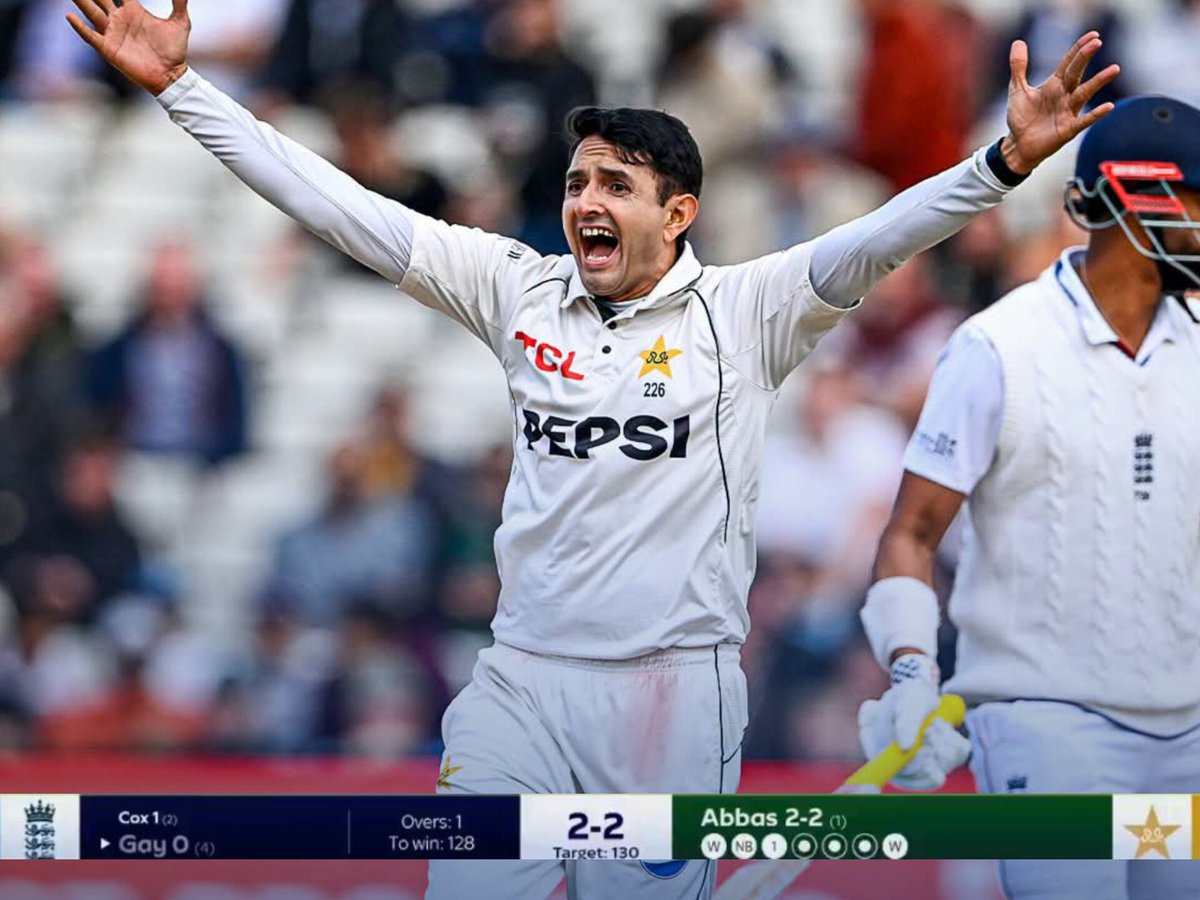
This might be the last time we see Mohammad Abbas in a Pakistan jersey in England. He is 36, and Pakistan only tour here once every few years.
This man was a welder in his village. He did not play a Test until he was 27. He now has the best Test bowling average in the history of Pakistan cricket, better than Imran Khan's. This England series has been a tribute to Mohammad Abbas and his awesome seam bowling.
He has an excellent relationship with England. He knows these conditions better than most England players do. He has 291 County Championship wickets at 19.89, across Leicestershire, Hampshire, Nottinghamshire and now Derbyshire. Cricinfo once wrote that he looks like he was born to play county cricket.
You cannot complain even a little bit about what he gave us this series. The same patch of grass, over and over, until somebody plays at one he should have left alone. A machine with control built into his body.
Absolutely incredible.
I'd argue Younis Khan is among the best Asian players ever to own the sweep shot. AB de Villiers learned the sweep by watching Younis Khan. So did Kumar Sangakkara. Two of the greatest batters of the modern age went to school on a Pakistani's cross-bat shot, and the strange part is what de Villiers said he was actually copying wasn't the technique, but the willingness to risk the top edge.
Younis Khan was always adept at playing spin on slow, low and turning pitches, and the sweep was the centre of everything. He has explained why himself. He said it was easier to sweep a left-arm spinner or a legspinner because the ball breaks away from the right-hander and meets the bat nicely, whereas an offspinner turning it into you can skid under the bat and hit the pads or the stumps. And he said it was always easier on a turning wicket, because the ball already had some break and force, and he was simply helping it on its way. A turning pitch made his best shot easier, not harder.
But it only worked because of what came before the shot. His stance and base position let him pick length early, and there was a forward press starting just before the ball was released, which meant half the movement was already done by the time he committed. He had two versions of the sweep: the conventional one, down on one knee with the body upright, getting right to the pitch of the ball to kill the movement, and a second one where the front leg extended further down the pitch and an exaggerated crouch brought his chest to within touching distance of his knee, letting him reach lengths and angles nobody else could.
Then the other half, and the reason he could sweep so freely. The forward push with the bat straight and, crucially, in front of the pad, head nicely over the ball. That is the defence that kills the arm ball. No gap to squeeze through, nothing sliding on to hit the pad first. Left-arm orthodox on a turner has two weapons, the one that spins past the edge and the one that goes straight on, and Younis had removed the second before the bowler ran in.
He was asked once for tips on the sweep. He said there are no tips, you have to be brave, and that if you get out sweeping, the whole world will be after you.
He was not exaggerating. He reached his 10,000th Test run with a sweep. He brought up his triple hundred with a reverse sweep. And the last shot he played in international cricket was a sweep, off a full toss, and it got him out.
Dawn once called him the last good sweeper Pakistan produced, and argued that losing the shot is exactly why our batsmen became so vulnerable to left-arm spin. Look at the last decade and tell me they were wrong.
The man was truly terrific against spin. What a top player he was.
Pakistan's Test record has tipped the other way 👀
For the first time since 1987, Pakistan have more Test losses (154) than wins (153)
The last time this was the case, following their draw against England at The Oval in August 1987, they had 39 wins and 40 defeats from 170 Tests. The Lord’s Test against England was their 473rd.
Yesterday Germany became first country to win 4 hockey world cups to equal Pakistan with most world cup victories..32 years after Pakistan won it's last world cup! From 1960 to 1994 we played in 7 olympics and won 3 hockey gold medals. During same period there were 8 world cups and we won 4! 7 asian games. We won hockey gold medals in 5 of them! After a long time we are seeing some signs of life in Pakistan hockey. Let's give it the focus and resources the national game deserves and make Pakistan a hockey super power again
A Proud Moment for Pakistan on the International Stage
Pakistani hockey legend Shahbaz Ahmad Senior, often called the "Maradona of Hockey" and the captain of the 1994 World Cup-winning team, was honoured by the FIH to present the Best Player Award to Argentina's star at the FIH World Cup 2026. As the only athlete in hockey history to win consecutive World Cup Player of the Tournament awards (1990 & 1994), Shahbaz Senior’s attendance highlights Pakistan’s distinguished sports legacy and international reputation.
For the “65 billion barrels” to be developed, Trump will have to rely heavily on U.S. and international oil companies, particularly the majors.
According to Rystad Energy, Venezuela would require at least $183 billion in investment to raise oil production to 3 million barrels per day by 2040.
But international oil companies cannot simply be compelled to invest in Venezuela. Capital will flow to projects offering the most attractive risk-adjusted returns.
Oil frontiers such as Guyana, Brazil and Namibia generally offer significantly lower project breakevens, making them potentially more attractive destinations for major oil companies that ultimately have to justify their investment decisions to shareholders.
A year earlier, India's batsmen had surrendered a Test match rather than keep facing this bowling attack. Wasim Raja faced the same bowlers without a helmet and hit them for 14 sixes, more than any batter had ever hit in a Test series.
Twenty years ago today, Wasim Raja passed away, and he left in the most Wasim Raja way possible ..in the middle of a cricket match.
any tribute to him has to begin in the Caribbean of 1977. It was the most dangerous place in cricket. Roberts and Croft at their most frightening, batsmen everywhere flinching, and no helmets yet in the game. Raja walked out bareheaded and hit them for 14 sixes across the series, scoring 517 runs at 57.44. Over five Tests, Wasim Raja scored 517 runs and topped the series averages at 57.44, with five fifties and a hundred, and took seven wickets at 18.71 with his leg-spin for good measure. The 14 sixes set a record for any Test series that has since been equalled but never beaten, and that half a century later no batter has ever matched away from home. Nor was it slogging born of fear. West Indies remained his favourite opponent for an entire career: his first two Test hundreds came against them, and he finished averaging 57.43 against the best team of his era.
Then came Bridgetown . This says everything about his nerve. Pakistan were 158 for 9 and finished, and Raja stitched 133 for the last wicket with Wasim Bari to save a Test nobody believed could be saved.
On this day in 2006, Wasim Raja was fielding for Surrey Over-50s at Marlow when he felt dizzy, told the slips he needed to go off, and collapsed on the boundary edge. The man who never wore a helmet went with his whites still on, and twenty years later that still reads less like a tragedy than like the last line he chose for himself.
One has to acknowledge the pace at which Pakistan Hockey Federation is moving under Mohyuddin Wani.
From introducing a professional coaching setup for the senior men's team, to forming age group women's teams, planning a hockey league and, importantly, arranging international matches for men, women and junior teams, there is visible movement on multiple fronts.
We expected a similar sense of urgency from Pakistan Football Federation. Unfortunately, that momentum has been missing.
Great to be back at Headingley.
My first ever international match was at Headingley in 1987, when as a youngster I saw an inspired, brilliant, charasmatic Imran Khan show why he was one of the greatest cricketers of all time.
He bowled with skill, aggression and pace and ended the match with figures of 10-76 and was named player of the match.
#ENGvPAK #Cricket
In a recent study, pupils using AI saw their average homework score rise by 18% across all subjects after six months. But come exam time, the same students scored 20% below their classmates who had not called on AI’s help. We analyse the data https://t.co/1v1MoCuaXz
Best figures by a Pakistan bowler in a Test match at Headingley:
7-40 Imran Khan in 1987
5-39 Sarfraz Nawaz in 1978
5-49 Imran Khan in 1982
#Cricket#ENGvPAK
Thank you, Enid Blyton, for the wonderful books that captivated my childhood with your unforgettable characters and magical adventures. More importantly, your stories instilled in me a love of reading, a habit that has stayed with me and continues to enrich my life to this day.