Anthropic is worth $965 billion. Each of its seven co-founders owns about 1.6% of it.
OpenAI is worth $852 billion. Sam Altman owns none of it.
DeepSeek is worth $50 billion. Liang Wenfeng owns about 78% of it.
Now guess who Bloomberg just named the richest founder in AI.
It's Liang. $36 billion, up from $16.7 billion a few weeks ago. He built the smallest company on that list. Nineteen times smaller than Anthropic. And he walked out the richest man in the room.
The difference is not talent neither is it even the technology.
It's the cap table.
DeepSeek didn't take a dollar of outside money for years. It ran on the profits of High-Flyer, the hedge fund Liang already owned. So when he finally raised $7.4 billion in June, he wasn't begging. He was picking.
Look at the terms he set:
Investors had to park their money in a partnership he personally controls. Five-year lock-up. No voting rights.
They still lined up.
That is what "I don't need your money" buys you.
Two things worth taking from this:
1. Size is what people clap for. Ownership is what you eat. You can build something enormous and own a crumb of it. Or build something modest and own most of it. The second man goes home richer.
2. Leverage isn't what you ask for. It's what you don't need. Liang could dictate terms because he had his own money first. That's the whole game, whether you're raising $7 billion or negotiating a salary.
So the real question isn't how big the thing you're building is.
It's what percentage of it is yours.
And if the answer is zero, that might still be the right room to be in. Just don't confuse being in the room with owning a piece of it.
Computer science principles (cheat code)
Here you go:
- Hashing to get quick lookups.
- Sorting to get quick searches.
- Append only to get fast and high throughput writes.
- In-memory to get ultra fast writes/reads.
- Probabilistic data structures to get fast lookups with chances of false positives.
- B-trees to get quick lookups with disk-friendly access patterns.
- Bloom filters to get space-efficient membership testing with acceptable false positives.
- Write-ahead logging to get durability without sacrificing write performance.
- Caching to get fast reads by storing frequently accessed data in faster storage.
- Indexing to get quick searches without scanning entire datasets.
- Compression to get reduced storage costs at the expense of CPU overhead.
- Sharding to get horizontal scalability by distributing data across multiple nodes.
- Replication to get high availability and read performance through data redundancy.
- Columnar storage to get fast analytical queries by storing related data together.
- LSM trees to get high write throughput by batching writes and periodic merging.
- Skip lists to get balanced tree performance with simpler lock-free implementations.
- Consistent hashing to get even data distribution with minimal reshuffling during scaling.
- Trie structures to get fast prefix matching and autocomplete functionality.
- Ring buffers to get bounded memory usage with efficient circular data access.
- Copy-on-write to get memory efficiency by sharing data until modifications occur.
- Merkle trees to get tamper detection and efficient synchronization through cryptographic hashing.
- Segment trees to get fast range queries with logarithmic update complexity.
- Fenwick trees to get efficient prefix sum calculations with minimal memory overhead.
- Union-find to get fast connectivity queries through path compression and union by rank.
- Suffix arrays to get efficient string matching with reduced memory compared to suffix trees.
- Inverted indexes to get fast full-text search by mapping terms to document locations.
- Spatial indexing to get quick geographic queries through multi-dimensional partitioning.
- Time-series databases to get optimized storage for chronological data with compression.
- Event sourcing to get complete audit trails by storing state changes instead of current state.
- CRDT (Conflict-free Replicated Data Types) to get eventual consistency without coordination overhead.
- Lockless data structures to get high concurrency through atomic operations and memory ordering.
- Partitioning to get improved performance by dividing data based on access patterns.
- Materialized views to get fast complex queries by pre-computing and storing results.
- Delta compression to get reduced storage by storing only differences between versions.
- Heap data structures to get efficient priority queue operations with constant-time peek.
- Rope data structures to get efficient string concatenation and manipulation for large texts.
- Radix trees to get memory-efficient prefix storage through path compression.
- Adaptive data structures to get self-optimizing performance based on access patterns.
- Batching to get improved throughput by amortizing overhead across multiple operations.
The bug only happened in production. Not staging. Not local. Only prod.
We spent 2 weeks comparing environments:
- Same code
- Same configs
- Same infrastructure
- Different behavior
The difference? Production had 10x more data.
Our pagination logic broke after page 1000. Staging only had 400 pages. We never saw it.
We tested the code. We didn't test the scale.
Now our staging environment has production-sized data. Slows down our tests, catches real bugs.
Except you should never use a dynamically resizable array, hashmap, or linked list. These are banned in my codebases.
Learn static arrays, pools, and spsc ring buffer queues. Learn AoSoA and SoA. These are your fundamental data structures if you want good real-time performance.
He predicted:
• The Deep Learning revolution (2008)
• The online education boom (2011)
• China's massive AI dominance (2014)
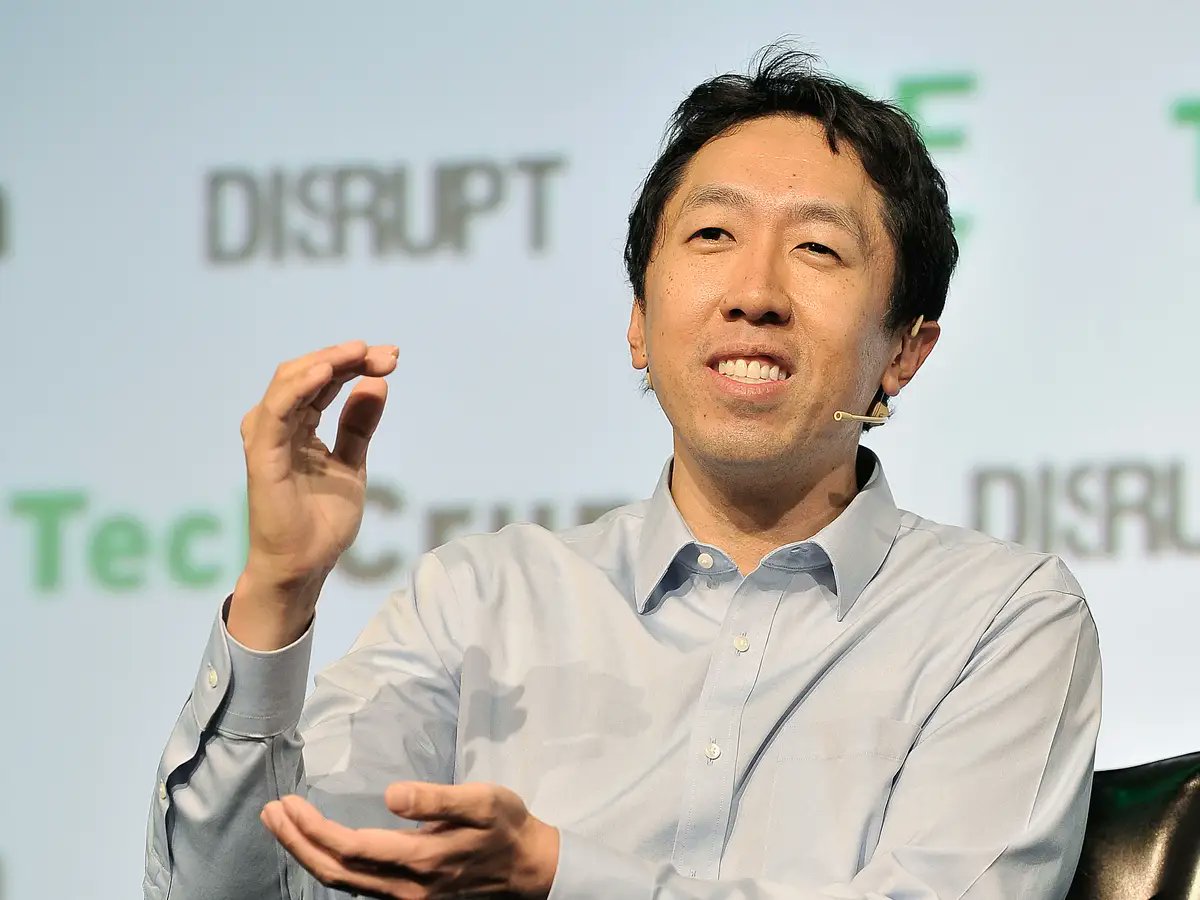
Now Andrew Ng revealed 5 opportunities that will create more millionaires than anything before.
Here's what you should know (& how to prepare): 🧵
Learning Linux isn’t optional for real devs
Commands you MUST know:
- grep, awk, sed → text processing
- top, htop, iotop → resource monitoring
- systemctl, journalctl → service management
- strace, lsof → debugging
Backend Dev Roadmap (2025 Updated)
Want to become a solid backend dev? Here’s what you need to master:
Protocols:
> HTTP/HTTPS, TCP, WebSockets - Know how data flows.
APIs:
> REST (easy to start), GraphQL (flexible), gRPC (super fast).
Auth:
> Learn JWT (tokens), OAuth2 (third-party logins), sessions.
DevOps Basics:
> CI/CD, Docker, Linux, basic cloud (AWS/GCP).
Databases:
> SQL (PostgreSQL, MySQL) & NoSQL (MongoDB, Redis).
Message Brokers:
> RabbitMQ, Kafka — For async jobs & microservices.
Focus on depth, not just tools.
Backend is architecture, not just APIs.
Had a talk with a senior who has multiple offers.
His strategy:
-Companies don't hire much from Oct to Dec
-They hire the most from Mar to June
-Prepare for interviews from July to Feb & start applying between Feb and June
FYI, it's July.
Backend Data Flow (in simple words)
1. Client sends HTTP request
2. Server parses request
3. Middleware checks auth
4. Controller maps routes
5. Service layer does logic
6. DB query runs
7. Response returns
Every full stack dev should know this flow.
Its actually,
(Basics) html -> css -> js/ts ->(Backend) node.js -> express -> (Frontend) react -> tailwind -> nextjs -> shadcn -> (DB) MongoDB -> Postgres -> Prisma -> (DevOps) Linux -> Nginx -> AWS EC2,S3 -> Redis,Docker -> Kubernetes -> (AI) LLM sdks -> Fine tuning -> HuggingFace -> Embeddings and Vector DB -> AI Agents.
You are now a full-stack developer with DevOps and AI knowledge to give you unfair advantage.
If you go for blockchain, then another new roadmap with this.
I know its hard, and might seem overwhelming, but it actually isn't. You just need commitment and consistency, all these can be learn't in like 6-8 months actually.
Masterplan of Backend development
- Start with basics like HTTP, RestAPIs
- Work on making a basic todo app using local json files in server
- Learn databases and different modes of storing data
- Work on a proper application having CRUD operations with DB
- try to cache data, read about distributed locks, queues, kafka
- write code in good manner using SOLID and study some design patterns after OOPS
- Work on a proper application having microservices (1-3)
- study cloud deployment, security groups, autoscaling, fault tolerance etc
- read books like Database internals, Java performance etc to dig more deeper in different technologies
- continue & finally pick one technology in open source and dig deeper & raise PR eventually if possible
Masterplan for Backend Development
→ Begin with the essentials: understand HTTP, REST APIs, and how clients and servers interact.
→ Build a simple Todo app using local JSON files on the server to learn file-based persistence.
→ Dive into databases, exploring different storage and querying methods.
→ Develop a functional CRUD application connected to a database to solidify your knowledge.
→ Learn about caching strategies, distributed locks, queues, and tools like Kafka.
→ Practice writing clean, structured code with SOLID principles, and study design patterns after grasping OOP fundamentals.
→ Build and deploy a small project using 1–3 microservices to understand service boundaries and communication.
→ Study cloud deployment fundamentals, security configurations, autoscaling, and fault tolerance techniques.
→ Deepen your expertise by reading advanced books like Database Internals and Java Performance.
→ Keep building projects, then select an open-source technology to specialize in, contributing with pull requests when ready.
For a complete backend course with real projects, get this ebook:
https://t.co/IJN0CoY9ej