Use Breet to convert your crypto to cash and your current app will not see you agaiUse Breet to convert your crypto to cash and your current app will not see you again
🚨🎙️| Lamine Yamal after winning the Young Talent of the Year award.
“I would have liked for Cubarsí to be here. This prize should have been for him. He deserved it.”
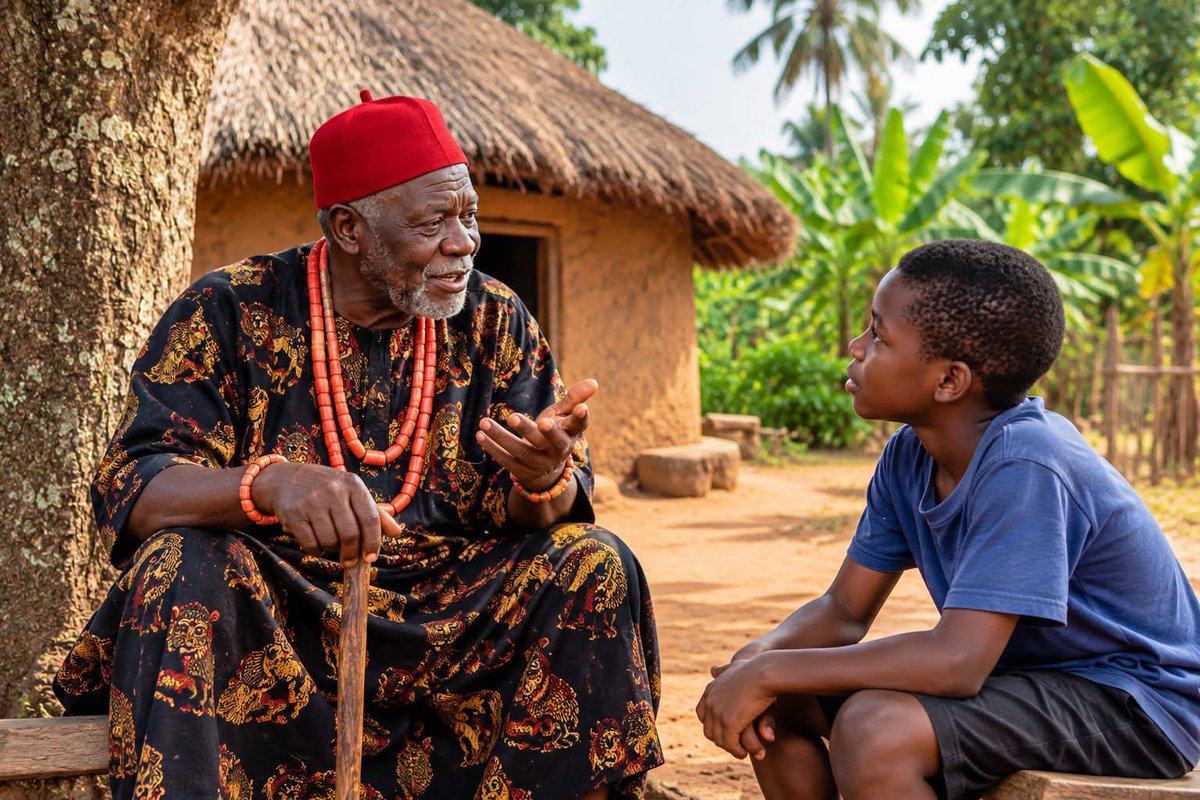
WHY DID OUR ANCESTORS TELL US NOT TO WHISTLE AT NIGHT?
Growing up in many Igbo homes, has your father or mother ever warned you not to whistle in the night?
Warnings like:
“Afụkwana ụkpọrọfịfị n'abalị!”
(Don't whistle at night!)
In many traditional African communities, the night was regarded as a time when the world became quiet, mysterious, and spiritually significant. Our ancestors believed that certain activities that appeared harmless during the day could carry different meanings after sunset.
Here are five possible reasons behind this age-old warning.
1. The Belief That Whistling Could Attract Spirits
In some African oral traditions, people believed that whistling at night could attract wandering spirits or unwanted spiritual attention.
The whistle was sometimes understood as a sound that could call or invite unseen beings.
2. The Fear of Calling Snakes or Dangerous Animals
At night, visibility is poor, and people cannot easily identify what is moving around them.
Our ancestors lived closer to forests, bushes, and wildlife. Discouraging children from making unnecessary noises outside at night may have been one way of keeping them safe.
3. A Way of Teaching Children Discipline
Imagine a quiet village at night, with everyone resting after a long day of farming and other activities.
Suddenly, a child begins whistling loudly.
The sound could disturb the household or alarm neighbours.
Rather than offering a lengthy explanation, parents sometimes used traditional warnings to make children obey.
4. The Night Was Associated With Mystery
In traditional Igbo cosmology, the visible world and the spiritual world were understood through a rich system of beliefs involving ancestors, spirits, deities, and the unseen.
Consequently, certain nighttime activities became surrounded by warnings and taboos.
5. Our Ancestors Used Stories to Preserve Their Wisdom
Our elders did not always explain every rule in the language of modern science.
Sometimes, a short warning was enough to communicate caution.
Behind the instruction not to whistle at night could lie several lessons: respect the peace of the night, avoid unnecessary risks, and be mindful of your surroundings.
Important Lesson:
We should distinguish between cultural beliefs and scientifically established facts. The spiritual explanation belongs to traditional belief, while the practical explanations offer plausible reasons for the warning.
Igbos not Nigerians, the Haitians have traced their origin to Enugu state, Igbo land. They have visited govt of Enugu more than once. The similarities comes from their ancestral connection to Igbos.
EIGHT (8) Ancestral Habits We Can Bring Back Today:
Note: The goal is not to live exactly as our ancestors lived. The objective is to preserve their useful wisdom, improve upon it with modern knowledge, and pass a happier way of life to the next generation.
1. Eat more natural foods: Include yam, cocoyam, vegetables, fruits, beans, whole grains, and other nutritious local foods.
2. Sleep consistently: Maintain a regular sleep routine habits. Their own was usually 8pm - 5am.
3. Move your body daily: Walk, work, garden, dance, or engage in other physical activities.
4. Maintain family connections: Build supportive relationships with family members, neighbors, relatives and friends.
5. Rest when necessary: Balance work with recreation, recovery and celebration of festivals.
6. Spend time outdoors: Get daylight safely and enjoy nature.
7. Neighborhood watch: where any strange face entering the village or hamlet is interrogated and noted including the family he is visiting.
8. Respect for traditional medicinal remedies and safety: Emphasis on herbal medicine, traditional health and safety awareness.
In addition to seeking appropriate western medical advice, vaccinations, screening, and treatment when needed.
The Etruscans said that a weird being emerged from under the ground and brought knowledge that became the foundation of their religious practices.
The account was recorded by Cicero in the first century BCE, but the tradition was considerably older.
According to the Etruscans, a farmer near Tarquinia was ploughing his field when his plough struck unusually deep into the earth. Suddenly, a figure emerged and began speaking.
They called him Tages.
He had the physical appearance of a child but possessed the knowledge and intelligence of an elderly sage.
A crowd gathered, and eventually people came from across Etruria to hear this extraordinary being speak.
Tages reportedly delivered an extensive body of knowledge concerning divination and the interpretation of divine signs. His teachings were written down and became central to Etruscan religious practice.
Archaeologists excavating the ancient ceremonial complex at Tarquinia discovered the burial of an approximately eight year old boy dating to the ninth century BCE.
He was buried beside a natural opening in the ground, at a location that remained sacred for centuries.
Researchers also recovered an Etruscan inscription near the cavity, dating several centuries after the burial. It reads terela, a word associated with extraordinary phenomena or portents.
Archaeologists have seriously considered whether this child inspired the legend of Tages or became associated with him in antiquity.
An ancient civilization saved this story about an bizarre child emerging from the earth and delivering knowledge.
At the actual city associated with the account, archaeologists discovered a child buried beside a sacred opening in the ground.
So seriously, were these simply stories created to explain the origins of human knowledge, or were some of them attempts to preserve encounters with something their ancestors couldn't explain?
We have the ancient testimony and the archaeological discovery.
This third century BCE bronze statuette depicts a seated child with mature facial features. It is traditionally associated with Tages.