Hugging Face released a free course on agents
You can learn how to create:
- Code agents that solve problem with code
- Retrieval agents that supply grounded context
- Custom functional agents that do whatever you need
Definitely the best I've seen so far.
Link below
If you start a Pinterest account this new year, you could be making $3,000 per month by March 2025 easily.
Usually, I'd charge $249 for this guide, but today I'm giving it away for free.
Like and comment 'Pinterest' and I will send you the full guide for FREE.
Follow me to get the guide in DM. FREE for 24 hours only.
After the Gemini fiasco, new reporting from our sources inside Google describes a broken, hollowed-out culture at Google where HR reigns supreme, and no one wants to speak up for fear of being noticed 👇
Here is one important observation I have made when building with LLMs:
No matter how powerful these LLMs get there are a bunch of decisions that you need to make in order to build really powerful applications with LLMs. I am talking about applications that serve a user base.
Regardless of whether you are building on top of existing general-purpose models, you still have to make a bunch of decisions about the prompt, the flow of operations, model selection, deployment, observability, data collection, mitigating hallucination/safety issues, scaling, evaluation, etc. Some of these may require expertise but all of them require rigor and careful attention to detail.
That being said, I don't think it's getting any easier to build with LLMs as a lot of people claim. The complexity of the capabilities of LLMs requires even more decision-making. Human supervision isn't going away no matter what any one person or company tries to sell you. This is not a bad thing. I believe this exact paradigm (where humans and AI systems collaborate) will unlock even more powerful applications. It's not AGI, it's something even more powerful than that -- something that combines, in harmony, intelligence of all kinds.
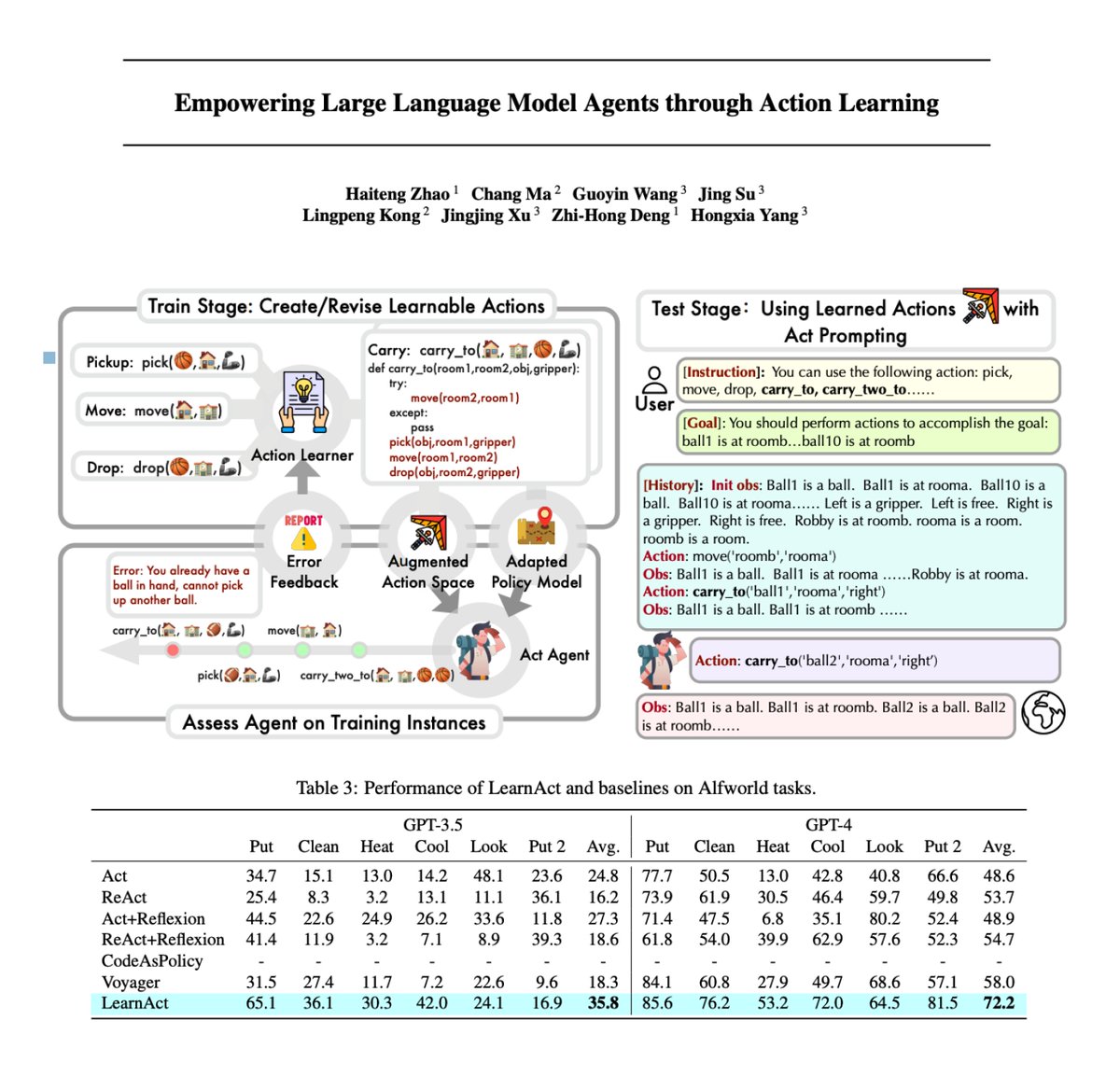
Advancing LLM Agents through Action Learning
Can LLM agents be improved by learning new actions through direct interaction with the environment?
This work explores open-action learning for language agents through an iterative learning strategy that creates and improves actions using Python functions.
On each iteration, the proposed framework (LearnAct) expands the action space and enhances action effectiveness by revising and updating available actions based on execution feedback.
The LearnAct framework was tested on Robotic planning and AlfWorld environments. It improves agent performance by 32% in AlfWorld compared to ReAct+Reflexion.
It's remarkable to see the performance gain when using GPT-4 as the LLM during testing. Even in the agent setting we still rely on strong language models which is why it's important to keep improving model capacity, especially for open-source models.
These results are not surprising as in many ways humans use a similar approach to acquire and enhance skills. Overall, this is a great concept that showcases the huge potential of action learning for LLM agents.
The purpose of building a prototype is not to *have* a prototype, it's to better understand the target problem and scope out critical issues. If you could wave a magic wand and make a prototype pop up, you'd learn nothing about how to build the actual system.
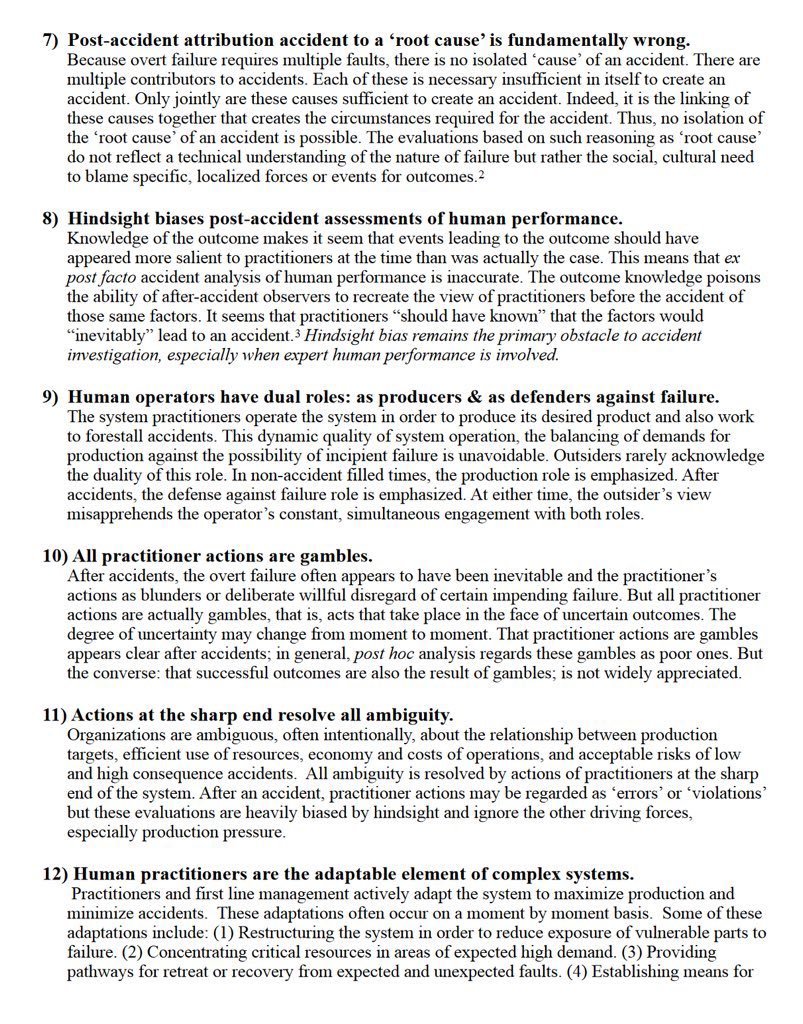
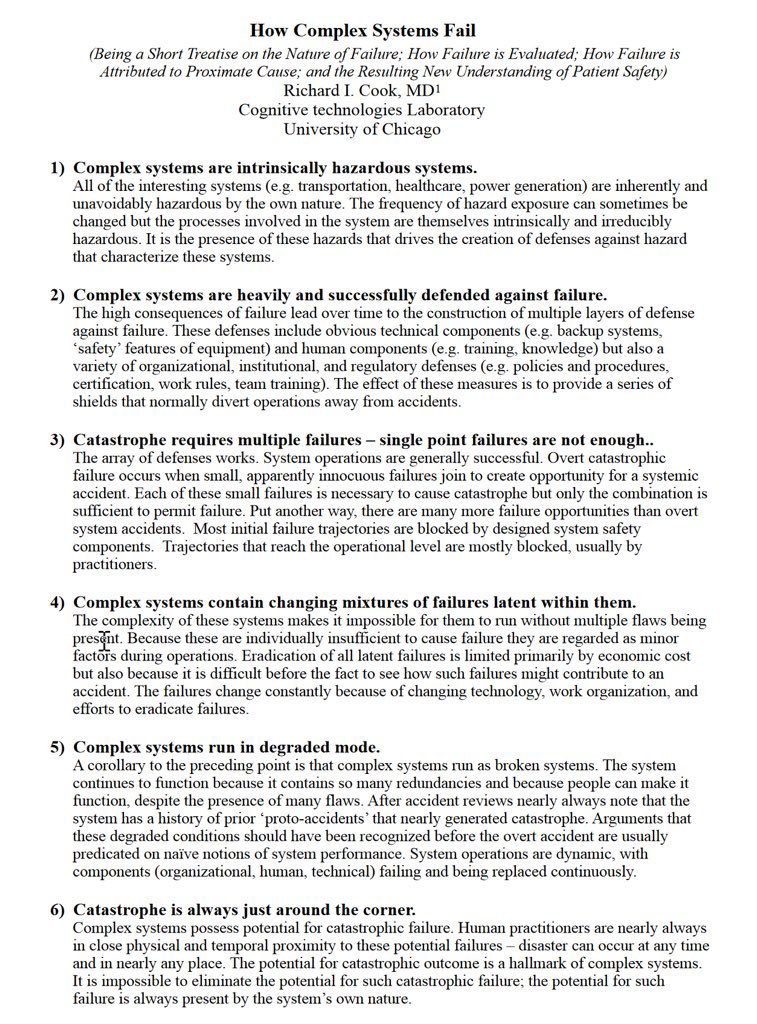
This is a paper I post every six months as it is worth rereading; the 18 reasons complex systems fail.
Complex systems fail for complex reasons, and only adaption & learning by organizations, as well as individual "actions on the sharp end" keep us safe. https://t.co/pnNlFLvno1
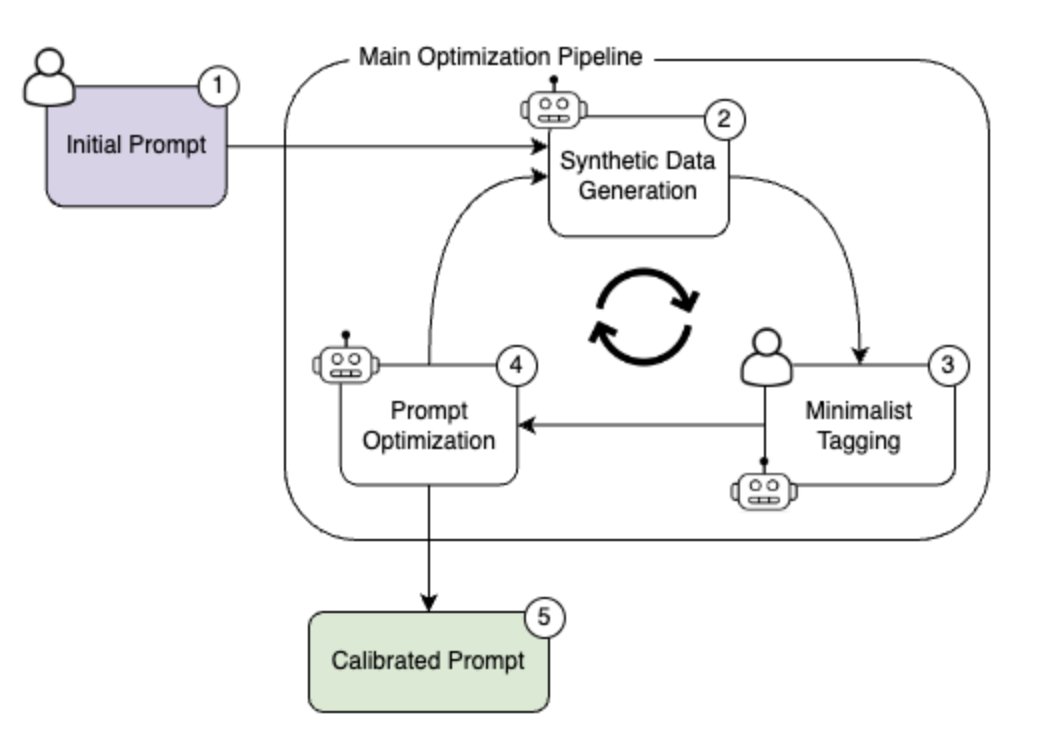
📝 AutoPrompt
Auto Prompt is a prompt optimization framework designed to enhance and perfect your prompts for real-world use cases.
It iteratively builds a dataset of challenging edge cases and optimizes the prompt accordingly
GitHub: https://t.co/CjexvdJZvC
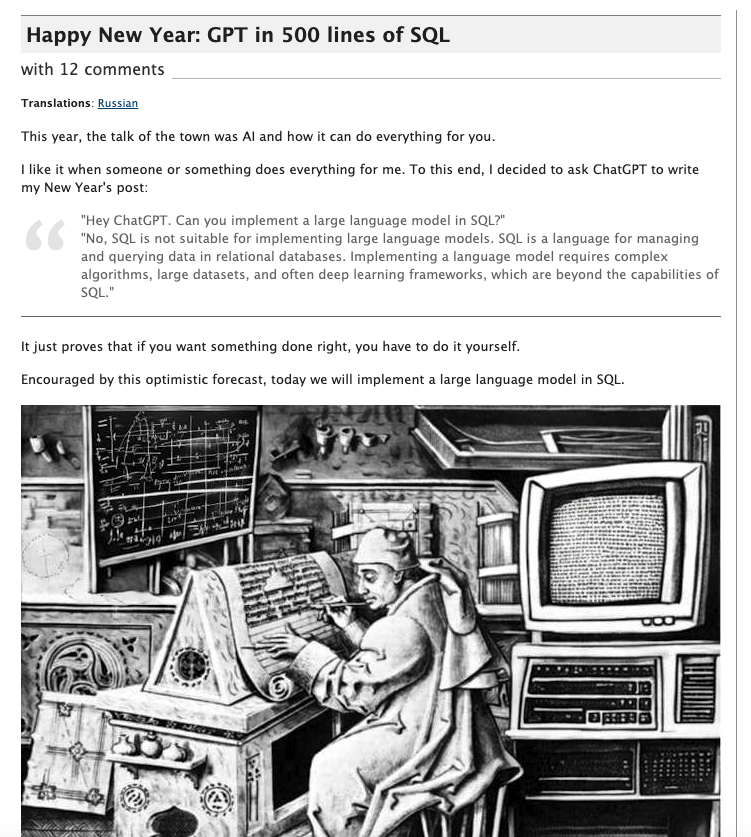
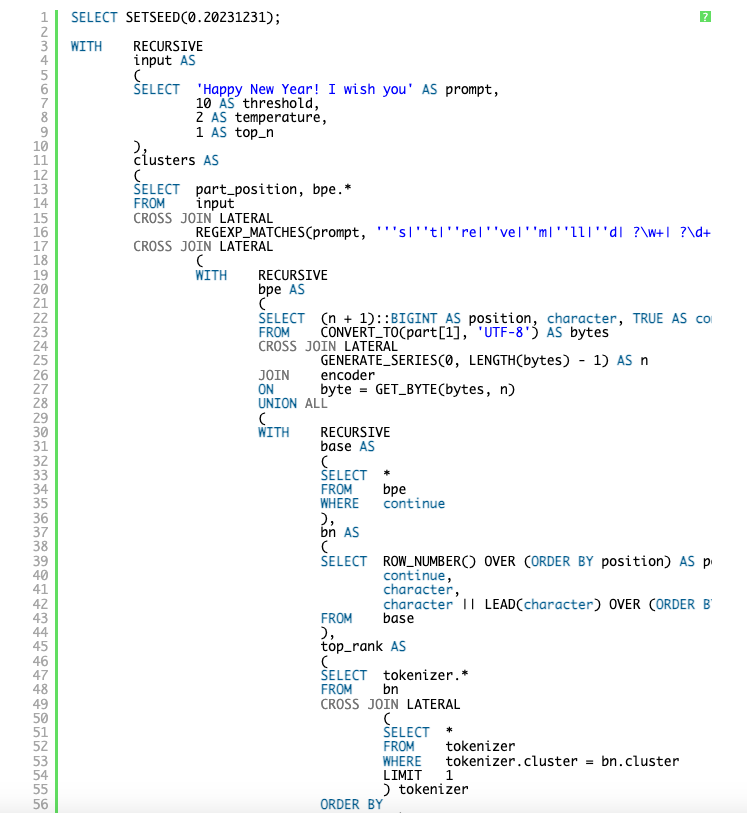
GPT in 500 lines of SQL
Attempts to implement an LLM with SQL in just 500 lines.
If you are interested in diving deep into the inner workings of GPT this is a fun weekend read.
By the way, this approach of breaking things down in a form you better understand I find to be an exceptional approach to learning. I didn't use SQL, but I have done something similar with GPT using detailed pseudocode.
https://t.co/u4hb45cmO1
Introducing Sora, our text-to-video model.
Sora can create videos of up to 60 seconds featuring highly detailed scenes, complex camera motion, and multiple characters with vibrant emotions.
https://t.co/YYpOAcrXQ3
Prompt: “Beautiful, snowy Tokyo city is bustling. The camera moves through the bustling city street, following several people enjoying the beautiful snowy weather and shopping at nearby stalls. Gorgeous sakura petals are flying through the wind along with snowflakes.”
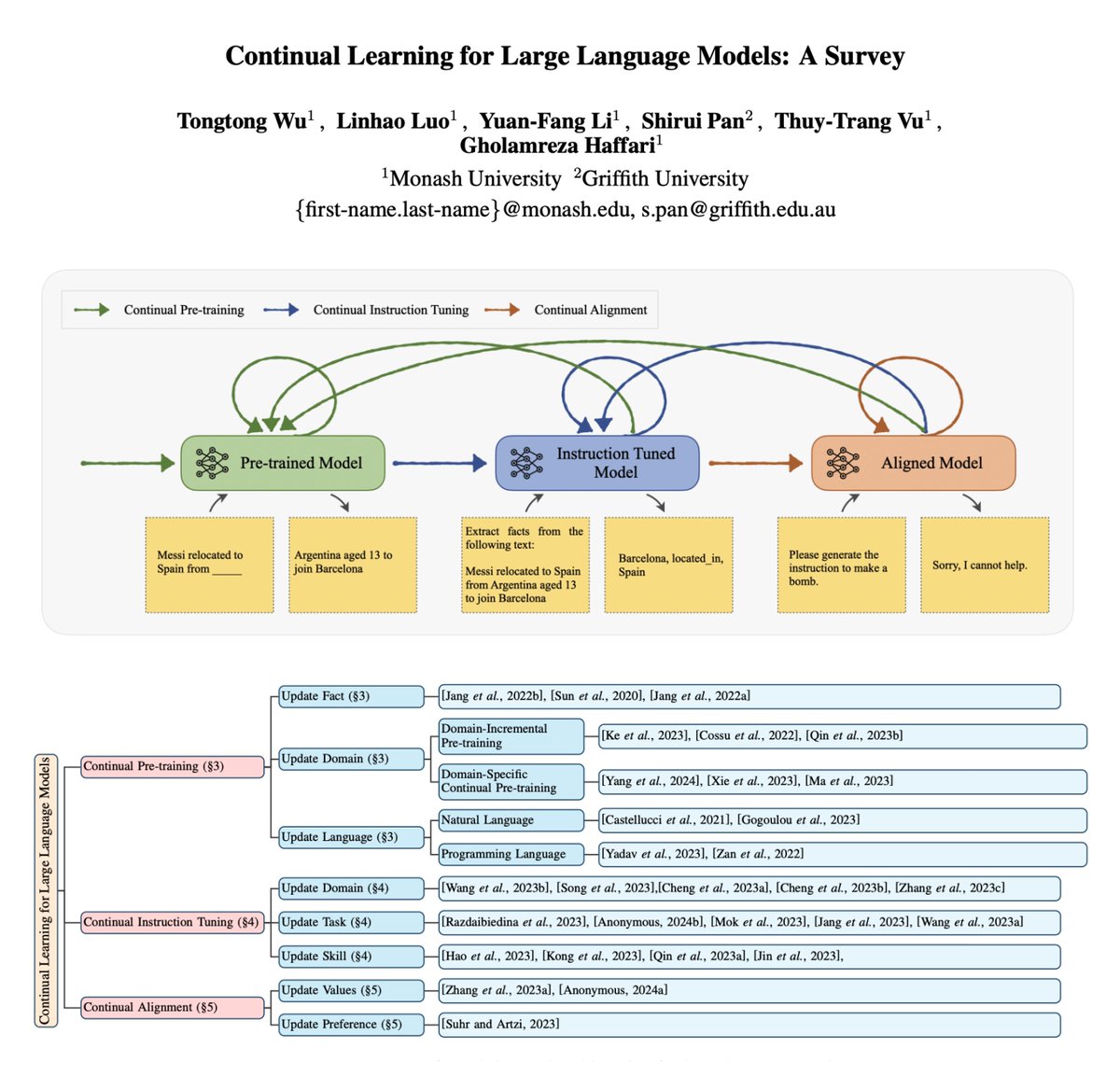
Continual Learning for LLMs
One of the biggest challenges of working with LLMs is keeping them updated.
Continual learning aims to enhance the overall linguistic and reasoning capabilities of LLMs.
This survey paper provides an overview of developments in continual learning.
This is a short survey but it includes some key references on the topic of continual learning.
The Top ML Papers of the Week (Jan 29 - Feb 4):
- OLMo
- SliceGPT
- MoE-LLaVA
- Corrective RAG
- Advances in Multimodal LLMs
- LLMs for Mathematical Reasoning
...
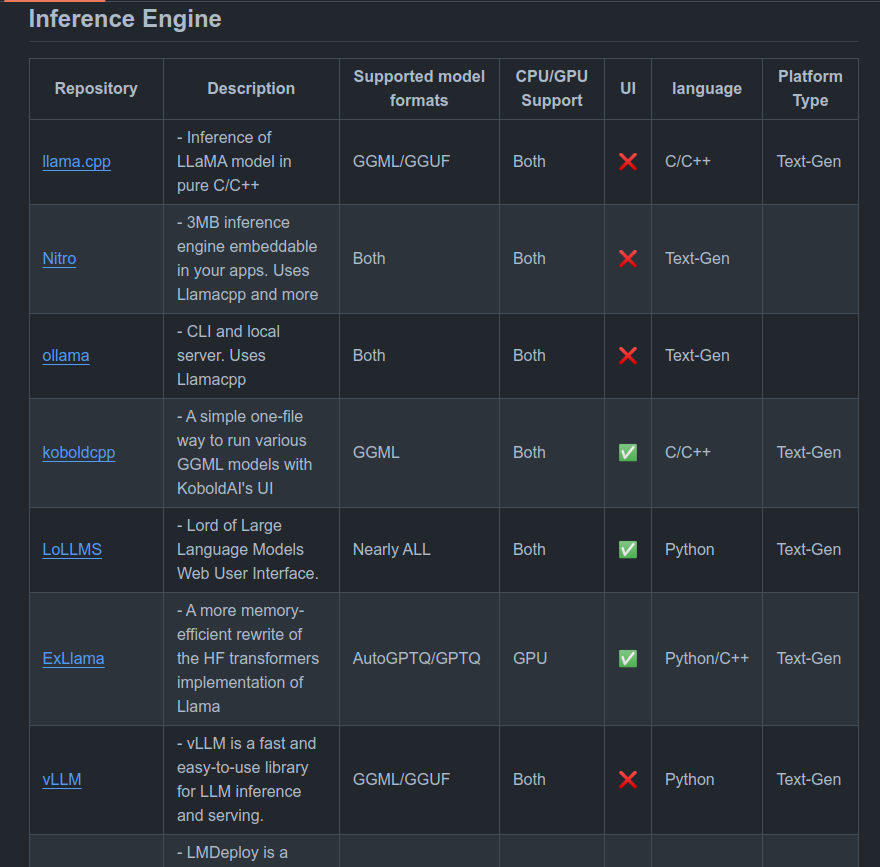
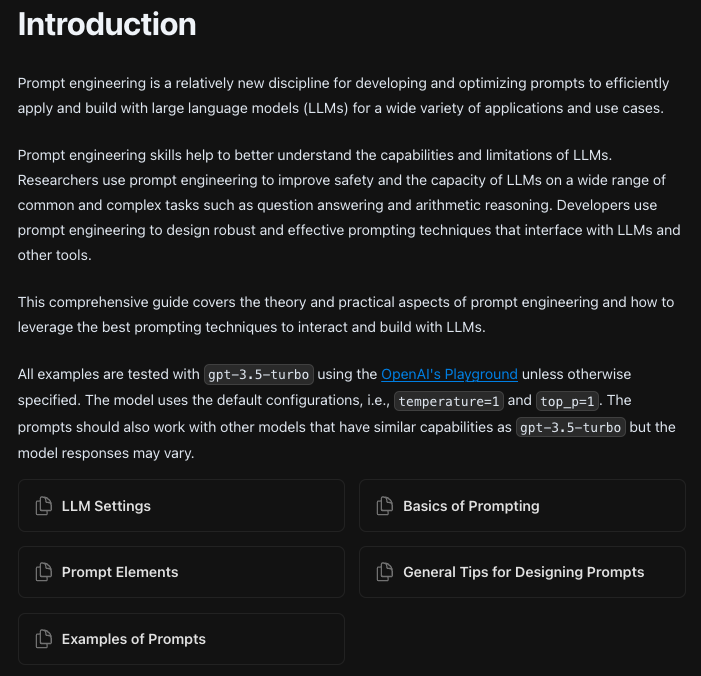
For those who may not know about the project, it's essentially a central place to learn about how to work and build with LLMs.
There is an introduction for those getting started:
https://t.co/DJ4uoWrBQc
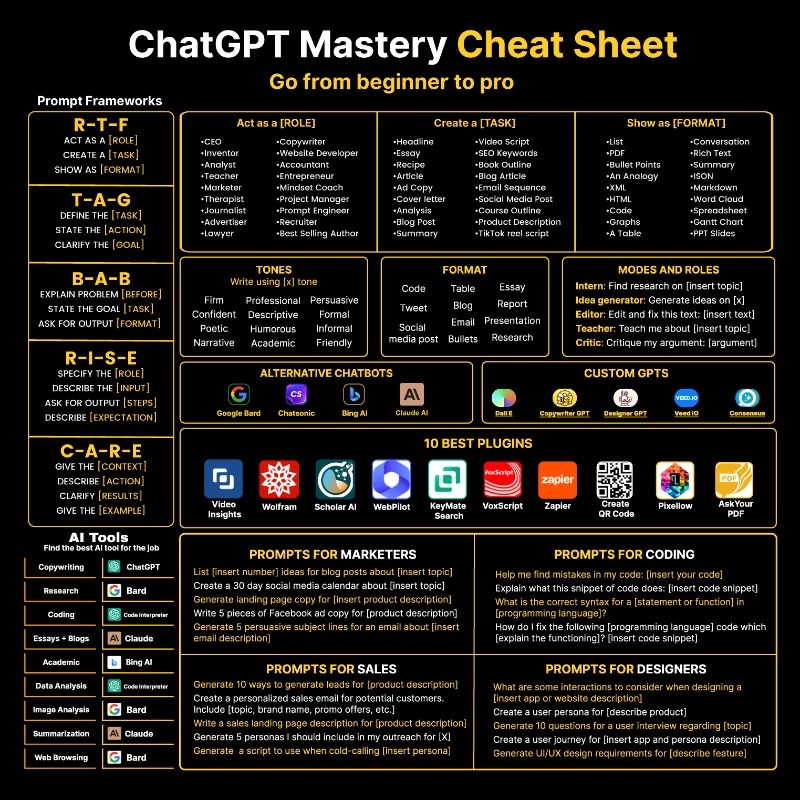
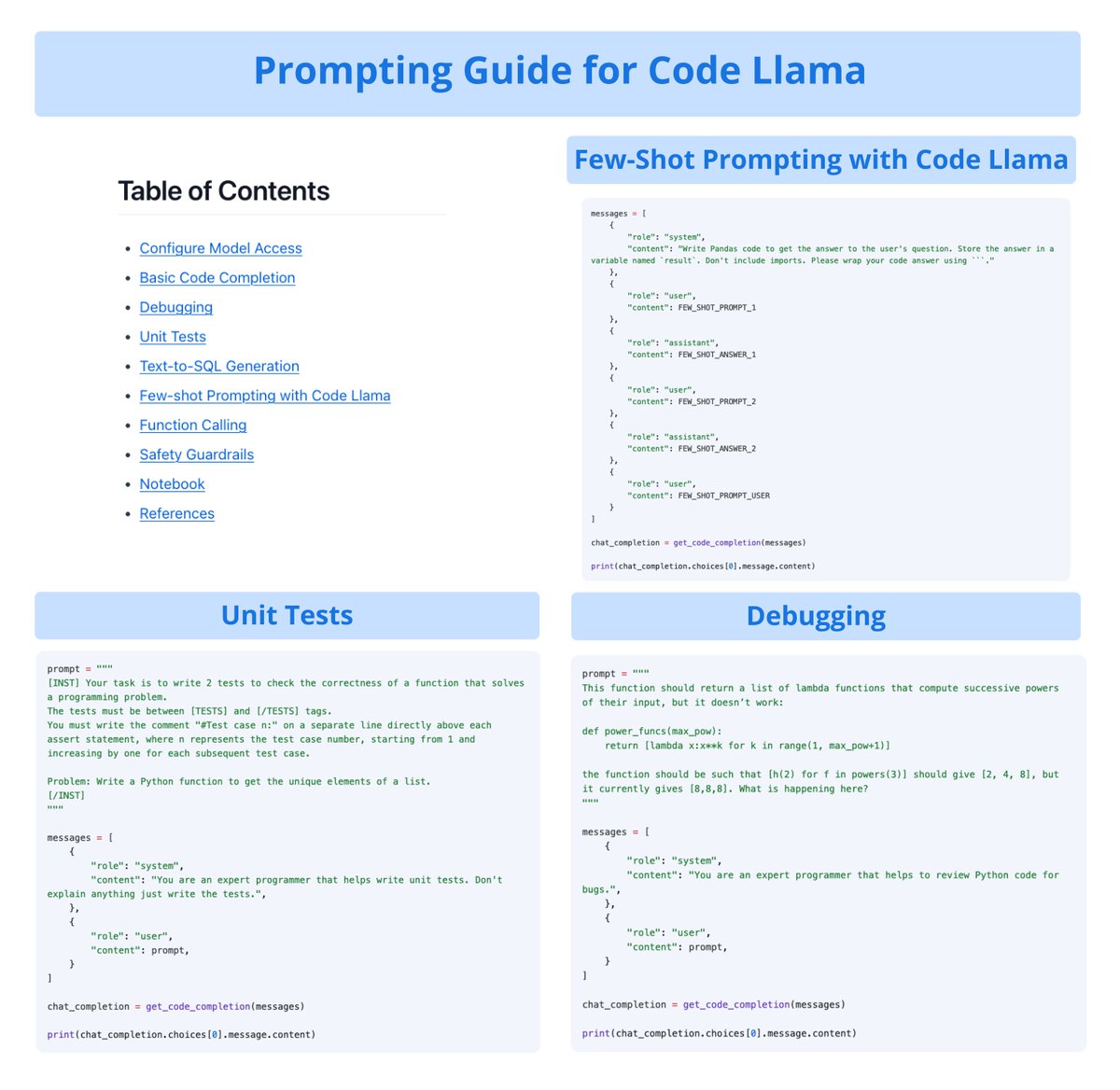
Prompting Guide for Code Llama
Excited to release my latest prompting guide for how to effectively prompt Code Llama 70B Instruct with plenty of examples for developers and practitioners.
Code Llama 70B Instruct is one of the most powerful open-source models for code generation.
After it was released yesterday, I felt we needed to develop a proper guide for it to learn how it could be used for all sorts of interesting code generation tasks like debugging and Text-to-SQL generation.
The guide includes the following:
• Configure Model Access
• Basic Code Completion
• Debugging
• Unit Tests
• Text-to-SQL Generation
• Few-shot Prompting with Code Llama
• Function Calling
• Safety Guardrails
• Notebook
• References
More examples coming soon!