🚀 New paper in IEEE Internet Computing:
We introduce AICon — an open-source Python framework for realistic, decentralized management across IoT–edge–fog–cloud systems, modeling agents as resource-aware, QoS-aware workloads.
💻📰 Code and paper: https://t.co/WEXLvJgLUa
Hi @dominic_w, I posted an ICP reward-reservoir proposal: a reserve pays part of rewards, reducing new minting; fallback if insufficient. Safe sim: ~6.25% less over 5y. Would welcome a tokenomics sanity check. https://t.co/xF599JaT2e
@dominic_w@zucaro_mar83047 I get the practical upside, but if replicas can run on AWS, doesn’t that risk diluting the sovereign-cloud story and reintroduce hyperscaler dependence?
This is what an EXCEPTIONAL mindset thinks like and sounds like.
So impressive from a 22 years old.
Not only you CAN control what you think, and how you think it and why, but you SHOULD.
See your mind as a skill and practice it as such.
One of the most interesting parts of my convo w/ @demishassabis: He would support a “pause” on AI if he knew all companies + countries would do it — so society and regulation could catch up
This is not joke.
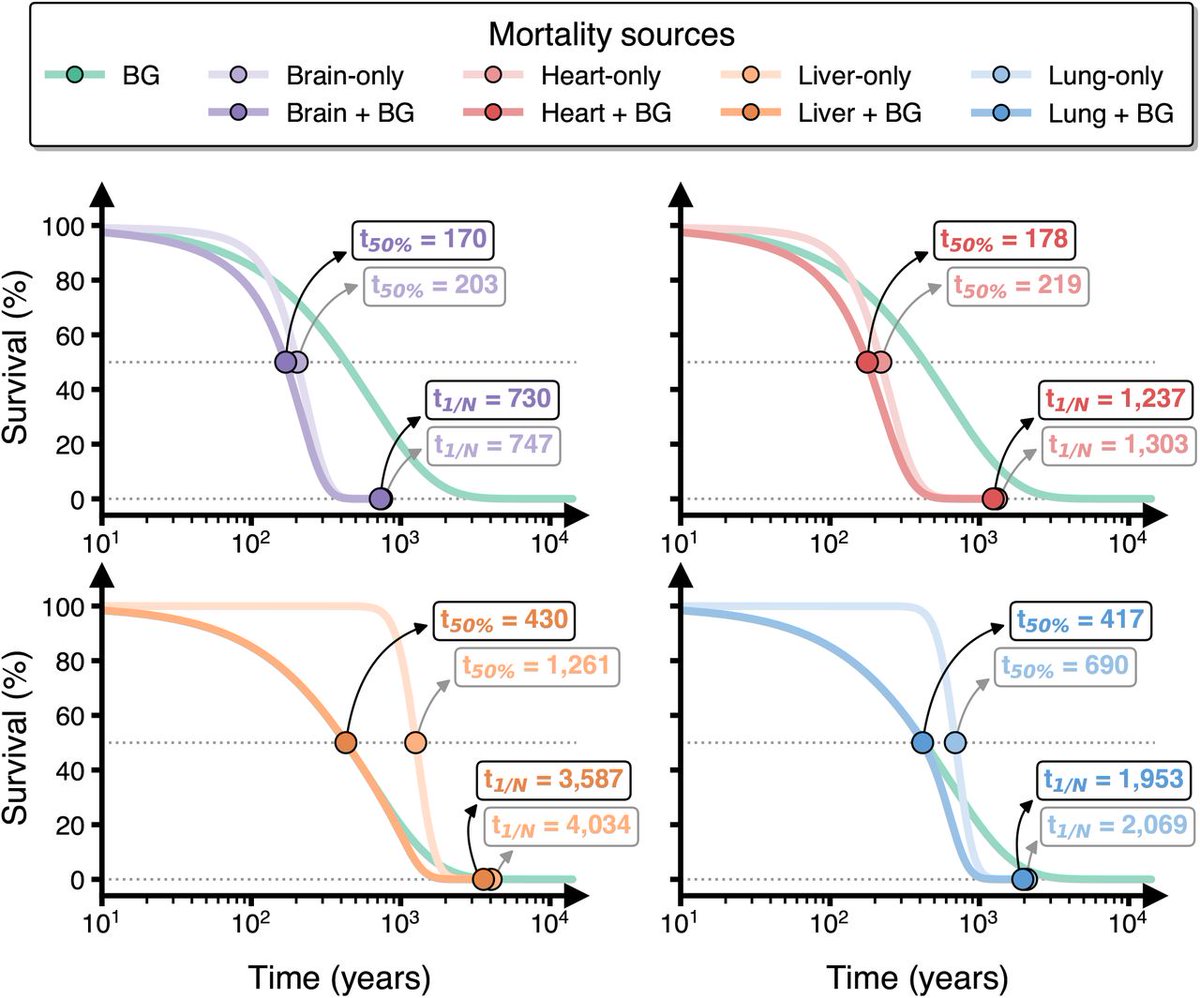
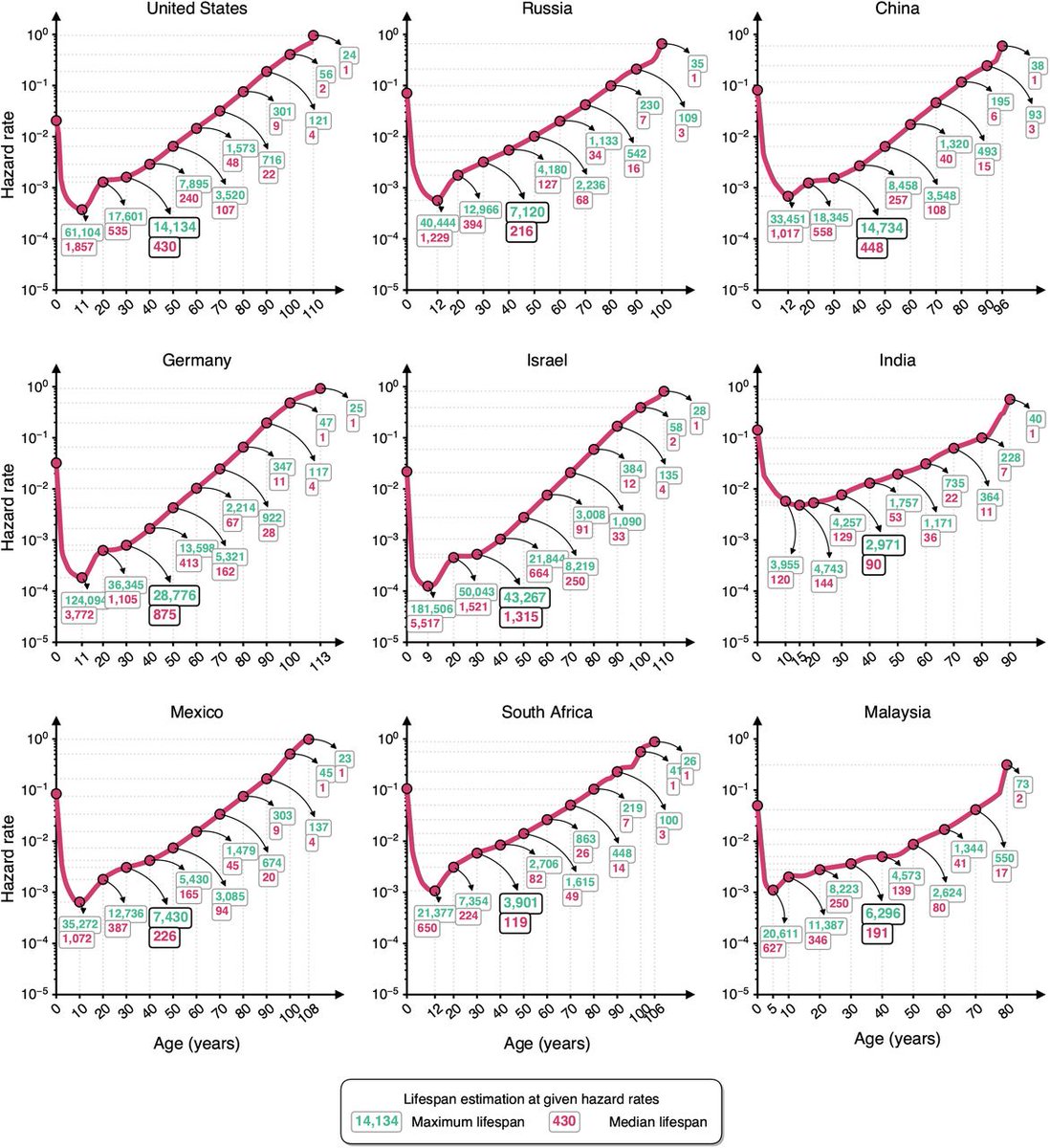
A new longevity model suggests humans could potentially live 430 years 🤯!
Scientists have created a new aging research suggesting that our bodies might be built for far longer life than we actually experience.
In this model, most of our organs could keep repairing themselves for centuries. Some tissues, like the liver and skin, can replace damaged cells again and again with almost no limit.
But post mitotic cells, especially neurons in the brain and muscle cells in the heart, don’t divide. They slowly build up tiny DNA mutations over time. Once those cells hit their limit, the entire body does.
Because of these “aging bottlenecks,” the model predicts a realistic human lifespan of around 134–170 years, roughly double what people reach today.
Under ideal conditions, without mutation driven aging, humans might biologically reach up to 430 years. For the brain alone, the model estimates a median lifespan limit of about 169 years.
Proliferating tissues (like liver and skin) could theoretically last thousands of years, since they keep replacing damaged cells. But those non dividing cells eventually accumulate too many irreversible DNA mutations, becoming the key aging bottlenecks.
Study: Somatic mutations impose an entropic upper bound on human lifespan (2025 preprint)
Working in #academia can be stressful. In a new World View, @laraffington suggests treating it as "just a job" to reduce performance pressure and advocate for structural improvements.
https://t.co/zGxa3TRG0c
🇺🇸 STANFORD SCIENTISTS JUST CURED TYPE 1 DIABETES IN 100% OF MICE - AND THE PHARMA LOBBY IS ALREADY SHARPENING THEIR KNIVES
Stanford Medicine dropped the bomb: a "gentle" immune reset using low-dose radiation, T-cell-killing antibodies, and mismatched donor stem cells + islet transplants flipped the autoimmune switch off in every single mouse - preventing diabetes in 19 pre-diabetics and reversing it in all 9 long-term cases.
No lifelong insulin jabs. No constant finger-pricks. No more 10-year-olds rationing candy like it's contraband.
The hybrid immune system - part original, part donor - plays nice without nuking the whole defense grid or requiring a lifetime of immunosuppressants.
Published in the Journal of Clinical Investigation, this isn't sci-fi: the core steps are already in clinics for blood disorders and organ transplants.
Lead researcher Seung Kim:
"Transformative for Type 1 diabetes... and autoimmune hellholes like lupus and rheumatoid arthritis."
But here's the truth: Big Pharma's been peddling symptom-management snake oil for 100 years while 1.25 million Americans - mostly kids - get sentenced to daily poison and $16,000/year bills.
This cure? It threatens their trillion-dollar empire.
The day we stop treating diabetes like a profitable subscription service is the day the suits in white coats start sweating - finally, a real fix that doesn't line their offshore accounts.
Source: Stanford Medicine, Journal of Clinical Investigation, Fox News
Insane video of stars orbiting the supermassive black hole that lies at the heart of the Milky Way over a period of nearly 20 years.
This time-lapse video is from the NACO instrument on ESO's Very Large Telescope in Chile.
It's Pikachu time.
I Built an agentic AI workflow to tell me exactly what trending video to make for the day.
It scrapes viral trending data and automatically craft the prompts to use.
Here's what it created Today 🐭🟡
See below an example of the prompts used 👇
RUMOUR 🚨
JP Morgan has a huge short position on MicroStrategy's $MSTR.
This is why they are FUDing against BTC and Strategy to profit hundreds of millions.
Now, people have started to close their JP Morgan bank accounts.
Also, several players are thinking of a GME-type short squeeze for MSTR stock.
@lysergin33 Can you make it so that the more you eat the tokens you get and make more levels but later levels give less tokens and when people lay they are directed to the first level with available food and make it so that those tokens are DEX tradable and you can see other players