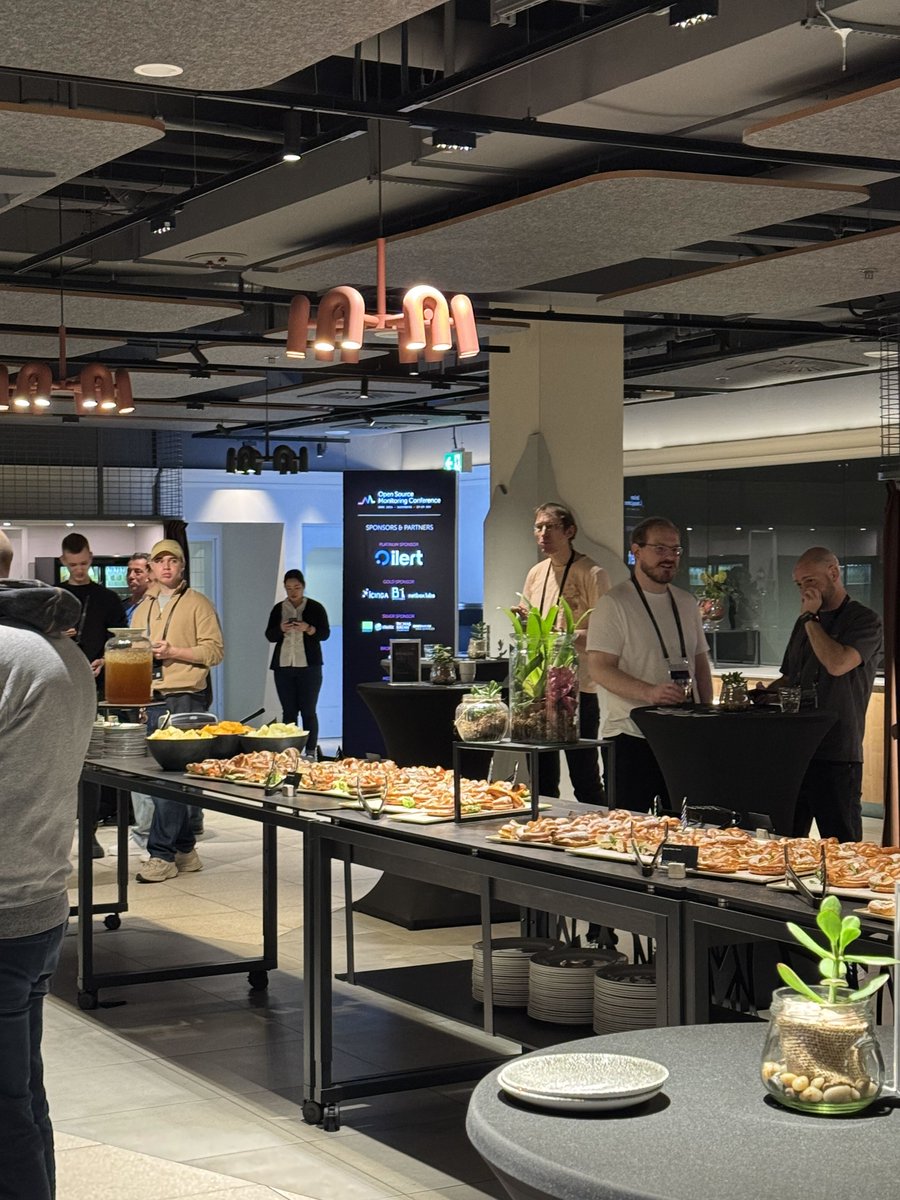
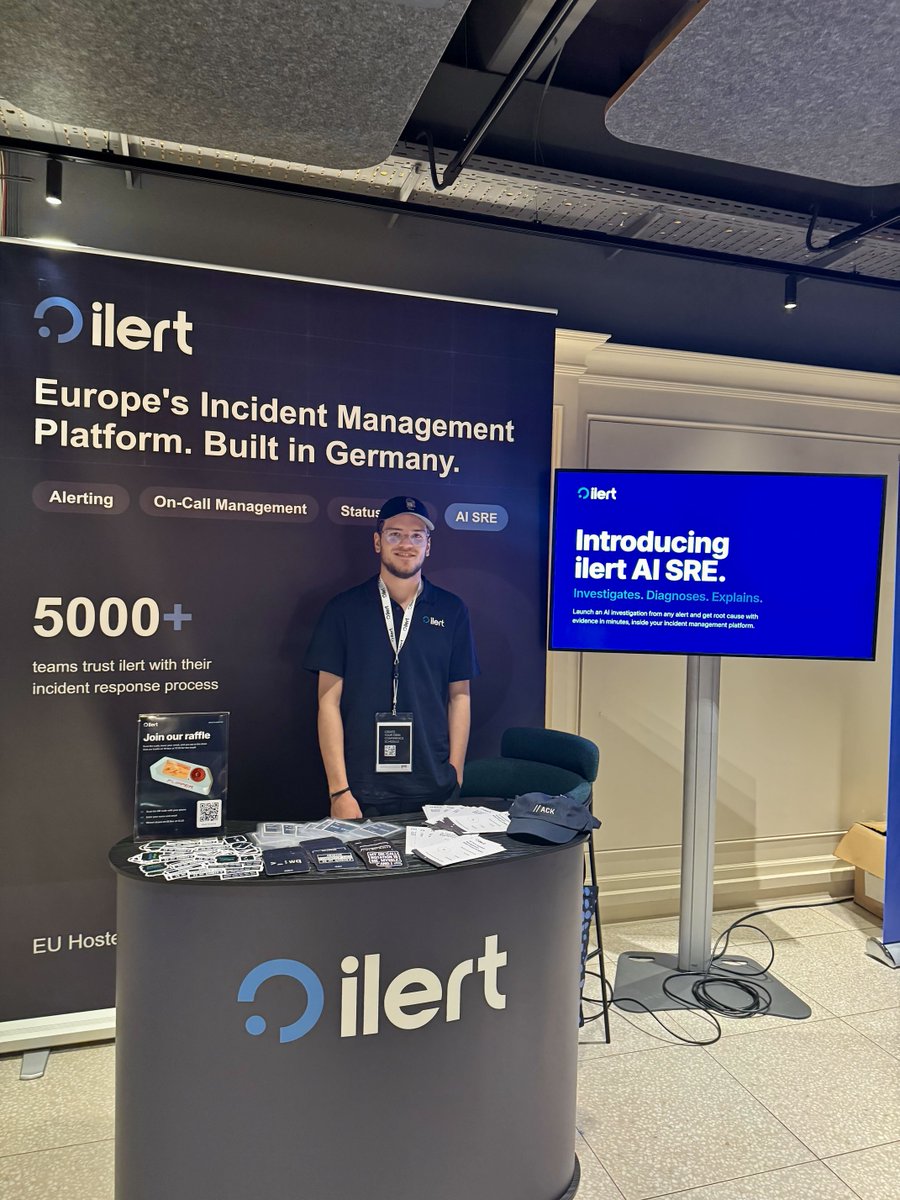
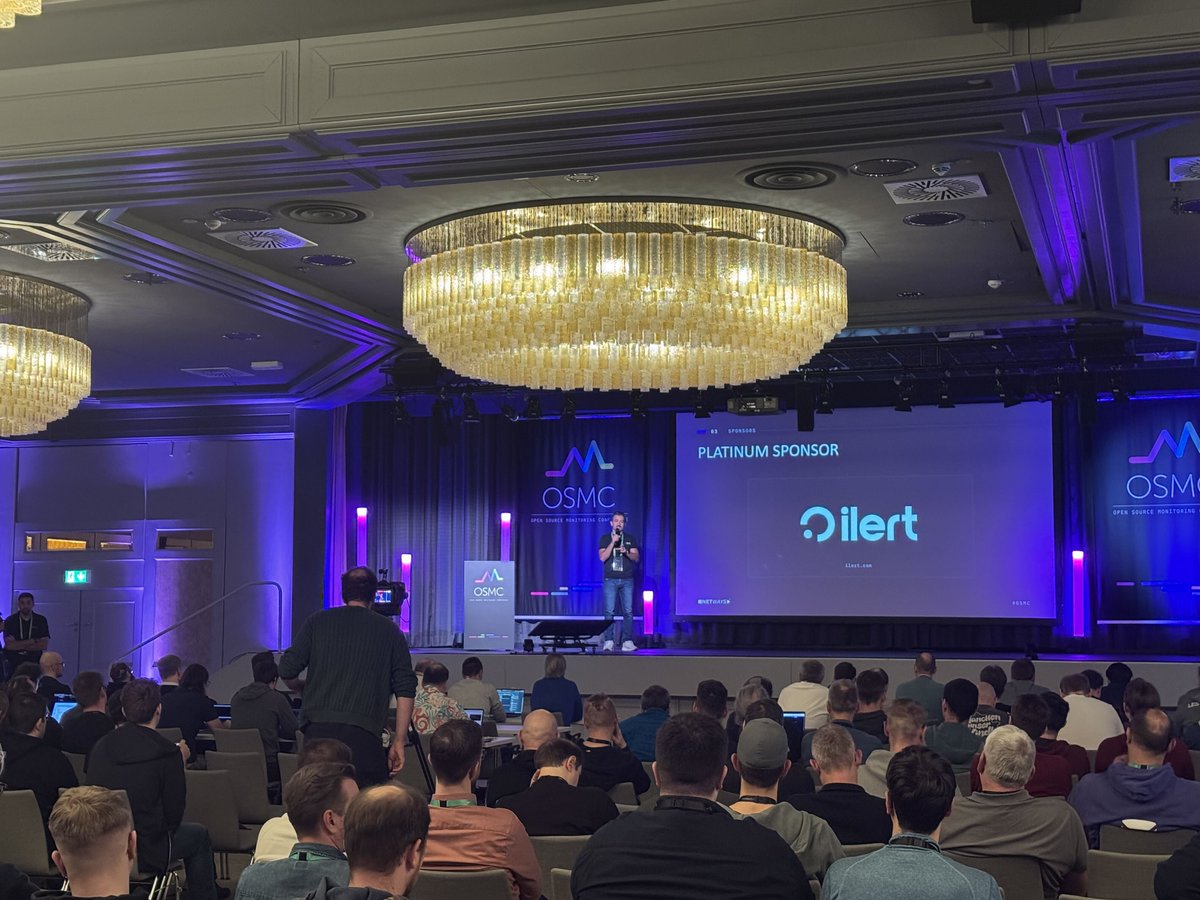
Getting ready for another great day at OSMC 2026 ☕🚀
Yesterday was packed! Our CEO Birol Yildiz opened the day with a talk on the future of incident response. After that came lots of booth visits and plenty of great conversations about alerting and on-call.
As this year’s Platinum Sponsor, we’re excited to keep the momentum going today. Missed the talk, or just want to say hi? Stop by our booth 👋
New integration announcement 📣
ilert + @Tideways
With the ilert + Tideways integration you can turn Tideways notifications about PHP errors, performance regressions, and slow transactions into ilert alerts, routed to the on-call responder and escalated through your escalation policy.
Learn more here: https://t.co/OMj4GqJY8E
Choosing an AI SRE tool? Finding the root cause is only part of it.
We compared 10 tools on how deep they investigate, what they’re allowed to change, how they fit into on-call, and how they handle your data.
We found that some agents apply fixes on their own, some wait for approval, and some only report back. Where they live and where your data goes also varies more than you’d expect.
Find out more about the top AI SRE tools in 2026 and which one fits your team best 👉 https://t.co/QMZxwwyifD
New: a cleaner alert list in ilert.
Your alerts come first, and filters stay out of the way until you need them.
→ Choose which columns to show
→ Find all filters behind one Filters button
→ Filter by alert labels
Built for the alerts you actually need to see.
See you next week in Nuremberg! 👋
We're proud to support OSMC 2026 – Europe's leading conference for open source IT monitoring, celebrating its 20th anniversary this year!
At the event, 250+ engineers and developers come together to share how they keep IT systems reliable, stable, and observable – with open source monitoring tools.
Three days you don't want to miss:
✅ Cutting-edge talks from practitioners – not sales pitches
✅ Hands-on workshops to deepen your skills
✅ The tools shaping the future of open source monitoring
✅ A community of 250+ peers to learn from and grow with
📆 November 17–19 | Nuremberg, Germany
🔗 https://t.co/ac0wt7HZDf
We'll be there – come and say hi!
https://t.co/xVQqxEkzAC
New integration announcement 📣
ilert + @OpenNMS!
With the ilert + OpenNMS integration you can route OpenNMS alarms straight to the right on-call responders, trigger escalations, and keep alerts in sync as alarms are acknowledged or cleared.
Learn more here: https://t.co/Ipo7OBBoL9
A generator that never got the signal to start took a Google Cloud zone offline for 6 hours.
At about 07:00 London time on October 20, a power failure hit the data center hosting europe-west2-b. The backup generators never started, and services running in the region were disrupted, including at least one banking app, right as people were heading to work.
This is when postmortems matter most: when a fault in a data center reaches the apps people use every day.
We broke down what failed, why the backup never kicked in, and what every team running on the cloud can learn from it.
Read the full breakdown 👇
https://t.co/dPFcCFTNMy
Product reviews vanished from our demo shop. The cause was in payments.
No alert fired, no pod was down, and everything looked healthy. We typed one sentence into ilert AI SRE: “Customers are complaining about not seeing their reviews. Investigate.”
It traced reviews → orders → payments and found a refunded order the payment service couldn’t handle. It took a few minutes, and every finding linked to the log line behind it.
It suggested fixes and changed nothing. It runs the investigation. You make the call.
Full walkthrough: https://t.co/6e7eGe8nr6
How can deleting two lines of configuration crash iPhone apps around the world?
On September 28, 2026, a routine cleanup at Google removed a configuration flag that the Google Analytics for Firebase iOS SDK still referenced. The malformed configuration rolled out globally, and active users of apps on iOS and other Apple platforms hit a crash on launch. The bad configuration was served for 2 hours and 11 minutes, while Firebase status dashboards stayed green because they rely primarily on server-side health metrics.
In our latest postmortem, we break down what happened, why server-side monitoring missed a client-side outage, and what teams can learn about treating config as code, validating server payloads on the client, rolling out changes progressively, and keeping status pages honest.
Read the full breakdown 👇
https://t.co/tg1PJw9VC5
We asked our customers what makes on-call work. Nobody said “better tools.”
We don’t always get the chance to have our customers in one room, so when we did this past September, we gave them paper and pens and had an honest conversation about on-call culture.
What we took away: being reachable and showing empathy are the practices that have kept these teams successful over the years. We compiled the results into this quick read 👉 https://t.co/8GRvUITUWd
What’s the on-call rule your team swears by?
New integration announcement 📣
ilert + @DBmarlin
With the ilert + DBmarlin integration you can route DBmarlin alert rules to the right responders, trigger reliable escalations, and have alerts resolve automatically once the condition clears — so incident response keeps moving and ilert reflects the real state of your databases.
Learn more here: https://t.co/PpKr2Gd2gy
ilert is now a Silver Member of the @Cloud Native Computing Foundation (CNCF) and @The Linux Foundation.
Most on-call pages our customers handle start somewhere in the cloud native stack. ilert integrates with CNCF projects like Prometheus and Kubernetes, and that is where the alerts originate long before an engineer gets woken up.
Membership gets us closer to the projects and maintainers behind that stack, and into the working groups where observability and incident response practices get shaped.
#CNCF #CloudNative #IncidentManagement
How can one failed DNSSEC key rollover make an entire national domain unreachable?
The .al incident in July 2026 shows how withdrawing an old DNSKEY before updating the matching root record broke the DNSSEC chain of trust for Albania’s top-level domain. As cached records expired, validating resolvers began returning SERVFAIL, affecting access to government services, banks, media organizations, businesses, and other .al domains.
In our latest postmortem, we break down what happened, how Cloudflare temporarily restored resolution for 1.1.1.1 users with a Negative Trust Anchor, and what teams can learn about DNSSEC key overlap, full-chain validation, independent emergency communication, and separating availability recovery from security recovery.
Read the full breakdown 👇
https://t.co/fs9k44jhy8
Incident response does not have to be chaotic. 🤷🏻♂️
We built Compass into ilert as an incident lifecycle assistant. It suggests your next move when you need it, and stays quiet when you do not.
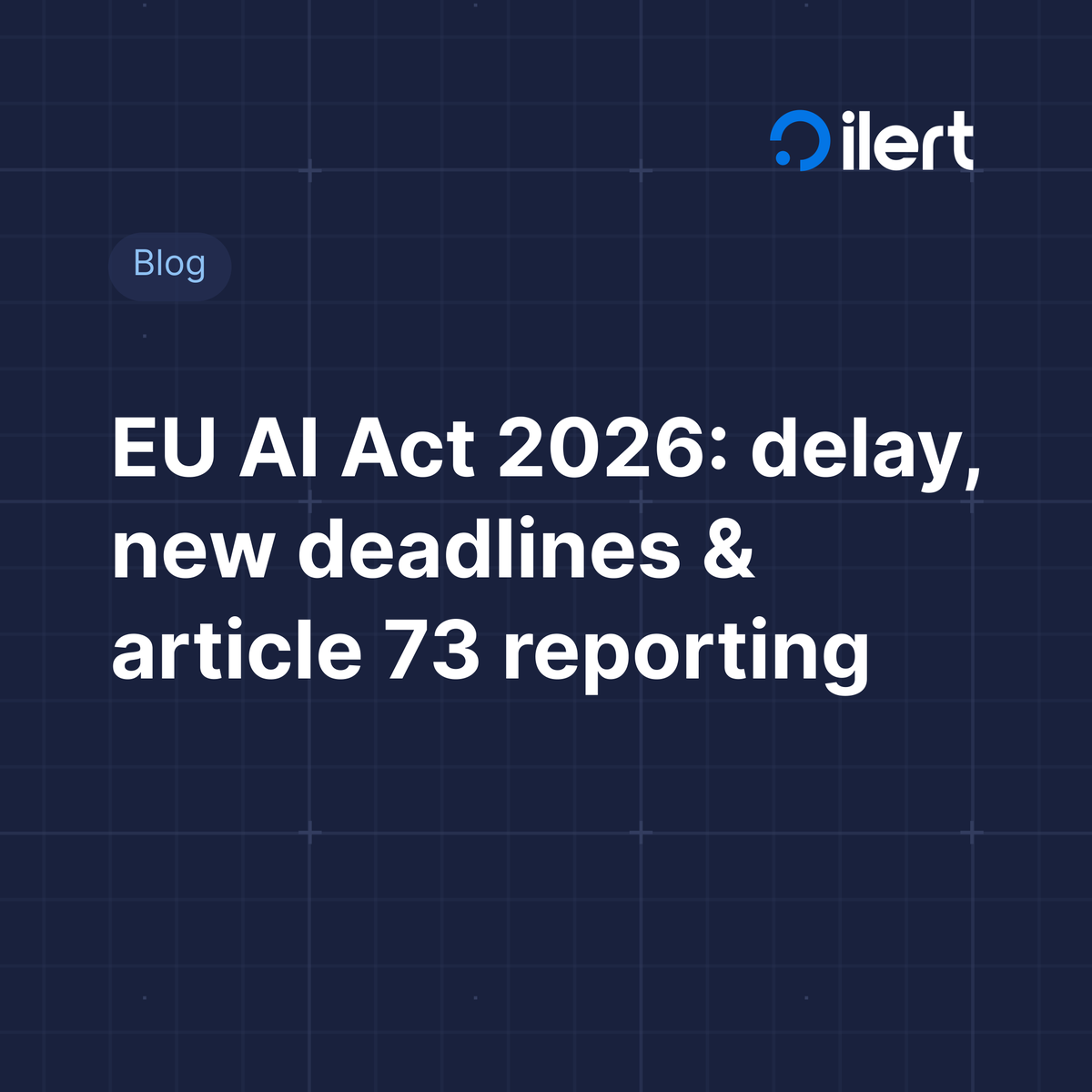
The EU AI Act got delayed. Partly.
The Digital Omnibus (in force since July 27) moved high-risk obligations, including Article 73 serious-incident reporting, to December 2, 2027. AI embedded in regulated products moves to August 2, 2028.
What didn't move:
→ Article 50 transparency has applied since August 2, 2026
→ The Commission can now fine GPAI providers up to 3% of global turnover or €15M
→ NIS2, DORA and GDPR clocks are unchanged
The new dates are fixed, not conditional. There's no scenario where they come early and no realistic one where they slip again.
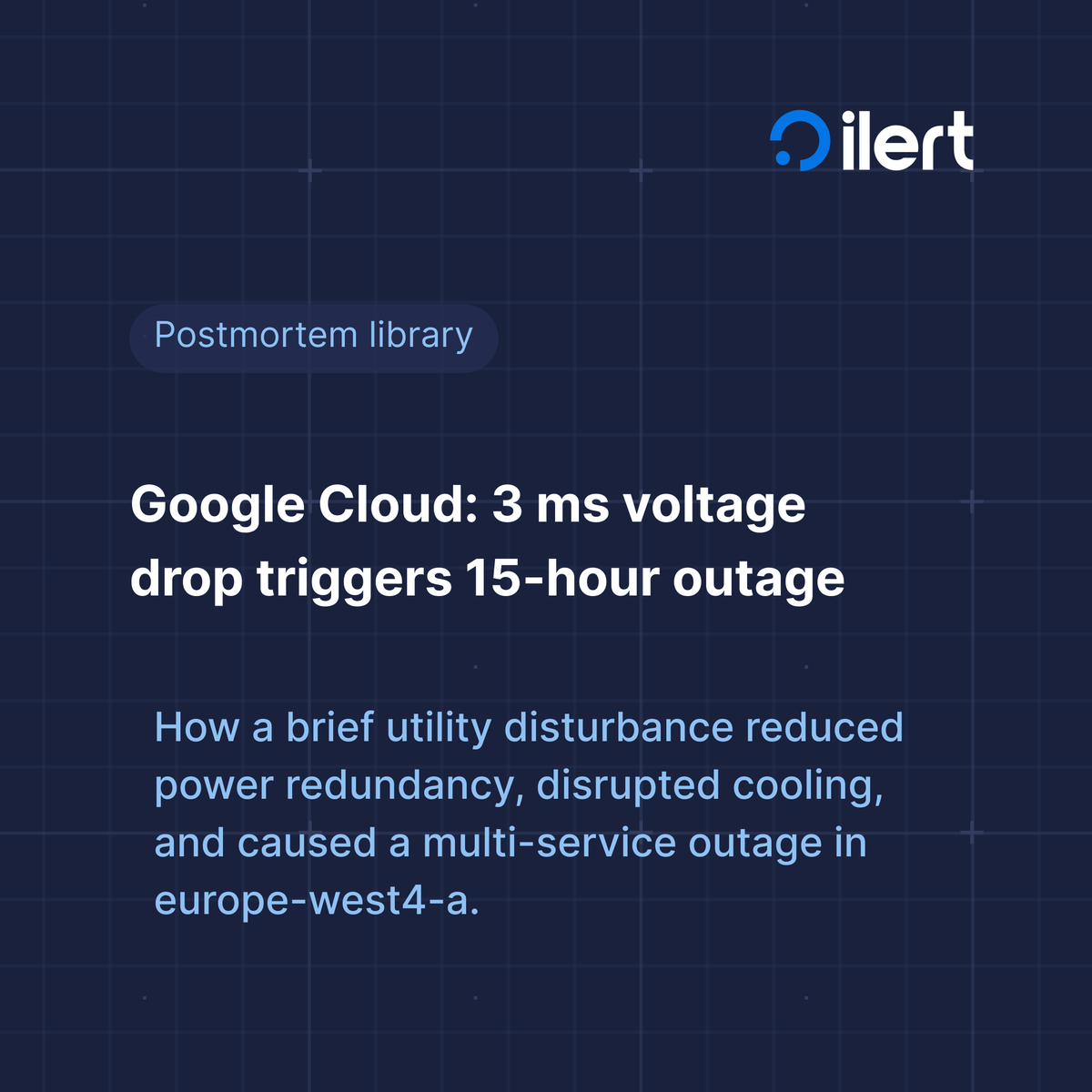
How can a three-millisecond voltage drop lead to a cloud outage lasting nearly 15 hours?
Google Cloud’s July 2026 incident shows how a brief electrical disturbance exposed failures across backup power and cooling systems in europe-west4-a. Feed A’s DRUPS failed, one server row lost power, and a chiller controller failed to restart the cooling pumps. As temperatures reached 44°C, Google shut down infrastructure to protect hardware and customer data.
In our latest postmortem, we break down what happened, how Google restored VMware Engine, Bare Metal Solution, and NetApp Volumes, and what teams can learn about power redundancy, cooling dependencies, thermal monitoring, and dependency-ordered recovery.
Read the full breakdown 👇
https://t.co/vMtB37AsV2
New integration announcement 📣
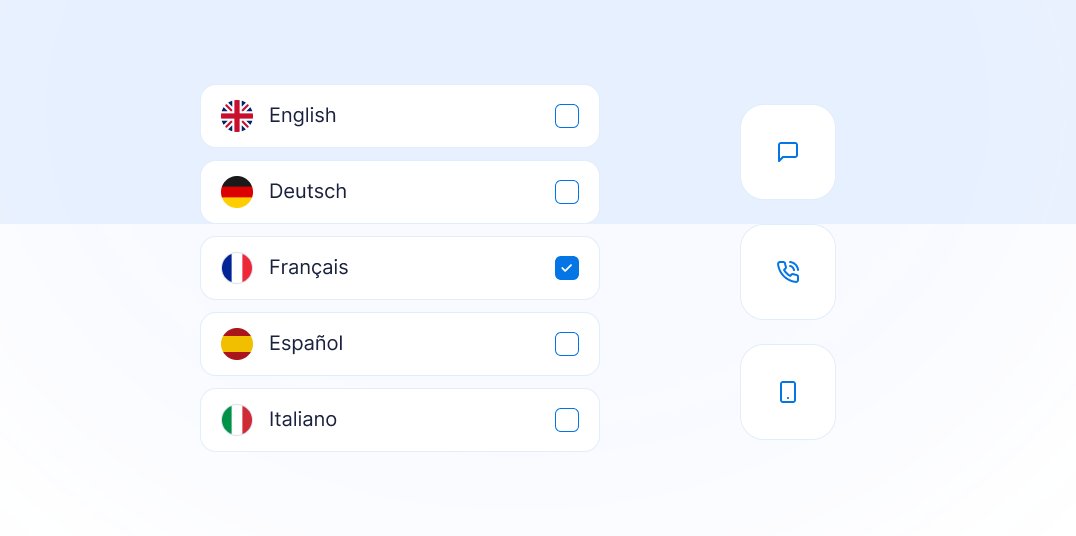
ilert + Bleemeo!
@Bleemeo is a French monitoring platform, built in Toulouse since 2015, covering servers, containers and applications on open standards like Prometheus, with data hosted entirely in the EU.
It now connects natively to ilert: threshold breaches reach the responder on duty through your escalation policy, and alerts close automatically once the issue clears.
Two European vendors, one alerting chain that never leaves the EU.
Learn more here: https://t.co/d8ZbHSvTJC
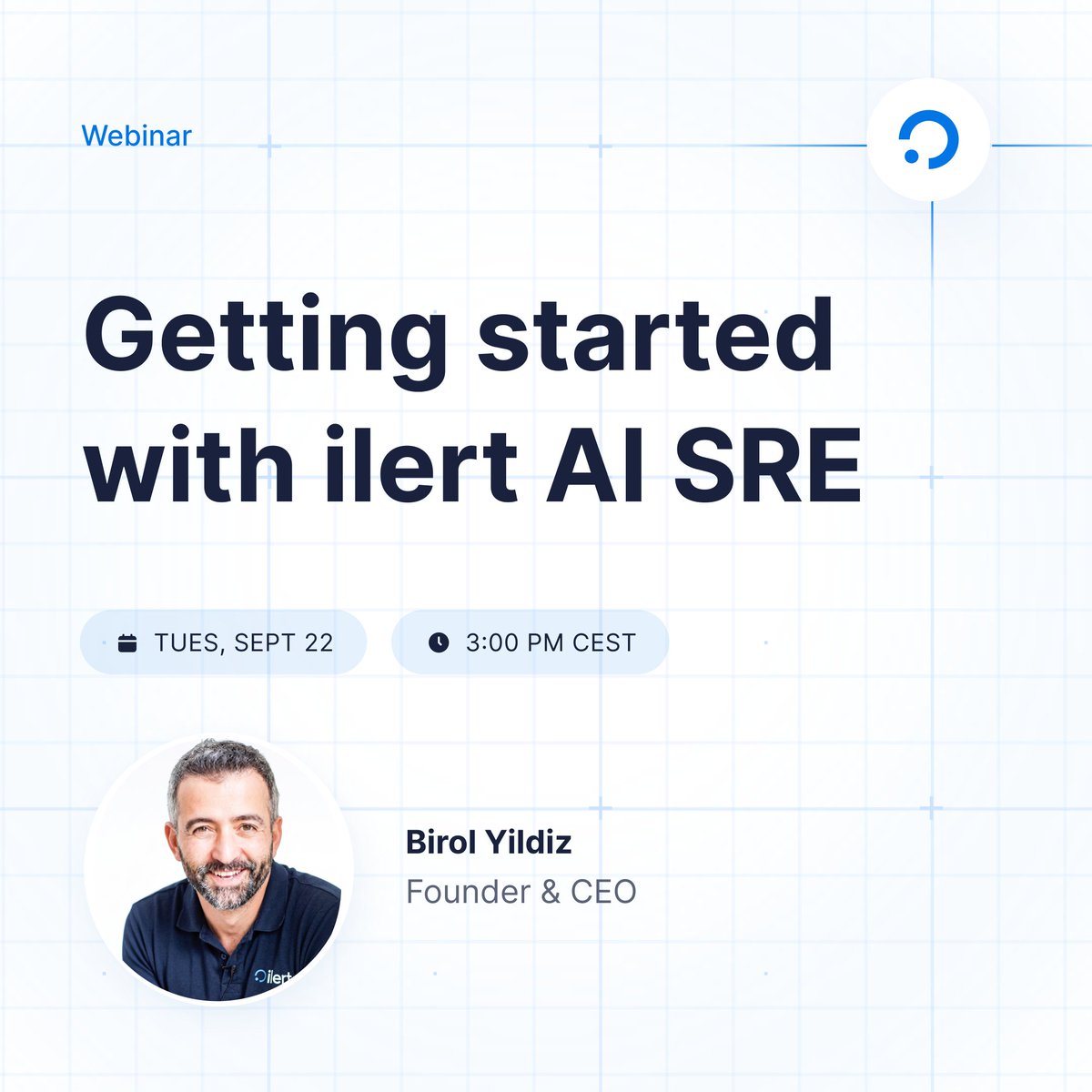
Most incident response time is spent finding, not fixing.
Tomorrow: September 22 at 3:00 PM CEST, we're doing a live session on what ilert AI SRE actually does during an incident: the full setup walkthrough, a real investigation end to end, and open Q&A with the team behind it.
Register: https://t.co/Pq3OC3JXpr