one thing that can easily get overlooked with launchpads is what happens after a token launches,
@RebateLaunch has a buy bonus to attract buyers, and the project says fees from launches will go toward buying back and burning $REBATE,
but i'd be interested in seeing whether projects launched on the platform continue to attract trading activity after the initial hype fades,
because a successful launch isn't just about getting people in on day one, it's also about what happens when the excitement settles.
i wonder how the rewards on @RebateLaunch will look once more people start holding $REBATE,
if the USDG payouts come from platform activity, then the amount generated and the number of holders sharing it both matter,
more activity could mean more rewards, but more holders could also mean each person receives a smaller share,
that’s why i'd rather see actual payout figures alongside the number of eligible holders than judge the system from one big reward alone.
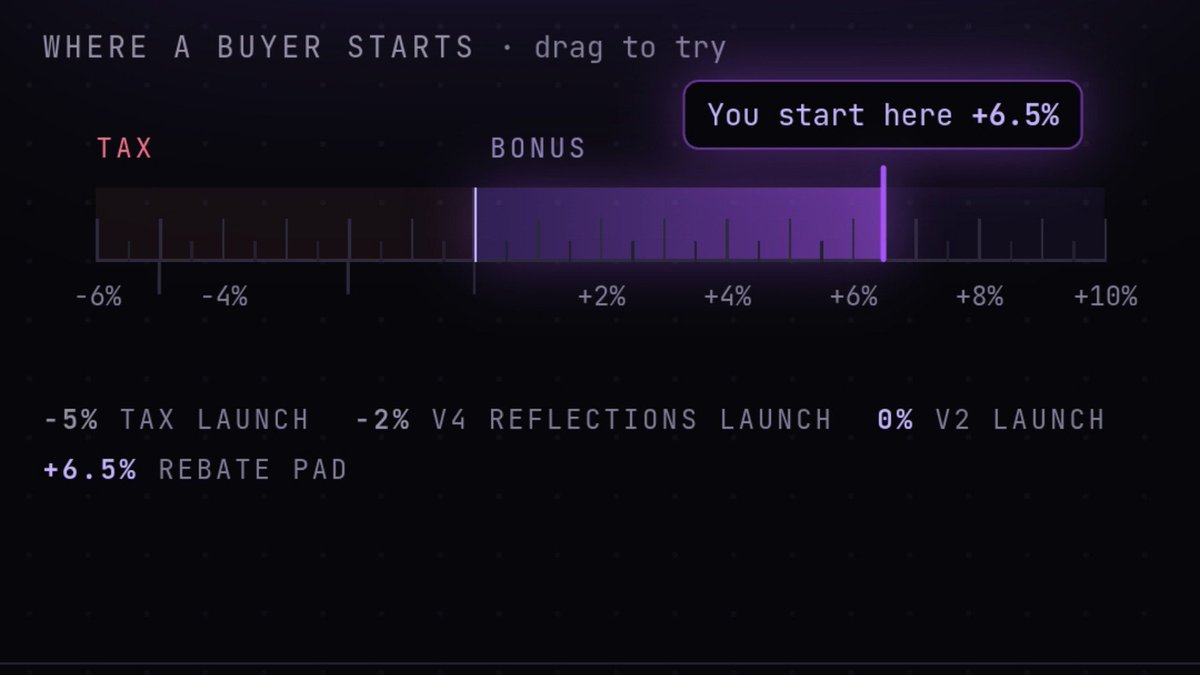
something i’d pay attention to with @RebateLaunch is how the 3% buy bonus works when the market gets volatile,
the bonus gives buyers extra tokens, but if the token price drops after the purchase, the value of those extra tokens can drop too,
so a 3% bonus at the time of buying doesn't automatically mean you're 3% ahead financially,
i think it's a useful incentive, but people still need to look at the entry price and the risk they're taking.
i think the interesting part of @RebateLaunch isn't just that holders can earn USDG, it's how the reward system is meant to work without staking,
the project says payouts go straight to holders' wallets several times a day, with no claim button or staking contract,
that removes a few steps, but it also makes transparency around payout calculations even more important,
i'd want to see how rewards are shared between holders and whether the amounts stay consistent as the number of participants grows.
a token burn sounds exciting until you ask where the buying pressure is coming from,
@RebateLaunch says fees from launches on its platform will be used to buy back $REBATE and burn it, which connects the token’s supply to activity on the launchpad,
but the impact depends on how much revenue those launches actually generate and how consistently the buybacks happen,
reducing supply is one thing, having enough demand to support the token is another.
one thing i’d compare with @RebateLaunch is the difference between a token bonus and a reward that comes from holding,
the 3% buy bonus gives buyers extra tokens upfront, while the USDG payouts are designed to reward holders over time,
those are two different incentives, and they attract different kinds of people,
i’m curious how much each one contributes to long-term participation once the launchpad has more activity
i’ve always thought rewards are only useful when you understand how they actually work,
@RebateLaunch says holders can receive USDG payouts directly to their wallets several times a day, without staking or claiming anything manually,
that sounds convenient, but i'd still want to see how the payouts are calculated and how they change when platform activity goes up or down,
the real picture comes from seeing how the system performs over time, not just knowing rewards are part of the model.