"Meta’s mass-scale infringement isn’t public progress, and AI will never be properly realized if tech companies prioritize pirate sites over scholarship and imagination." - AAP CEO Maria A. Pallante
https://t.co/9JZ7dZmXFF
"Creators face a level of digital piracy today that is so staggering it is almost unbelievable — it is an affront to the public interest."
https://t.co/nwXhjqHaQ3
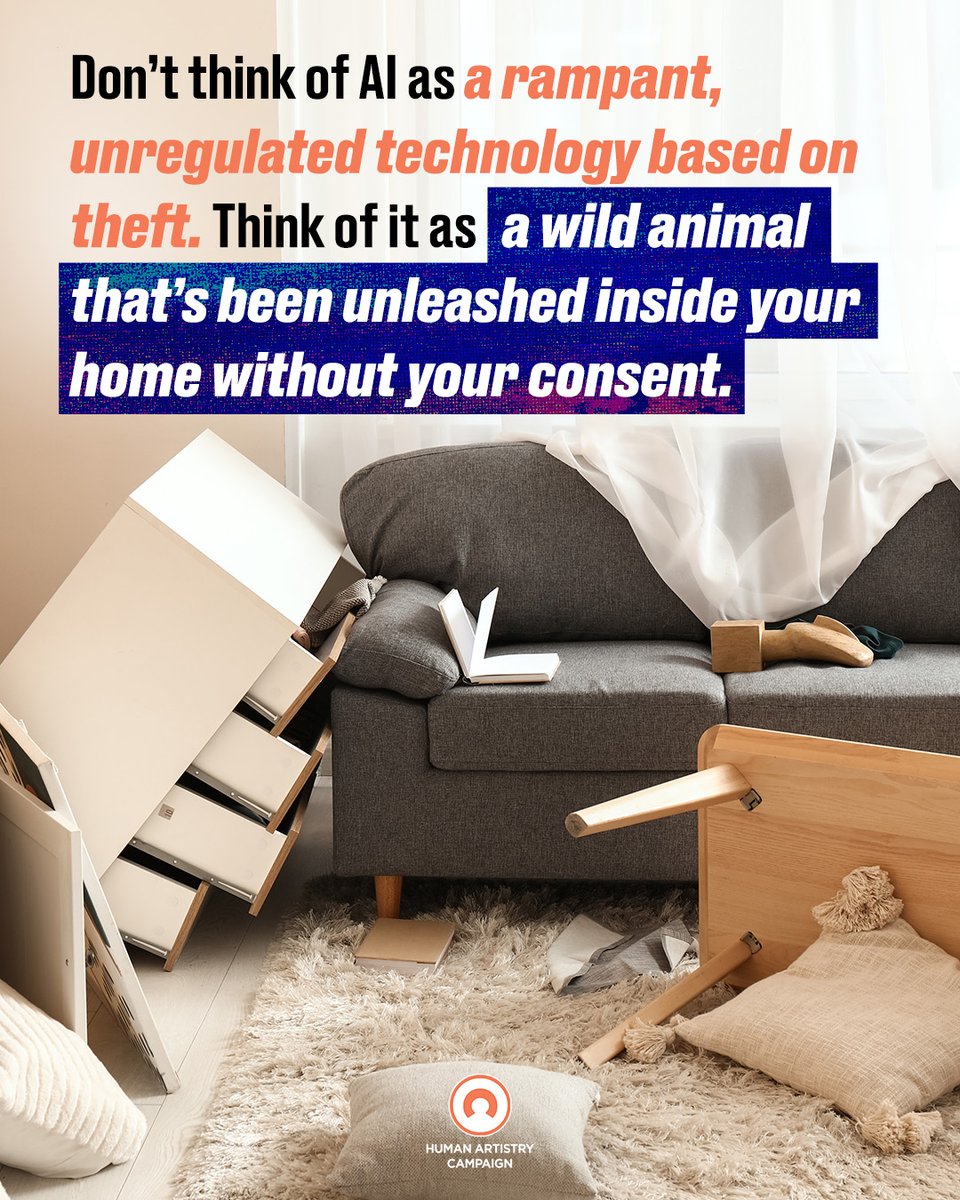
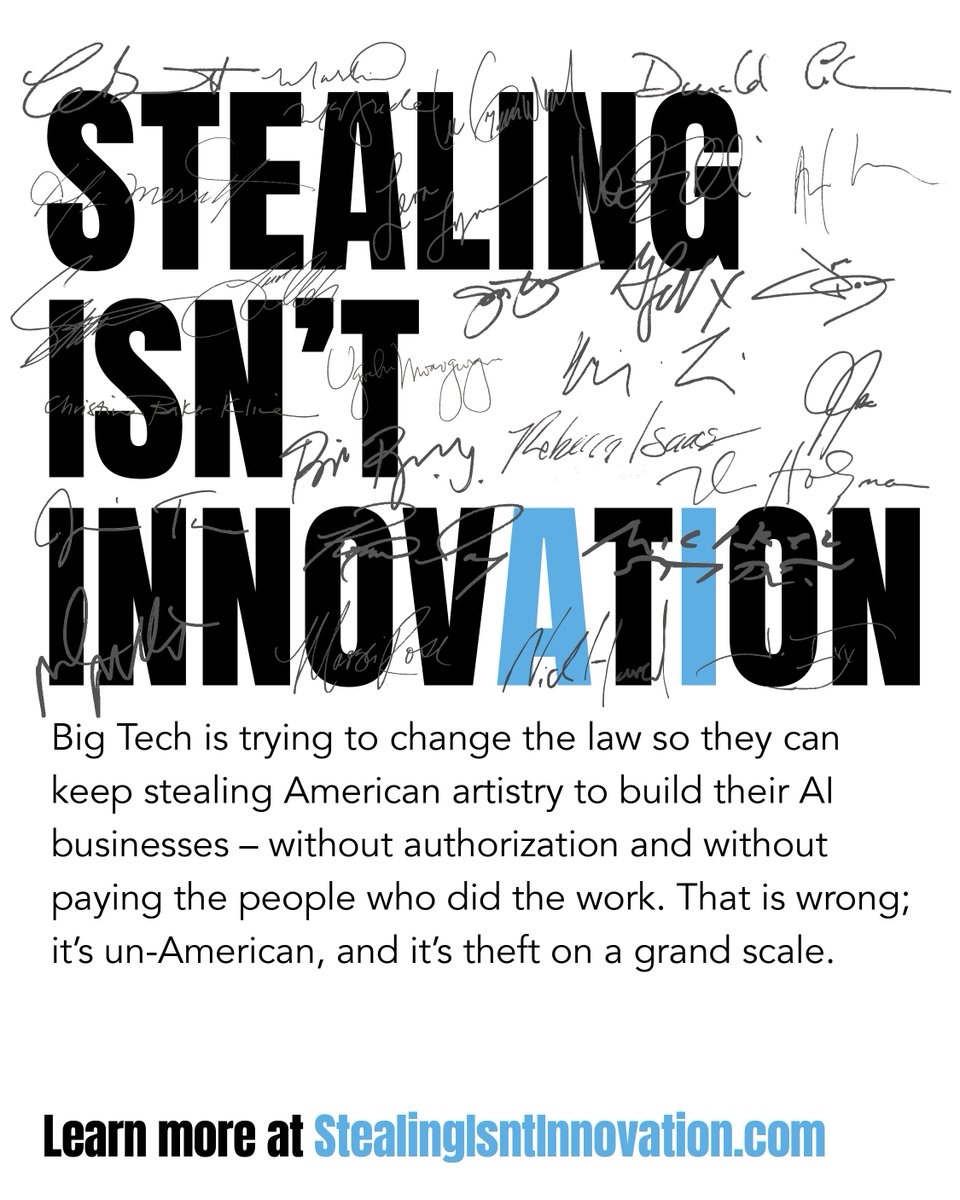
We're not anti-tech, we're anti-theft. If the future of “innovation” depends on stealing creators’ work without asking or paying, that’s not progress - it's stealing, and we shouldn’t accept it. #StealingIsntInnovation
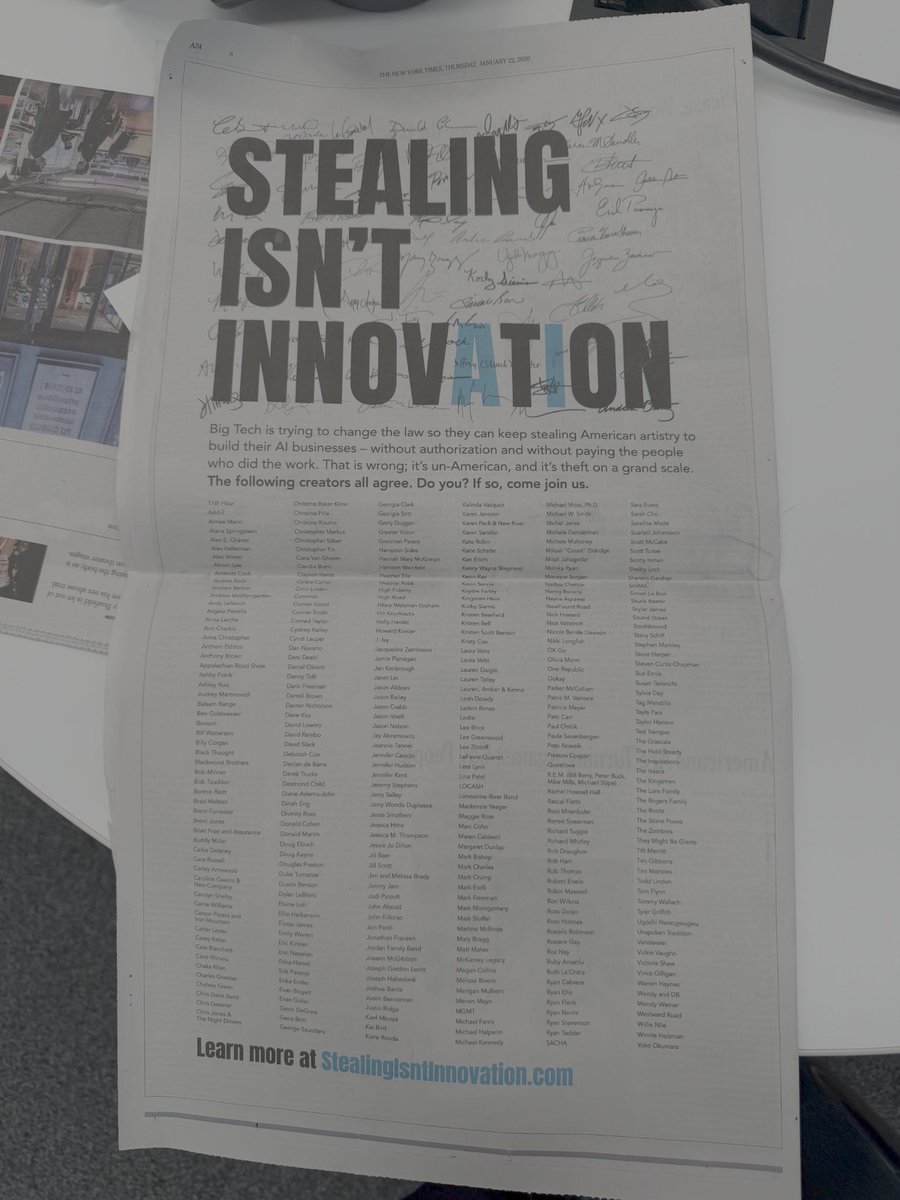
It’s in the paper because it matters! 🗞️ Over 700 artists, writers, and creators are calling for protections for human creativity in the age of AI. #StealingIsntInnovation
Join the conversation: https://t.co/DQfQshoRej
"I don’t know how many headlines I’ve read, including quotes by lawmakers in both parties, articulating some variation on the theme that 'we should not make the mistake with AI that we made with social media.'" https://t.co/1NmqcOat5k
“I don’t know how many headlines I’ve read, including by lawmakers in both parties, articulating some variation on the theme that ‘we shouldn’t make the mistake w/ AI that we made w/ social media.’ But that’s precisely what the US is doing, & with far more perilous consequences.”
"For now, the least Congress can do is stay out of the way, and few if any of their constituents will complain that they declined to give Big Tech another free pass..."
https://t.co/bPRDu9H6xr
"Unregulated artificial intelligence is a new pandemic. Parents know it. Consumers know it. Educators know it. State lawmakers know it. And Members of Congress know it."
https://t.co/bPRDu9H6xr
I’m about to give evidence in Parliament on AI & copyright.
I’ll say:
- there’s no excuse for ai companies not to pay for training data; they mostly don’t simply because a critical mass of ai companies decided not to
- suggestions that licensing is not required under the law are wildly misleading: openai lost in court in germany, and in the US the judge in a case vs meta said many instances of training are unlikely to be fair use
- the primary reason ai companies hide their training data is fear of getting sued
- governments should make ai companies reveal their training data so that people can defend their rights
You can watch here:
https://t.co/gfimQGjLW4
During the first 30 years of the internet, every time we found an interesting piece of online content, we learned to ask:
- What is the source of it?
- Who is sharing it?
Synthetic data is now everywhere, and both the source and the messenger behind the content can be realistically falsified.
Now, every time people find an interesting piece of content, before they get to the “source” question, they should ask:
- Is this real?
- Is there a real person behind the screen?
Most people are, unfortunately, not aware of this shift and not ready to navigate it.
In a post by our VP of Legal Policy Rachel Kim, she writes, "People describe AI as ‘creating' output, ‘hallucinating,' or ‘learning.’ But AI does none of those things like a human does—and the differences matter in copyright law and in many other areas.” Learn more!https://t.co/UFSFM3PT4J
"The technological innovation of AI is no talisman for fair use, or transformativeness for that matter," state @AmericanPublish in brief filed in Thomson Reuters v. Ross Intel. https://t.co/hK8xb6gi5V
@terrencehart writes, "The question is not whether AI companies can innovate. The question is whether that innovation requires erasing the rights of everyone whose work makes that innovation possible."
https://t.co/Xy976RLeO3