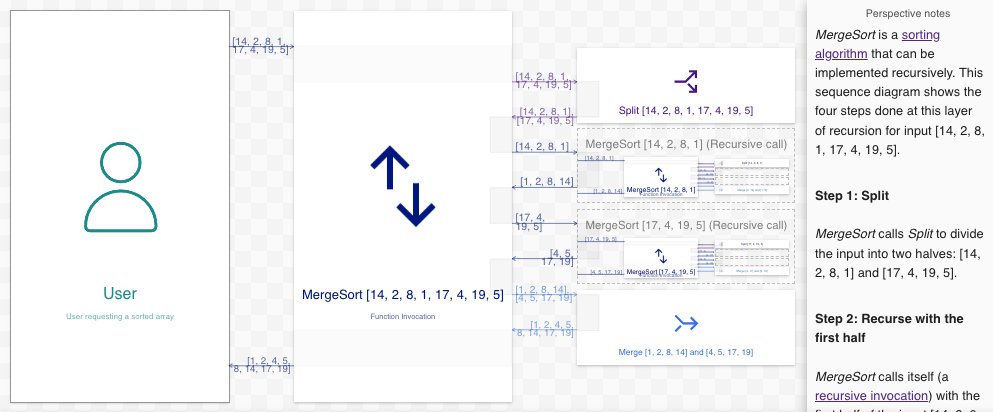
Merge Sort is an efficient sorting algorithm that recursively divides an unsorted list, sorts the individual segments, and merges them to produce a fully sorted list
@fetrigon Hi, thanks for this feedback. It is possible to set the detail on a step to low (say, 0.001) and select/highlight the nodes you like. I'll have a think if the opposite, choosing resources to "hide" in a step, would work.
Spent this week deep-diving into the https://t.co/XEFDsAhykI source code. This is the first decentralized protocol I've ever seen that has a chance of scaling to billions of users. Very exciting stuff! #programming#tech#startups https://t.co/25qEyplTHV
@swedishsouthpaw Sure thing, let me know how it goes. No immediate plans. I did experiment with sub-sequences that could be collapsed/folded, but it conflicted a bit with selecting and focusing on resources. I'll have a think on revisiting it 😀
@swedishsouthpaw - If not, try using combinations of "restartAt" and "color" to differentiate the two paths. Color one path, say, blue, then use "restartAt", and write the next path in, say, red.
- "toAsync" would also be handy for one-time conditional calls
@swedishsouthpaw Howdy, good question! There isn't specific mechanism for this in the language itself. Thinking on it, here is what I'd do:
- If the two (or more) paths are important and/or differentiated enough, then putting them in their own perspectives.
(🧵)
In system architecture diagrams, arrows are just as important as boxes. Ilograph 1.8.1 (all environments) adds markdown support for arrow descriptions, so you can show all the details about how your systems interact:
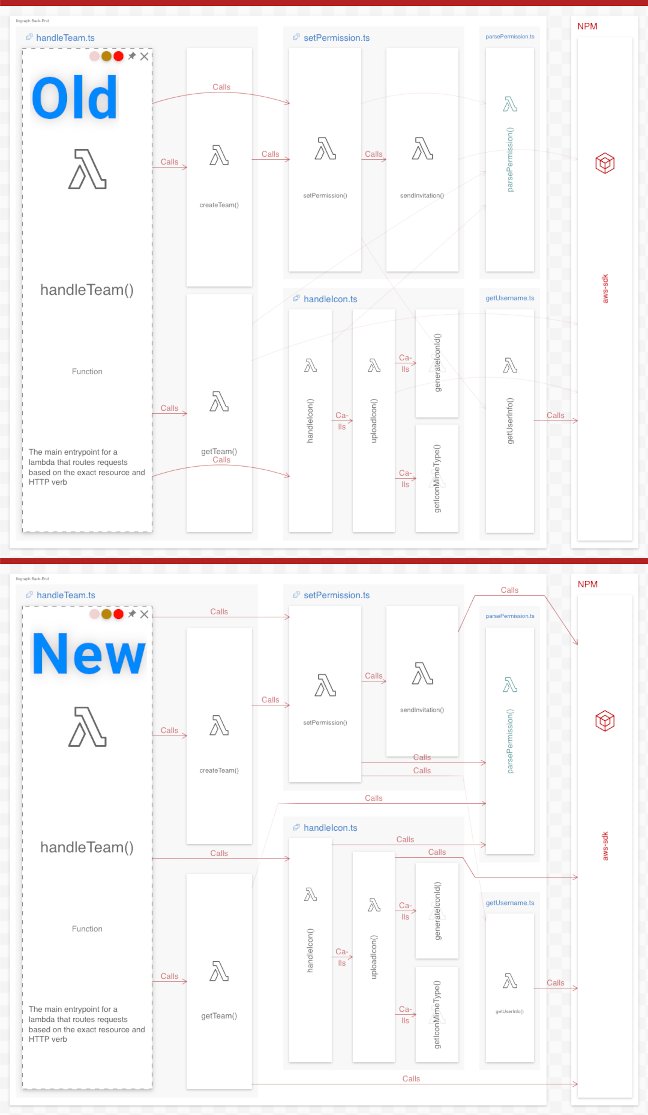
Ilograph 1.7.6 (all environments) is an exciting new release that updates how arrows are rendered. When space permits, arrows will now route around other resources: