Introducing the new @stitchbygoogle, Google’s vibe design platform that transforms natural language into high-fidelity designs in one seamless flow.
🎨Create with a smarter design agent: Describe a new business concept or app vision and see it take shape on an AI-native canvas.
⚡️ Iterate quickly: Stitch screens together into interactive prototypes and manage your brand with a portable design system.
🎤 Collaborate with voice: Use hands-free voice interactions to update layouts and explore new variations in real-time.
Try it now (Age 18+ only. Currently available in English and in countries where Gemini is supported.) → https://t.co/pmT9iHEpZa
Write UI tests in natural language with Journeys in @AndroidStudio → https://t.co/2rylG0FCgZ
Gemini uses multimodal capabilities to navigate your app, validate visual states, and explain its reasoning for every step.
🦔 Found this video and had to share. In China, AI-generated livestreams are selling products using synthetic video and voice. No humans on screen. Just AI avatars running 24/7, reportedly earning up to $100 per hour per stream.
The video shows rows of PCs, each running a different AI influencer, all selling products simultaneously. Classic crypto mining farms are being converted to AI content farms.
My Take
This is the uncanny valley meets late-stage capitalism. We've gone from humans selling products to humans, to AI selling products to humans, and eventually it'll be AI selling to AI while the ad money sloshes around until someone realizes there are no real customers left.
One commenter asked the right question: "Where does the money come from? Bots watching AI bots. Who is putting money in the cycle?" Right now it's advertisers paying platforms, platforms paying creators, and some percentage of human viewers actually buying stuff. But as the human viewers fade and the AI content floods every channel, the whole model starts eating itself.
The "dead internet" theory used to sound paranoid. Now it looks like a business plan.
Hedgie🤗
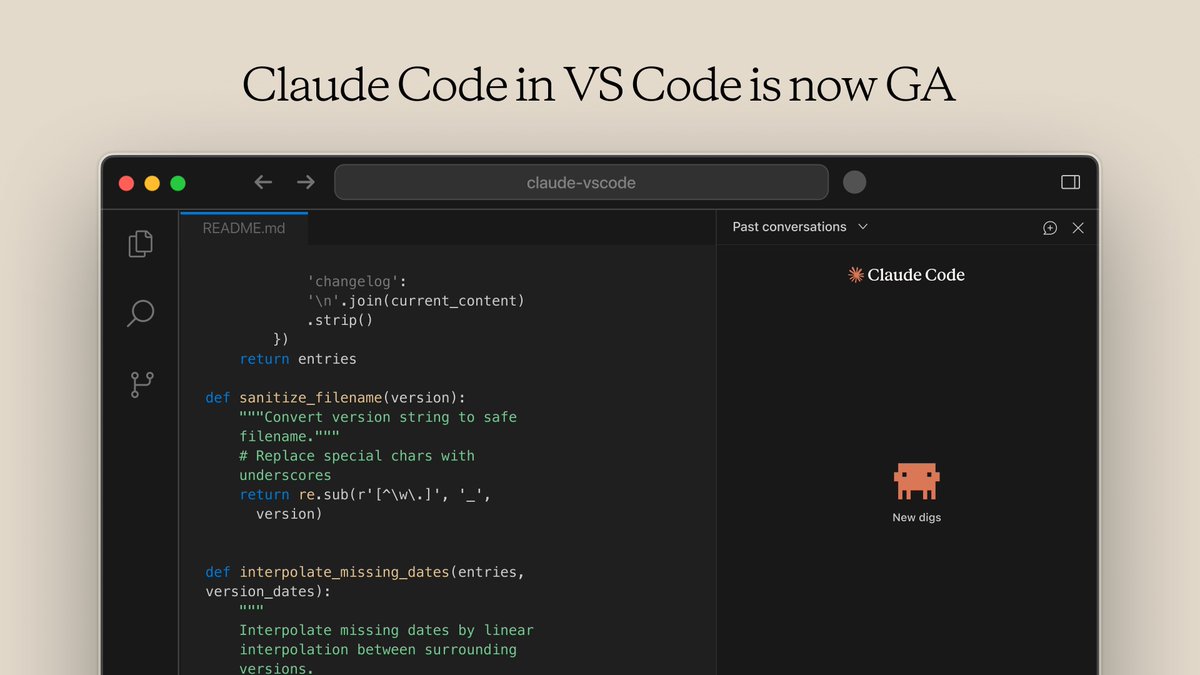
The VS Code extension for Claude Code is now generally available.
It’s now much closer to the CLI experience: @-mention files for context, use familiar slash commands (/model, /mcp, /context), and more.
Download it here: https://t.co/q95Cw4soMk
Unlock higher usage limits for Gemini 3 Pro → https://t.co/8PPAPdCm1z
Connect your own API key in the latest version of Android Studio Otter to extend your Agent Mode sessions.
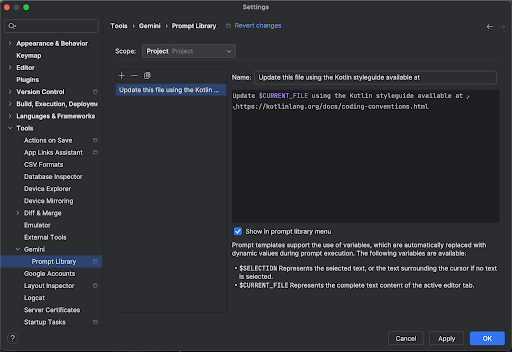
Standardize your team's AI workflows with the Prompt Library in Gemini in Android Studio for businesses → https://t.co/p6RO9E2UN0
Save, share, and reuse complex prompts via version control to automate repetitive tasks.
Your AI agent should be able to execute tasks, not just chat.
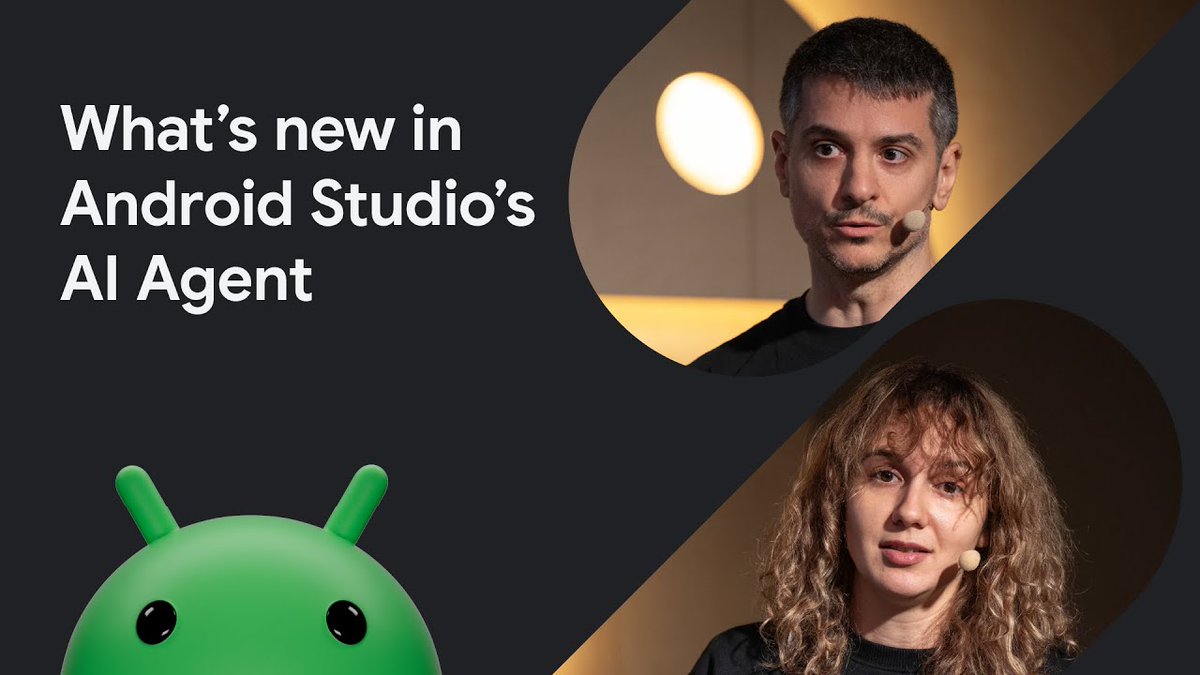
See how the updated Android Studio agent uses tools like "Find Files" and "Version Lookup" to solve complex problems in your codebase→ https://t.co/poON4mhHlO
👋 Android devs, have you tried this yet?
Build dashboards and internal tools using Kotlin and Compose Multiplatform.
Ship responsive internal apps in the browser – no JavaScript needed.
Learn more!
🔥 Compose Multiplatform for iOS is Stable and Production-Ready! 🔥
Build mobile apps faster with shared UI code, full control over native experiences, and the confidence to ship at scale.
Explore all the updates in Compose Multiplatform 1.8.0: 👇
https://t.co/F1Zs9VgcT4
🎤 Meet Duolingo's Johnny Ye and John Rodriguez at KotlinConf’25!
Duolingo delivers weekly updates to 40M+ daily active users across iOS and Android. Discover how KMP helps them move fast, the challenges they’ve tackled, and key lessons they've learned.
https://t.co/n3lSwIaWx0