the fast16 malware was almost certainly targeting spherical implosion simulations.
left: unmodified LS-DYNA 970
right: LS-DYNA 970 modified with the relevant portions of fast16.sys
both running a spherical implosion deck
Last August, I was invited to keynote (no honorarium) at a major event organized by Polytechnique Montréal—you know, the campus that no longer allows meat to be sold.
I received a note yesterday saying they’ve pivoted and will invite someone else to speak.
Here's the deal. Unless you’re left-of-centre or aligned with the Liberals, you risk being sidelined on university campuses in Canada. Full stop.
That’s the reality—and Canadians should know it.
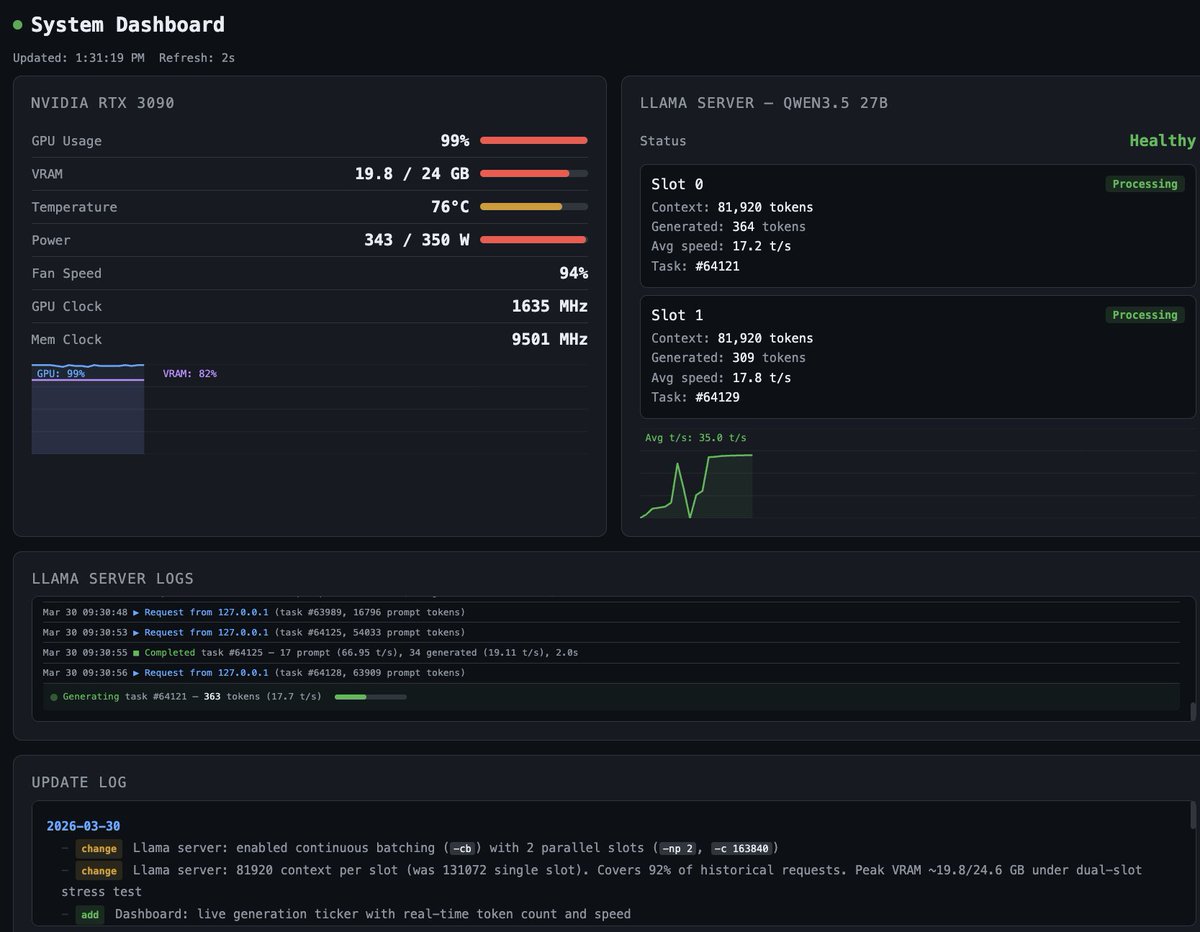
finally running local LLM setup: RTX 3090 x Qwen3.5 27B x 82k context x 2 parallel slots x hermes agent for knowledge base/research/admin.
one gpu, one linux box, no subscription. slower than cloud, but it works and solves privacy concerns.
@Hesamation@huggingface@danielhanchen Keeps getting lost in infinite thought processes for me. Switched back to vanilla Qwen3.5 27B, been getting much better results since and no more infinite reasoning loops.
We are curious to hear what others are seeing on the degradation side, especially for thermoplastic composites in service conditions.
Full publication: https://t.co/kAmREx4Dhv
Learn more: https://t.co/sBXtQQiUnp
🧵 How do aerospace thermoplastic composites age?
CF/PPS, CF/PEI, and CF/PEEK are increasingly used in aircraft structures. They are lighter than metal, but UV and moisture strongly affects them. We recently focused on longterm exposure to lower altitudes (think zeppelins).
Key finding: matrix chemistry matters. PPS, PEI, and PEEK degrade differently, different chemical signatures, different surface damage patterns.
CF/PPS shows increased cross-linking and brittleness. CF/PEI and CF/PEEK undergo chain-scission under the same conditions.
@sciencegirl Natural fiber composites appear to have real sustainability appeal (if we forget about the matrix). Bamboo has decent specific properties, but the variability is a huge challenge for structural use. Now making carbon fiber out of this would be a real game-changer.
@MIT_CSAIL Interesting direction. The question is whether ML-optimized composite architectures actually deliver the predicted mechanical gains outside the training distribution.
We use DIC to generate dense local field data that could help close that gap. Curious to explore this.
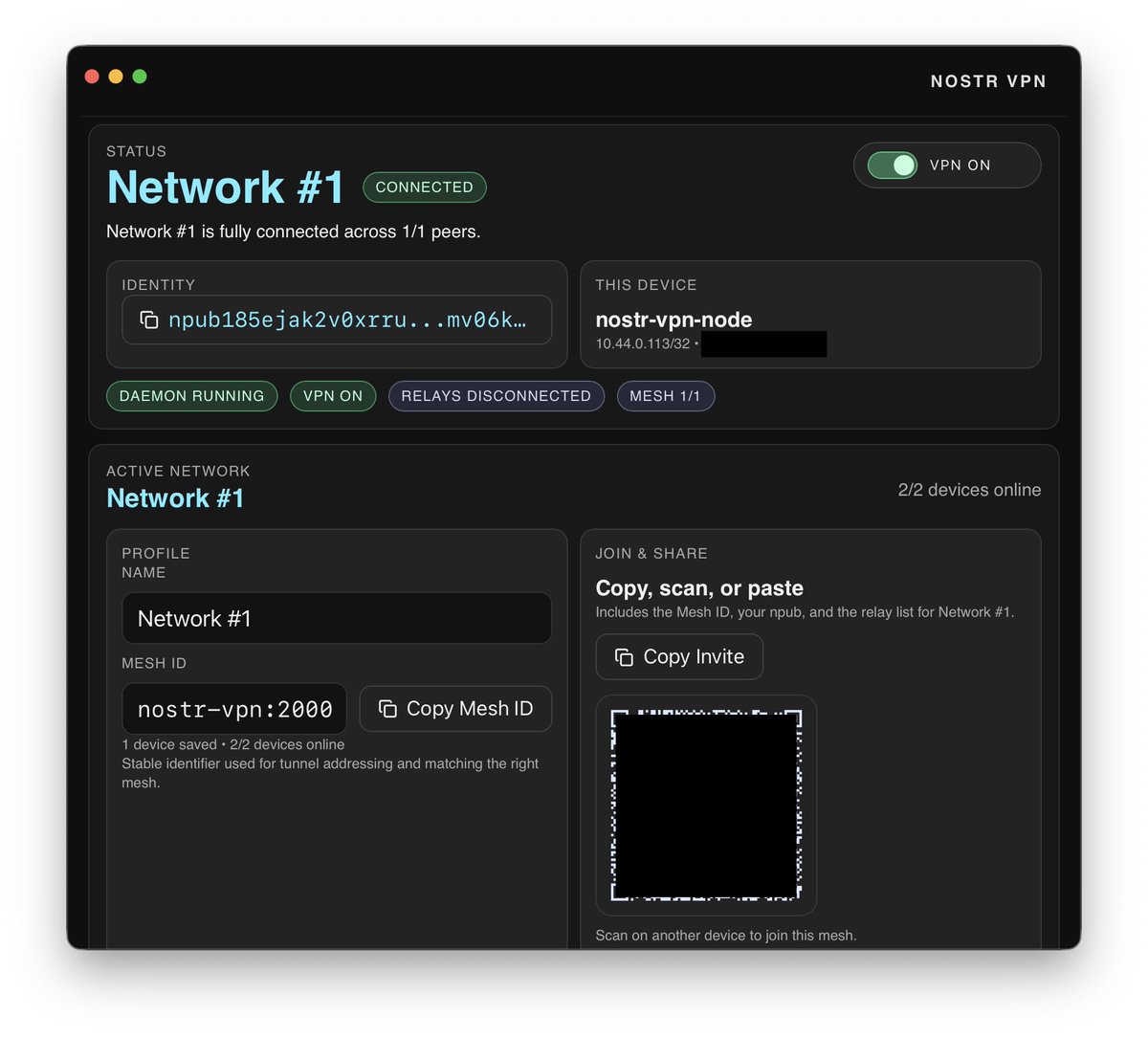
Got annoyed by Tailscale requiring 3rd party accounts, so created Nostr VPN.
It signals over nostr relays and creates a wireguard / boringtun network. Builds for Macos and Linux. Using it between my Macs, but haven't tested extensively yet.
A lot of our experimental work uses Digital Image Correlation.
Most materials we study are heterogeneous. Composites, 3D printed parts, biological tissues. Properties vary locally.
DIC makes that variation visible. That is why it works so well for us.
https://t.co/u2XBHtXFcR
Been meaning to post more about what we're working on in the lab.
Upcoming thread series on our main projects:
Additive manufacturing: understanding how bead bonding develops in MEAM
Thermoplastic composites for the aerospace
Heterogeneous materials characterization methods
In theory, meshtastic sounds like a great idea.
In practice, I don't know if it is because although I can see nodes, there's no activity at all in my area, so who knows.
This work also showed that high performance thermoplastic composites prefered in the aerospace industry might not be the best choice for an airship, especially when cost and ageing are also considered.
Read the full paper here: https://t.co/KJCDliH5uF
The long-term performance and ageing of high-performance thermoplastic composites are critical for their application in demanding environments, such as the innovative structures of next-generation airships.
These findings provide crucial insights into material behavior under prolonged environmental exposure, aiding in the development of robust composite solutions for aerospace applications like the LCA60T.