FULL INTERVIEW: @ryancohen explains his plan to acquire eBay.
He unpacks his pitch to institutional investors, why eBay is so horribly run, and how Ryan plans to create billion in shareholder value.
$GME $EBAY
Ryan Cohen:
✅ Builds a dog food business that somehow goes head to head with the largest, most powerful business in America and wins. Sells business for $3 billion. Discovers a market wide short and distort campaign with Amazon at the center capturing the market share of the various brick and mortar retailers summarily destroyed by said campaign.
✅ Take a controlling interest in GameStop during COVID when short and distort ramped up its attacks. Assist a retail revolution causing a reversal of fortunes in the form of a short squeeze that would be ultimately interrupted by institutional corruption.
✅ Aggressively trim the fat from the GameStop footprint and redirect the business model towards collectibles with the aim of creating a profitable business in the face of extremely daunting competitive headwinds.
✅ Simultaneously engage in an activist campaign against another company in the crosshairs of the criminals, none other than Bed Bath and Beyond. Surprisingly sell your stake in said company while maintaining a cooperation agreement with the board. Through a series of opaque financial maneuvers gain control of the inevitable chapter 11 to follow. Utilize chapter 11 to expose the fraudulent short and distort campaign first discovered at Chewy.
✅ Partner with PSA to expand the collectibles business through in store shipping and handling to PSA grading centers along with the unveiling of a digital collectibles product that increases revenue significantly while ushering the collectibles business into Web 3.0.
✅ Make a half stock/ have cash me outside offer for eBay, the prime online marketplace for collectibles and much more. Utilize social media to bring to light a corporate malaise bordering on, if not fully crossing into, corruption and breach of fiduciary duty. Fund the deal with commitments from International sovereign wealth funds surreptitiously brought into the fold years prior. Force the hand of eBay shareholders into a deal that combines eBay and GameStop into one absolute behemoth prepared to take on Amazon.
✅ Use the shell of the former Bed Bath and Beyond to combine both entities. A shell conveniently named after an insect that transforms and resurrects into a majestic butterfly following a long dormant period in a cocoon not unlike a 3 year chapter 11 saga. Utilize the NOLs from the intentionally sabotaged business to significantly offset tax obligations of the new combined entity.
✅ Do all of this while never taking a salary, facing down a system that will d anything to protect itself from its own demise and battling through a coordinated media campaign designed to kill shareholder interest.
✅ Ultimately partner with other like minded, powerful entrepreneurs who were able to fill a vacuum created by AI and blockchain to build a new cultural and economic system that rewards merit over cronyism, innovation over monopolization and, at its core, good over evil.
The Hollow Men
American capitalism is rotting from the head down. We have replaced the "Owner-Operator"—the risk-taker-with a new, parasitic class of corporate bureaucrat: The Risk-Free Insider.
By "Insider," I am not referring to a specific title. I am referring to the entire administrative state that has captured the modern corporation. This includes the Directors who exist solely to collect fees, the Executives who exist solely to collect bonuses, and the Managers who exist solely to hire consultants.
These are the hollow men of the boardroom. They are masters of PowerPoint. They wear the right suits. They say the right buzzwords about "governance" and "ESG." But they are mercenaries fighting a war with someone else’s ammunition.
In a functioning economy, authority is tied to liability. If you make a bad decision, you lose your own money. That fear of loss is the only thing that keeps a business honest. It forces you to cut waste, obsess over the customer, and stay late to fix what is broken.
Today, we have severed that link.
We have rigged the game so that heads, the Insider wins; tails, the shareholder loses.
If the stock goes up, the Insider collects a massive performance bonus. If the stock crashes due to their own incompetence, they are fired with a "Golden Parachute" worth tens of millions. They are gambling with the house’s money, and they never leave the table poorer than they arrived.
This looting starts in the boardroom.
We have normalized a "Country Club" culture where directors are selected based on social profiling rather than their ability to build a business. The modern board member is often a professional tourist—paid an average of $350,000 a year.
Let’s be brutally honest about what that number represents. The average director is paid nearly five times the GDP per capita of the United States. They earn more for attending four quarterly lunches than the vast majority of Americans earn in five years of hard labor.
And for what?
Most of these directors are "over-boarded," sitting on three or four boards simultaneously. They treat directorships as a gig economy for the elite. They fly in, rubber-stamp a compensation package they didn't read, and fly out. They collect checks from companies they do not understand, do not use, and certainly do not love.
They are not there to ask hard questions. They are there to be collegial. They are there to protect the other Insiders.
And what happens when these boards hire executives who also have no personal capital at risk?
We get the Delegation Economy.
When a Risk-Free Insider faces a crisis—bloated expenses, a broken supply chain, or a stale product—they do not roll up their sleeves. They hire a consultant. They pay a strategy firm millions of shareholder dollars to produce a 100-page deck telling them what they already know.
This is not management. It is intellectual money laundering.
They use shareholder capital to buy an insurance policy for their own careers. If the plan fails, they can blame the consultants. They delegate the work because they are terrified of the responsibility. They would rather preside over a slow, comfortable decline than risk a bold mistake.
While American Insiders are busy optimizing their severance packages, our global competitors are optimizing their products. They are not slowed down by bureaucracy. They are not waiting for a slide deck. They are outworking us.
If we continue to fill our C-suites with administrators instead of operators, we will lose our edge. We will see iconic American franchises hollowed out by fees, managed for the benefit of the Insiders, while the true owners—the shareholders—are left holding the bag.
The time for polite governance is over.
If we want to save the American economy from mediocrity, we must demand a return to the "Owner’s Mentality." We need leaders who treat shareholder capital with the same reverence they treat their own savings. The era of the Risk-Free Insider must end.
1/ A new class is rising:
Not blue collar.
Not white collar.
But Black Collar — independent, digital, and global.
Powered by AI, driven by freedom. Here’s how they’re taking over the future of work:
2/ Black Collar workers are freelancers, creators, investors, and solopreneurs.
They don’t commute.
They don’t clock in.
They work from laptops, cafes, airports, and the cloud.
3/ AI is their edge.
It writes, edits, designs, analyzes, trades, automates.
With the right prompts and tools, a one-person business can now scale like a startup.
4/ Finance?
There’s a Black Collar class managing assets from anywhere:
Remote traders, quant coders, crypto strategists, global real estate allocators.
No suits. Just screens and signals.
5/ AI doesn’t replace them.
It amplifies them.
One freelancer becomes a full agency.
One investor runs global portfolios.
One creator builds a media empire.
@ryancohen Will there be $BTC dividend soon for us diehard sharehodlers? Been holding a while and really would like to hodl $BTC long term as a gift to myself for hodling.
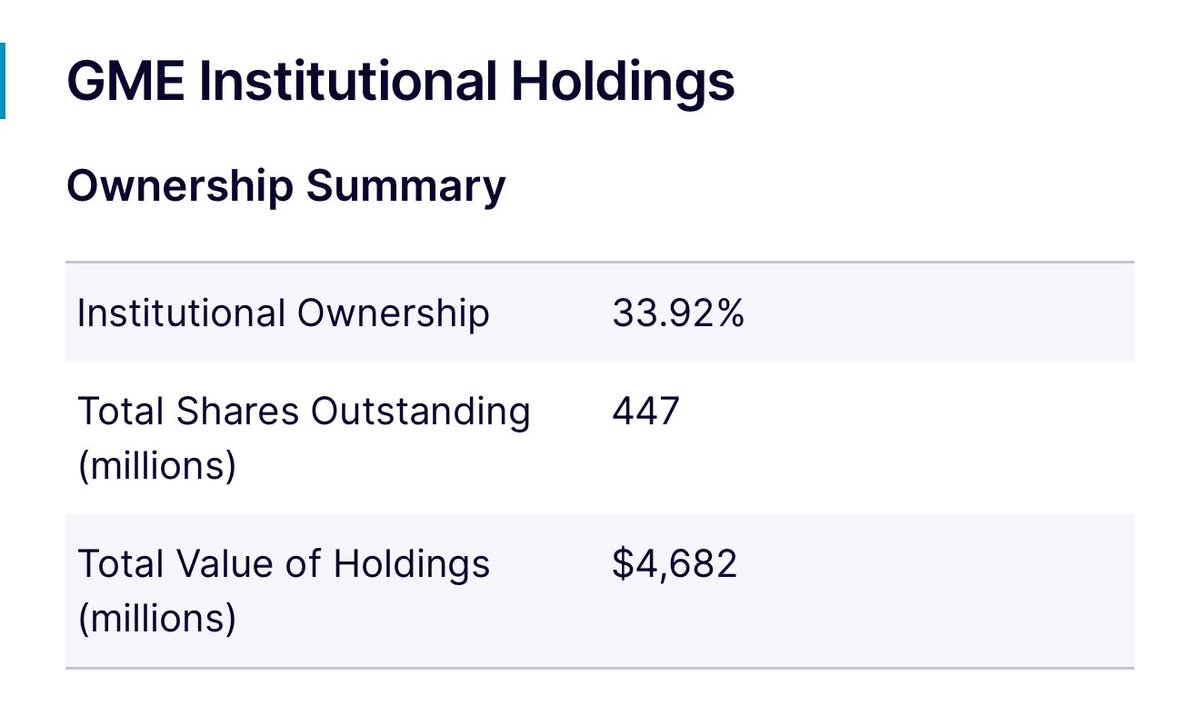
BREAKING NEWS: According to the most recent $GME 13F filings, all of the top call-option sellers COMBINED to not have enough shares to satisfy @TheRoaringKitty's 12 million shares currently in the money.
The Massachusetts Securities Regulator has said they are investigating Roaring Kitty for his $GME, GameStop positions.
But the Massachusetts’ politicians have been trading themselves.
Let’s look at Massachusetts reps and their trading.
- Rep Katherine Clark sits on the Congressional Subcommittee on Labor, Health and Human Services. She bought shares in Holologic a week before the US Department of Health awarded the company a $119 million Covid 19 contract. She sold after the shares spiked days later.
- Rep Lori Trahan was months late disclosing stock sales, never faced a penalty
- Bill Keating was also late, failing to disclose his ROST sells and TJX buys
- Seth Moulton sold $250,000 of $ATVI, Activision, on June 13th. Later that exact day, the $ATVI and $MSFT acquisition was blocked by the US FTC
- Rep Clark also traded stock before the COVID drop, and bought tons of tech stocks before vaccines were announced
Most of their portfolios are beating the market at the moment.
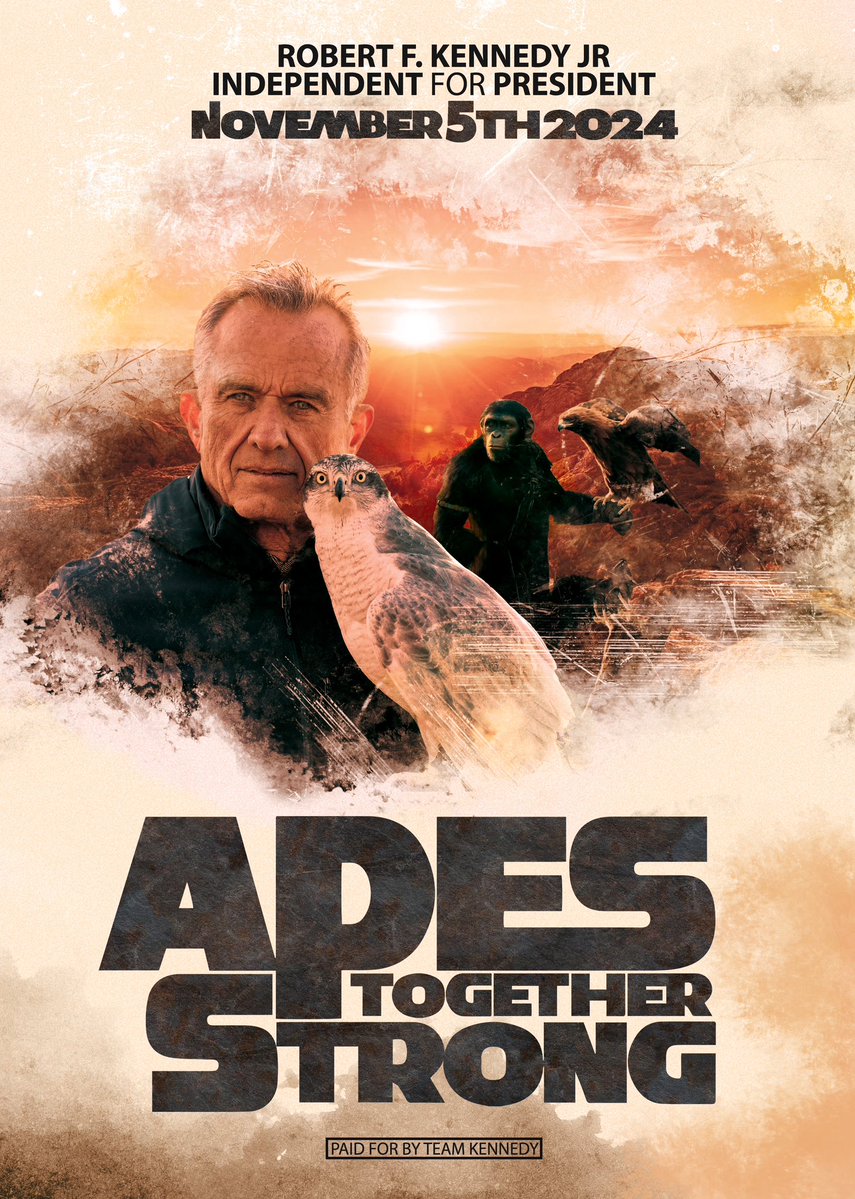
I’m very aware of what the average retail investor has been saying about the need for greater transparency in our markets, stronger regulatory oversight and tougher penalties for market manipulation and criminal behavior. My administration will support the Ape retail rebellion and enact aggressive Wall Street reforms.
To match action with words, I just invested $24,000 in GameStop from the fees I earned from suing Monsanto for their knowingly poisoning our soil and causing cancer. I love the idea of making Monsanto support $GME and the Apes. We need a free and fair market. Let’s punish predatory short selling to the moon. By the way, I ride with you and I’m not leaving.
#ApesNotLeaving #ApesTogetherStrong #GME #AMC @TheRoaringKitty@StockRetail@KatStryker111@Cancelcloco@BossBlunts1@LanceKhazei@PeterRHann1 @Human_Augustus