Dos ingenieros de Anthropic pasaron 24 minutos exponiendo cada función de Claude Code que no sabías que existía y gratis.
La mayoría de las personas pasarán de largo este contenido
Guarda esto para no perderlo 🏷️
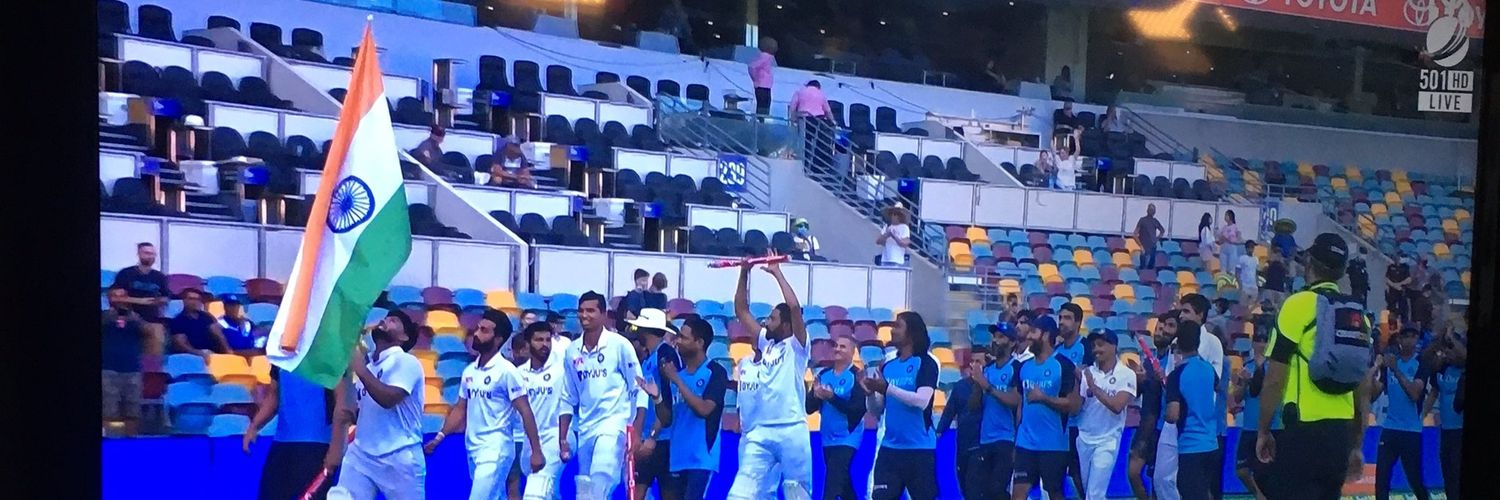
Under 18 fc rohit ki hate me Itni pagal ho chuki he ki Bt ka context tk ni smja or views or likes ke liye Rohit ke khilaf Hate failani shuru kr di..
Uske Show me Shikhar ayaa he obviously vo uska h incident Btayega kohli ayaa hota to uska incident btata kitne insecure Nibbe nibbiya he..Niche video lgaa rhaa hoon dekh lo Rohit kiss incident ki bt kr rhaa😂😂
It is clearly evident that it was Dhawan who came to Rohit's defense first, not Kohli. But when Rohit exposed their fake PR agenda, 'Chokli's' fans started crying 😭.
Chokli always Crying for Credit because he knows he can't beat Rohit without Pr 😭
@TL_cricket false information 😂😂😂😂
shastri was asked is there any rift between Rohit nd Virat then shastri said everyone walks out for team then ro posted this
btw virat played sympathy card after india lose T20I world cup
I'd argue this video from Tibet/Nepal might be the most jarring footage of a natural disaster ever filmed.
Climate change isn't coming, it's here - and the consequences are horrific. But hey, at least the billionaires are happy.
#Nepal: oggi sui social sta circolando molto questo video effettivamente reale proveniente dal confine Tibet-Nepal.
Non si tratta però della frana principale, ma di una frana secondaria più contenuta avvenuta circa 3 ore dopo, anche questa registrata dai sismografi
📹 @WxNB_
A lot is being said on Ashwin Vs me heated chat on Rishabh Pant. Some fellows have used selective clips which can easily be manipulated for certain narratives. You judge yourself by watching whole video. For me, such contrasting opinions are always fun in any shows. More so if it involves a former player.
RAG vs. CAG, clearly explained!
In a standard RAG setup, every query hits the vector DB, including queries about a product manual or policy documents that haven't changed in months.
The retrieval adds latency, and then the model prefills those same retrieved chunks again on every subsequent query.
CAG is a technique that drops the vector search and moves the prefill off the query path.
The preprocessing step runs those documents through the model once, before any query arrives, and keeps the key and value tensors it produces for every token at every layer.
At query time, the model loads that state and starts decoding, with no vector search or prefill on the knowledge.
The amount of context you can store as cache isn't limited by the context length of the model but rather the GPU memory.
For instance, in a 70B model at BF16, the cache takes around 300 KB/token, so even a small corpus can produce tens of GBs of cache to manage.
That's why production setups run both RAG and CAG together.
↳ Static, high-value knowledge that nearly every query reads gets cached once, like policies, product docs, and standing instructions.
↳ Everything else stays in the vector DB, since a document that surfaces in one query out of a thousand doesn't justify holding its tensors on the GPU all day.
The diagram below depicts this.
To use this in practice, you don't need to build a custom serving stack.
The transformers library already implements the cache as an object of KV vectors that you can preserve, so you can prefill a corpus once, retain the returned tensors, and reuse them across queries in about ten lines.
And this KV cache is only one of four separate caching layers in an LLM stack.
The other three are prefix caching on the server, prompt caching billed by a provider, and a semantic cache that skips the model entirely.
I wrote a full breakdown of all four caches in LLM serving that you should know as an AI engineer, with code for each.
Read it below.