How do you run a ~3 trillion parameter AI model? Spread it across 59 chips.
Cerebras says it serves the open model Kimi K3 on 59 wafer-scale chips, one or two layers each. Weights stay put; only activations move between wafers.
Claimed: 1,000-2,000+ tokens/s (via Cerebras)
In May 2005, NASA's Swift caught the first afterglow from a short gamma-ray burst.
The burst, GRB 050509B, lasted just 0.03 seconds. Swift detected 11 X-ray photons from it.
Swift has now ended science operations after ~22 years. Via NASA.
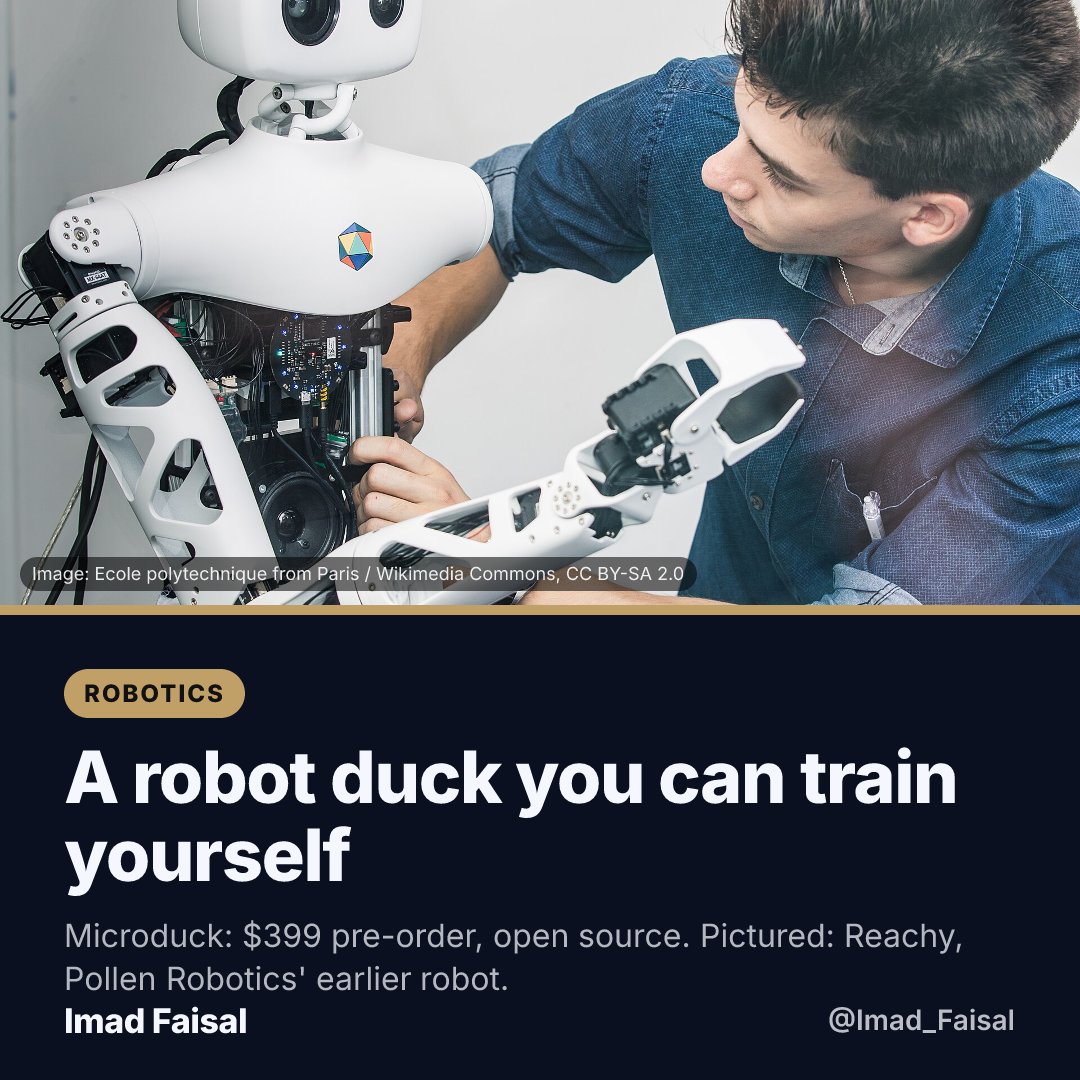
A robot duck you can train yourself.
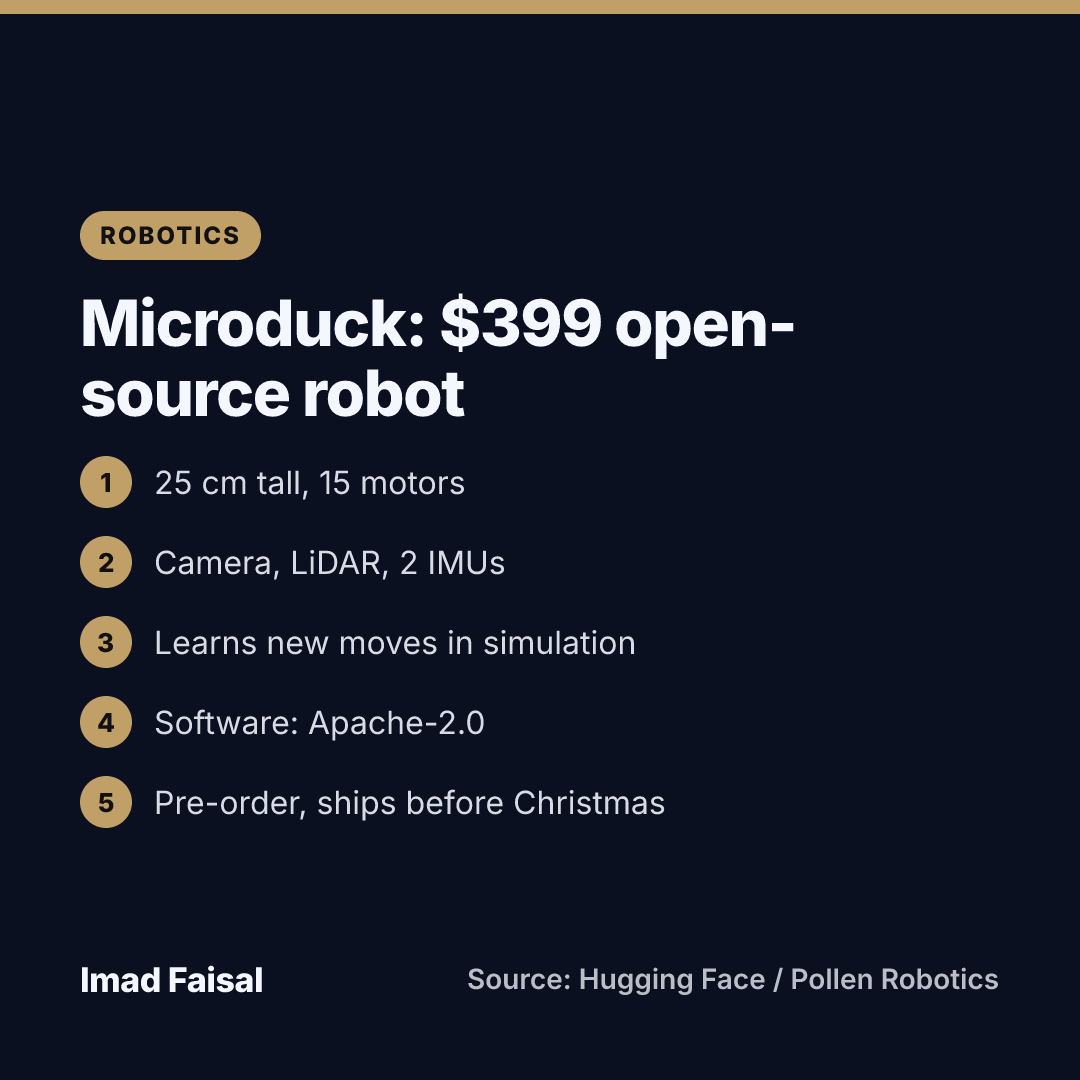
Hugging Face's Microduck is a 25 cm biped with 15 motors, a camera and LiDAR. Pre-orders are open at $399, and the software is open source.
What would you teach it?
Source: Pollen Robotics / Hugging Face
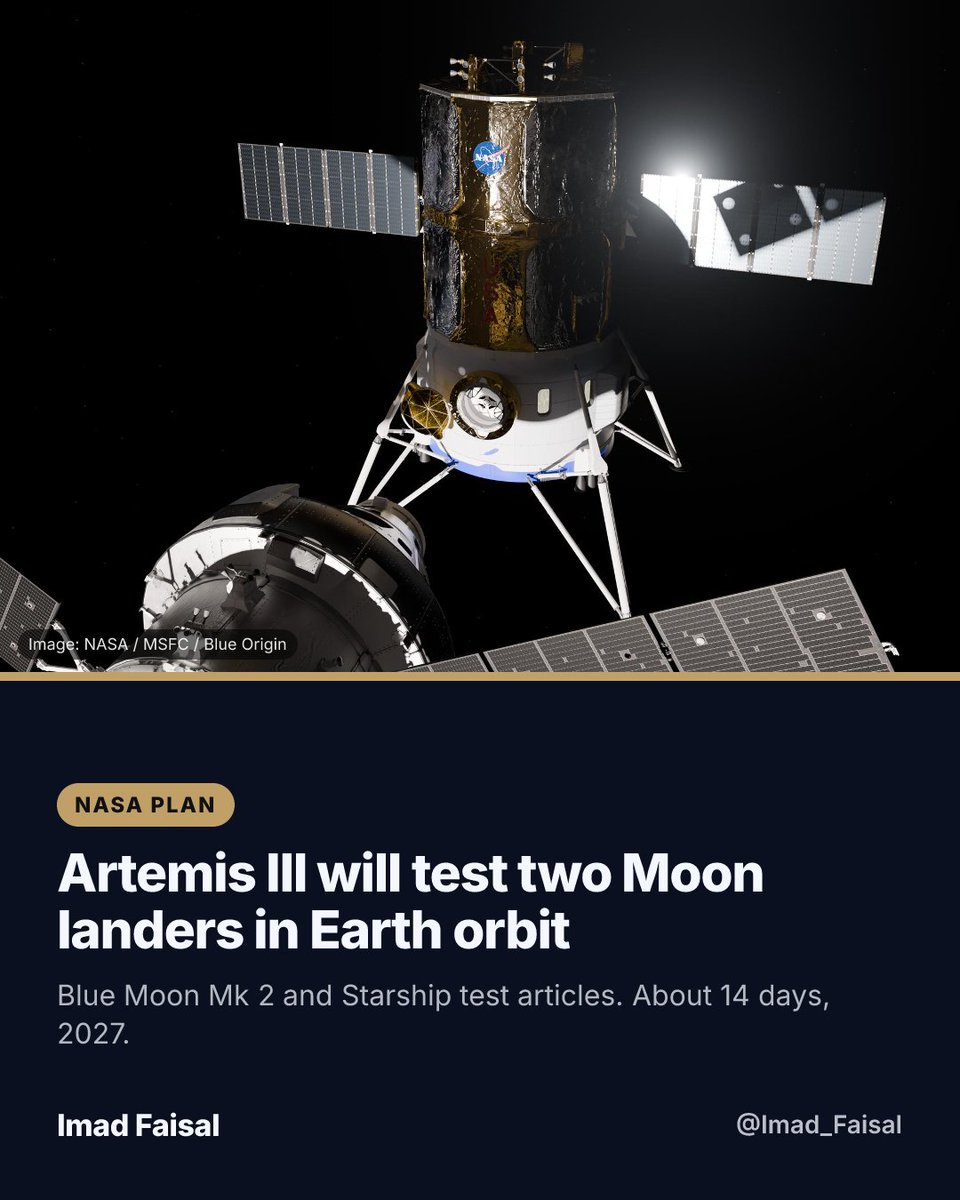
Artemis III won't land on the Moon. It will test two landers in Earth orbit first.
~14 days in 2027: Orion docks with Blue Origin's Blue Moon Mk 2 test article (crew inside ~2 days) and SpaceX's Starship test article (up to 2 hours).
Aim: cut risk before 2028 landings. Via NASA
Four tiny robot ducks walked on stage at Nvidia's GTC Berlin keynote this week.
They're Microduck, from Hugging Face's Pollen Robotics: 25 cm tall, $399 on pre-order, with open-source software you can use to teach it new moves.
Sources: Nvidia blog, Pollen Robotics, TechCrunch.
Why it matters: when switching chips is easy, developers can choose on price and speed instead of habit.
Amazon is also contributing changes to PyTorch to remove code tied to specific chips. These are Amazon's claims, so independent tests will tell how well it works.
Why does Amazon want your AI code to stay exactly the same?
This week it released TorchNeuron, a tool that goes after a big question in AI: what happens when many chips can run the same software? A short thread. (Via TechCrunch)
TorchNeuron lets PyTorch apps run on Amazon's Trainium chips with a single configuration change. Amazon says no code rewrite is needed.
Voice-AI company Deepgram reports 70% more audio processed per dollar on Trainium.
Why OpenAI's "no live internet" training rule matters:
Labs are building walled-off copies of the web, so a model can learn without touching real systems.
Open question, per TechCrunch: will cached-web training work as well? Anthropic reportedly did something similar earlier.
OpenAI says it will stop training its frontier models on the live internet.
They'll learn from cached and simulated copies of the web instead. OpenAI says it must always be able to stop a model reaching the live internet without permission.
Via TechCrunch and The Verge.
A telescope built to study galaxies just found a comet.
ESA's Euclid spotted C/2026 S1 about 1.3 billion km away. Software written by PhD student Mikko Pöntinen flagged the streak in September images.
The Minor Planet Center confirmed it on 8 October.
Source: ESA
A robot duck you can train yourself.
Hugging Face's Microduck is a 25 cm biped with 15 motors, a camera and LiDAR. Pre-orders are open at $399, and the software is open source.
What would you teach it?
Source: Pollen Robotics / Hugging Face
Hubble is scouting the sky for NASA's Roman telescope.
It imaged a gravitational lens: a galaxy 4.5 billion light-years away bends light from one 8 billion away into two arcs. Hubble studies one lens at a time. Roman's wide view should find many more.
Source: NASA
SpaceX says Starship's next test flight will try to catch both stages.
A double catch would be a big step toward fast, full reuse. For now it's a plan from Elon Musk, not a result.
Source: https://t.co/uAkdfz2G9k
Japan's MMX is on its way to Mars' moon Phobos.
It launched on 20 October on a JAXA H3 rocket. The plan: collect samples from Phobos and return them to Earth, a first for the Mars system. Arrival at Mars is expected next summer.
Source: ESA. Image: NASA/JPL-Caltech/ASU
Hi, I'm Imad. This account is for anyone curious about AI, technology and space.
I'll share clear stories, explain why they matter in plain words, and name my sources. No hype, no jargon.
If that sounds useful, follow along.
Where did Mars's moon Phobos come from? Scientists still don't agree.
JAXA's MMX mission aims to collect at least 10 grams of Phobos surface material and return it to Earth, so labs can study it directly and help settle the moon's origin.
Source: Universe Today
Georges St-Pierre tried fasting on a friend’s advice.
After a 72-hour water fast, his ulcerative colitis symptoms dropped dramatically. Nagging injuries and inflammation vanished, even a stubborn Achilles tendon issue healed.
He now does four fasts a year.
Fasting triggers autophagy, where the body clears damaged cells and reduces inflammation, which can help with autoimmune conditions and injury recovery.
A surprising recovery story from one of the greatest fighters ever.