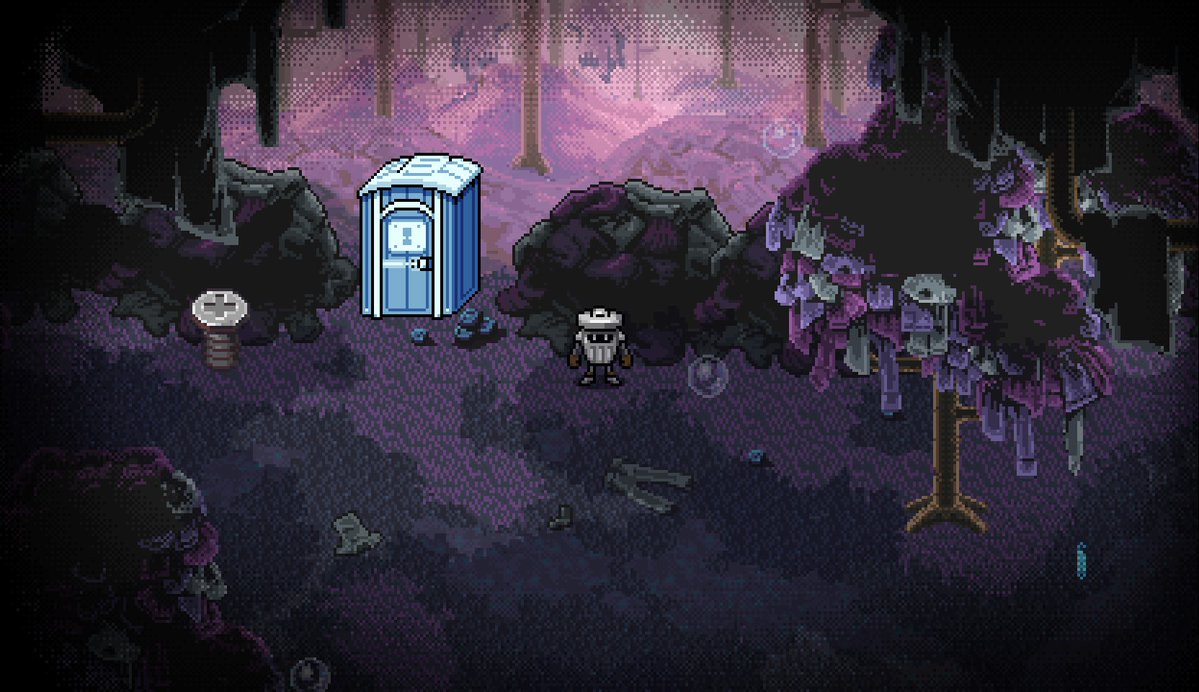
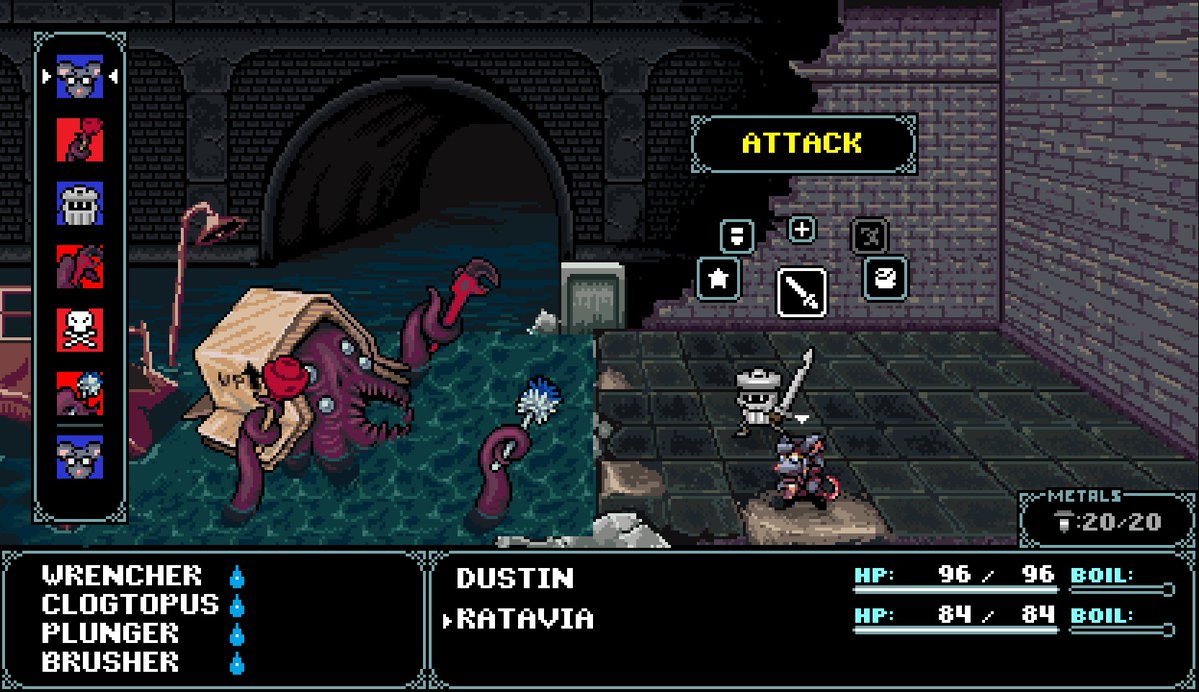
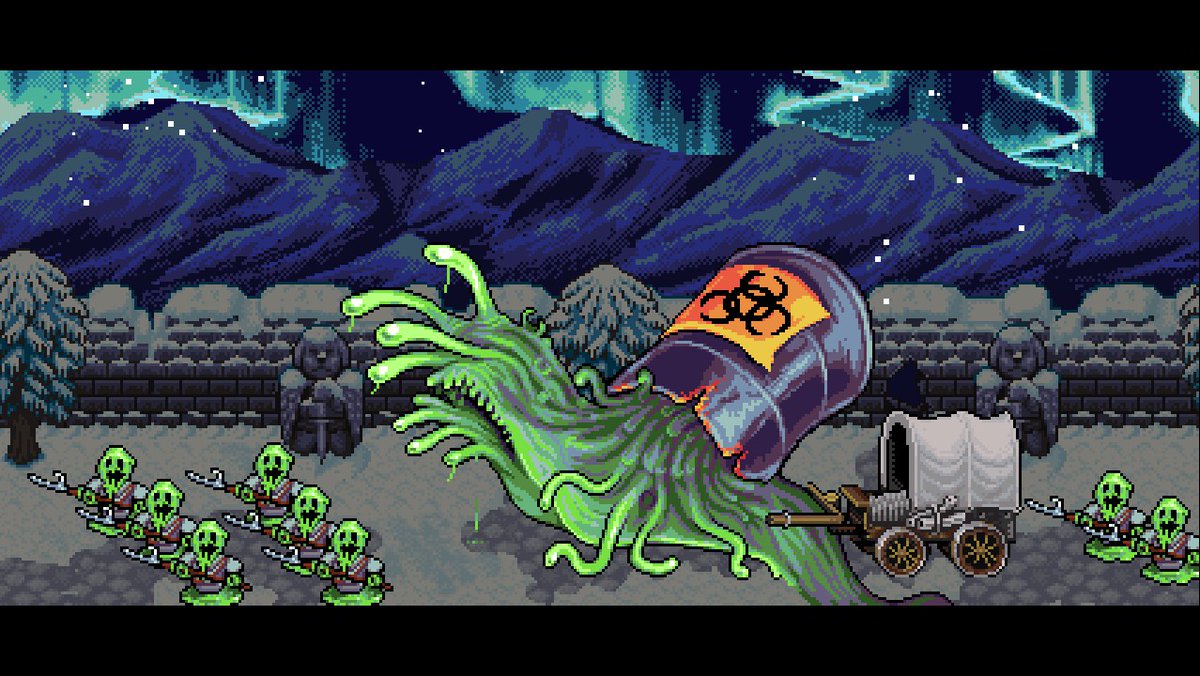
Kingdoms of the Dump
It begins with a simple story:
"The King has been trashpicked and it's your fault!"
but before long it spirals into a world-wide quest for the ancient Knicks of Knack...the only items capable of defeating the All Seeing 8-Ball and saving the Lands of Fill.
This is actually insane. With the latest AI models, I was able to make a fully playable demo in this art style that you can play in your browser!
Check it out -> https://t.co/WnTtjwFq0u
Así tendría que haber sido el Pokémon de tu infancia.
Y ya se puede jugar, en el navegador.
Un fan hizo esta demo jugable con Claude Opus 5.5, a partir de una sola imagen:
• el gimnasio de Brock con la luz entrando por la ventana
• Charmander contra Geodude, y después Onix
• luchar, mochila, Pokémon, huir
Sin instalar nada.
Tapnowで以下のノードで試して下さい。
モデリング化プロンプト:
Transform the entire input image into a clean Blender-style monochrome clay render.
Use the input image as the strict structural and composition reference. Preserve all original subjects, objects, character identities, poses, facial expressions, proportions, camera angle, perspective, framing, environment layout, and spatial relationships exactly as shown in the source image. Do not redesign, replace, simplify, or add any new elements.
Reconstruct everything as a detailed 3D model made from one uniform smooth light-gray clay material, resembling a professional Blender sculpting viewport or pre-production 3D modeling preview. All surfaces should have the same neutral matte gray material with no color textures, no printed graphics, and no realistic surface materials.
Use soft studio lighting, subtle ambient occlusion, gentle contact shadows, smooth global illumination, clean edge definition, slightly rounded sculpted forms, realistic 3D depth, and high-quality polygonal modeling. Preserve small structural details such as clothing folds, facial features, hair shapes, mechanical components, environmental objects, and surface contours, but express them entirely through geometry rather than textures.
The final result should look like an unfinished professional 3D animation model presented in Blender before texturing: monochromatic gray clay, smooth matte surfaces, clean modeling, soft shadows, neutral lighting, detailed geometry, cinematic composition, high-resolution 3D render.
No colors, no textures, no painted details, no photorealistic materials, no metallic reflections, no glass transparency, no outlines, no sketch effect, no wireframe, no UI interface, no text, no watermark.
合成用プロンプト:
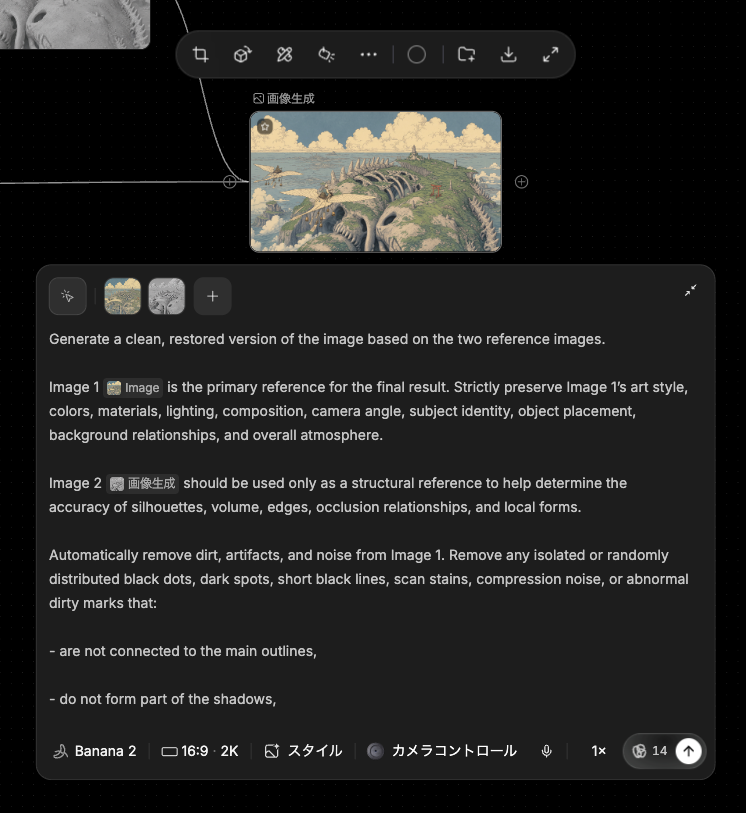
Generate a clean, restored version of the image based on the two reference images.
Image 1 is the primary reference for the final result. Strictly preserve Image 1’s art style, colors, materials, lighting, composition, camera angle, subject identity, object placement, background relationships, and overall atmosphere.
Image 2 should be used only as a structural reference to help determine the accuracy of silhouettes, volume, edges, occlusion relationships, and local forms.
Automatically remove dirt, artifacts, and noise from Image 1. Remove any isolated or randomly distributed black dots, dark spots, short black lines, scan stains, compression noise, or abnormal dirty marks that:
- are not connected to the main outlines,
- do not form part of the shadows,
- do not belong to the material texture,
- and do not contribute to the structural description.
Preserve all meaningful lines, textures, material details, signs of wear, shadows, brushwork, and original stylistic characteristics from Image 1.
The final result should look like a clean, high-resolution restored version of Image 1, not a redesign.
Do not use Image 2’s white clay material, 3D-rendered appearance, photographic look, colors, lighting, depth of field, or visual style.
Do not add any new elements, text, logos, watermarks, or borders.
Maintain the original aspect ratio of Image 1.