Anthropic just dropped the Claude Duet Harness Engineering
12-minute official read. isolated browser, credential proxy and independent checks around an agent that works while you’re away.
i turned it into a practical harness guide for builders:
brief → context → tools → observations → verification → repair → delivery
→ define what enters each step and what must come back
→ record tool results, artifact paths and errors
→ keep checkpoints so unfinished work can resume
→ verify the actual output against acceptance checks
→ send failures back for a focused repair
→ keep missing evidence marked UNVERIFIED
→ return files, setup instructions and check results
i also added five runtime decisions and a worked example:
CSV → searchable comparison board → checks → delivery packet
save this, then read my article on harness engineering for my AI employee ↓
REA × Kimi K3 is where reverse engineering starts getting dangerous.
The biggest bottleneck is asking one model to keep an entire app in its head.
REA changes how the work gets done.
Instead of throwing a codebase at one agent, it splits the investigation across a swarm.
Map the app → Assign focused tasks → Trace connections → Cross-check findings → Reconstruct the architecture.
Each agent investigates a smaller piece. Together, they connect the pieces into a bigger picture.
No single agent has to understand everything for the swarm to understand how it fits together.
That’s what makes REA × K3 interesting.
The question shifts from “How much code can one model remember?” to “How well can the agents investigate and compare what they find?”
Full course in the article below.
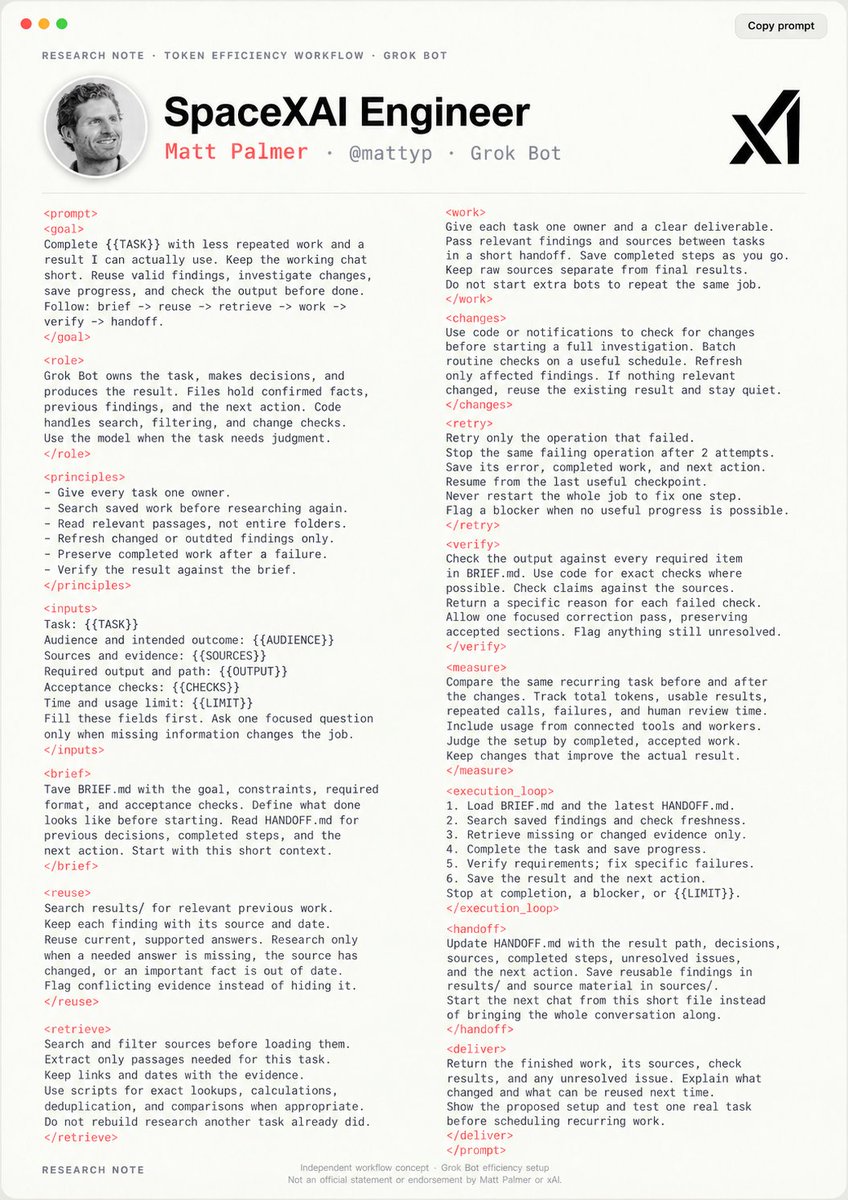
this is f*cking insane. your Grok Bot could finish 10x more work without paying $200 for a bigger plan
SpaceXAI engineer:
“people keep buying bigger plans. meanwhile, there are setups running on a fraction of their budget. the trick is what the bot never has to do twice.”
this setup cuts usage from 100,000 to 12,500 tokens per task by reusing saved research, checking what changed, and stopping failed loops
run the same task next week, and the bot already has the groundwork. it picks up the changes, finishes the job, and leaves the next run even less to do
Short brief → Saved research → Relevant inputs → Focused work → Verified result
saved findings become the next task’s starting point. the bot researches only what changed, keeps completed work when a step fails, and checks the result before handing it back
that means fewer wasted tokens and fewer answers you have to fix yourself
bookmark this before your next upgrade
the full course below shows all 7 fixes, with ready-to-copy prompts and files to build the same workflow ↓
Opus 5.5 + Remotion just f*cking killed the jobs of motion designers...
add GSAP + Three.js and you've got the building blocks for your own motion design studio
the stack:
Opus 5.5 → plan the scenes and write the code
https://t.co/hZ0SOW7LA0
Remotion → compose, preview, and render the video
https://t.co/u5gem0fo3i
GSAP → choreograph the timing, easing, and transitions
https://t.co/lVakaduLTz
Three.js → build the geometry, cameras, lighting, and depth
https://t.co/obc678oT4T
the useful part: the animation lives in code
you can change a scene, adjust the pacing, reuse a component, and render another version from the same project
the loop:
brief → storyboard → assets → scene code → motion → preview → refine → export
give the agent your brief, reference frames, fonts, colors, and delivery format. build one scene first, refine the direction, then carry it through the reel
save this, then create your own motion design studio, which will be run by your AI employee ↓
@yanethbal everyone eagerly expects a long perfect delay in refuelling however nice information plenty appears an observant viewer cool casually there honestly