No approved drug can reverse cartilage damage.
Stanford researchers report cartilage regeneration in aged mice and human joint tissue by targeting a single age-related protein.
Published in Science (2025).
#Osteoarthritis#DrugDiscovery
Not a drug yet.
An oral version has already passed Phase 1 safety trials for another indication, reducing development risk.
Osteoarthritis affects 1 in 5 U.S. adults and has no disease-modifying treatment.
One of the most promising preclinical findings in decades.
The human tissue result is the key finding.
Cartilage from knee replacement patients was exposed to the inhibitor in the lab. It reduced degradation signals and stimulated production of new hyaline cartilage - the functional tissue found in healthy joints, not scar tissue.
The mechanism: 15-PGDH rises with age and suppresses cartilage repair. Blocking it with a small-molecule inhibitor stopped degeneration and restarted regeneration - using existing cartilage cells, no stem cells required.
Scientists discovered the first new antibiotic class in nearly 30 years from a backyard soil sample in Ontario.
Lariocidin targets a ribosome site no antibiotic has ever reached before.
AMR contributes to approx. 4.5 million deaths every year.
#AMR#Antibiotics#DrugDiscovery
Lariocidin is not a drug yet.
Turning it into a clinical therapy will require years of optimisation, manufacturing, and Phase I–III trials.
The next challenge is funding. AMR research has been underfunded for decades.
The mechanism is what makes it significant.
Lariocidin binds to a novel ribosome site no existing antibiotic targets, meaning many known resistance mechanisms may not apply.
100% survival in mouse infection models. No toxicity to human cells.
The molecule is called lariocidin, found in a slow growing soil bacterium called Paenibacillus from a backyard in Hamilton, Ontario.
The research team cultivated the sample for approx. one year to allow slower growing species to emerge.
That patience produced the discovery.
In 2009, 1 in 5 pregnant women at Nepal's main maternity hospital had rubella.
In August 2025, WHO verified Nepal had eliminated it.
This is what 16 years of sustained public health commitment looks like.
#Rubella#Vaccines#GlobalHealth#PublicHealth
Rubella often seems mild. During pregnancy, it can cause miscarriage, stillbirth, or birth defects. Around 100,000 infants are born with congenital rubella syndrome globally each year. Nepal’s elimination means this is no longer a routine risk for pregnant women there.
The surveillance system mattered as much as the vaccine. Lab-based rubella surveillance since 2004. Case-based surveillance since 2007. In 2025, it became the first country in WHO South-East Asia Region to implement the new molecular genotyping algorithm for case confirmation.
Nepal did this through two earthquakes, a pandemic, and some of the world’s most remote terrain. 4 national vaccination campaigns. Door-to-door outreach reaching 14,800 children during COVID. 95%+ coverage by 2024. Health workers walking days to reach mountain villages.
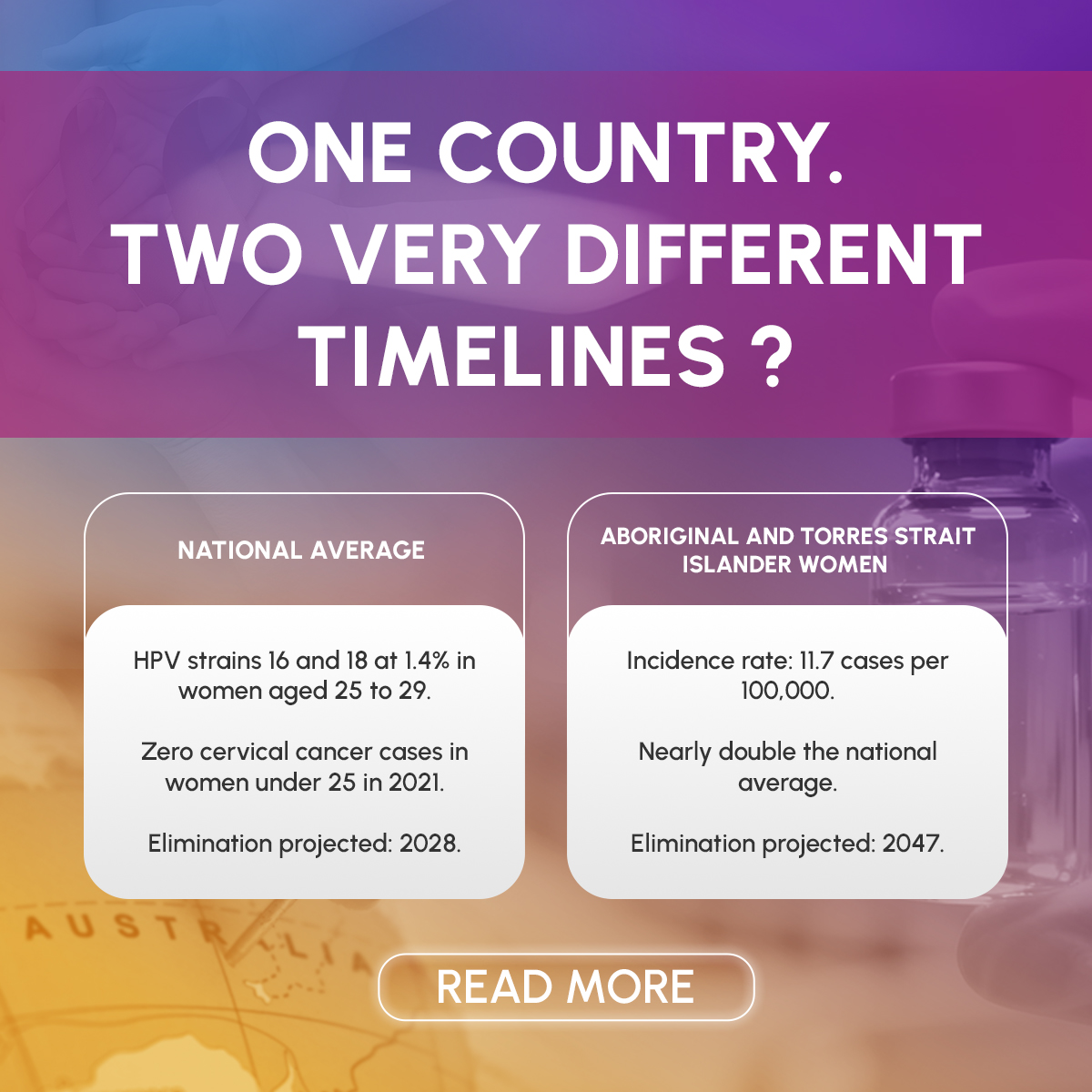
Australia is on track to become the first country to eliminate cervical cancer by 2028.
Zero cases in women under 25 in 2021.
First time in 40 years of records.
#CervicalCancer#HPV#WomensHealth#PublicHealth
Globally, cervical cancer killed 348,000 women in 2022. 94% of those deaths were in low and lower-middle income countries. Australia proved elimination is possible. The question now is who gets left behind and why.
But the headline hides a harder truth. Aboriginal and Torres Strait Islander women face 11.7 cases per 100,000, nearly double the national average. Under current conditions, elimination for these communities is not projected until 2047. 21 years behind.
How? World's first national HPV vaccination programme in 2007. Switch to primary HPV testing in 2017. Upgrade to the 9-strain vaccine in 2018. Single-dose schedule by 2023. Four policy decisions. Two decades. One elimination.