Upcoming smartphones in November:
• OPPO Find X9 series
• realme GT 8 Pro
• iQOO 15
• LAVA Agni 4
• Motorola Edge 70
• Nothing Phone 3a Lite (expected)
• Oppo Reno 15 series - China
• Vivo S50 series (aka V70 series) - China
• Honor 500 series - China
Samsung Exynos 2600
Growing concerns:
Yield rates remain a concern, overall 2 nm process for this chip is reportedly at approximately 30%, though the AP die itself is said to have reached about 50% yield due to a smaller die size.
Due to these constraints, Exynos 2600 is expected to only cover around 30% of the production volume for the Galaxy S26 series.
This potentially moves only the Base and Plus models to Exynos in specific regions, With the Ultra variants remaining with Qualcomm Snapdragon.
The late cancellation of the Galaxy Edge reportedly led to the accelerated development of the Galaxy Plus variant, Potentially contributing to delays in the One UI 8.5 public and beta launches.
Samsung is back to the old naming scheme for their flagships
Galaxy S26, S26 Plus and S26 Ultra
No Galaxy S26 Pro or S26 Edge
They seem to have given up on thin & light phones for now...
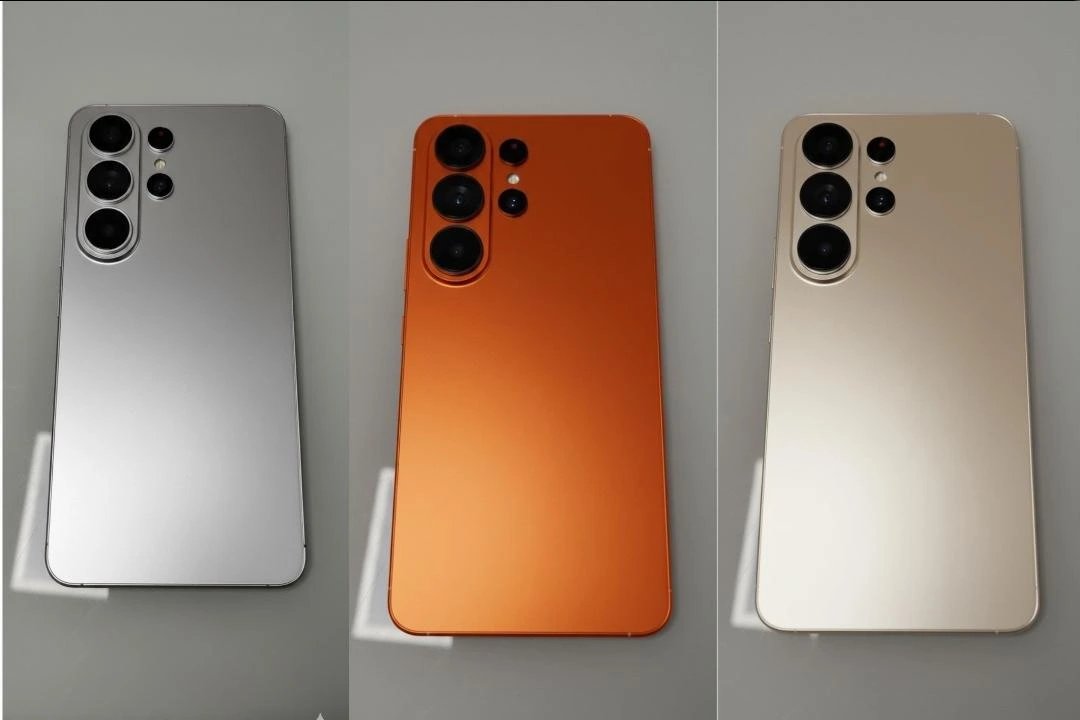
Why is everyone losing their minds over this? First off, this isn’t a leak, it’s literally just an AI generated render someone made for clicks. And second, those aren’t the real color options for the S26 Ultra. There’s no legit source confirming any colors yet.
Breaking: Exynos 2600 Performance Leaked
According to reports from Korean media, the Exynos 2600 delivers the following performance:
• Over 6× stronger NPU performance compared to Apple’s A19 Pro chipset
• 14% higher multi-core CPU performance
• 75% higher GPU performance
When compared to Qualcomm’s latest Snapdragon 8 Gen 5 Elite chipset:
• NPU performance is about 30% higher
• GPU performance is up to 29% higher
[Exclusive] Galaxy S26 confirmed to feature ‘Exynos 2600’—six times faster than Apple’s chip
The upcoming Galaxy S26 series, set for release early next year, will be equipped with Samsung’s in-house application processor (AP), the Exynos 2600. It is reported that not only the base and Plus models but also the flagship ‘Ultra’ model will likely adopt the chip. This marks the first time in four years—since 2022—that Samsung has used its own Exynos AP in a flagship model.
According to industry sources on the 20th, Samsung Electronics has decided to use the Exynos 2600 in the Galaxy S26 and has begun mass production. The company has traditionally employed a dual-sourcing strategy, using both Qualcomm and Exynos chipsets. The Exynos share in the S26 lineup is reportedly around 50%, with Qualcomm chips used in the U.S., Japan, and China, while Exynos chips power the Korean and European models.
From the Galaxy S1 in 2010 through the S6 in 2015, Samsung equipped most of its phones with Exynos chips. However, starting in 2016, it sharply increased Qualcomm’s share, switching to a mixed approach. The S23 (2023) and S25 (2025) series—except for lower-end and foldable models—did not use Exynos at all.
The AP serves as the “brain” of a smartphone. Analysts say Exynos’s return to the Galaxy S lineup reflects improvements in both performance and foundry yield (the ratio of good chips). While Apple and Qualcomm rely on TSMC’s foundries, Exynos chips are manufactured by Samsung Foundry.
The expansion of Exynos adoption is expected to improve the financial performance of Samsung’s Foundry and System LSI divisions, which have been struggling with losses, while also reducing semiconductor procurement costs for its smartphone division. Samsung spent ₩7.7899 trillion in the first half of this year and ₩10.9326 trillion last year on mobile AP purchases.
“Its performance no longer lags behind Apple’s latest A19 Pro chipset.”
Samsung’s decision to reintroduce its in-house AP into the Galaxy S series stems from major performance enhancements, which reportedly rival or exceed competitors.
According to internal testing results revealed by industry sources on the 20th, the Exynos 2600’s NPU (neural processing unit) performance is more than six times higher than that of Apple’s A19 Pro chipset. Its CPU multi-core performance is 14% higher, and GPU performance up to 75% better.
When compared to Qualcomm’s latest Snapdragon 8 Gen 5 Elite chipset, Exynos 2600 shows about 30% higher NPU performance and up to 29% higher GPU performance. The AP, which functions as the smartphone’s central brain, contains CPU, GPU, and NPU units responsible for AI computation, video processing, and overall system control.
The Exynos 2600 is produced using Samsung Foundry’s latest 2-nanometer (nm) process technology. To achieve the performance boost, the System LSI division reportedly took the drastic step of redesigning the chip’s architecture. For the North American market, Samsung is expected to continue using Qualcomm chips to ensure smooth local regulatory approvals.
Samsung is said to have focused heavily on AI performance during Exynos 2600’s development—positioning AI as its weapon to surpass Apple. While Samsung launched the world’s first “AI phone” (Galaxy S24) in January 2024, Apple has struggled to fully implement AI capabilities in the iPhone.
With its AI semiconductors—including HBM (High Bandwidth Memory), DRAM, and now system semiconductors—entering a recovery phase, Samsung’s turnaround momentum is expected to accelerate. Although the Foundry and System LSI divisions each recorded losses of around ₩2 trillion in the first half of this year, those losses reportedly narrowed to the ₩1 trillion range in Q3.
Industry watchers expect further improvement in the fourth quarter as Exynos 2600 shipments ramp up. The smartphone division’s profitability will also benefit, given reduced spending on Qualcomm chipsets—Samsung spent ₩10.9326 trillion last year on AP purchases.
The company’s business outlook beyond next year appears even brighter. As early as 2026, Samsung will begin producing Tesla’s autonomous driving chip (AI6) and Apple’s image sensors. In July, Samsung signed a $16.5 billion (₩22.8 trillion) semiconductor supply contract with Tesla, and in August, it agreed to supply image sensors for the iPhone.
‘Mass Production This Month’ – Samsung Exynos 2600 Likely to Be Installed in Galaxy S26
Samsung Electronics has completed development of its next-generation smartphone application processor (AP), the Exynos 2600, and is scheduled to begin mass production at the end of this month. With the chip virtually confirmed to be applied to the Galaxy S26 series—Samsung’s flagship smartphone to be unveiled early next year—expectations are rising that this could mark the starting point for a rebound in Samsung’s non-memory (System LSI and Foundry) business. In particular, the Exynos 2600 is Samsung’s first chip produced with its 2-nanometer gate-all-around (GAA) process, and the performance verification results are expected to be a key variable influencing the future landscape of global foundry competition.
■ S26 Adoption Virtually Confirmed
According to industry sources on the 14th, Samsung is showing significant confidence in the completeness of its next-generation AP, the Exynos 2600. At a recent internal meeting, executives reportedly emphasized that “the Exynos 2600 clearly outperforms its predecessor (2500),” while also mentioning that mass production is scheduled for the end of this month and strongly hinting at its adoption in the S26.
Yong-In Park, head of Samsung’s System LSI business division (President), also stated to reporters at an event in July: “We are steadily preparing the Exynos 2600” and added, “There will be good results.”
The Exynos 2600, Samsung Foundry’s first flagship chip to use the 2nm GAA process, is expected to deliver improved power efficiency and heat control compared to its predecessor. A new thermal management solution called the “Heat Path Block (HPB)” is also set to be applied, drawing attention from a stability perspective.
Expectations are backed by actual performance metrics. According to Geekbench, a performance measurement site, benchmark scores from what is believed to be the Exynos 2600 showed 3,309 points for single-core and 11,256 points for multi-core performance. Compared to its previous test results (single-core average 2,575 points, multi-core 8,761 points), the performance improved significantly in a short time. This puts it on par with Qualcomm’s next-generation Snapdragon 8 Elite Gen 2 (single-core 3,393 points, multi-core 11,515 points), which is expected to be featured in the Galaxy S26 series.
■ Return to the S Series After 2 Years
Exynos has long been considered less competitive than Qualcomm due to issues such as heat generation, power efficiency, and foundry yield instability. Samsung excluded Exynos entirely from the Galaxy S23 and S25 series, equipping them only with Qualcomm chips. Exynos made a comeback this year with the Galaxy Z Flip 7, which was equipped with the Exynos 2500, and its adoption in the flagship Galaxy S series will mark its return after two years since the Galaxy S24 in 2024.
If the Exynos 2600 is confirmed for the S26 series, Samsung’s System LSI, Foundry, and MX (Mobile eXperience) divisions are all expected to see tangible benefits. In the first half of this year, the MX division’s raw material cost for mobile APs rose 29% year-on-year to 7.7899 trillion won from 6.0275 trillion won, with a large portion attributed to Qualcomm procurement. Expanding the share of its own Exynos chips would help the MX division reduce costs, while the System LSI division could regain momentum by once again supplying its own chips to Samsung’s flagship smartphones.
For Samsung Foundry in particular, stable supply of the Exynos 2600 would help restore credibility and positively influence its ability to secure external clients. In fact, Samsung has recently demonstrated its technological prowess by winning high-profile contracts such as Tesla’s next-generation AI chips and Apple’s image sensors.
It has already been leaked but confirming from my side as well. The Samsung Galaxy Note10 will start from €949 for 256GB Variant. Galaxy Note10+ will cost €1099 for 256GB and €1199 for 512GB. The Price will slightly differ b/w Euro countries.Will tell about more variants soon!
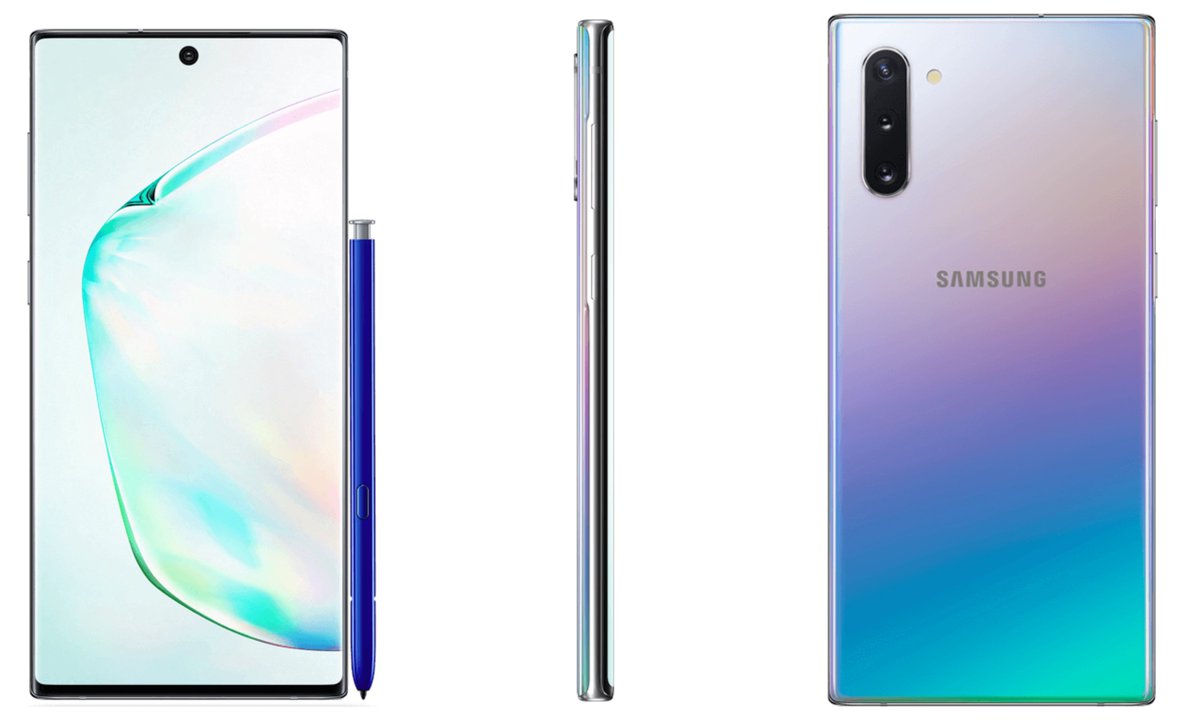
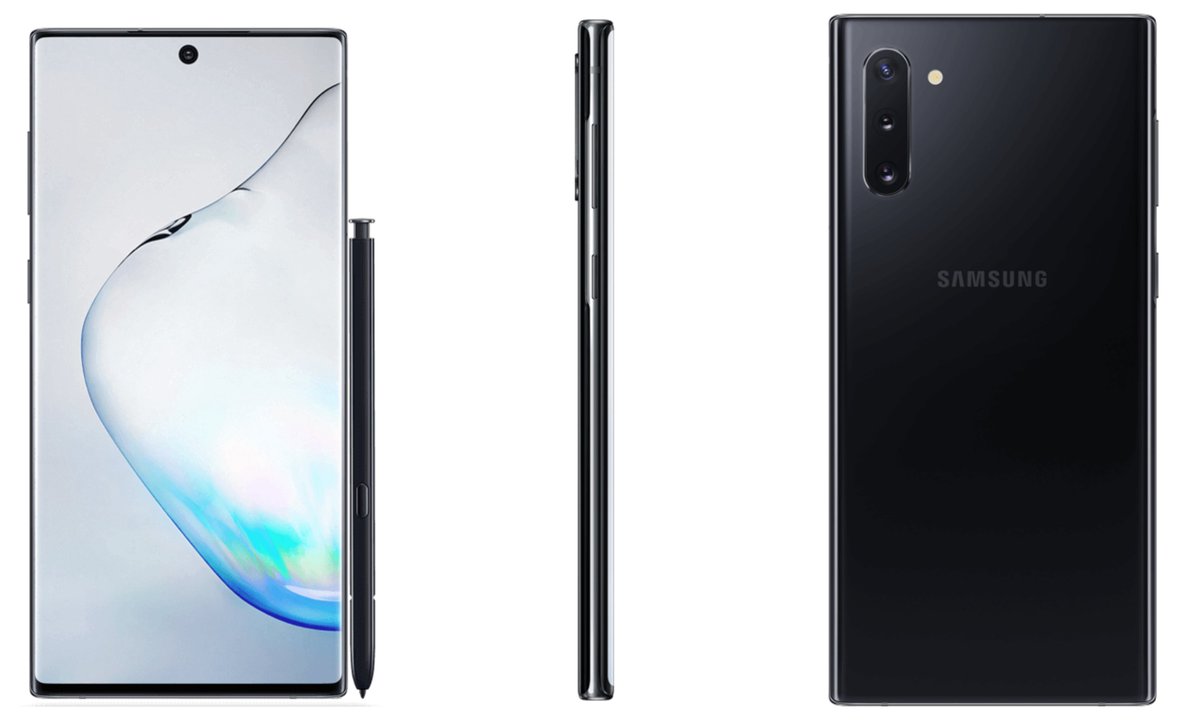
AND HERE IT IS! Your first look at the Samsung Galaxy Note10 Silver and Black colour option images! Isn't the gradient just amazing? I'm so loving the design, what about you? *Please credit if you use, not using watermarks.* #Samsung#GalaxyNote10#GalaxyNote10#Unpacked
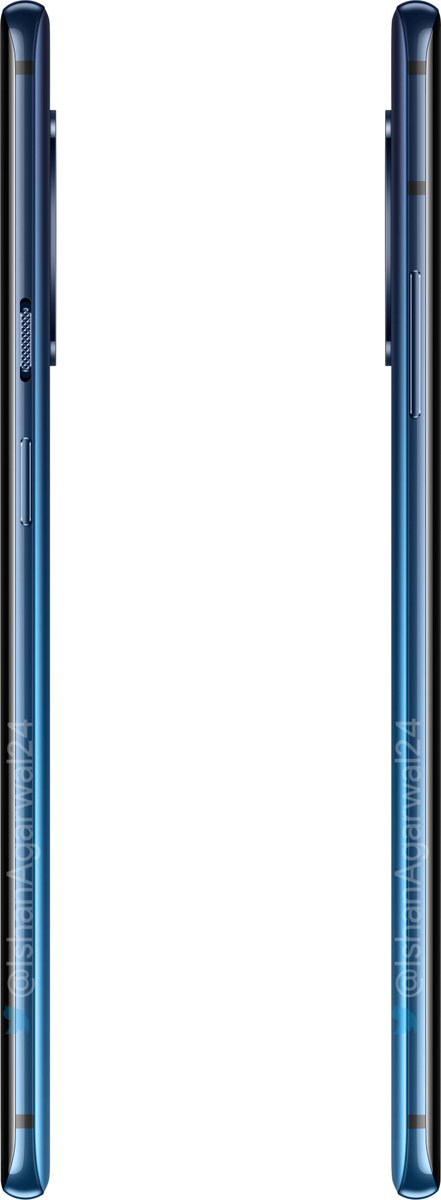
OnePlus 7 Pro Almond and Nebula Blue Highest ever resolution renders in this thread below (each image was of almost 20MBs lol). Twitter will probably compress but still good if you wanna see all angles of the phone. First up, the Front and Back. #OnePlus7Pro#OnePlus7 (1/3)





![jukan05's tweet photo. [Exclusive] Galaxy S26 confirmed to feature ‘Exynos 2600’—six times faster than Apple’s chip
The upcoming Galaxy S26 series, set for release early next year, will be equipped with Samsung’s in-house application processor (AP), the Exynos 2600. It is reported that not only the base and Plus models but also the flagship ‘Ultra’ model will likely adopt the chip. This marks the first time in four years—since 2022—that Samsung has used its own Exynos AP in a flagship model.
According to industry sources on the 20th, Samsung Electronics has decided to use the Exynos 2600 in the Galaxy S26 and has begun mass production. The company has traditionally employed a dual-sourcing strategy, using both Qualcomm and Exynos chipsets. The Exynos share in the S26 lineup is reportedly around 50%, with Qualcomm chips used in the U.S., Japan, and China, while Exynos chips power the Korean and European models.
From the Galaxy S1 in 2010 through the S6 in 2015, Samsung equipped most of its phones with Exynos chips. However, starting in 2016, it sharply increased Qualcomm’s share, switching to a mixed approach. The S23 (2023) and S25 (2025) series—except for lower-end and foldable models—did not use Exynos at all.
The AP serves as the “brain” of a smartphone. Analysts say Exynos’s return to the Galaxy S lineup reflects improvements in both performance and foundry yield (the ratio of good chips). While Apple and Qualcomm rely on TSMC’s foundries, Exynos chips are manufactured by Samsung Foundry.
The expansion of Exynos adoption is expected to improve the financial performance of Samsung’s Foundry and System LSI divisions, which have been struggling with losses, while also reducing semiconductor procurement costs for its smartphone division. Samsung spent ₩7.7899 trillion in the first half of this year and ₩10.9326 trillion last year on mobile AP purchases.
“Its performance no longer lags behind Apple’s latest A19 Pro chipset.”
Samsung’s decision to reintroduce its in-house AP into the Galaxy S series stems from major performance enhancements, which reportedly rival or exceed competitors.
According to internal testing results revealed by industry sources on the 20th, the Exynos 2600’s NPU (neural processing unit) performance is more than six times higher than that of Apple’s A19 Pro chipset. Its CPU multi-core performance is 14% higher, and GPU performance up to 75% better.
When compared to Qualcomm’s latest Snapdragon 8 Gen 5 Elite chipset, Exynos 2600 shows about 30% higher NPU performance and up to 29% higher GPU performance. The AP, which functions as the smartphone’s central brain, contains CPU, GPU, and NPU units responsible for AI computation, video processing, and overall system control.
The Exynos 2600 is produced using Samsung Foundry’s latest 2-nanometer (nm) process technology. To achieve the performance boost, the System LSI division reportedly took the drastic step of redesigning the chip’s architecture. For the North American market, Samsung is expected to continue using Qualcomm chips to ensure smooth local regulatory approvals.
Samsung is said to have focused heavily on AI performance during Exynos 2600’s development—positioning AI as its weapon to surpass Apple. While Samsung launched the world’s first “AI phone” (Galaxy S24) in January 2024, Apple has struggled to fully implement AI capabilities in the iPhone.
With its AI semiconductors—including HBM (High Bandwidth Memory), DRAM, and now system semiconductors—entering a recovery phase, Samsung’s turnaround momentum is expected to accelerate. Although the Foundry and System LSI divisions each recorded losses of around ₩2 trillion in the first half of this year, those losses reportedly narrowed to the ₩1 trillion range in Q3.
Industry watchers expect further improvement in the fourth quarter as Exynos 2600 shipments ramp up. The smartphone division’s profitability will also benefit, given reduced spending on Qualcomm chipsets—Samsung spent ₩10.9326 trillion last year on AP purchases.
The company’s business outlook beyond next year appears even brighter. As early as 2026, Samsung will begin producing Tesla’s autonomous driving chip (AI6) and Apple’s image sensors. In July, Samsung signed a $16.5 billion (₩22.8 trillion) semiconductor supply contract with Tesla, and in August, it agreed to supply image sensors for the iPhone.](https://pbs.twimg.com/media/G3sGynmW4AA-Agi.png)