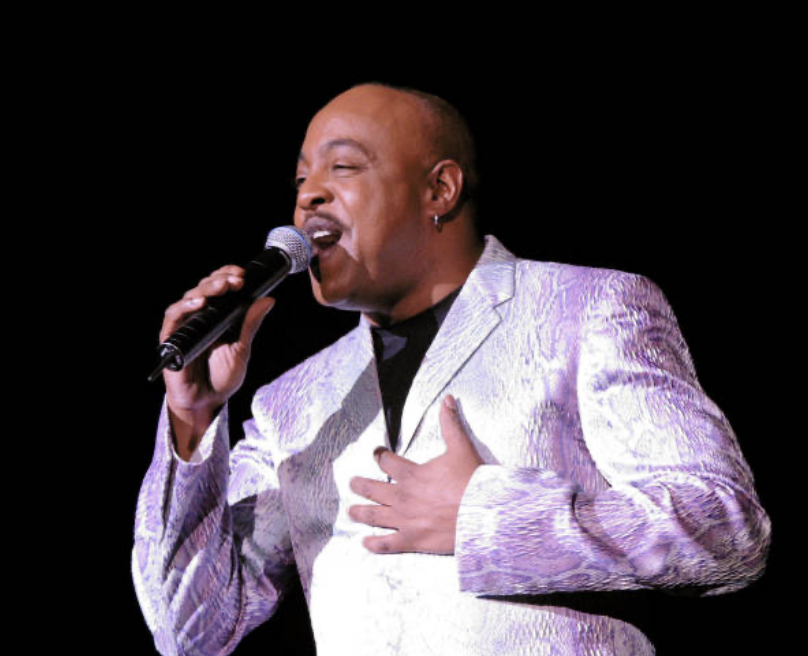
To everyone who’s streamed, clicked through, or shared “Let’s Fall Slow” today—thank you. It’s been wonderful seeing this song find new listeners and work its way back into my Top 10. I appreciate every listen. ❤️
“Let’s Fall Slow” has worked its way back into my Spotify Top 10.
Thank you for giving it another listen. ❤️
E Power-Let's Fall Slow
https://t.co/xUzfZnOZW7
Album of the day. After setting a new precedent for soul music with his 1969 groundbreaker, Hot Buttered Soul and its follow-ups, The Isaac Hayes Movement and ...To Be Continued, Isaac Hayes agreed to compose the score for the Gordon Parks film, Shaft. While it wasn't the first "blaxploitation" film score, it was certainly one of the most popular and acclaimed, winning Hayes a Best Original Song Oscar for "Theme from Shaft." It's easy for many to take the breadth of Isaac Hayes' artistry for granted today. Although he was often known for his peerless talents as a reinterpreter of the contemporary American pop songbook through a filter of symphonic soul, he was also a great arranger. No matter how many times "Theme From Shaft" has been popularized in various forms of media, there's no way anyone can underestimate the intensity of its timeless bad-ass groove: those endless layers of wah-wah guitar notes floating atop supple hi-hat percussion that builds well before the piano, lithe flute, punchy horns, mighty bass, tambourine, and soaring orchestral strings kick in. It's a masterpiece of sonic construction that encapsulates what made Hayes great in his arranging mode in less than five minutes. What makes this classic soundtrack work so well is that it showcases Hayes' flair for scene-setting and motif-driven eclecticism through his arrangements. With closer listens to these exceptional instrumental pieces, it's stunning to hear a wide range of styles and influences Hayes and his backing musicians were capable of pulling off with ease. Perhaps it's necessary to experience it all within the filmic context, but all of it stands really well on its own.
Plas Johnson was a key member of The Wrecking Crew, alongside other elite Los Angeles session players
and prominently in the 2008 documentary The Wrecking Crew directed by Denny Tedesco.
https://t.co/SSNSt6Cqvf
@brandonousley Just watched a YouTube video, Shaft 15 Shocking Facts, how “Shaft” saved MGM and how Issac Hayes was almost disqualified from receiving an Oscar.
George Johnson, a hair-care magnate who rose from a sharecropper’s cabin to found the first Black-owned company listed on a major American stock exchange, and who made a fortune on products like Ultra Sheen and Afro Sheen, died has died at 99. https://t.co/zGYqxwquBM
July 4 belongs to two giants whose music never stopped playing.
Today marks the birthday of Bill Withers and the anniversary of the passing of Barry White.
Bill Withers proved that timeless music doesn’t need excess. Songs like “Use Me,” “Grandma’s Hands,” “Ain’t No Sunshine,” and “Lovely Day” became more than classics, they became the foundation for new generations. His music found new life through artists like 2Pac, DMX, Black Star, and the Grammy-winning “No Diggity” by Blackstreet, which famously sampled “Grandma’s Hands.”
Barry White left this world on July 4, 2003, but his voice never did. His unmistakable baritone and lush orchestral arrangements became staples for hip-hop producers. “I’m Gonna Love You Just a Little More Baby” gave A Tribe Called Quest the backbone of “Bonita Applebum,” while “Playing Your Game, Baby” helped shape Big Daddy Kane’s “Smooth Operator.” His music also became a favorite source for producers crafting the luxurious sound of boom bap, G-funk, and Southern hip-hop.
One gave hip-hop its heart.
The other gave it its swagger.
Neither chased trends. They created music so authentic that every generation keeps returning to it, flipping the sample and introducing it to someone new.
The greatest records don’t compete with time, they outlive it.
STO Question: If you could only keep one catalog in hip-hop’s sample history, whose would it be, Bill Withers or Barry White? What’s your favorite song that sampled either artist?
Tony Brown, the TV journalist, educator and civil rights advocate, has passed away.
He was perhaps best known as the host and executive producer of "Tony Brown's Journal," recognized as a landmark, long-running PBS public affairs program.
Brown was also an author, speaker and media entrepreneur.
His family said Friday he died peacefully at his home in Newport News, Virginia. Brown was 93 years old.
Today is the day we Celebrate the Life of Peabo. We invite you all to remember him 🙏🏾
The service will start from 10am (EST)
The Live link is displayed in Peabo’s bio
Peabo’s Celebration of Life will be held on Monday 22 June at 10am (EST) We are inviting all who loved and admired him to be apart of the day by Live streaming the service globally.
The link to watch will be available in the bio and stories on the day 🌹
A great place to shoot a movie: The Blues Brothers, Transformers 3, Cooley High, My Bodyguard, I Want Someone To Eat Cheese With, The Dark Knight, The Fugitive, The Untouchables, Backdraft, Ferris Bueller’s Day Off, High Fidelity and more. It has a massive musical history including Chicago Soul, The Buckinghams, the band Chicago, gospel music, Jim Peterik and so much more including VeeJay Records, the label that brought The Beatles to America.
@brandonousley Legendary Chicago radio DJ Herb Kent “The Cool Gent” closed his WVON Radio show with the original version of “Open Our Eyes” by The Gospel Clefs. So it was great to hear Earth, Wind & Fire cover it.
You know, it’s nice when your musical heroes turn out to be genuinely kind people when you get the chance to meet them.
I only interacted with Mr. Peabo Bryson here when it was still Twitter, but he was gracious and gave this day-one fan an unforgettable memory when he shared a playlist of his music that I had dedicated to him on his Facebook page.
A class act both on and off the stage.
Thank you for the music and the memory.
He will be missed.
@PeaboBryson2