Jensen Huang going back to Nvidia feels a lot like Steve Jobs returning to Apple.
What caught my attention was Nvidia’s statement. It went out of its way to spell out that Jensen was resuming all three roles: president, CEO, and board director.
To me, this is a strong sign that Jensen has cleared the biggest hurdle.
Some pretty troubling details about Eva Yi Xie’s parents are coming to light.
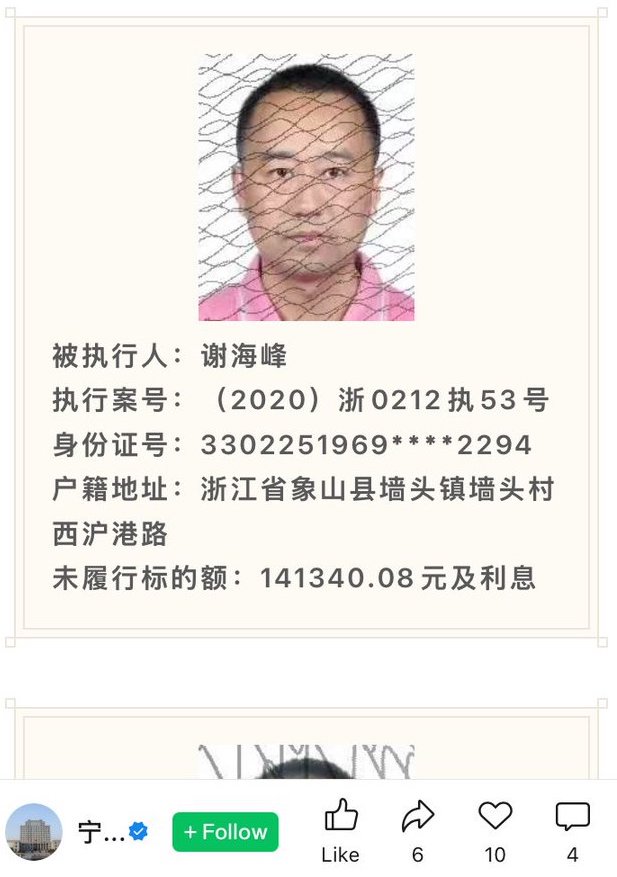
They’re reportedly in the microloan business and owe a huge amount of money in China. Both are said to be on China’s list of judgment defaulters.
There are also allegations that the family scammed people in China before coming to the U.S. and applying for political asylum.
For once, people in China and the U.S. seem to be on the same page about Eva Yi Xie.
In the U.S., people are questioning whether her family fabricated persecution claims to get asylum. Others are questioning whether she got her full scholarship based on false information.
In China, the focus is on her family’s reported debts and the expensive private school she reportedly attended.
Then there’s the story about her boyfriend. She allegedly hid her background from him and hoped marriage would be a shortcut to U.S. citizenship. His mother reportedly caught on.
Now it’s all about her academic achievements and how much sympathy she deserves.
What a joke.
She came to the U.S. at 14. Now she’s 24, a Princeton PhD student. And she was detained by ICE at an airport.
That’s the part of the Eva Yi Xie case I can’t get out of my head.
She had just attended a neuroscience conference. Her family filed for asylum years ago, but the case is still pending.
Her lawyers argue that her detention was unjustified. The government, on the other hand, says she overstayed her visa. A federal judge has now ordered ICE not to move her out of Virginia while her legal challenge is being considered.
I’m not saying immigration laws shouldn’t be enforced. Every country has the right to enforce its laws.
But she’s only 24. She’s spent years studying and working toward a future. I find it hard to accept that someone can end up in detention while their case is still waiting to be heard.
I don’t think that’s too much to ask: enforce the law, but give people a fair chance to defend themselves.
To me, that’s what a fair system should look like.
I’ve also seen some pretty serious claims being made about the Xie family.
People online are saying her parents owe a lot of money in China and are reportedly on a Chinese court blacklist for failing to pay their debts.
I haven’t independently verified the records being shared online, so I can’t say for sure.
But one thing I do believe: going to Princeton shouldn’t get anyone special treatment under immigration law.
If she qualifies for asylum, she should get it. If she doesn’t, she shouldn’t. Her degree shouldn’t change that.
She came to the U.S. at 14. Now she’s 24, a Princeton PhD student. And she was detained by ICE at an airport.
That’s the part of the Eva Yi Xie case I can’t get out of my head.
She had just attended a neuroscience conference. Her family filed for asylum years ago, but the case is still pending.
Her lawyers argue that her detention was unjustified. The government, on the other hand, says she overstayed her visa. A federal judge has now ordered ICE not to move her out of Virginia while her legal challenge is being considered.
I’m not saying immigration laws shouldn’t be enforced. Every country has the right to enforce its laws.
But she’s only 24. She’s spent years studying and working toward a future. I find it hard to accept that someone can end up in detention while their case is still waiting to be heard.
I don’t think that’s too much to ask: enforce the law, but give people a fair chance to defend themselves.
To me, that’s what a fair system should look like.
Tesla had founders before Elon Musk.
PayPal had founders before Elon Musk.
Twitter had founders before Elon Musk.
Yet somehow, Musk ended up running the show. 😂
I have a feeling we’re not fully grasping how fast AI is moving.
Most people are worried about AI taking their jobs. I get that. But honestly, that’s not what scares me most.
What happens when AI no longer needs us to make it smarter? When it can improve itself, push science forward, and solve problems that even the brightest human minds can’t?
For thousands of years, we’ve built smarter tools to make our lives easier.
But we may be approaching a moment when the tools we’ve created become more capable than the people who created them.
And if that happens, the biggest question won’t be what AI can do for us. It’ll be whether we’re still the ones deciding what happens next.
The FBI’s criminal database was reportedly hacked.
The USDA’s payment system was breached.
DHS employee records were leaked.
So when are the hackers coming for the IRS? 😼
She came to the U.S. at 14. Now she’s 24, a Princeton PhD student. And she was detained by ICE at an airport.
That’s the part of the Eva Yi Xie case I can’t get out of my head.
She had just attended a neuroscience conference. Her family filed for asylum years ago, but the case is still pending.
Her lawyers argue that her detention was unjustified. The government, on the other hand, says she overstayed her visa. A federal judge has now ordered ICE not to move her out of Virginia while her legal challenge is being considered.
I’m not saying immigration laws shouldn’t be enforced. Every country has the right to enforce its laws.
But she’s only 24. She’s spent years studying and working toward a future. I find it hard to accept that someone can end up in detention while their case is still waiting to be heard.
I don’t think that’s too much to ask: enforce the law, but give people a fair chance to defend themselves.
To me, that’s what a fair system should look like.
China, Russia and the U.S. just issued a four-point peace declaration. What does it really mean for the world?
Following their historic summit in Shenzhen, the three leaders released the China-Russia-U.S. Leaders’ Peace Declaration.
It’s short, just four points. But behind each one is a bigger message about the future of the international order.
Let’s look at what’s being said — and what’s being implied.
1. The post-war world order
On the surface, the three countries are reaffirming their commitment to the UN and calling for reform.
But there’s a deeper message: they are defending the international order established after World War II.
Some may see this as a warning against any attempt to revive militarism or challenge the post-war order. And they probably won’t have to look far to figure out who it’s aimed at.
2. Energy security
This is likely to be one of Trump’s biggest priorities.
With soaring oil prices adding to inflation, increasing the supply of refined petroleum products could help stabilize energy markets and ease pressure on consumers.
But there’s another possible implication: keeping global energy routes open. The Strait of Hormuz and the free passage of oil tankers naturally come to mind.
3. The International Criminal Court
This may be the most surprising point.
A few days ago, I wrote about China, Russia and the U.S. finding common ground in opposing a report at a UN meeting.
Now, all three leaders have explicitly addressed the issue of international institutions abusing their jurisdiction over heads of state and government officials.
The message is significant: the three powers are drawing boundaries for the International Criminal Court — and potentially other international institutions.
The reference to the ICC also inevitably brings Putin’s arrest warrant into the discussion, which has complicated his diplomatic engagements.
4. Nuclear risks
The public message is clear: a nuclear war cannot be won and must never be fought.
The three leaders are reaffirming the need to reduce nuclear risks and prevent proliferation.
But there’s something missing. Western media had previously speculated that China might join U.S.-Russia talks on reducing nuclear arsenals. No such agreement was publicly announced at this summit.
Four points. Four major issues.
The declaration won’t solve the world’s problems overnight. And words alone won’t guarantee peace.
But when the world’s three major powers can find common ground on issues this important, that matters.
In a world full of uncertainty, we need more than competition and confrontation. We need cooperation that can serve as an anchor of stability — and help keep the world from drifting toward conflict.
Can the US and China avoid a war, or are we watching history repeat itself?
Elon Musk raised this question while in Shenzhen:
“Is the Thucydides Trap ever avoidable?”
The idea is simple: when a rising power challenges an established one, fear and tension can eventually lead to war.
That’s what happened between Athens and Sparta in ancient Greece.
Today, many people see the same risk in the relationship between the US and China.
But here’s what I keep thinking about…
Why should China’s rise have to come at America’s expense?
The US and China don’t have to agree on everything. They can compete, disagree, and push each other to do better.
But does it really have to end in war?
Honestly, I hope we’re not heading down that road. The consequences wouldn’t stop with these two countries. The whole world would feel them.
The World’s First Fourth World Country:
Internet Freedom Experience Center: 🇰🇵 North Korea
Free Universal Healthcare Center: 🇺🇸 United States
Traffic Order Demonstration Zone: 🇮🇳 India
Year-Round Ski Resort: 🇸🇬 Singapore
Global Currency Stability Institute: 🇿🇼 Zimbabwe
Deep-Sea Naval Base: 🇧🇴 Bolivia
Northern Lights Theme Park: 🇸🇦 Saudi Arabia
Tropical Rainforest Conservation Zone: 🇮🇸 Iceland
Desert Surfing Resort: 🇳🇴 Norway
Penguin Conservation Center: 🇨🇭 Switzerland
Volcano Tourism Park: 🇩🇰 Denmark
National Camel Breeding Center: 🇯🇵 Japan
Palm Beach Resort: 🇬🇱 Greenland
FIFA World Cup Host Nation: 🇻🇦 Vatican City
International Space Launch Center: 🇱🇺 Luxembourg
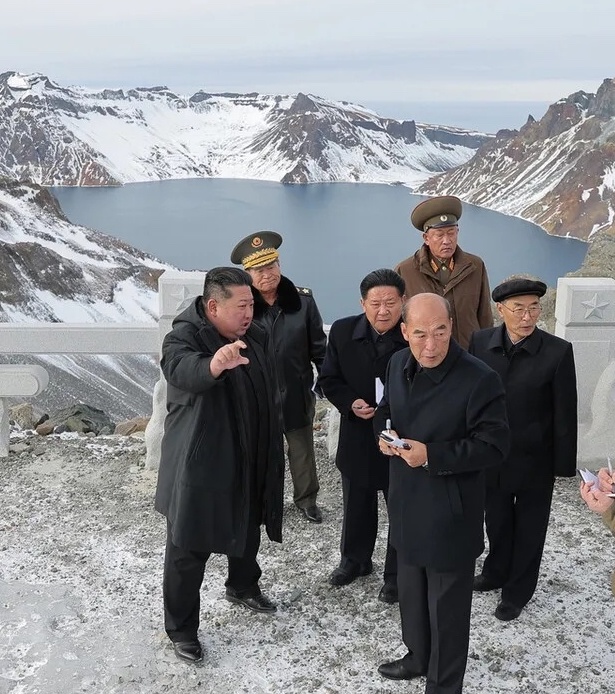
I didn’t expect to see Kim Jong Un’s daughter Ju Ae out skiing…
She’s wearing an all-white ski suit, and I have to say, her technique looks pretty good.
But I can’t help wondering… if she falls, would her ski instructor even dare to correct her?
And wait… why is there a sofa sitting right out in the snow? 😂
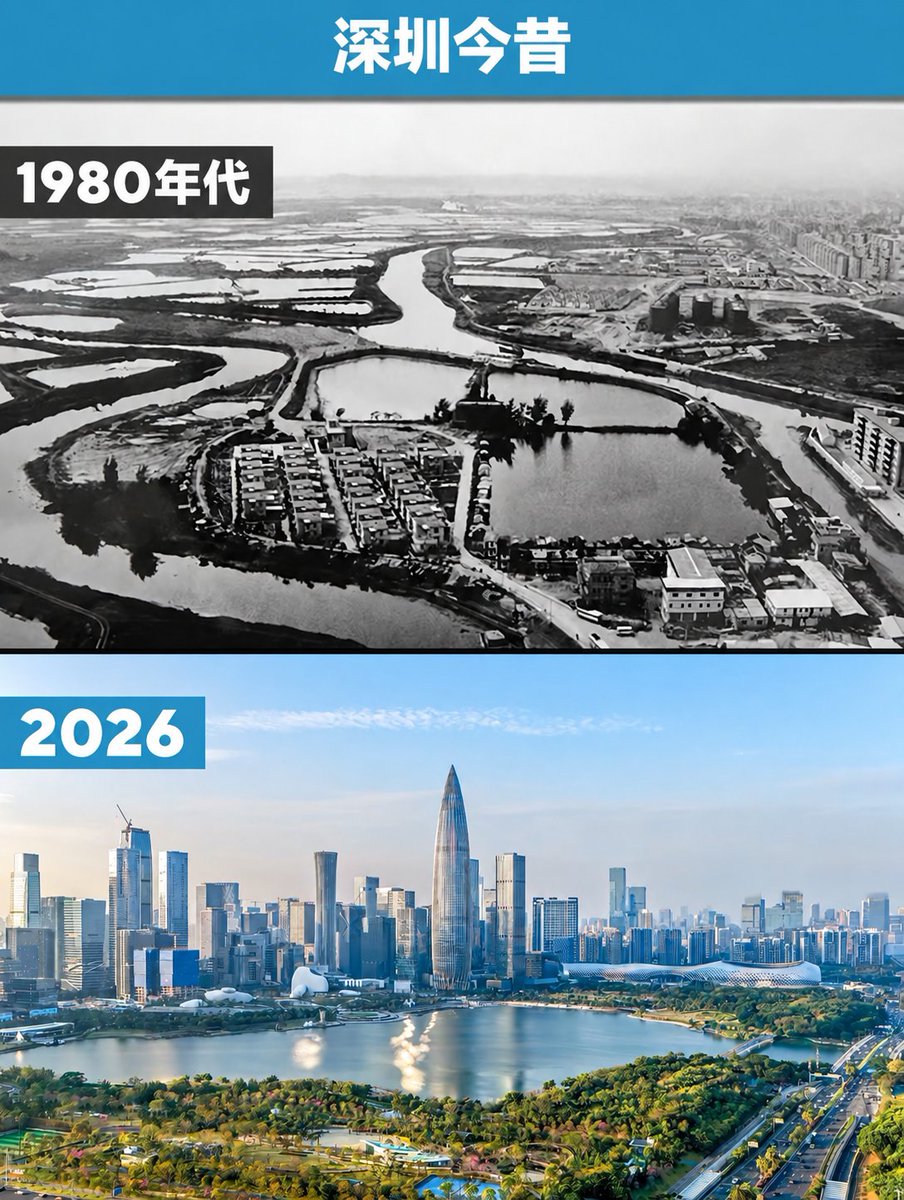
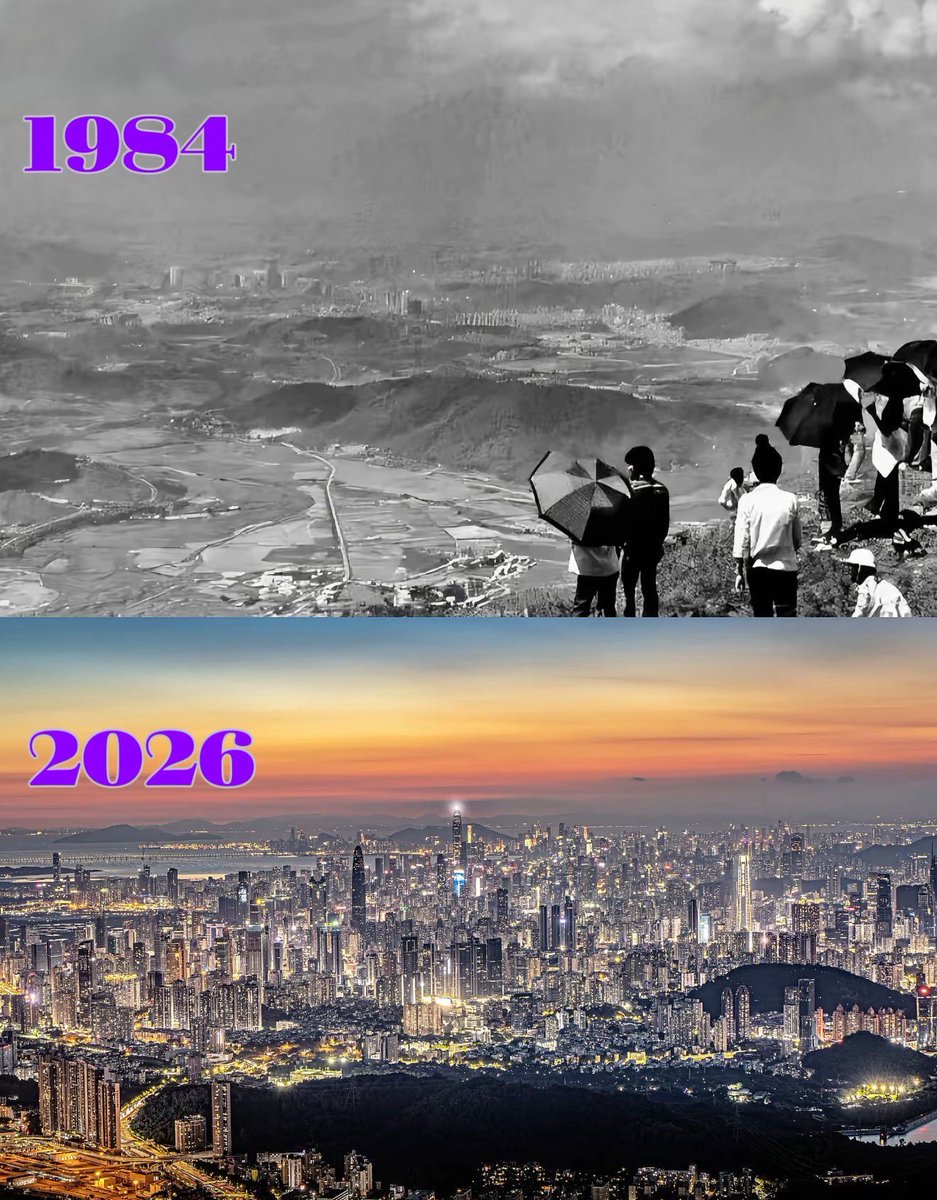
I’ve never been to Shenzhen, but I’ve heard its story.
They say that just over 40 years ago, this place was little more than a fishing town.
Then Deng Xiaoping came along and famously “drew a circle” here.
That circle helped turn Shenzhen into one of China’s most remarkable cities.
I’ve never set foot in Shenzhen, but I have to say, I really admire this city.
Shenzhen really is an extraordinary city.
I didn’t expect this to be the part of Trump’s China visit that stuck with me…
He described the airport welcome as grand and beautiful, and said he felt deeply respected.
Honestly, I liked hearing that.
The US and China have plenty of disagreements. But that doesn’t mean every interaction has to turn into a confrontation.
You can disagree with someone and still treat them with respect.
Seems pretty simple to me. I just wish we saw more of it.
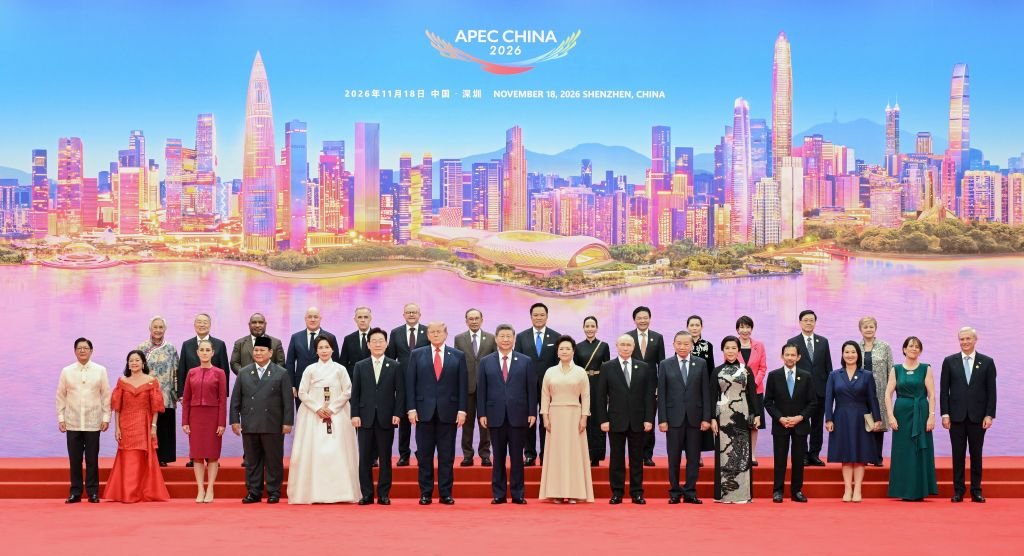
APEC leaders and representatives gathered for a group photo at the welcome banquet in Shenzhen.
Looks like almost everyone made it…
Wait… wasn’t someone else supposed to be here? 👀