Rory Sutherland made a quietly devastating observation about one of the biggest societal shifts of the last 50 years.
He said the move to the double-income household started as an option but quickly became an obligation. The big winners? Governments (twice as many people to tax) and property owners (now two salaries were needed to buy a house). The big loser? The family itself, which lost roughly 35 hours of discretionary leisure time per week — with no real increase in living standards, because the extra money was largely soaked up by higher house prices and taxes.
It’s a classic example of how something that begins as liberation can quietly turn into a new form of constraint.
Longitudinal studies on happiness and time use (including data from the American Time Use Survey and OECD reports) show that the sharp rise in dual-earner households correlated with stagnant or declining leisure time for families, while subjective well-being metrics for parents have not risen in line with the additional income — supporting the idea that much of the gain was captured by housing costs and taxation rather than improved quality of life.
It’s a reminder to look carefully at changes that society presents as inevitable progress.
What do you think — has the double-income model delivered more freedom or more pressure for most families?
This from @Geoffrey_Cox was titanic - a truly beautiful speech.
He outshone those sat opposite. They could only watch. And nervously laugh.
This should be seen by every new MP to understand what they do, & every new barrister to understand what we do.
Jimmy Carr delivered a powerful wake-up call in this clip that still stops people in their tracks:
“In 25 years, you’d give everything you own to be the age and health you are right now.”
He calls it life dysmorphia: we’ve adapted so completely to modern miracles — hot showers, abundant food, child survival rates, modern medicine, endless entertainment — that we forget we’re living like kings compared to the roughly 100 billion humans who came before us.
No one admired from history had it this good.
Yet objectively, life has never been better… while subjectively, it often feels worse than ever.
The hedonic treadmill never stops: we adapt to luxury so quickly that we start resenting it.
Next time you catch yourself complaining, pause and ask:
Would my ancestors trade places with me in a heartbeat?
What’s one modern “luxury” you’re grateful for today that would’ve blown their minds?
An absolute must watch.
Energy bosses have just told Parliament that EVEN IF gas prices halved by 2030, the soaring policy costs of renewables would mean bills go UP.
Ed Miliband’s plan means more grid, more expensive renewable subsidies, more paying wind farms to turn off.
This is Charlie Gee
One of the world’s most respected and renowned stonemason
His work in performing restoration works on Cathedrals throughout Europe is some of the best
A skill set that is becoming rarer to find and master in a more modern world
He’s only 23 years old
Every time you open Google Maps, your phone is talking to at least four satellites orbiting 20,000 km above Earth.
Each one beams down ultra-precise timestamps basically saying, “It was 12:00:00.000001 when I sent this.”
Your phone measures how long each signal takes to arrive, then triangulates your exact position. Simple, right?
Here’s the twist by Einstein.
As those satellites are moving fast (about 14,000 km/h), time slows down for them, a prediction of special relativity.
But because they’re also far from Earth’s gravity, time speeds up … a prediction of general relativity.
Put the two effects together, and their onboard clocks tick about 38 microseconds faster per day than clocks on Earth.
That sounds tiny but if engineers didn’t correct for it, your GPS location would drift by roughly 10 km every single day.
So every step you take, every Uber you call, every “turn left” you follow… all depends on Einstein’s equations quietly running behind the scenes.
Mind bending
@imacuriosguy@curiouswavefn
America is far more dependent on fossil fuels than we are. So why are its energy costs between 50% and 25% lower than ours?
Also I understand over 40% of our electricity now comes from renewables. If they’re so cheap why do we have among the highest domestic and industrial electricity prices in the world? And why do rich wind power multinationals still demand massive subsidies to erect more wind turbines if the stuff is so cheap to generate?
Also you keep on saying we’re dependent for gas on petrostate dictators. We import most of our gas from America and Norway. Is this a covert attack on Trump, with the innocent Norwegians as collateral damage?
Plus if you gave out more North Sea licenses we could reduce our gas imports from democracies and dictatorships. Or at least stabilise the status quo.
Energy economics doesn’t seem to be your strong point. But an Oxford PPE degree is pretty poor all round when it comes to economics.
I hope this helps.
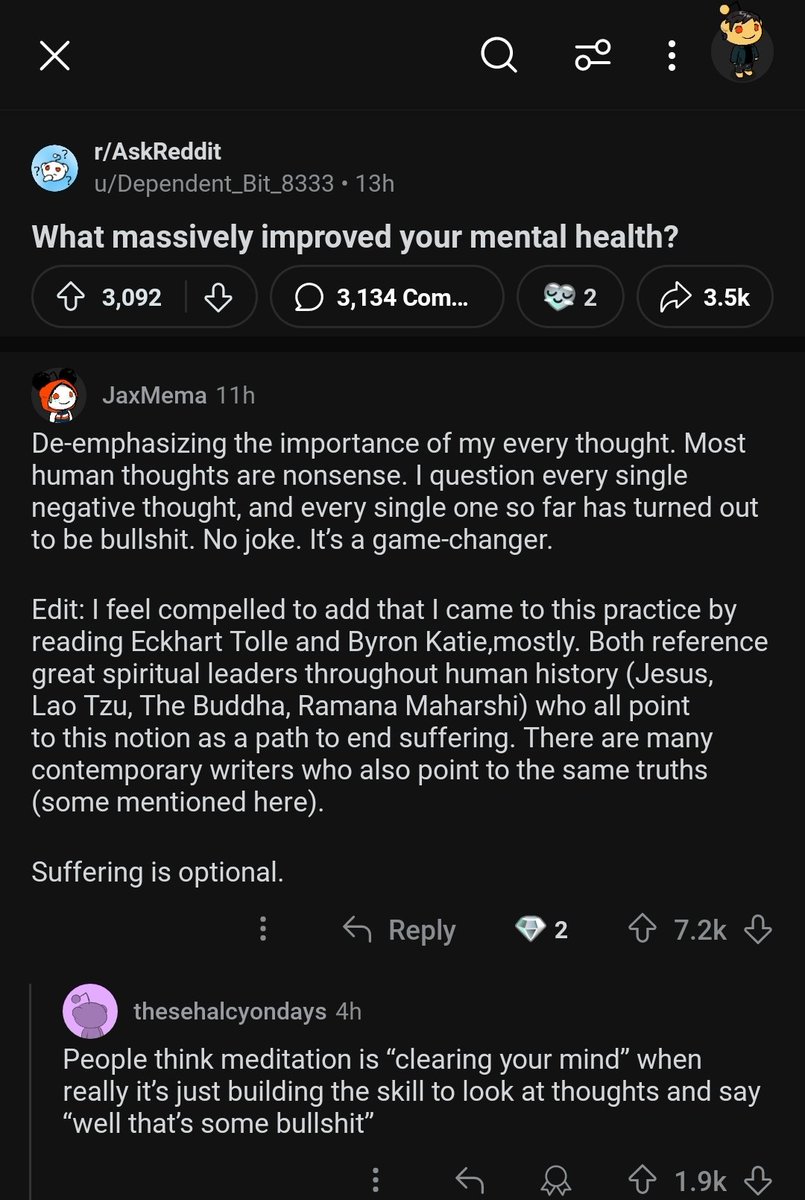
Again any thought you dislike should be immediately labelled as silly and meaningless because you have the power to assign meaning and value to what you think. As well as controlling your thought patterns.