Clinical Psychologist, Founder of The Brightly Project • school-based mental health, computational psychiatry, statistics and machine learning for mental health
PSA 📢
1: Headspace is free for K-12 educators. 2: If you are a post-secondary student, Headspace is $10 a year. Applies to US, Canada, Australia, UK.
The offer isn’t super obvious on their main webpage so here are the links:
https://t.co/OIMcdKT3KB
https://t.co/3iIB3bDXRN
🤖 Can LLMs effectively assist in cognitive behavior therapy (CBT)?
🔗New paper: https://t.co/itlWO35w1R
We present the first systematic benchmark to evaluate LLMs' efficacy for CBT. We include three levels of tasks: basic CBT knowledge acquisition, cognitive model understanding, and therapeutic response generation, with five new datasets. These tasks encompass key aspects of CBT that could potentially be enhanced through LLM assistance while also outlining a hierarchy of capability requirements.
✨ We find that larger LLMs are better at answering CBT knowledge questions. However, they fall short of analysis of complex cognitive structures. LLMs generally follow a rigid logical reasoning process but lack a crucial skill in psychotherapy—thinking and guiding from the patient’s perspective to respect their autonomy and build rapport. These findings underscore the substantial limitations of LLMs in practical psychotherapy, offering important directions for future work.
Thanks to @_Guuuuuuuu_ and @Qnolan4 for leading the effort, and @XZ1023_ , Travis Labrum, @imjamiechiu, Shaun M. Eack, @fangf07, @WilliamWangNLP.
Thank you for having me! What an excellent conference this was - the Computational Psychiatry Conference left me excited and energized with lots of ideas and connections! And how beautiful was Minneapolis and the Mississippi River? #cpconf2024
Excited to announce that 110 languages got added to Google Translate today! Time for context on these languages, especially the communities who helped a lot over the past few years, including Cantonese, NKo, and Faroese volunteers. Also, a 110-language youtube playlist. 🧵
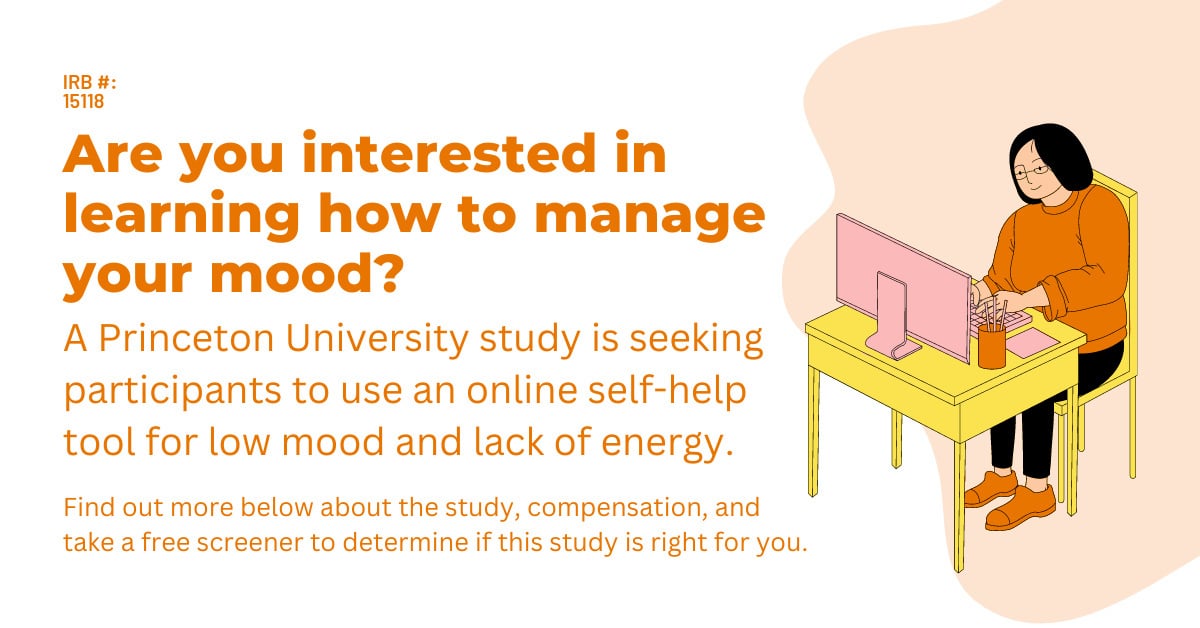
Our online research study (from Princeton University) is looking for participants to try a self-help tool for depression symptoms. See link to learn more! https://t.co/pEEjjqtMQk
📢 Can we use LLMs to help tackle real-world challenges? Yes!
We introduce Patient-Ψ, which uses LLMs to simulate patients to create an interactive framework for training mental health professionals.
Read on to learn how we do it!
📄: https://t.co/UdZhTiAjgx
🧵 1/n
Any therapist can tell you that going from the classroom to your first actual patient is a huge leap. Could LLMs help bridge this training gap? Combining LLMs with CBT case formulations, we simulate a one-session therapy client for training therapists to role-play with.
💡Introducing Patient-Ψ: 🧠🤖 We integrate cognitive modeling with Large Language models to simulate patients with mental health disorders, creating a new framework for training professionals.
📄 Paper: https://t.co/egZtuwI0CI
Based on a user study of 33 mental health experts and trainees, our simulated patient exhibits high fidelity to real patients, showing strong promise for mental health professional training.
#NLProc #MentalHealth #AIMentalHealth #AIHealthcare #AIForGood #LLM
We are often asked to rate how we feel on a scale from 0 to 10. While there are no objective units of feelings, it turns out that giving our feelings a number is quite predictive of life (dis)satisfaction. https://t.co/PnimgnuqW8
Talking to teens about and setting bedtime rules for electronic device usage helps reduce daytime sleepiness -- especially in teens who check and use social media a lot.
https://t.co/RKjJlo6ODO
Here at the Society for Neuroscience #SfN conference (my first time!) to share some early work on how our feelings influence whether we consider something to be ‘worth our effort’.
Come say hi at Poster Board QQ11 👋
If you are applying to a Psychology PhD program, you can get feedback on your personal statement from professors and current graduate students here: https://t.co/lrot2XK77O
Submit before October 20th!
Memories can be consolidated in qualitatively different ways during sleep vs. wakefulness.
Sleep-dependent consolidation is hippocampally dependent; consolidation during wakefulness is impaired by hippocampal activation.
https://t.co/fQzU1g1mFA
“We’re back in the same place: children dead in the very building where they were sent to learn and grow.” From Newtown, Connecticut, Carol Ann Davis argues nothing has changed since the Sandy Hook shooting to stop it from happening again in Uvalde, Texas:
https://t.co/IkYuUb1Vnd
Across the country, parents are putting their children to bed, reading stories, singing lullabies—and in the back of their minds, they’re worried about what might happen tomorrow after they drop their kids off at school, or take them to a grocery store or any other public space.