7 Signs to tell whether a Company is cooking its Books: “Financial Shenanigans”
Learn the tools used by companies for accounting manipulations. Simple steps for investors to identify the financial shenanigans and accounting gimmicks.
https://t.co/5GmDXrI51z
.
Credit Rating Reports: A Complete Guide for Stock Investors
Credit rating reports tell equity investors confidential information, which is otherwise not available to them. It is important for better stock analysis.
https://t.co/C6nH2cC5ND
.
How to do Management Analysis of Companies
9 simple steps to find out whether any company has a competent, shareholder-friendly management. Learn how to find this information for Mangement Analysis
https://t.co/4j3aI8A8hv
.
How Companies Manipulate Cash Flow from Operating Activities (CFO)
Learn tricks used by companies to inflate their cash flow from operations and show a better CFO to mislead the investors.
https://t.co/ZMH8iBmHMx
.
Jacob Rothschild is dead.
Evelyn D Rothschild is dead.
Henry Kissinger is dead.
David Rockefeller is dead.
George Soros is 93.
Rupert Murdoch is 92.
Klaus Schwab is 87.
The New World Order is collapsing in real time. 🔥🔥🔥
Howard Marks manages ~$190 billion and has penned some of the world's best investment writing.
Warren Buffett loves his writing too: "When I see memos from Howard in my mail, they're the first thing I open."
Here’s our conversation—with its top 13 insights:
1) For Howard Marks, heaven is seven little words: “I never thought of it that way.” Get the reader to say them and you win.
2) Einstein supposedly said there are four levels of intelligence: bright, brilliant, genius, and simple. Insecure writers try to flaunt their expertise with jargon; secure writers share what they know in surprising yet simple ways.
3) Something about putting words to paper freezes people up. Hence, Howard Marks tries to write as he speaks. Lesson: Take your written voice closer to your conversational voice. You’ll discover a new freshness and speed in your work.
4) Most writing rings hollow. No stories or thought-out principles inside. Howard Marks’ challenge to writers: Have experiences, cultivate convictions, and then your writing will come alive like never before. Thoreau said it best: “How vain it is to sit down to write when you have not stood up to live.”
5) Find your creed. What do you believe in? What do you think will work? What will not work? What are the rules that govern your decisions? People listen intently when you speak from a "principled voice."
6) Be eclectic in your subject matter and sources. Tackle the same point from different angles to create a richer reading experience. For example, in his memos, Howard Marks has explained investing via the prism of gambling, poker, sports, and more.
7) Howard Marks’ knack for analogies has made him one of Warren Buffett’s favorite writers. Takeaway: Come up with more surprising comparisons. Make cross-disciplinary connections.
8) What Howard admires in Buffett’s writing: its accessibility, folksy simplicity, and humor. A great example is Buffett’s description of the 2008 financial crash: “It's only when the tide goes out that we find out who's been swimming naked.”
9) Writing is anti-BS because the reader can keep re-reading until the hole in your logic becomes clear. You will get away with some BS in conversation, but if you want to discover and fix the holes in your ideas, write them down.
10) The old sayings don't get to be old sayings for nothing. A heuristic, story or book that has been around for long probably has something valuable to teach you.
11) The more complex the idea, the simpler your explanation must be. Nietzsche agrees with Howard Marks: “The more abstract the truth you wish to teach, the more you need to seduce the senses to it.”
12) The world is governed by cyclical forces. Even if history doesn't always repeat, it rhymes. This is why old books will teach you as much about the future as the past.
13) Writing prompt: Reconcile two things that seem to be at odds or show the hidden fault lines between two things that seem to be compatible. The reader will feel rewarded. She might even say the seven magical words: “I never thought of it that way.”
I've shared the full conversation below.
If you'd rather listen on YouTube, Spotify, or Apple, check out the replies below.
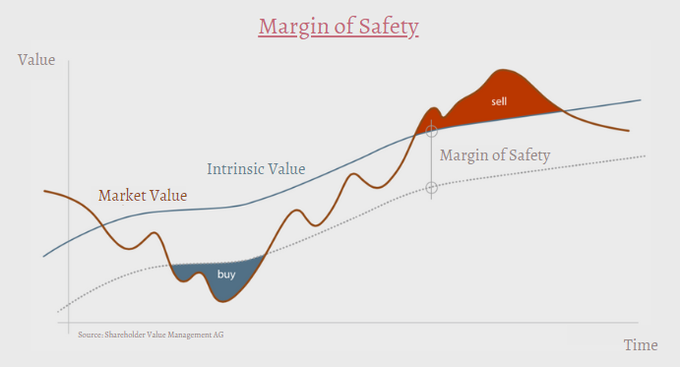
Warren Buffett said the three most important words in investing are "Margin of Safety."
He also said that Chapter 20 of The Intelligent Investor is the best chapter ever written on that topic.
Here's what Chapter 20 taught about the Margin of Safety👇
Joel Greenblatt is one of the greatest investors ever.
He compounded at 49% for 20 years. 🤯
Here are 7 investing tips from his Columbia Business School lectures:
More than 35000 startups closed down or on the verge of it in 2023.
As they shut shop, founders of these startup learnt an important lesson
Raising money from investors is hard. Returning it is even harder.
@tam_arund has a riveting read @TheKenWeb
https://t.co/2YtLqGyqKu
10 Excellent Development Economics Books
1) Economics of Development - Thirwall + Pacheco-López.
A wonderful textbook on development econ. Includes both categories of development such as trade, health etc, and development theories, from the Lewis Model to dependency theory.
30,034 Killed
11,833 Children
6,009 Women
58,313 Injured
1.9 million displaced
67,214 Home completely destroyed
178,600 Home partially destroyed
3,420 Kidnaped
Then they say "voluntary migration"!!
South Africa called this out as Genocide, every country should, starting with Palestine!
South Africa initiated proceedings against Israel at the International Court of Justice for the Crime of Genocide against the people of Palestine. Other countries should as well, starting with Palestine again!
Warren Buffett's most profitable skill:
Identifying undervalued stocks with long-term potential.
99% of people lack this skill because nobody showed them how to develop it.
Here are 5 keys to building this skill for yourself (and improving profits as a result):
Buffett Said “It’s A Crime That Business Schools Don’t Study Men Like Henry Singleton”
Singleton achieved an 18% compounded annual return over 25 years
Through an aggressive acquisition & buyback strategy.
His top 13 investing principles:
🧵