Characterization of a massive hepatic Hemangioma: a) T2w Image acquired with Respiratory Trigger (RT); b) DWI (RT); c) T1w Multi-Phase acquired in Breath Hold (BH); d) T1w Isotropic Delayed Phase acquisition (BH) and MPR reconstructions.
Receiver Bandwidth is a crucial parameter for the optimization of an imaging protocol. Here’s a formal definition and a conversion table to keep in mind when adapting this parameter in different Manufacturers.
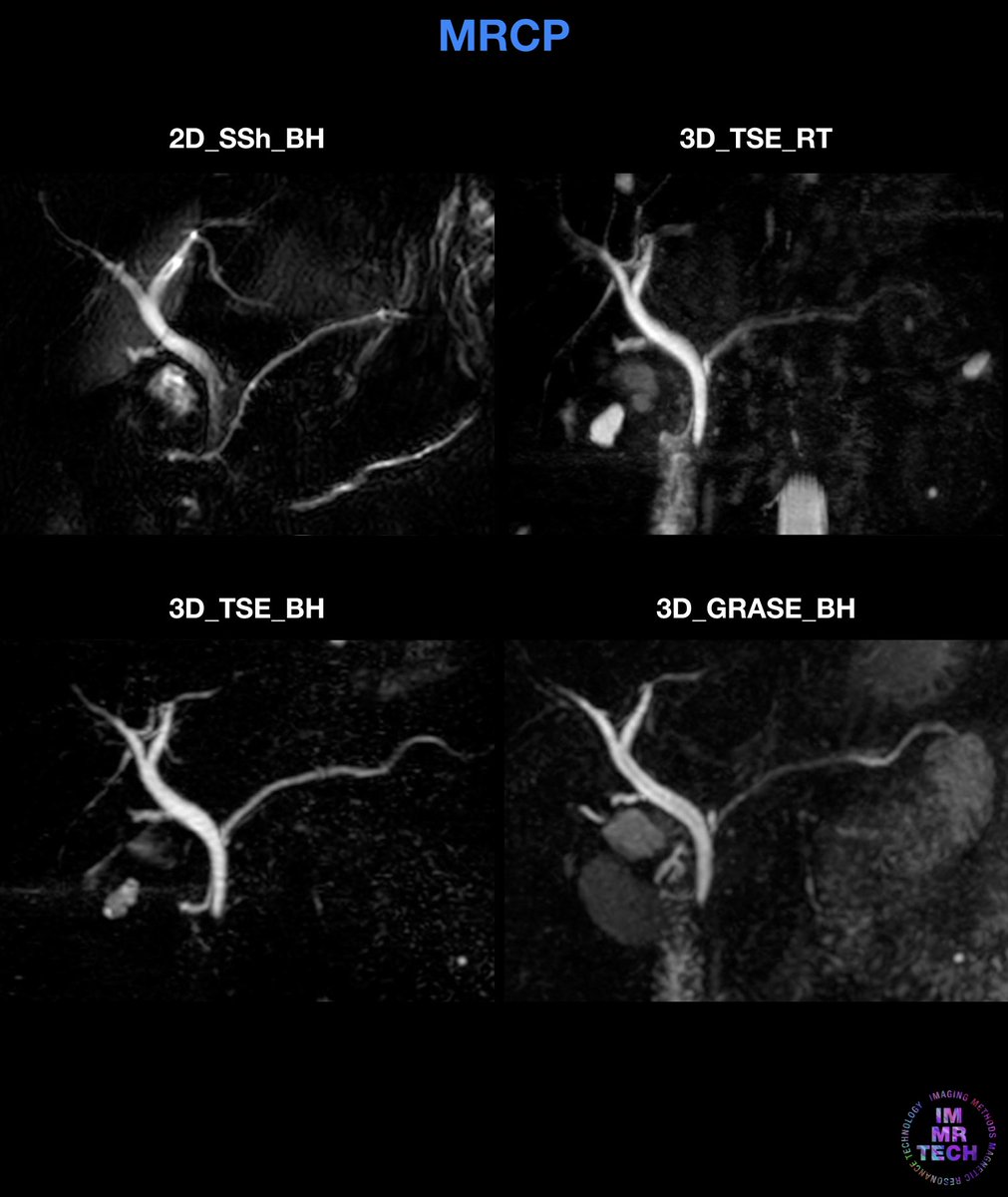
Comparison between different MR CholangioPancreatography techniques. What are the differences and what kind of protocol do you usually implement for this study? Tell us in the comments below!
In this Lumbar Spine + Hip Joints examination, the anterior phased array coil in the hip joints region was accidentally turned on during the spine acquisition (left). This error caused an Annefact artifact, that could be overcome switching off the lower anterior channel (right).
In today’s video we will discuss about 4D MRI Angiography and its principal K-space sampling methods.
Check it out on our Youtube channel: https://t.co/N0l4sg9XUz
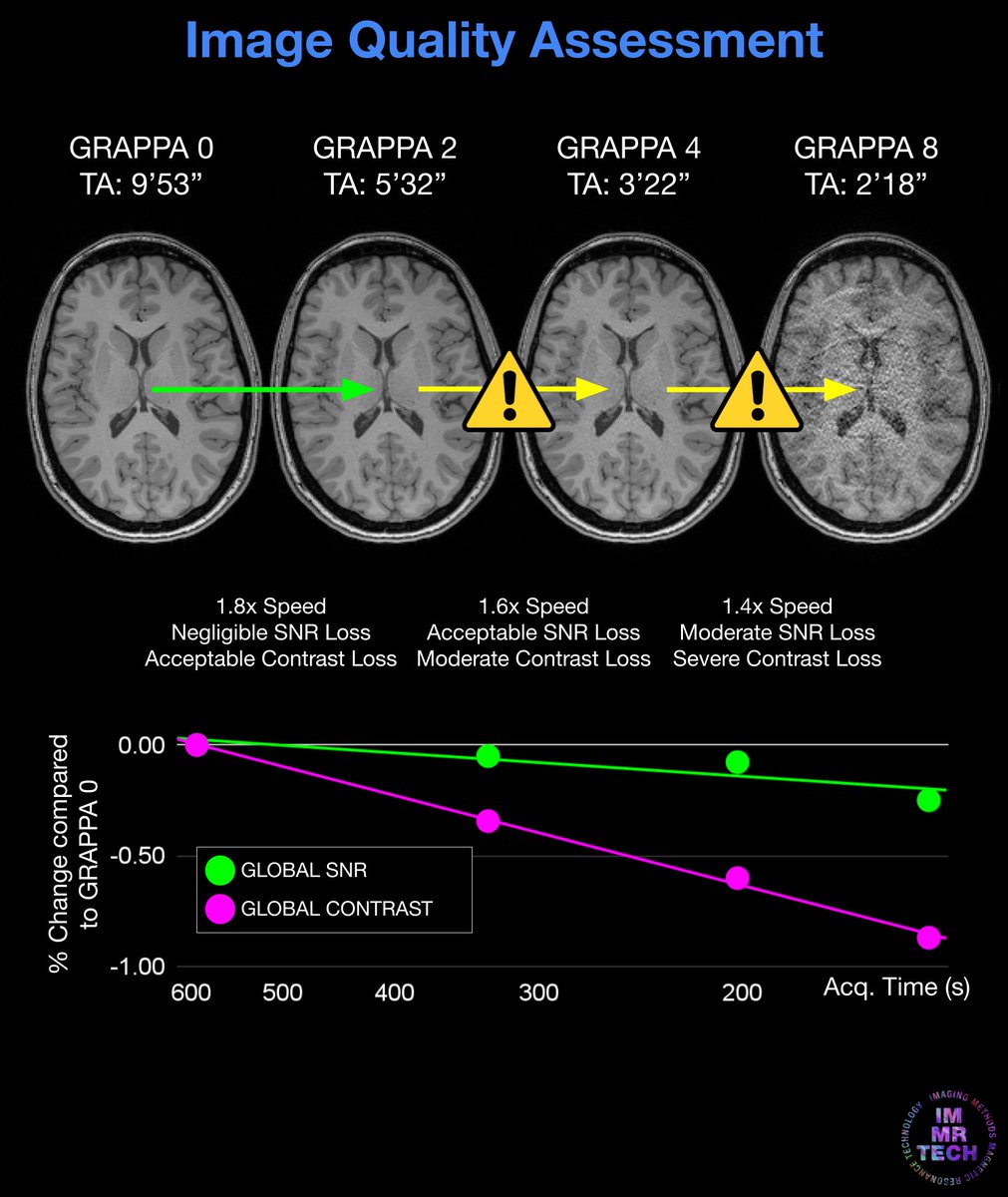
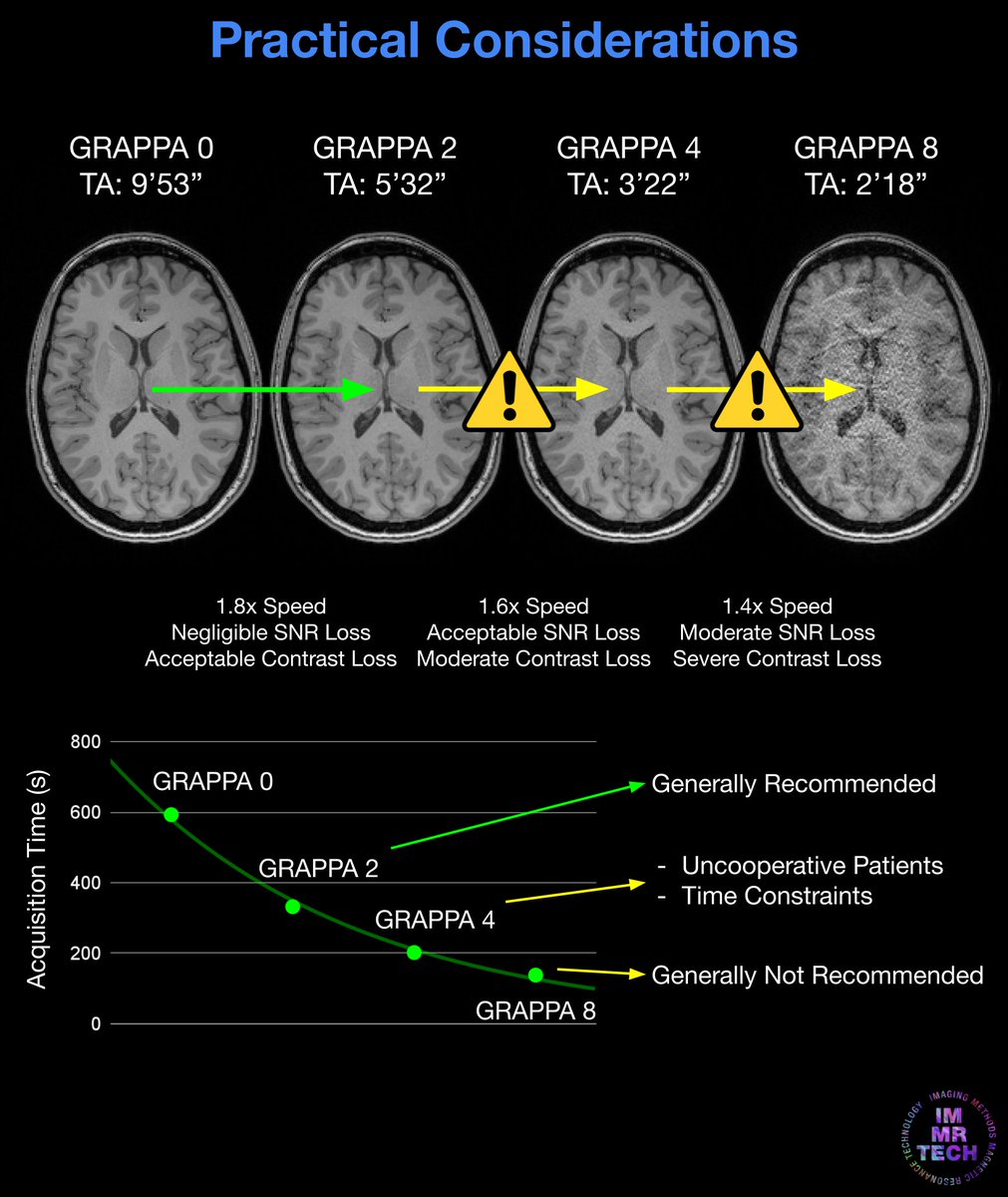
Acceleration based on parallel imaging can be very effective in reducing scan time, but is it always worth it? No surprise that GRAPPA is another version of the too-short-blanket dilemma: be careful in selling quality for speed.
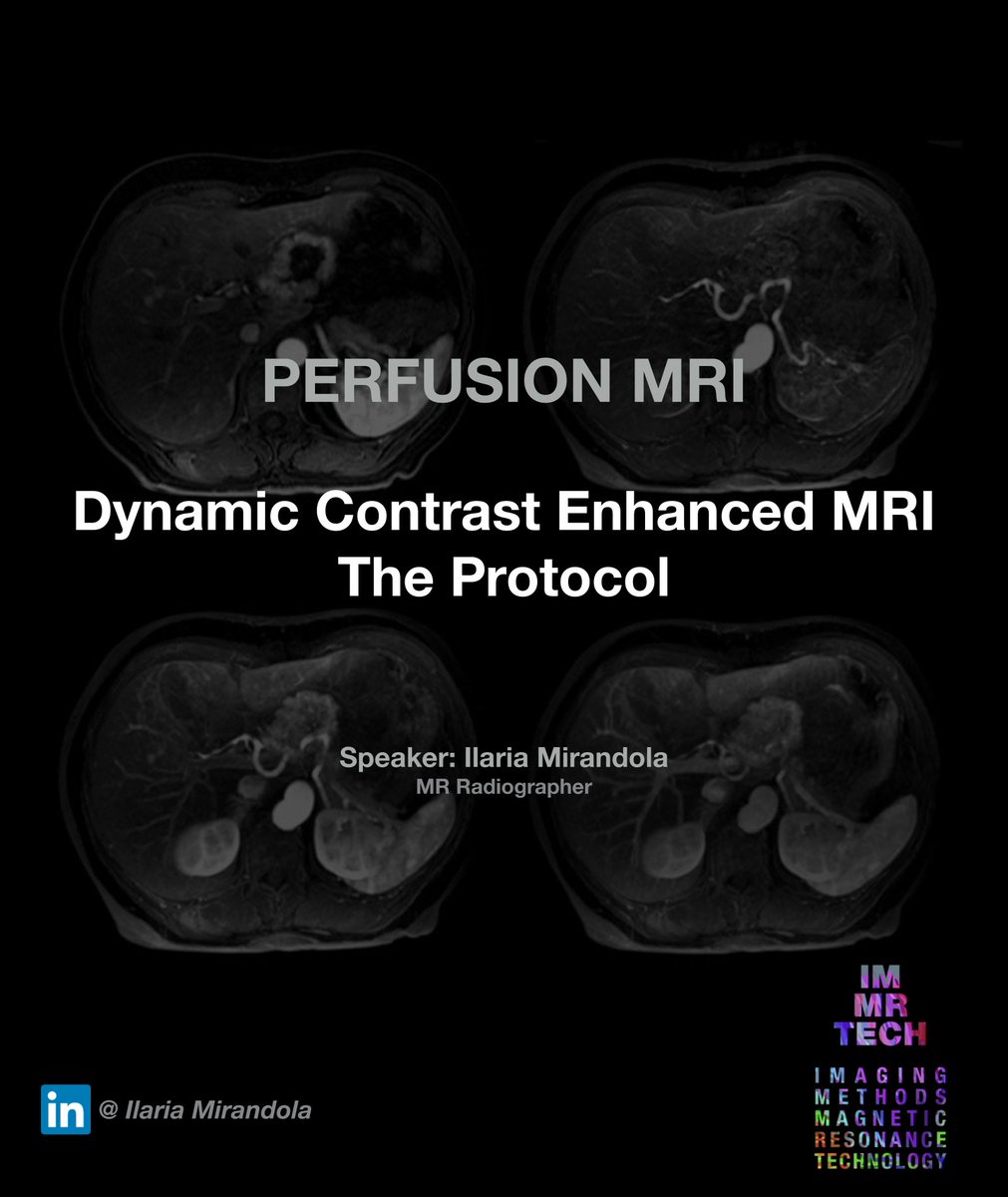
Dynamic Contrast Enhanced MRI: how can we make the acquisition protocol more efficient?
Check out our new video and let us know if you need more info!
Youtube video can be found here: https://t.co/K0MySMeYEJ
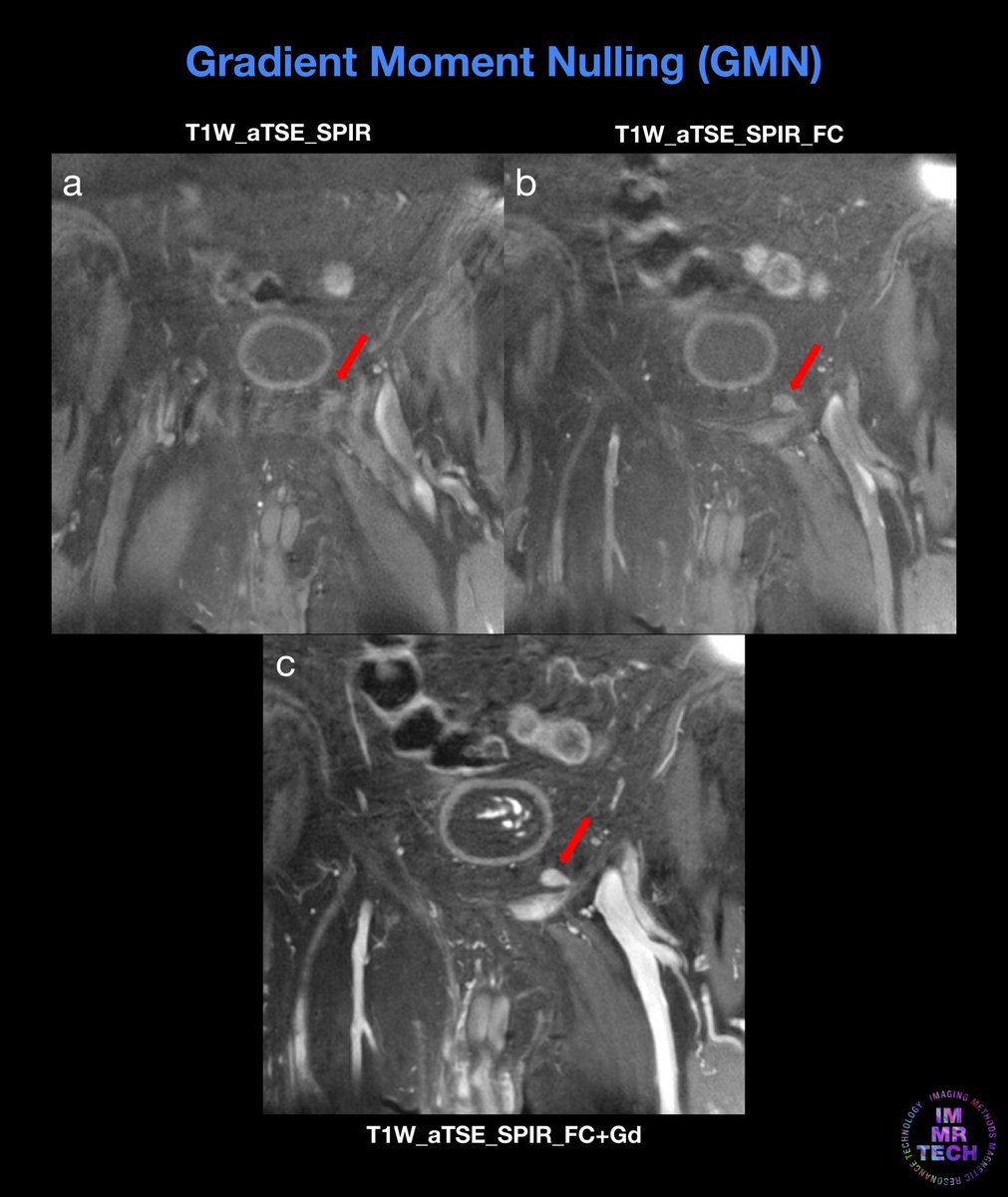
Flow Compensation (FC) is a method to reduce flow artifacts. In this pelvic MRI case, note how FC benefits the final image, showing pathology (confirmed in panel c after contrast agent injection) that otherwise wouldn’t be visible (panel a, b, before and after FC, respectively).
If you want to know something more about ASL, check out this video! It will discuss the main features we have to consider when adapting a ASL acquisition protocol.
You can find the video here: https://t.co/AOWNMUWptg
Let us know if you need more info about this technique!