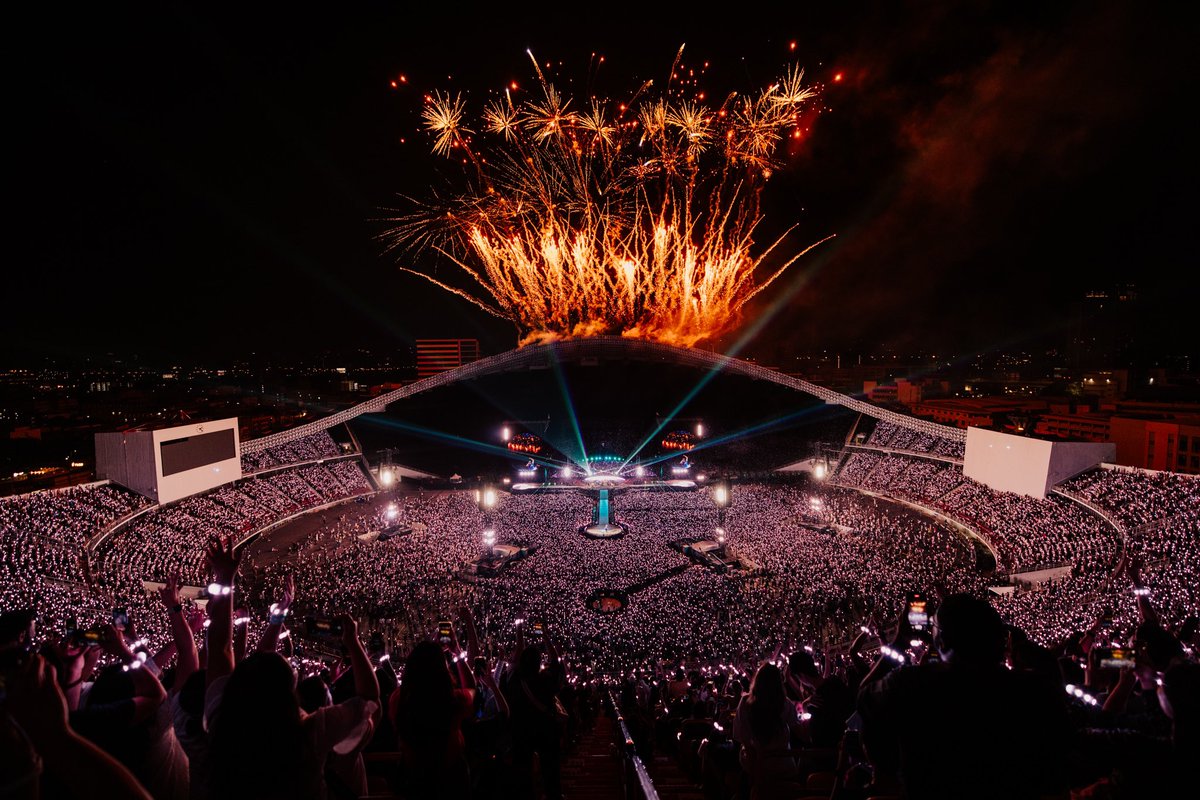
Also..... One more thing I noticed for #ColdplayBangkok is there's a lot of weeds inside. People smoking weeds or cigarettes during the concert and also vaping. It was really wild.
First time in KL, last show of the year… the scene is set for a fantastic night. We are very grateful for the warm (and wet!!) welcome and can’t wait to get going. Thank you very much for having us here in Malaysia. W. X
This is the first image captured of Chernobyl, taken 14 hours after the explosion on April 26, 1986.
The photo was snapped from a helicopter assessing radiation levels over the disaster area.
The image is grainy due to the intense radiation in the air, which began damaging the camera film as soon as it was exposed.
Igor Kostin, the photographer, found that the radiation affected his camera's motors after about 20 photos.
When he processed his films, only the image above was usable.
All other photos, affected by high radiation levels, came out completely black.
Kostin's visit to Chernobyl was not legal or approved by the authorities. The incident's news was largely hidden.
However, Kostin was later given permission to photograph the disaster site, the evacuation of residents in Pripyat, and the 30 km zone around the power plant.
His images helped reveal the catastrophe to the world.
Despite his closeness to the site, Kostin did not receive deadly amounts of radiation.
He died in a car crash in 2015 when he was 78.