Researchers at the University of Florida have developed an AI tool called AIDD that can distinguish between Alzheimer’s disease and dementia with Lewy bodies with near-perfect accuracy using specialized MRI scans.
This is significant because the two conditions are often confused despite requiring different treatment approaches. Some studies estimate that up to half of dementia with Lewy bodies patients are initially misdiagnosed, creating the risk of ineffective or even harmful interventions.
Discussions about AI focus on models replacing human decision-making. More interesting is what happens when organizations can no longer distinguish between human judgment and machine-generated judgment.
Today, a growing share of strategic recommendations, hiring assessments, market analyses, and product decisions are influenced by AI systems. Yet organizations still attribute decisions through traditional reporting structures.
The formal structure of the organization suggests that authority sits with people, while an increasing share of the underlying intelligence comes from machines.
We have governance frameworks for employees, executives, and boards. We do not yet have governance frameworks for intelligence that participates in decisions without formally belonging to the organization. That is one of the most important institutional challenges of the AI era.
4/ @_PradeepGoel built platforms serving 80M+ Americans through Medicare and Medicaid infrastructure. He knows exactly how high the stakes are.
https://t.co/6meVTa524J
Prediction is being commoditized.
Models can forecast, estimate, simulate, and recommend.
But we still struggle to change behavior based on those predictions.
The ability to predict a problem and the ability to respond to it are two very different competitive advantages.
We're drowning in predictive capabilities while starving for adaptive capacity.
The smallest thing that helps🌍
A question for World Environment Day:
What's the smallest thing you've done that you think actually matters?
Not the big gesture. The small habit that stuck. Curious. 💧
📌Reply with yours.
#WorldEnvironmentDay#Sustainability
🇺🇸 TODAY: JPMorgan, Citi and major US banks are launching a new tokenized deposit system to compete with crypto.
YESTERDAY: Stripe, Visa and Mastercard backed a new stablecoin platform.
Looks like the big companies already know the CLARITY Act is about to get approved.
🚨 UPDATE: Zcash founder Zooko discloses a critical counterfeiting vulnerability in Zcash's Orchard pool that could have allowed unlimited undetectable $ZEC minting.
Discovered May 29 and patched by June 2.
It's World Environment Day🌍
It's World Environment Day. A day to take stock of the only planet we've got.
A small reminder: caring is a habit, not a holiday. But the holiday helps.🌱
📌Reply with something you're doing
#WorldEnvironmentDay#WED2026#Sustainability#BigWater
The most important things tokenization projects need to focus on in my opinion:
> Positioning
> Liquidity
> Distribution
> Asset quality
> Regulatory structure
> Transparency
> Product-market fit
> Ecosystem integration
> Trust / credibility
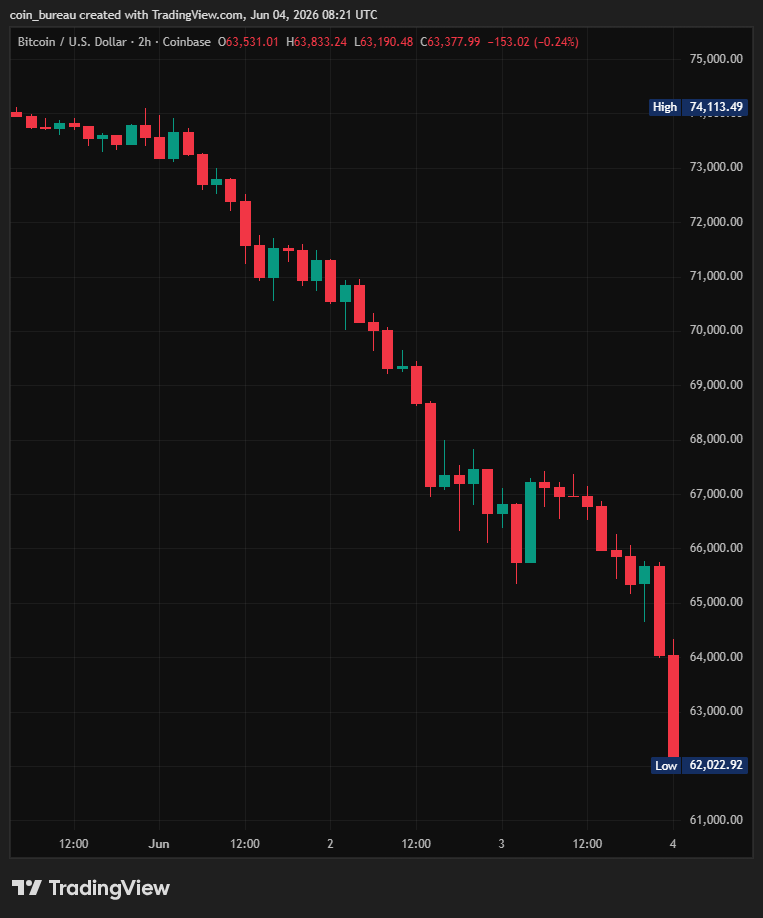
🚨JUST IN: Strategy officially records its LARGEST EVER unrealized Bitcoin loss of -$12 BILLION after selling $BTC.
Strategy basically lost 4,800x MORE than it made from selling 32 BTC for $2.5M.
That trade was the worst.
You don't need a DevOps team to run enterprise AI infrastructure.
PAI3 Power Node: plug in, 30-min setup, automatic updates, built-in self-recovery.
No command line. No server room. No technical team.
Doctors and lawyers are running it. Not engineers. 👇
The Crypto Quorum is back after a travel hiatus! ✈️
Join us, our sponsor @EdgeWallet, and our co-host @zano_project as we debate if revenue on crypto networks is a lie.
5pm UTC this Thursday! ⏰
https://t.co/HBmVlwJAyH
Exactly 15 years ago today when Bitcoin was trading at $15, Hal Finney said:
"Every day that goes by and Bitcoin hasn't collapsed…increases the chance of Bitcoin's eventual success and justifies a higher price."