Legal citizen. Follows laws, or works to change them LEGALLY. Loves the USA & equal opportunity. Hates racism, CRT, equity & idealistic liberalism & socialism.
@SenateGOP Establishment RINOs (Uni-Party) will ALL LOSE their next primaries. We will never forget those who refused to support the will of their voters and Save AMERICA Act.
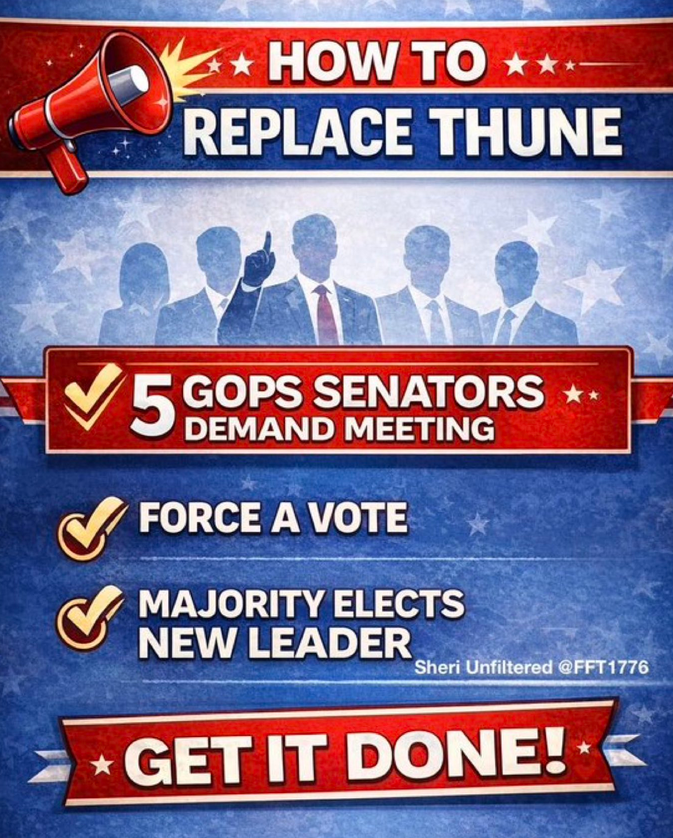
1) Demand a Meeting:
- Conference Rule III explicitly states: The Chairman shall call a Conference meeting whenever requested in writing by five or more Senators (or by the Policy Committee).legislativeprocedure.com
- This gives rank-and-file members leverage. It has been publicly discussed in contexts like challenges to prior leaders (e.g., McConnell). https://t.co/jZUMp0lpFZ
2) Force a Vote:
- At the called Conference meeting, members can propose a motion to hold a leadership election or vote on whether to retain the current leader.
- Leadership positions (including Floor Leader) are elected by the Conference, typically by secret ballot if https://t.co/lpL2cdxFfH
3) Majority Elects New Leader:
- A simple majority of voting Republican Senators in the Conference decides the outcome.
- The position of Floor Leader/Majority Leader is a party role, not a formal Senate officer requiring a full chamber vote. Changes happen internally via the https://t.co/z0fcjCJpD4
- Once elected, the new leader assumes the role on the floor (with precedence rights, scheduling power, etc.).
Important Context:
- This can happen mid-Congress (not just at the start of a new one). The rules allow it via the five-senator https://t.co/jcXvFrVB34
- The full Senate doesn't vote to "ratify" party leadership changes—it's handled privately within the Republican https://t.co/z0fcjCJpD4
Success depends on having the votes:
- You need enough senators (a majority of the Conference) willing to back a replacement.
- With Republicans holding a majority (around 53 seats recently), it’s feasible in theory if discontent is broad.
1) Demand a Meeting
- Conference Rule III explicitly states: The Chairman shall call a Conference meeting whenever requested in writing by five or more Senators (or by the Policy Committee).legislativeprocedure.com
- This gives rank-and-file members leverage. It has been publicly discussed in contexts like challenges to prior leaders (e.g., McConnell). https://t.co/jZUMp0lpFZ
2) Force a Vote:
- At the called Conference meeting, members can propose a motion to hold a leadership election or vote on whether to retain the current leader.
- Leadership positions (including Floor Leader) are elected by the Conference, typically by secret ballot if https://t.co/lpL2cdxFfH
3) Majority Elects New Leader
- A simple majority of voting Republican Senators in the Conference decides the outcome.
- The position of Floor Leader/Majority Leader is a party role, not a formal Senate officer requiring a full chamber vote. Changes happen internally via the https://t.co/z0fcjCJpD4
- Once elected, the new leader assumes the role on the floor (with precedence rights, scheduling power, etc.).
Important Context:
- This can happen mid-Congress (not just at the start of a new one). The rules allow it via the five-senator https://t.co/jcXvFrVB34
- The full Senate doesn't vote to "ratify" party leadership changes—it's handled privately within the Republican https://t.co/z0fcjCJpD4
Success depends on having the votes:
- You need enough senators (a majority of the Conference) willing to back a replacement.
- With Republicans holding a majority (around 53 seats recently), it’s feasible in theory if discontent is broad.