@Retlouping Interesting. But the whole 'active placebo' issue.. my understanding was the control group often receives needling/saline injection (wet needling), which may or may not be biologically active. So really the conclusion should say 'PRP is no more effective than needling/tenotomy'?
@LSaugman@DrJN_SportsMed@LSaugman@DrJN_SportsMed
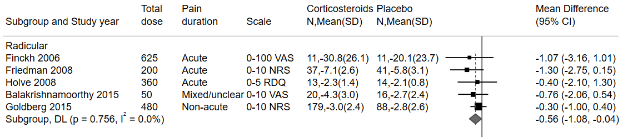
There were a few additional RCTs not included in the 2016 NICE Low Back Pain review (not always oral steroids) and, when pooled, they do give a short term pain benefit (MD -0.56 [95% CI -1.08, -0.04) with minimal heterogeneity
https://t.co/80nlk35O8O
@AdamMeakins@physiojack@DrJN_SportsMed Relevant study: https://t.co/8Oc415786A CRP has higher diagnostic accuracy. One utility however of doing both ESR and CRP at time of diagnosis for PMR is that a disproportionately higher ESR:CRP may indicate a PMR mimic like myeloma.
@MRheumy Agreed locally in our pathway for all the obvious reasons. Enforcing it is slightly harder. There ought to be evidence from the telephone-only primary care camp that demonstrates no detriment in clinical care by telephone only care and decision making in such cases
@MRheumy @profbdasgupta Yes! And shoulder pain...PMR with near zero inflammatory markers can occur, but less commonly, and we know oral steroids improve non-inflammatory MSK shoulder pain. Caution would help before committing (sometimes frail) individuals to possibly years of unecessary steroids.
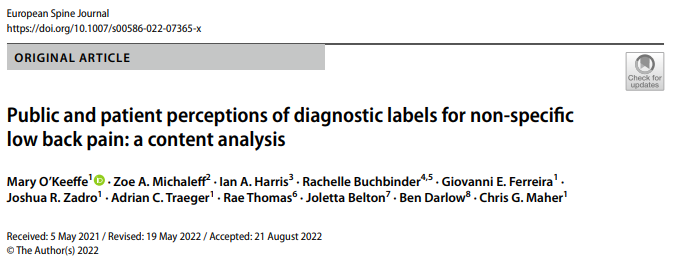
We had previously showed that some diagnostic labels reduce intentions to seek low-value care for low back pain👉https://t.co/rvt5qKPV53
Our new research shows that some of those labels elicited perceptions of poor prognosis, uncertainty, and damage
👉 https://t.co/PWDTAglunl
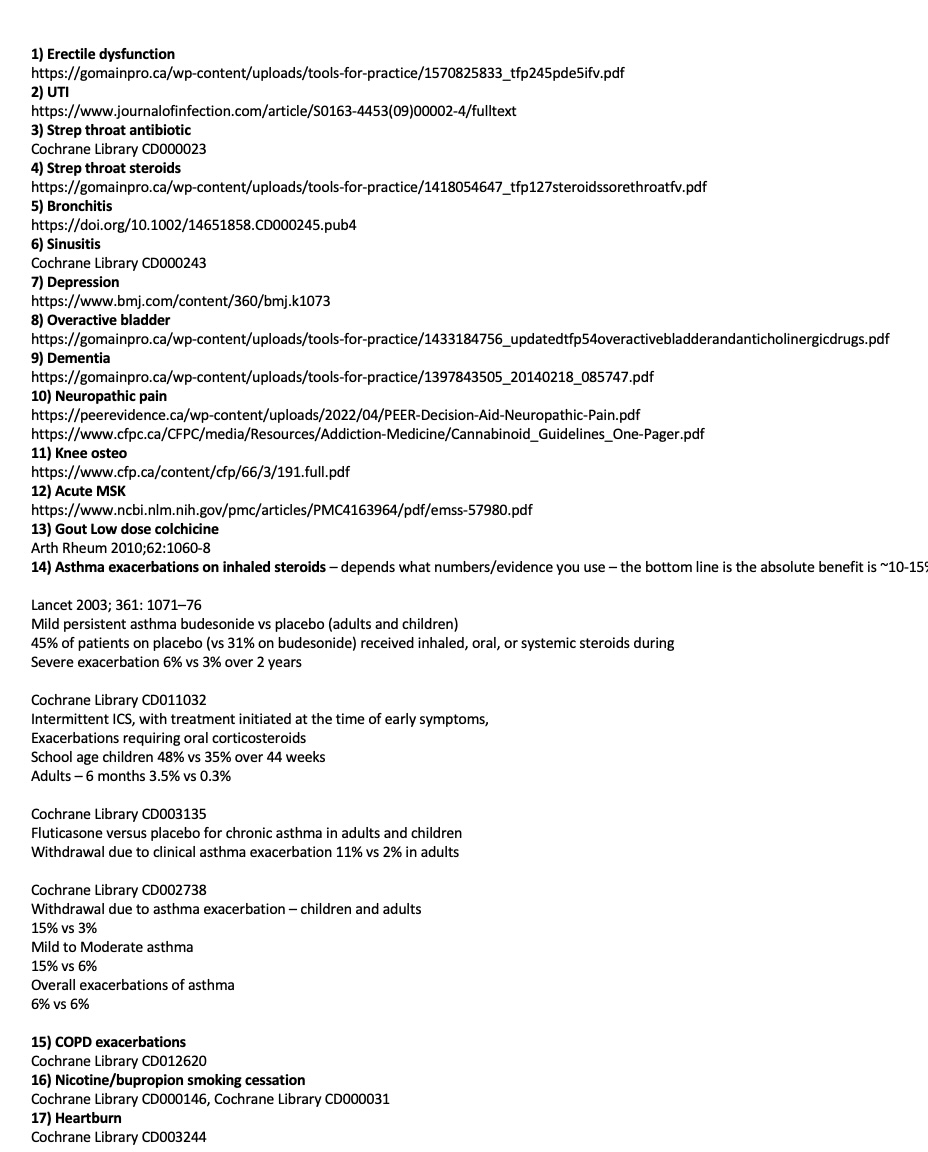
Ever wonder how many new medications are better than what we already have? Check out what Prescrire and the Canadian Patented Medicines Prices Review Board thought. <5% are substantially improved. Are you surprised? It's why I say don't keep up, just use the meds we have better.
One of my all-time favorite illusions: The spinning dancer
If you look at the dancer on the left and the one in the middle, the one in the middle spins clockwise.
If you look at the dancer on the *right* and the one in the middle, the one in the middle spins counterclockwise.
@BurgessRoanna Fantastically useful piece of work highlighting an area where we really need to be better in terms of understanding our MSK systems. Case-mix adjustment in particular needs to be routinely addressed: https://t.co/0g8sFBJA2n
In terms of physical behaviours and MSK physiotherapists should be considering:-
✅️Goals
✅️Leisurely activity behaviours
✅️Movement exploration
✅️Habit development
✅️Advice on safety
✅️Pain implications
✅️Benefits
✅️Time frames
✅️Set backs
1/2
As appropriately requested by many people, I've provided the references for my chart. I've also tweaked the chart a bit as there was some new evidence - I created this 3-4 years ago. If you see any errors/have any concerns please let me know. Always happy to correct and improve.
T2DM guidelines have a BIG problem. The 2018 Canadian guidelines are ~350 pages long. 2021 American ~225 pages. 2019 European ~70 pages. Frustratingly, none of them provide a useful numeric description of what the best available evidence shows for risk, benefits and harms.
In this podcast episode, @kieranosull sat down with us to discuss an editorial that he helped author titled "Back to basics: 10 facts every person should know about back pain." Check it out!
https://t.co/8bQaYQod37
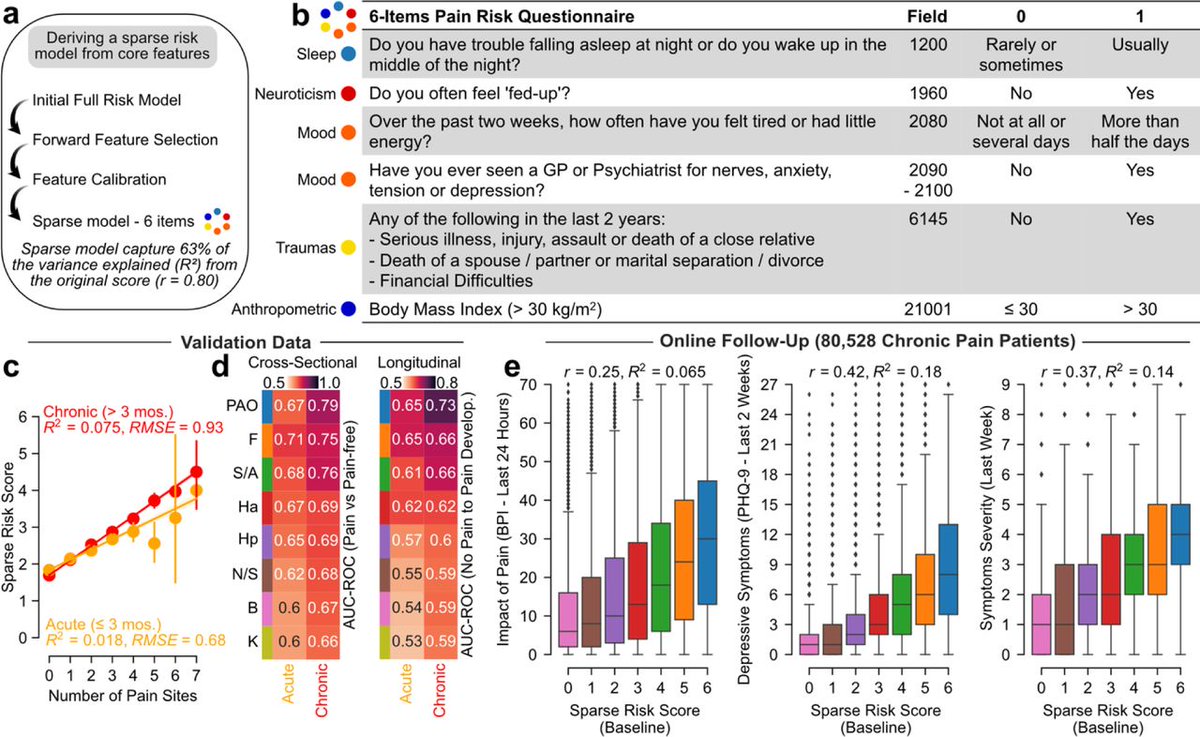
An amazing data set on 50k people with pain exploring predictors of spreading of pain over 9yrs. The predictors were irrespective of the dx/site of pain.
👉Sleep problems
👉Tiredness
👉Feeling fed-up
👉Depression/anxiety
👉Stressful life events
👉BMI >30
https://t.co/1liD6riGUj
Amidst the controversies surrounding our paper on the serotonin theory of depression, the FDA has published the largest and most comprehensive IPD analysis on the efficacy of antidepressants in the acute treatment of major depression. A brief summary:
https://t.co/0mLafJGTHj
@MRheumy Absolutely! Seemingly little recognition out there on the rates of misdiagnosis (small studies show 25-50% of primary care PMR diagnoses appear incorrect) and harmful long-term over treatment (including unecessary prolonged treatment without titration in those who do have PMR)
@EmmaCowleyPhD @BTBoekkooi@AdamMeakins@DrJN_SportsMed Yeh seen so much post-vaccine 'SIRVA' and with all the other vaccine issues out there, pts get really worried. Still see in vaccination centres too many injecting far too superiorly, right into the SAB.
@GregLehman@DerekGriffin86@OMPTGUY@TheHipPhysio This would be a really interesting study! You could maybe even have clinicians just look at their own recommendations, blinded to what their recorded diagnosis was...
@VincentGnanapr3@NICEComms Great paper. As mentioned in limitations, in view of spectrum bias, suspect the specificity could be even lower when studied in primary care populations that see even more undifferentiated presentations. Great addition to the debate on current pathway investments.