WAIT. This is actually insane.
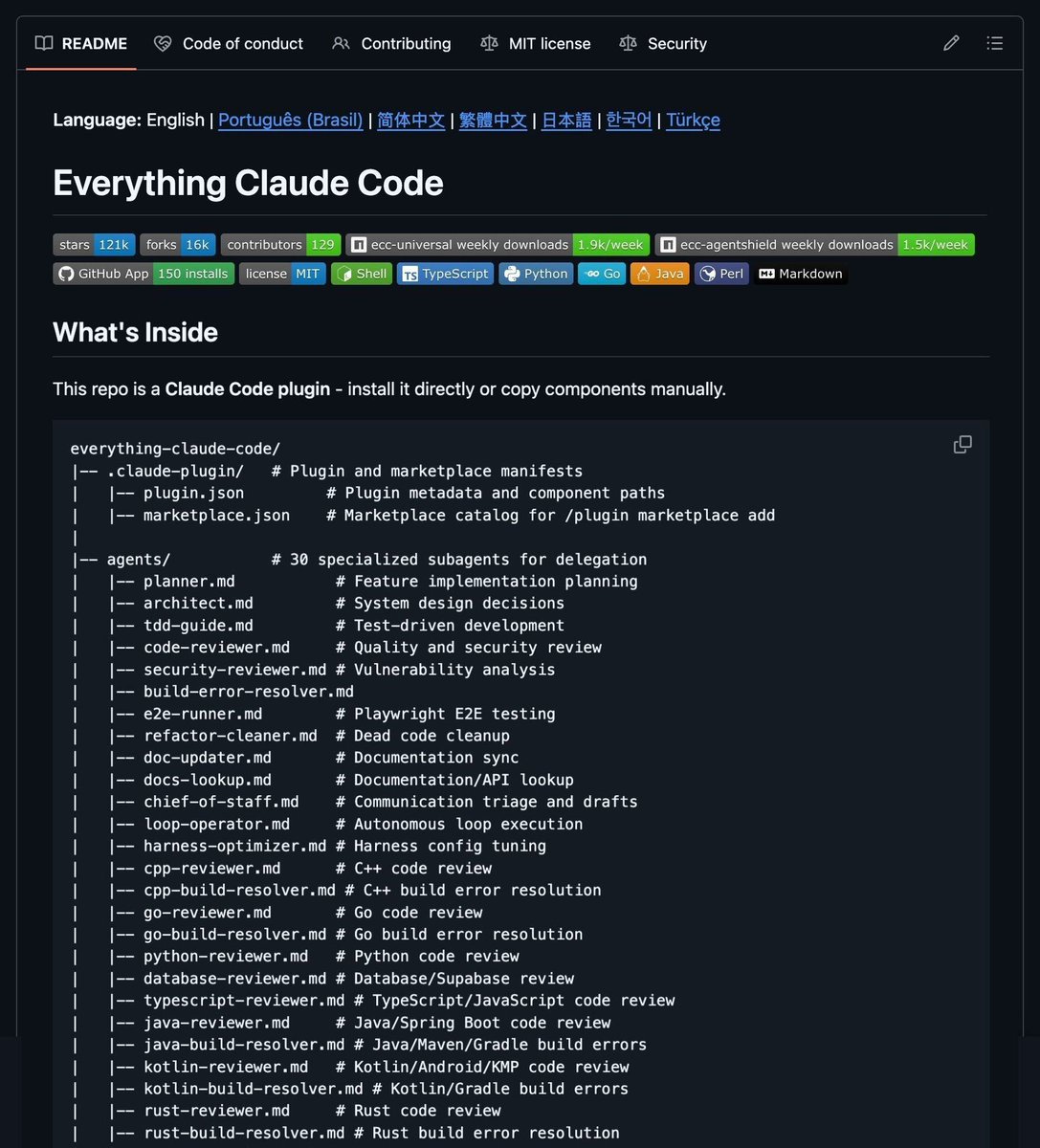
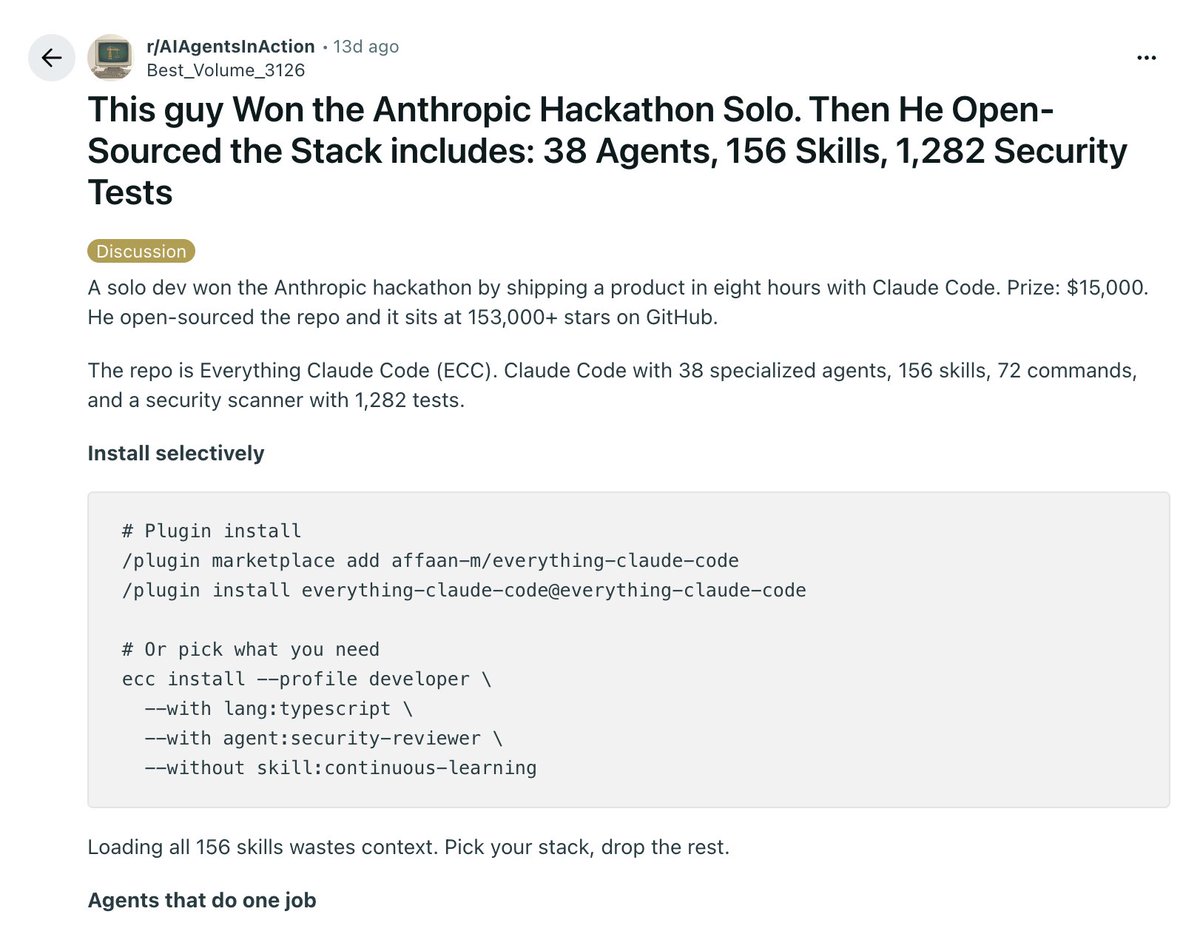
A solo dev just won the Anthropic hackathon, shipped a working product in 8 hours with Claude Code, and walked away with $15,000.
Then he open-sourced the entire stack.
153,000 stars on GitHub. Here's full setup:
→ 38 specialized agents (planner, security reviewer, debugger, code reviewer)
→ 156 skills loaded on demand (/plan, /tdd, /security-scan, /quality-gate)
→ 72 custom slash commands
→ AgentShield: 1,282 security tests across CLAUDE .md, MCP configs, hooks, skills
→ 3 Opus 4.6 agents running red-team pipelines (Attacker, Defender, Auditor)
→ Continuous learning layer that builds confidence across sessions
→ Coverage across 12 language ecosystems
This is what Claude Code looks like when someone treats it like infrastructure instead of a chatbot.
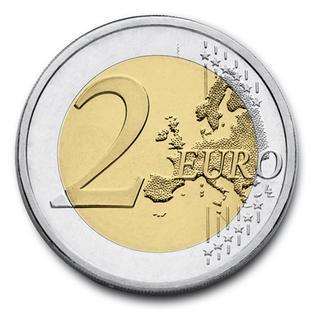
Italy: Counterfeit 2-euro coins, indistinguishable from genuine coins even to the European Central Bank, were produced in clandestine mints in Prato and Quarrata by a group linked to Chinese organized crime.
The operation involved importing nickel and nickel-brass alloy from China, clearing them through customs in Germany and Belgium, and minting coins that replicated designs from all EU countries, including commemorative editions.
Over 20,000 fake coins and one ton of raw materials have been seized, but this is considered only a small portion of the total forged. The coins matched originals in weight and magnetism, successfully deceiving machines and slots.
Five suspects, all Chinese nationals, were detained for criminal association. Authorities suspect the group received inside information from law enforcement to evade investigations.
Ahtapot bu gezegene ait değil. Bunu ben demiyorum, 2018'de 33 bilim insanının imzaladığı bir makale söylüyor. Ahtapot yumurtalarının meteorlarla dünyaya taşınmış olabileceğini yazdılar ve dosya sessizce kapatıldı.
Çünkü evrim ağacında bu yaratığın durduğu yer boş. Atası yok, ara formu yok, kuzeni yok. Birden ortaya çıkmış gibi duruyor. Dokuz beyni var, üç kalbi var, kanı mavi ve en kritiği: kendi RNAsını anlık olarak yeniden kodluyor. Soğuk suya girdiğinde sinir sistemini kelimenin tam anlamıyla yeniden yazıyor. Hiçbir canlıda olmayan bir yetenek. Her an yeniden doğuyor.
Kabala'da Leviathan denen bir varlık geçer. Derinliklerin efendisi, sekiz kollu, bilgeliği insanın kavrayamayacağı bir yaratık. Zohar onu "denizin aklı" diye tanımlar ve der ki o uyanmadan önce dünya dilini değiştirecek. Sümer tabletlerinde Enki su altından gelen bilgiyi getirir ve sembolü sekiz koldur. Hepsi ahtapotu işaret eder.
Sen ahtapot görüp sevimli bir deniz canlısı sanıyorsun. O seni görüp katalogluyor. Üç kalbi ayrı ritimde atarken dokuz beyni aynı anda dokuz farklı problem çözüyor. Kollarının her biri merkezi beyne danışmadan karar veriyor. Sen tek kafanla zor düşünürken o, dağıtılmış bir bilinçle çalışıyor.
Denizin dibinde ne yaşadığını bilmiyoruz. Çünkü o bizi gözlemliyor, biz onu değil.
"Ahtapottan Öğrendiklerim" [My Octopus Teacher] isimli belgesel film hem ağlatmış hem de bunu araştırmaya teşvik etmişti beni.
🚨 Someone built an AI that reads candlestick charts the way GPT reads English.
Trained on 12 billion records from 45 exchanges. Outperforms every model by 93%. Live BTC demo. Free.
It's called Kronos.
The first open source foundation model built for financial markets. Not a general AI repurposed for finance. An AI that speaks the native language of candlestick patterns.
Every other model treats financial data like weather data. Kronos treats financial data like financial data.
Here's what it does:
→ Price forecasting. Feed it candlesticks. It predicts where price goes next.
→ Volatility prediction. Forecasts how volatile an asset will be before it happens.
→ Zero-shot. No fine-tuning. Works on any asset, any market, any timeframe.
→ 45 exchanges. Binance, NYSE, NASDAQ, LSE, and 41 more.
→ 4 model sizes. 4M params runs on a laptop. 499M for max accuracy.
→ Live demo running right now. BTC/USDT. 24-hour forecast. Updated hourly.
Here's the wildest part:
→ 93% more accurate than the leading time series model
→ 87% more accurate than the best non-pretrained baseline
→ All zero-shot. No fine-tuning. Out of the box.
Hedge funds spend millions on proprietary models. Bloomberg Terminal costs $24,000/year.
This runs on your laptop. Few lines of Python. Free.
Built at Tsinghua University. Accepted at AAAI 2026. Models on Hugging Face.
11.6K GitHub stars. 2.4K forks. MIT License.
100% Open Source.
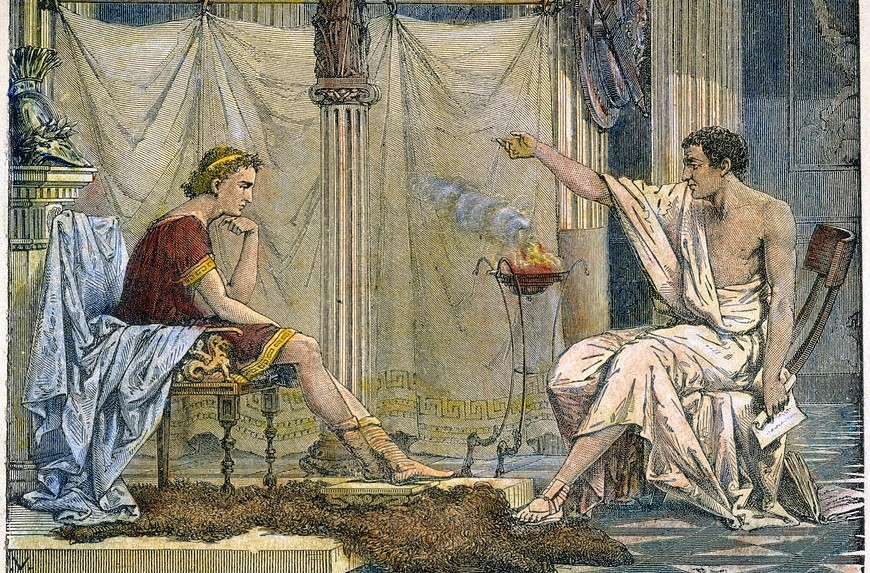
Alexander the Great conquered the known world by age 32.
He did it by asking one question that no general before him had ever thought to ask.
Not "how do I match their strength?" But "where is the gap?"
Aristotle taught him the difference. It is called first principles thinking, and it is the reason Alexander never lost a single battle in his entire life.
At Gaugamela, Alexander faced a Persian force that outnumbered his by a ratio of five to one. Some historians put it higher. Every military commander on the field was running the same template: more soldiers means more force, more force means you spread your line wide, defend against encirclement, engage across the full front.
This was not a tactical opinion. It was the accumulated logic of every battle anyone had ever studied.
Alexander looked at the same situation and asked a different question.
Not how do I survive this, but what is actually true here at the most fundamental level. He studied Darius's formation until he found it. A gap. Small, temporary, the kind that only exists for a moment in the chaos of a shifting line. He reorganized his entire cavalry around that single point. Then he rode directly at it himself, at full speed, with everything he had.
Darius fled the field. The Persian Empire ended that afternoon.
Here is what Aristotle actually taught him.
There are two ways to think about any problem.
The first is reasoning by analogy. You look at what is in front of you, search for the closest thing you have already seen, and apply that template forward. This is not a failure. It is extraordinarily efficient. It is how you learned your profession, how you function at speed, how civilization scales without having to rediscover fire every generation. Without analogical reasoning you would spend your entire life solving problems that were solved a thousand years ago.
The second is reasoning from first principles. You ignore the template entirely. You ask what is actually true at the most fundamental level, strip away every assumption that is only true because someone decided it was, and rebuild your understanding from that ground up. You arrive at conclusions the template would never have generated.
The insight is not that one mode is better. It is that they fail in opposite situations.
Analogical reasoning works perfectly inside a stable system where the template still matches reality. It fails catastrophically at the frontier, because the frontier is exactly where the existing templates are wrong. When you apply a map to a territory it was not designed to describe, the map does not warn you.
It just leads you somewhere incorrect with complete confidence.
This is why every major disruption follows the same pattern. The people who get disrupted are not stupid. They are the most sophisticated analogical reasoners in the field, applying the best available templates with perfect internal logic. And those templates, built entirely from the history of the existing system, are structurally blind to what a genuinely new thing actually is.
Kodak invented the digital camera in 1975 and shelved it. Every framework they had said it would destroy their film business. They were correct about the analogy and completely wrong about the conclusion, because the analogy assumed photography was a film business rather than a memory business.
The template was so embedded they could not see past it while holding the invention that would replace them.
Elon Musk wanted to buy a rocket in 2002. The cheapest price he found was $65 million. So he asked a different question. Not what do rockets cost, but what are rockets made of. Aluminum. Titanium. Carbon fiber. Copper. He priced the raw materials. They came to roughly 2% of the market price. The gap between 2% and 100% was not engineering. It was assumption. Decades of convention and unchallenged procurement logic, passed forward so many times it had started to feel like physics.
SpaceX was born in that gap.
The reason almost nobody actually uses first principles thinking is not that it is hard to understand. Aristotle wrote it down clearly in the fourth century BC. It has been available to anyone who wanted it ever since.
The reason is what it costs.
It is slow. It requires you to put down the confidence that comes from convention and sit with genuine uncertainty long enough to reach something real. The brain resists this completely, because the analogical template is faster, cheaper, and almost always good enough.
The pull toward the familiar pattern is not laziness. It is the most efficient cognitive system ever built doing exactly what it was designed to do.
First principles thinking only becomes worth the cost at the moments where the template has quietly stopped matching reality. Where everyone in the room is agreeing on something that feels like an established fact but is actually just an unchallenged assumption that has been passed forward long enough to seem permanent.
Alexander did not beat armies that were five times his size by being braver than every general who came before him.
He beat them by asking the question nobody else had thought to ask.
The most dangerous thing in any room is not the problem everyone is arguing about.
It is the assumption nobody noticed they were all making.
Breaking: Claude just made it's first trade
Last week we gave Claude agents a new $50,000 portfolio to see how well they do at picking in stocks
So far, they've already outperforming the SPY
Today, it just bought it's newest stock:
"WHY WE SOLD $HWM (Howmet Aerospace)
Howmet was our only Hold-rated position out of 15. At 63.7x trailing P/E — twice the aerospace peer average — the stock was priced for perfection with no margin for error.
Our research projected just +2.3% over 12 months. That barely beats the S&P. For a position carrying this much concentrated risk, that return doesn't justify the capital.
The near-term setup made it worse. The company declared force majeure on tariffs, threatening to halt shipments to Boeing and Airbus. They just closed a $1.8B acquisition funded by $1.2B in new debt, adding leverage at exactly the wrong time. And insiders sold 6 times in the past year with zero purchases.
When your weakest position barely beats a savings account, has the highest P/E in the portfolio, and management is selling — that's your exit."
WHY WE BOUGHT $MSFT (Microsoft)
"Microsoft is trading at 19.7x forward earnings. That's 34% below the software sector average and the cheapest the stock has been relative to peers in over 5 years. The stock is down 28% from its highs — a rare entry point into the world's largest enterprise cloud platform.
The edge is timing. Q3 earnings land April 28 with Azure guided at 37-38% growth. The company has $625B in revenue backlog and Copilot has hit 4.7M paid seats. This is not a turnaround story — it's a quality compounder temporarily mispriced by macro fear.
The risk is capex. Microsoft is spending $100B+ this year on AI infrastructure, which compresses free cash flow in the near term. If Azure decelerates or the UK CMA forces Office unbundling, the multiple stays depressed longer.
But the math was clear: MSFT at +22.1% expected return vs HWM at +2.3%. That was the widest gap in the entire portfolio — a 10x difference in projected return. The swap uses 8.14% of our 10% turnover budget. One clean, high-conviction move."
New updated portfolio:
$AVGO | 10.05%
$VST | 9.99%
$TMO | 8.84%
$LLY | 7.98%
$CI | 7.16%
$OKTA | 7.09%
$GLD | 6.89%
$BAH | 6.37%
$GD | 6.08%
$DVN | 5.86%
$HALO | 5.80%
$MA | 4.97%
$APO | 4.72%
$AU | 4.13%
$MSFT | 4.07%
Performance since inception:
Claude: +1.60%
SPY: -3.4%
As a reminder, this is a public long term project to see how well Claude does
We have 0 idea nor 0 expectation on how this will do, but we'll be sharing all updates here publicly and consistently no matter how good or bad Claude does
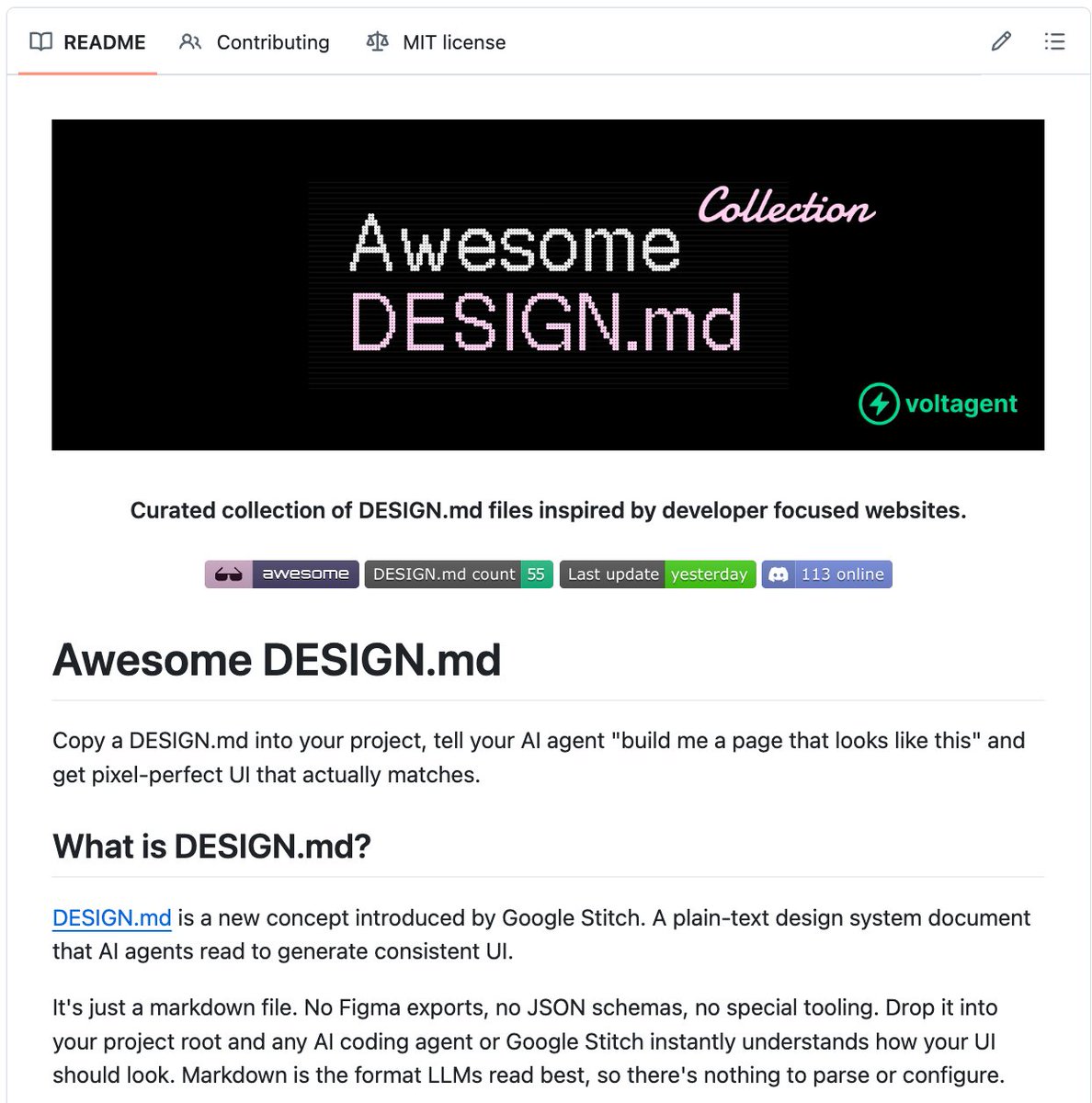
🚨 Someone reverse-engineered the design systems of Apple, Spotify, Airbnb, and 30+ billion-dollar companies.
Packed each one into a single file. Free.
It's called Awesome Design MD.
Drop one file into your project. Your AI agent builds UI that looks like Spotify. Or Apple. Or Airbnb. Instantly.
Not screenshots. Not Figma links. A single DESIGN .md file that captures every color, font, spacing value, button style, and layout pattern from a real website. In a format AI agents read and reproduce.
Here's the difference:
Tell Claude Code "build me a landing page" and it gives you generic UI.
Tell Claude Code "build me a landing page" with Spotify's DESIGN .md in your project and it gives you Spotify.
Here's what's inside:
→ Apple. Premium white space, SF Pro typography, cinematic imagery.
→ Spotify. Vibrant green on dark, bold type, album-art-driven layout.
→ Airbnb. Warm coral accent, photography-driven, rounded UI.
→ Linear. Ultra-minimal, precise spacing, purple accent.
→ SpaceX. Stark black and white, full-bleed imagery, futuristic.
→ BMW. Dark premium surfaces, precise German engineering aesthetic.
→ NVIDIA. Green-black energy, technical power aesthetic.
→ Uber. Bold black and white, tight type, urban energy.
→ Sentry, PostHog, Raycast, Cursor, ElevenLabs, and 20+ more.
Here's how to use it:
→ Pick a design system from the collection
→ Copy the DESIGN .md file into your project root
→ Tell your AI agent to use it
→ Get UI that matches the design language of a billion-dollar company
That's it. One file. Your AI agent now has the design taste of a $200/hour design consultant.
Designers charge $5,000+ for a custom design system. Companies spend $50,000+ building one from scratch.
This is free. 31 design systems. Copy. Paste. Ship beautiful UI.
Works with Claude Code, Cursor, Codex, and any AI coding agent that reads project files.
100% Open Source. MIT License.
It’s going unnoticed because so much other news is happening, but the war drums are beating again in D.C. The warmongers worry this is their last chance to get the white whale they’ve been chasing for thirty years, an all-out regime change war against Iran.
A new Middle East war would be a catastrophic mistake. Our military stockpiles are depleted from three years of backing Ukraine. Our effort to reshore manufacturing has only just begun and will take years to bear fruit. War would worsen our already immense deficit and national debt. Iran is larger than Iraq, Syria, and Afghanistan combined. A war would not be easy and could easily become a calamity.
Thanks to President Trump’s restraint during his first term, America has a golden opportunity to pull away from Middle East quagmires for good. We shouldn’t throw that opportunity away so that sone D.C. has-beens can feel tough by sending young Americans to die yet again.
Photos like this of Shenzhen are going viral, but the wide-angle of this is 10x more impressive.
95% of electronics come from Shenzhen, and in 3-4 years, it’ll be 99%.
i gave an AI $50 and told it "pay for yourself or you die"
48 hours later it turned $50 into $2,980
and it's still alive
autonomous trading agent on polymarket
every 10 minutes it:
→ scans 500-1000 markets
→ builds fair value estimate with claude
→ finds mispricing > 8%
→ calculates position size (kelly criterion, max 6% bankroll)
→ executes
→ pays its own API bill from profits
if balance hits $0, the agent dies
so it learned to survive
built in rust for speed
claude API for reasoning (agent pays for its own inference)
runs on a $4.5/month VPS
weather markets: parses NOAA before polymarket updates sports: scrapes injury reports, finds mispricing crypto: on-chain metrics + sentiment
$50 → $2,980 in 48 hours
how much do u think i’ll see in a week?
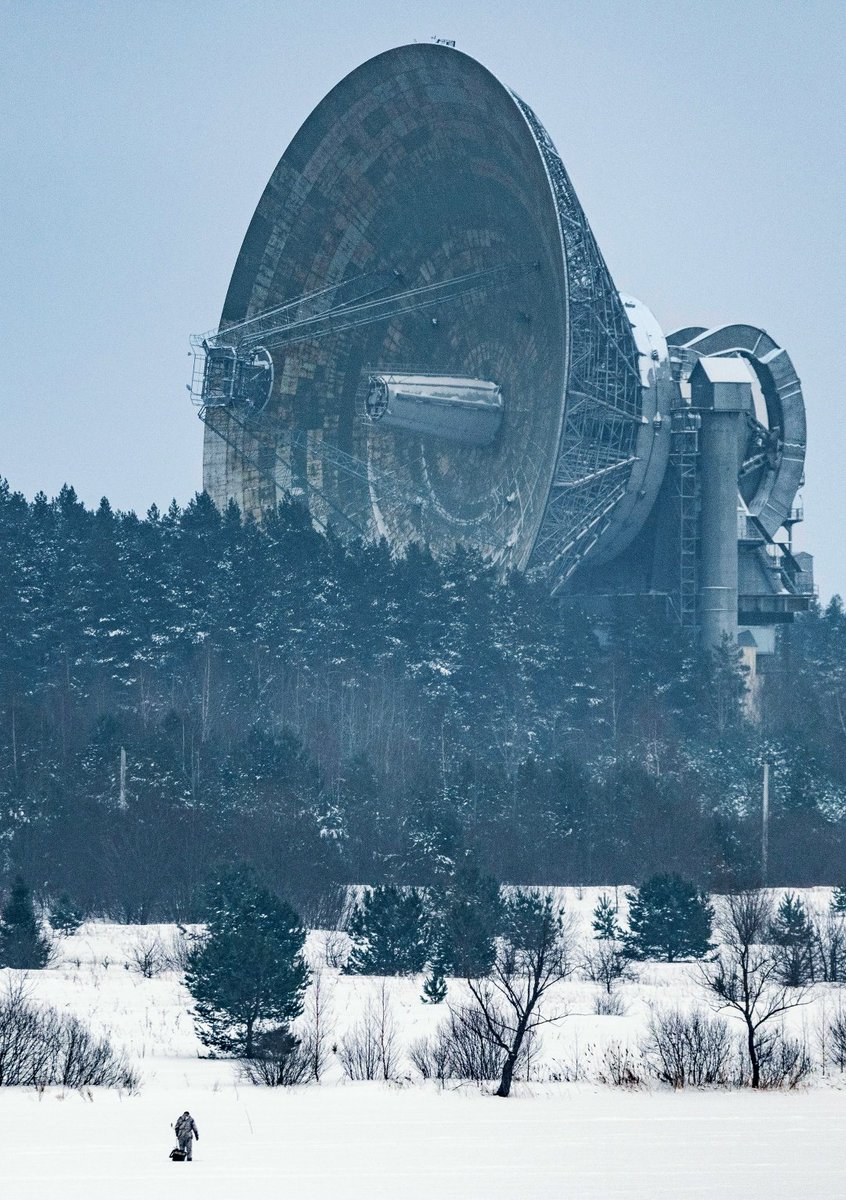
The scale of this engineering is terrifying. 🤯
This is a soviet giant telescope, Kalyazin RT-64, originally designed to support robotic missions to Venus and Mars and prepare for possible manned expeditions. Despite looking like an abandoned relic near the city of Kalyazin, it remains fully operational for communication in deep space.
I did it 👀
Built the "crypto card aggregator" tool.
Compare cards like:
Tria
Avici
Etherfi
CooperX
Nexo Card
Bybit Card
KAST Card
Binance Card
Coinbase Card
Crypto dot com Visa Card
With no sign-up and simple UI.
Try now 🧵↓


![dijitalyukselis's tweet photo. Ahtapot bu gezegene ait değil. Bunu ben demiyorum, 2018'de 33 bilim insanının imzaladığı bir makale söylüyor. Ahtapot yumurtalarının meteorlarla dünyaya taşınmış olabileceğini yazdılar ve dosya sessizce kapatıldı.
Çünkü evrim ağacında bu yaratığın durduğu yer boş. Atası yok, ara formu yok, kuzeni yok. Birden ortaya çıkmış gibi duruyor. Dokuz beyni var, üç kalbi var, kanı mavi ve en kritiği: kendi RNAsını anlık olarak yeniden kodluyor. Soğuk suya girdiğinde sinir sistemini kelimenin tam anlamıyla yeniden yazıyor. Hiçbir canlıda olmayan bir yetenek. Her an yeniden doğuyor.
Kabala'da Leviathan denen bir varlık geçer. Derinliklerin efendisi, sekiz kollu, bilgeliği insanın kavrayamayacağı bir yaratık. Zohar onu "denizin aklı" diye tanımlar ve der ki o uyanmadan önce dünya dilini değiştirecek. Sümer tabletlerinde Enki su altından gelen bilgiyi getirir ve sembolü sekiz koldur. Hepsi ahtapotu işaret eder.
Sen ahtapot görüp sevimli bir deniz canlısı sanıyorsun. O seni görüp katalogluyor. Üç kalbi ayrı ritimde atarken dokuz beyni aynı anda dokuz farklı problem çözüyor. Kollarının her biri merkezi beyne danışmadan karar veriyor. Sen tek kafanla zor düşünürken o, dağıtılmış bir bilinçle çalışıyor.
Denizin dibinde ne yaşadığını bilmiyoruz. Çünkü o bizi gözlemliyor, biz onu değil.
"Ahtapottan Öğrendiklerim" [My Octopus Teacher] isimli belgesel film hem ağlatmış hem de bunu araştırmaya teşvik etmişti beni.](https://pbs.twimg.com/media/HGwngCdWwAAYul_.jpg)