Prime Minister Narendra Modi's remark about our 'Chalo Delhi' campaign, aimed at protesting the injustices suffered by Kannadigas due to the Union Government's unfair tax allocation, being a threat to the nation's unity and security, is surprising.
I urge Prime Minister Narendra Modi to remember his own remarks opposing the UPA Government when he served as the Chief Minister of Gujarat. Weren't your statements back then also seen as potentially endangering the nation's unity and security? I await your reply.
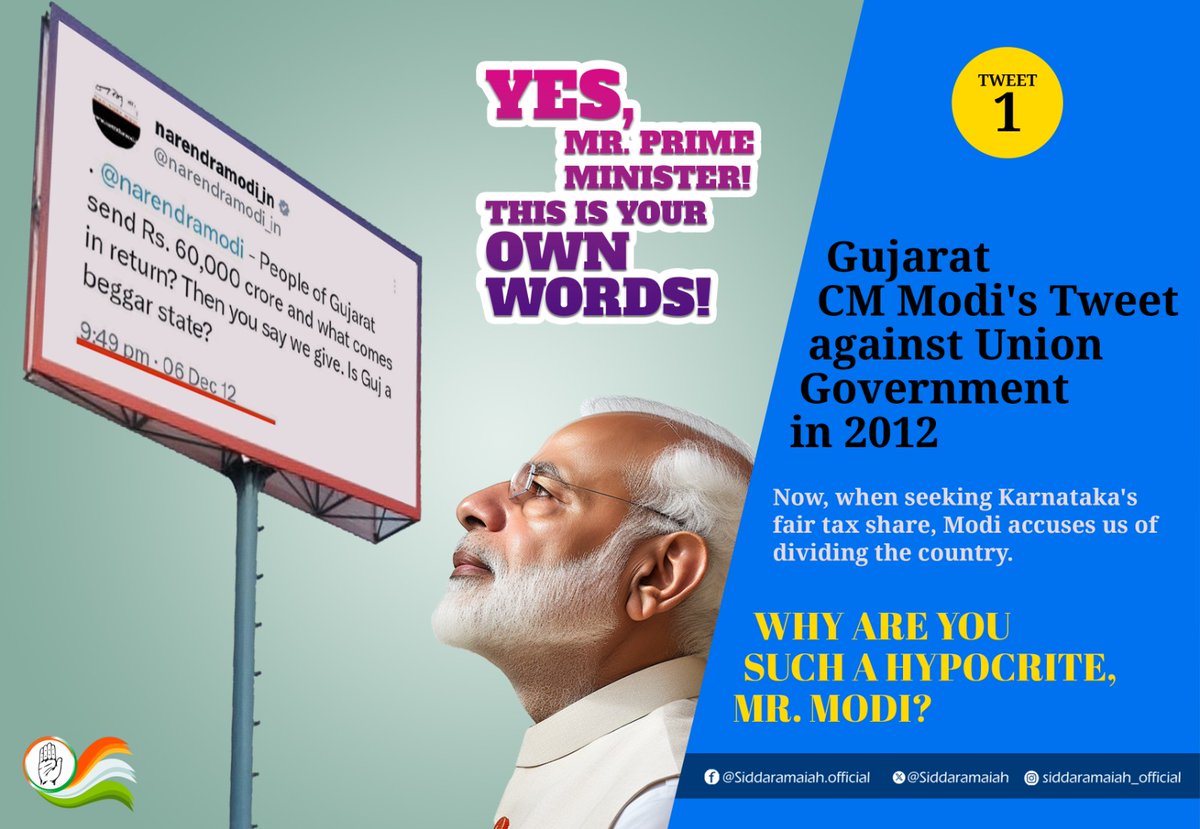
Narendra Modi expressed his concerns regarding the Central Finance Commission at various events during his tenure as the Chief Minister of Gujarat.
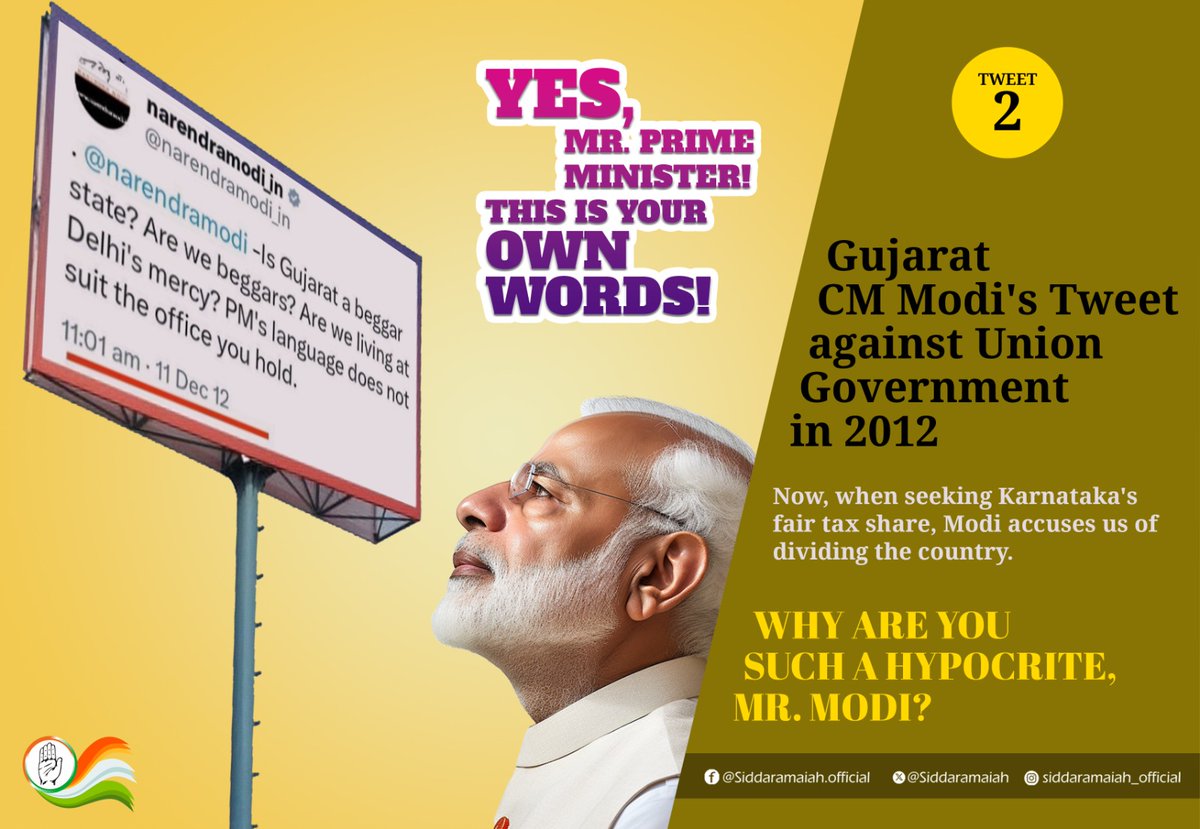
In a statement issued on December 6, 2012, CM Modi questioned the return on Gujarat's significant financial contributions to the Union Government, asking, "Gujarat is giving Rs 60,000 crore to the Union Government, how much of this has come back to us? Is Gujarat a beggar state?"
At a function in Vadodara in 2008, Modi remarked on Gujarat's substantial tax payments to the Union Government, stating, "Gujarat contributed Rs 40,000 crore annually to the Union Government in taxes. However, only a mere 2.5% of this sum was being allocated back to the state. Instead of receiving such a paltry amount in return, why not permit us to utilise our own taxes for at least a year?"
At the 10th Pravasi Bharatiya Diwas convention on January 9, 2012, amidst distinguished foreign dignitaries, Modi openly expressed his dismay at the Union Government's lack of assistance, declaring, "We receive no support from the Union Government or the Prime Minister. We've solely depended on our own resources."
During discussions with the 14th Finance Commission, Modi emphasised the need for a more equitable approach, urging the Union Government to allocate a larger portion, ideally between 32 to 50%, of the taxes collected from the states back to them.
He argued before the Finance Commission that the criteria for tax allocation should be revised to provide greater incentives to states demonstrating effective financial management and developmental efforts. Modi asserted the necessity of reforming the current tax allocation system, which disproportionately rewards underperforming states at the expense of those excelling in fiscal management. He advocated for incentivising states that have significantly contributed to infrastructure development and national progress.
Wasn't this stance in opposition to the Union Government?
Furthermore, Modi, who as Gujarat CM, previously criticised the Union Government for allegedly exploiting agencies like the CBI for its benefit and penalising adversaries, now denounces those questioning the credibility of the CBI, ED, and the Income Tax Department as “anti-nationals”.
During the implementation of the Foreign Direct Investment (FDI) Act by the UPA government, Modi, a vocal opponent, mocked that 'foreigners would eventually control even the trade of essential commodities like salt and spices.' He expressed apprehension that FDI would lead to unemployment among small shop owners and those in the manufacturing sector.
When the rupee was plummeting against the dollar, Modi humorously remarked that 'the UPA government and the rupee seem to be in a competition to see who falls faster.'
Despite previously warning about the adverse effects of rising petrol prices on the people of Gujarat, Modi, after becoming the Prime Minister, continued to raise petrol prices even as crude oil prices declined. This decision inflicted hardships not only on Gujaratis but on citizens across the nation.
Also, Gujarat CM Modi vehemently opposed the Aadhaar card, dismissing it as a mere political ploy with no long-term viability. However, upon becoming PM, Modi reversed his stance and became a fervent advocate for the Aadhaar.
#AnswerMadiModi
#MyTaxMyRight
#ನಮ್ಮತೆರಿಗೆನಮ್ಮಹಕ್ಕು